
1-7 February 2026
We left Gobernador Gregores, a small, windswept Patagonian town that serves as a key resupply stop in an otherwise remote region. With a few supermarkets, fuel stations, and basic services, it’s one of the last practical places to stock up before heading back out into the wilderness. Taking advantage once more, we shop and use a customer’s number—Mr Wang—to get the discounts, saving us significantly.
The region also carries a darker history tied to the ‘Patagonia Rebelde’. Stopping by a sun-faded half-effort, roadside memorial we learned that during this period, in 1921, striking estancia (farm) workers—demanding better pay and conditions—were brutally suppressed. Hundreds, possibly more, were executed by the Argentine army across Santa Cruz, leaving a lasting scar on the landscape and its communities.
Beyond town, the road stretched out into more of that vast Patagonian emptiness—wind-scraped, open but fenced. Up the road we passed an enormous, weathered wooden wagon, sitting alone like a relic from another life. Its steel-rimmed, hand built wooden wheels towered over us, thick timber spokes worn smooth by decades of use. These wagons once hauled wool—Patagonia’s white gold—from remote estancias to distant ports, pulled by teams of horses across unforgiving terrain. Now it stands still, a historic reminder – like those in El Calafate.
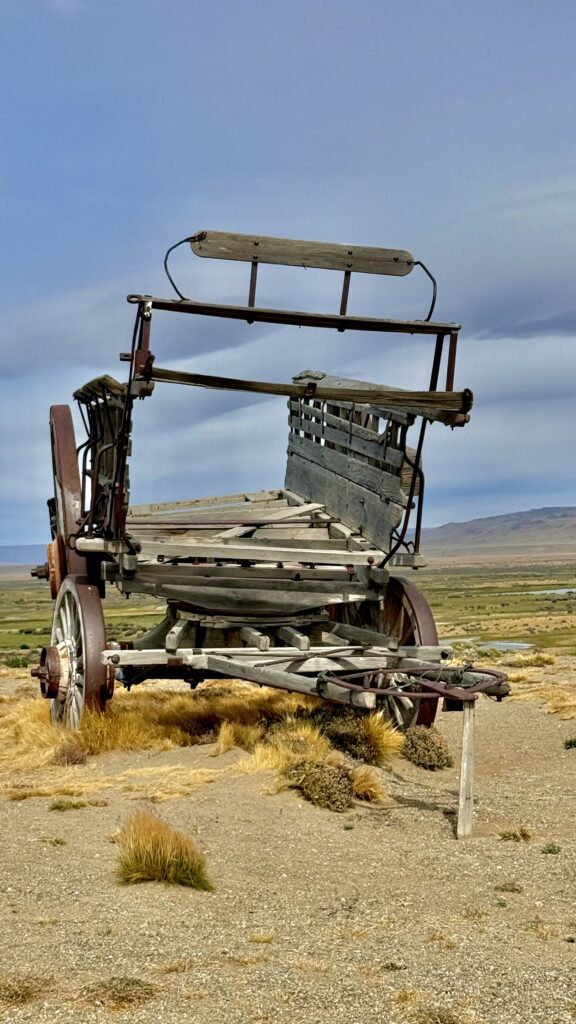
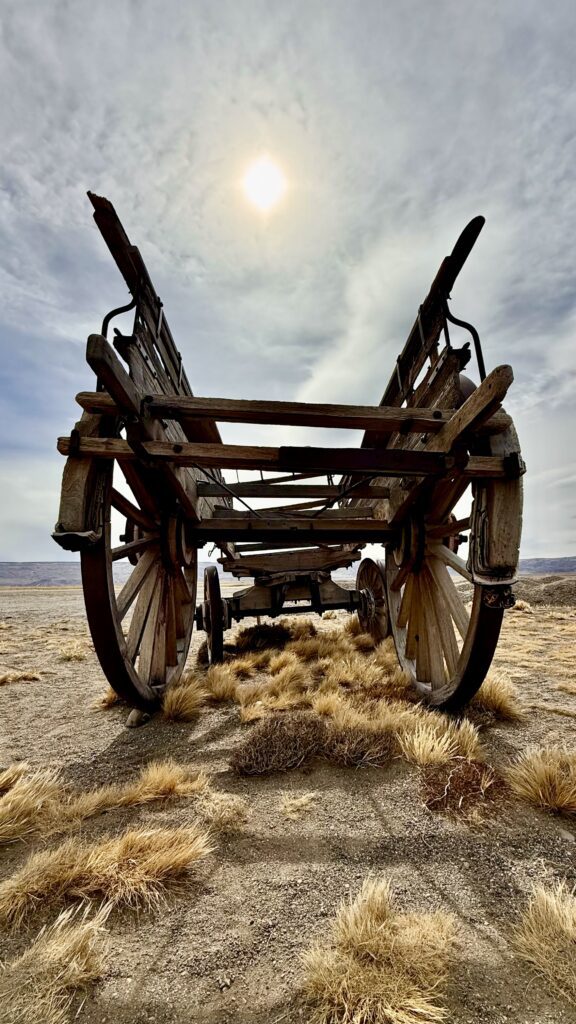
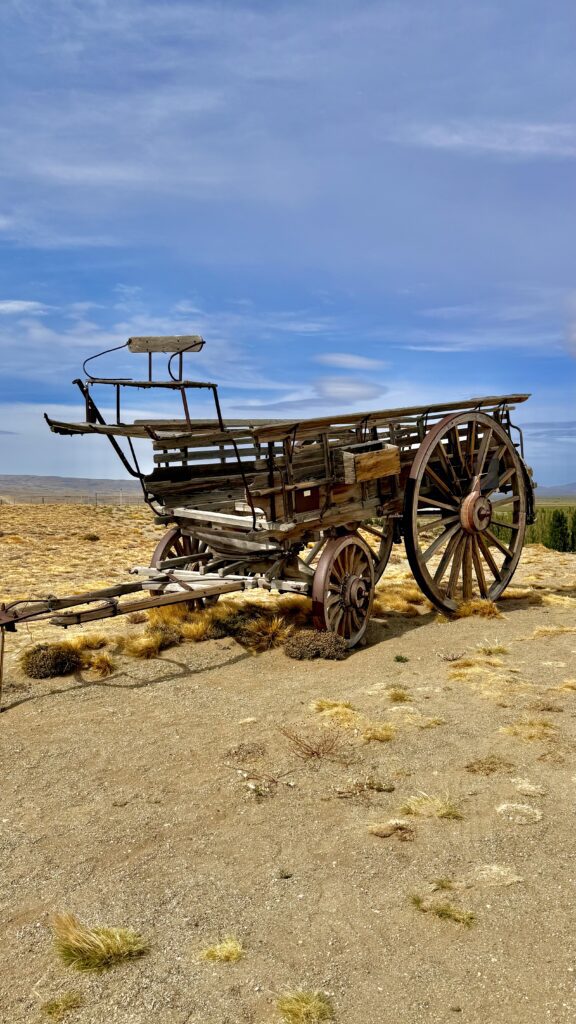
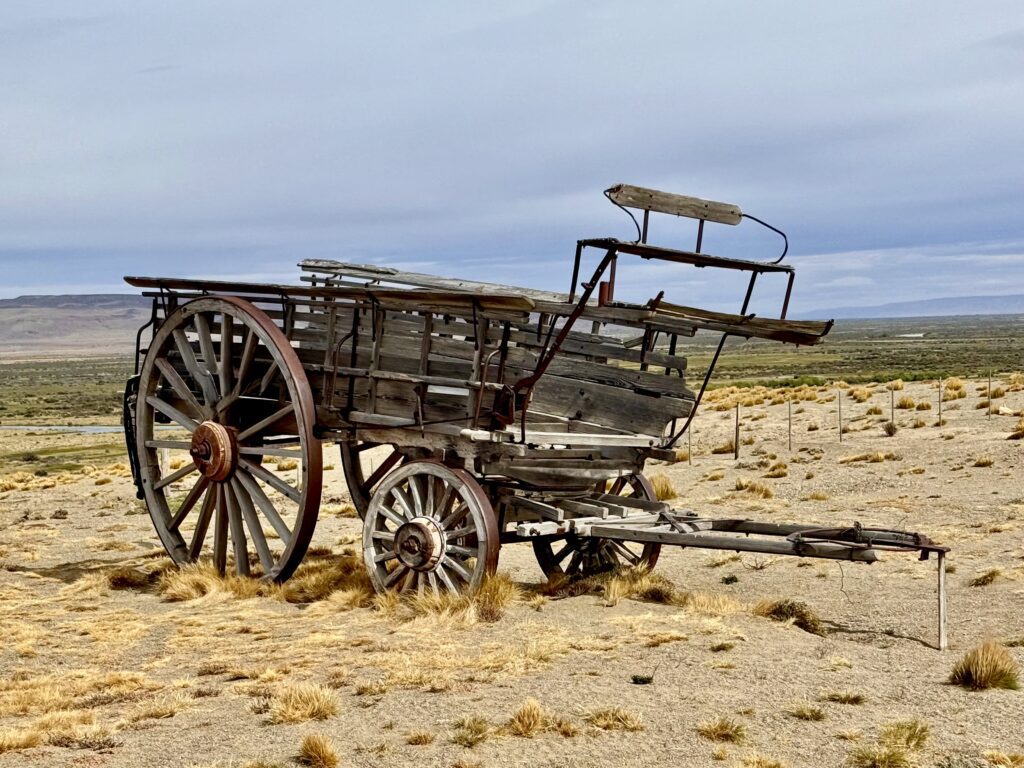
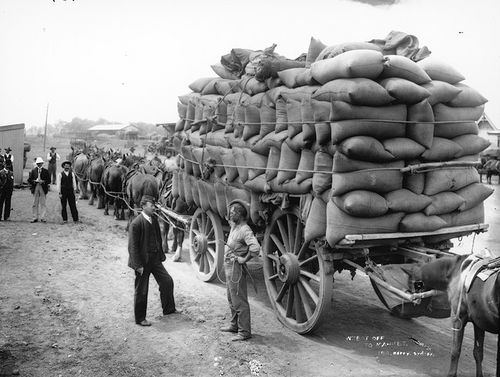
Beyond town, the road stretched out into more of that vast Patagonian emptiness—wind-scraped, open but fenced. Up the road we passed an enormous, weathered wooden wagon, sitting alone like a relic from another life. Its steel-rimmed, hand built wooden wheels towered over us, thick timber spokes worn smooth by decades of use. These wagons once hauled wool—Patagonia’s white gold—from remote estancias to distant ports, pulled by teams of horses across unforgiving terrain. Now it stands still, a historic reminder – like those in El Calafate.
Soon after, the pavement ended.
PERITO MORENO NATIONAL PARK
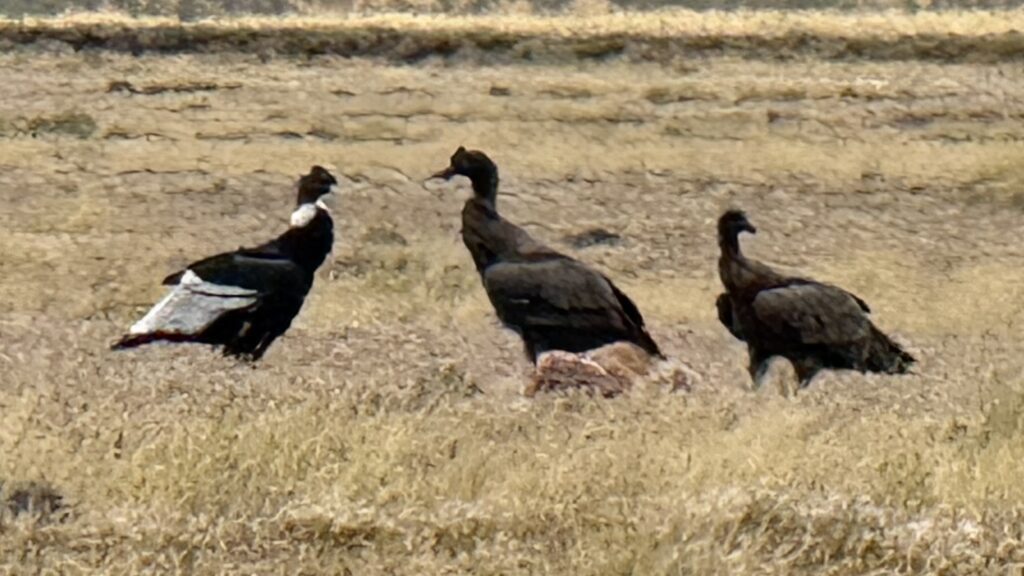
Eighty kilometres of dirt road lay between us and Perito Moreno National Park. The track wound through endless steppe, dust trailing behind us. Stopping suddenly when we spotted a Condor banquet not far off the road. A family of Andean condor gathered around the carcass of a guanaco. Two adults stood sentinel, at our approach. Huge wings half-spread, their white collars bright against the grey sky, while their young fed. Another national geographic moment. No doubt the remains of a morning puma kill, now sustaining the next in the food chain. We cut the engine and watched in silence. Bruce isn’t exactly small, so they were well aware of us.
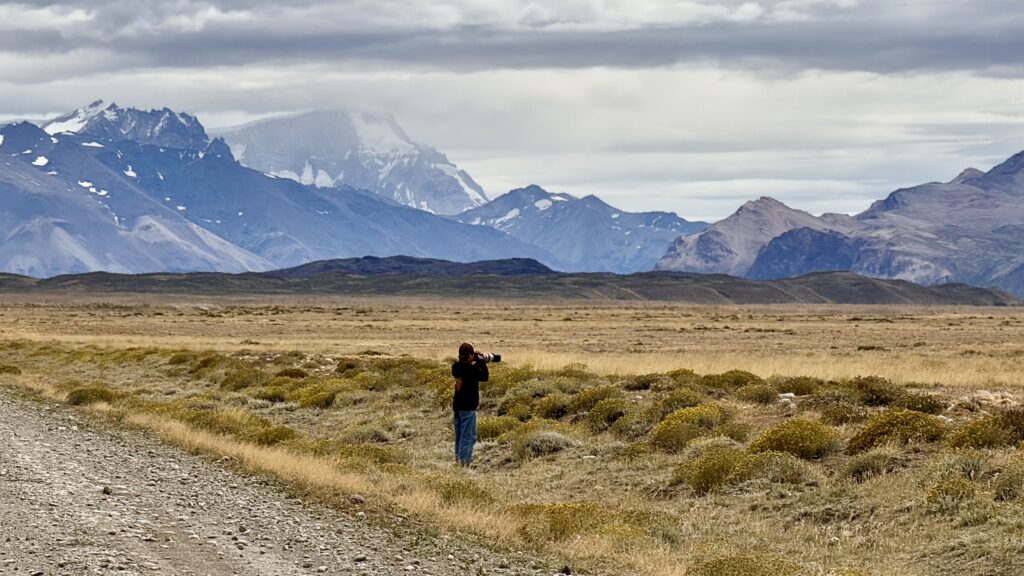
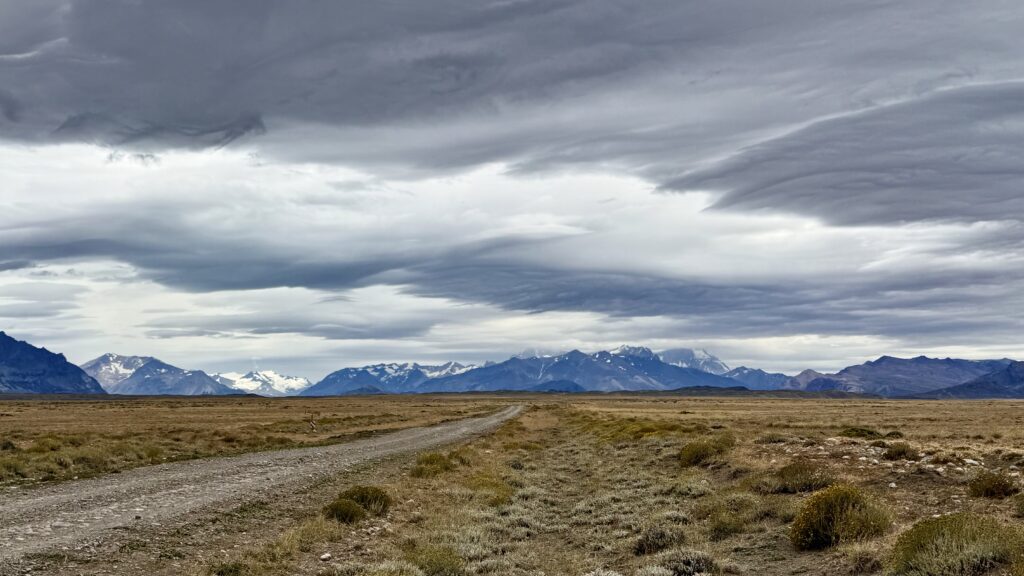
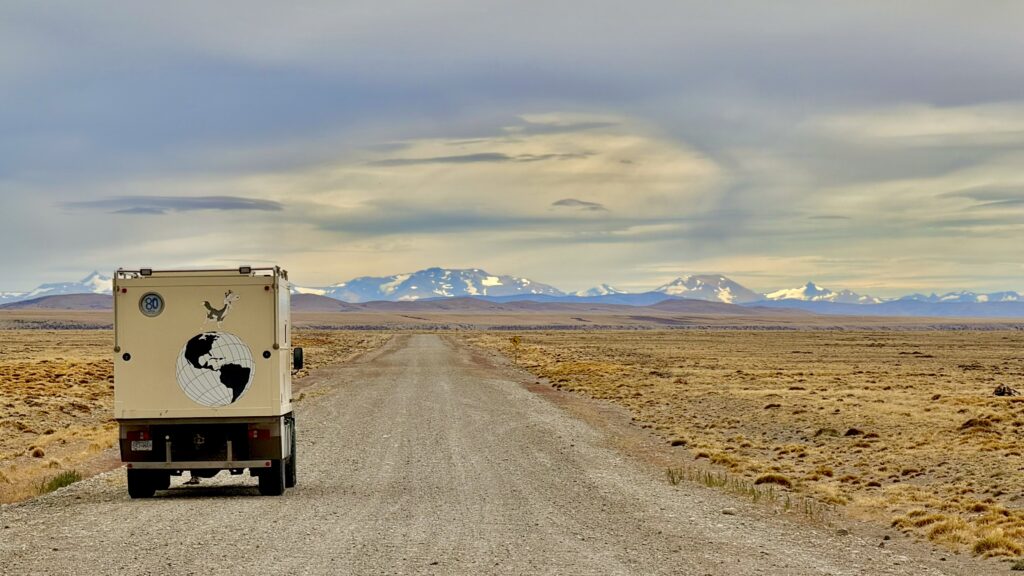
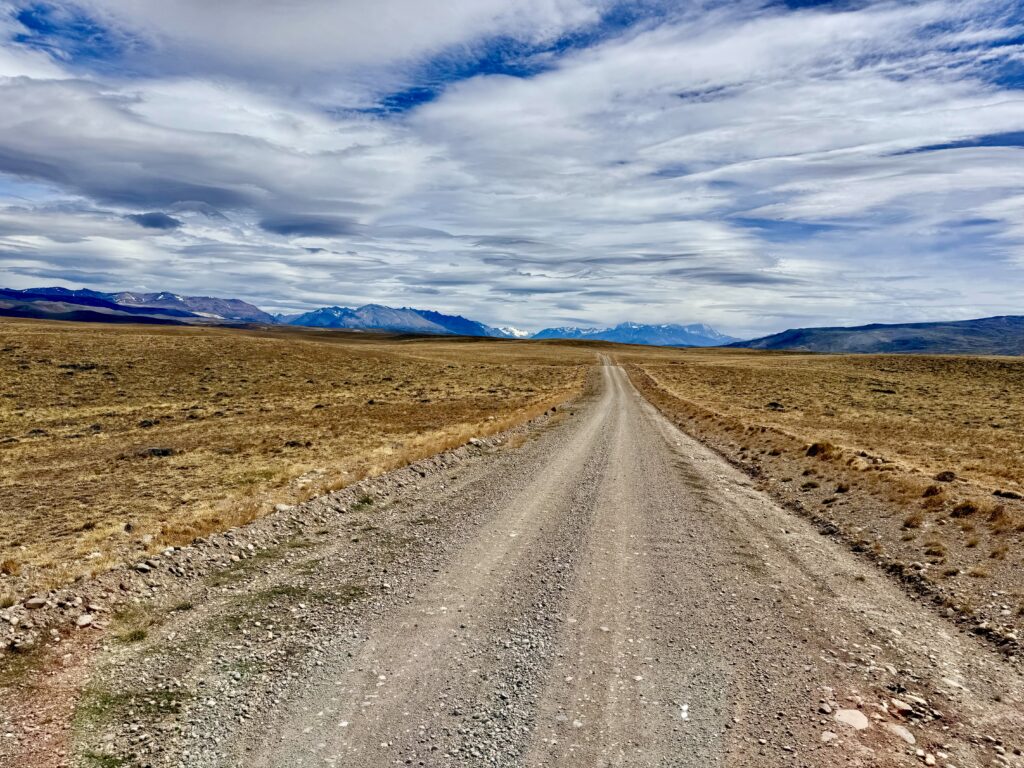
Driving in under moody skies…indicators of the rain to come!
The park itself is in one of the most remote corners of Argentina. Far from any airport or city, it’s not easy to get to. Which means there were very few people here. Talking with the ranger, he felt that this was the most beautiful part of Argentina. From what I have seen of the country, and after spending four days here I would agree with him. Untamed, and remarkably—free to enter. No gates, no tour busses, no crowds, no infrastructure. Just vast lakes, jagged ridge lines, a hidden beauty all to ourselves.
HIKING THE AZARA TRAIL
We camped that night with Sara and Huw. later joined by the Nicholas, Sandrine & kids who had come to hike another trail. The teenagers happy to have each other were off doing their own thing while we pulled all our hiking & camping gear out for tomorrow’s hike.
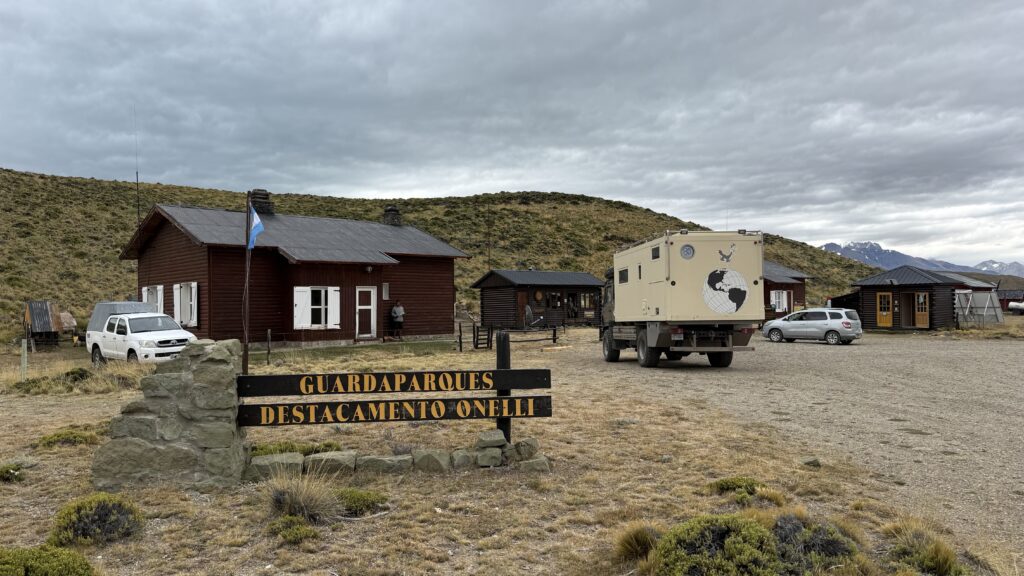
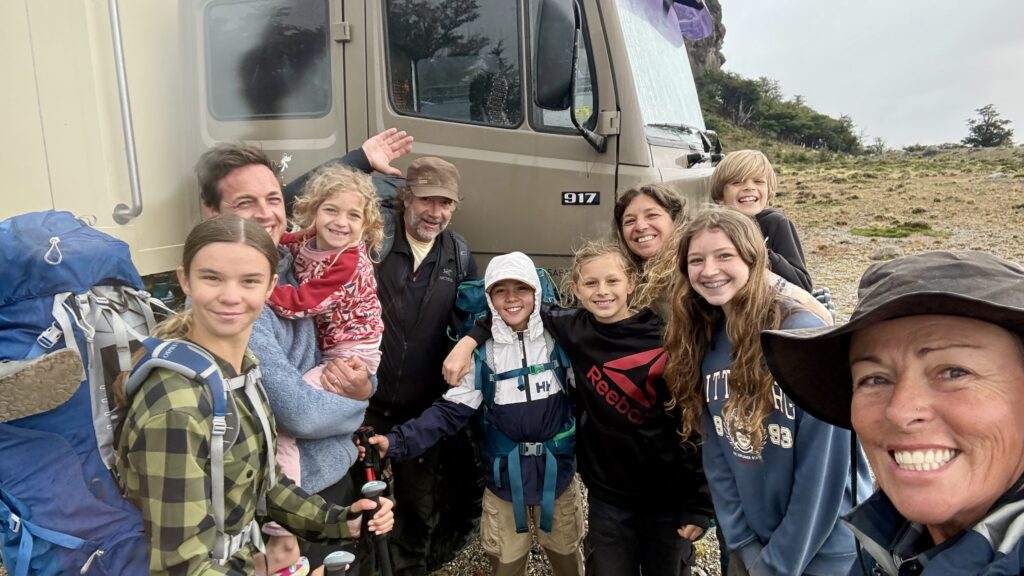
The Azara Trail is 52 km long. There are three cabins along the route that is usually walked clockwise, over three nights and four days. However we intend to do it anti-clockwise in 2 nights 3 days. Unfortunately the cabins were not available for us to use, so we will be packing our tents. To do it in the usual amount of time would mean short hiking days with lots of down time, which would be great if the weather was going to be hot & sunny…but it’s not. The forecast was for rain showers with sunny breaks.
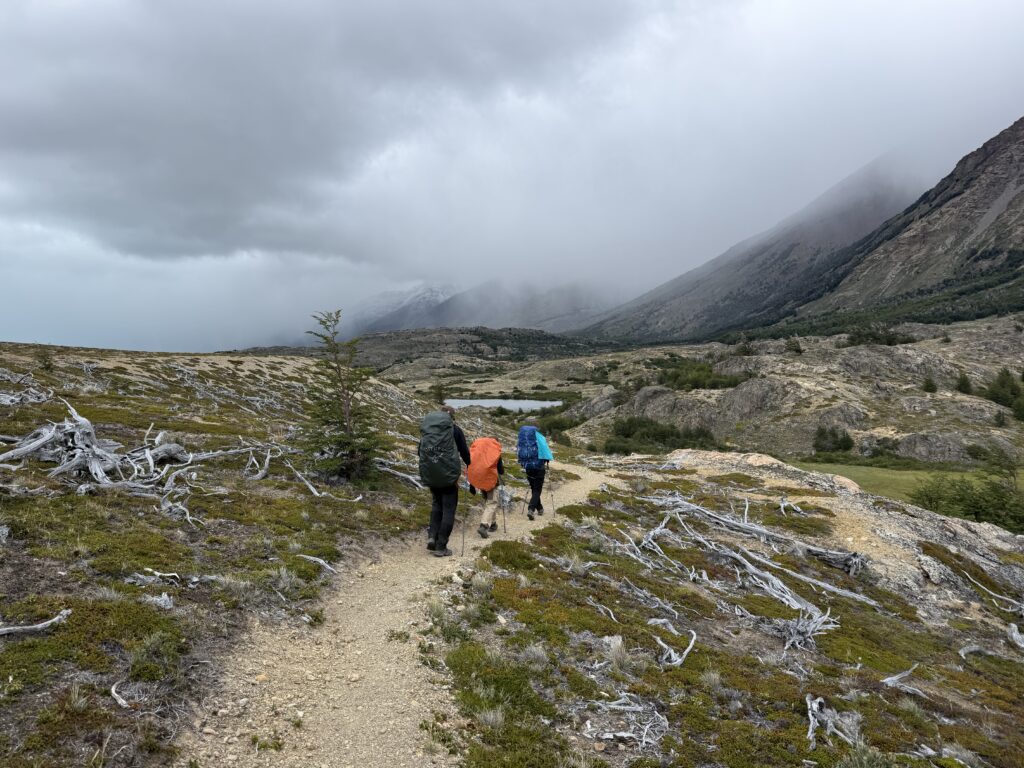
We set off late morning between rain showers. Thirty minutes in the rain returned. Pushed by a head wind, quickly soaking us through. We did have rain pants but chose to take a loosing gamble of it being a ‘quick shower’, rather than stop and put them on.
Sweat from exertion on the inside, rain on the out, there was no escaping moisture. But on the bright side, this hike had become more useful than we realized. Finding the deficiencies in our equipment will allow us to prep better for the O. Our waterproof hiking boots—so much for “Gore-Tex”—were soaked through in the first hour. (Tim’s too and his were just a couple of months old.) Note to self to reproof everything before tackling the O Circuit. Jaxon’s rain jacket wasn’t holding up much better, we will need to upgrade his jacket too.
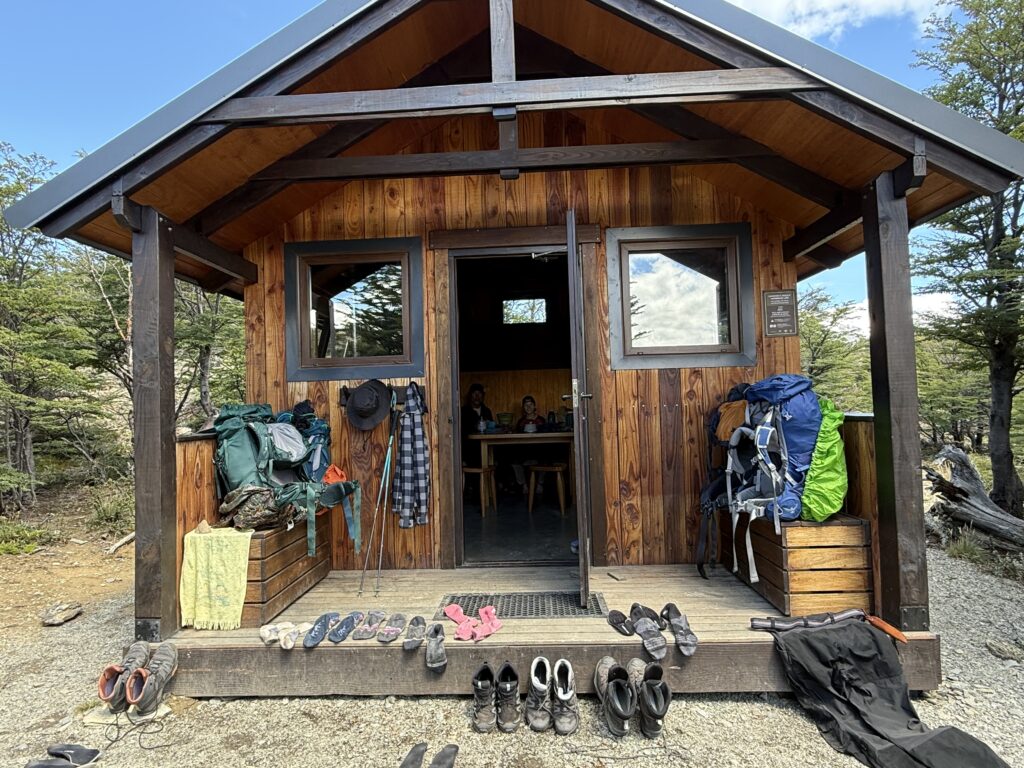
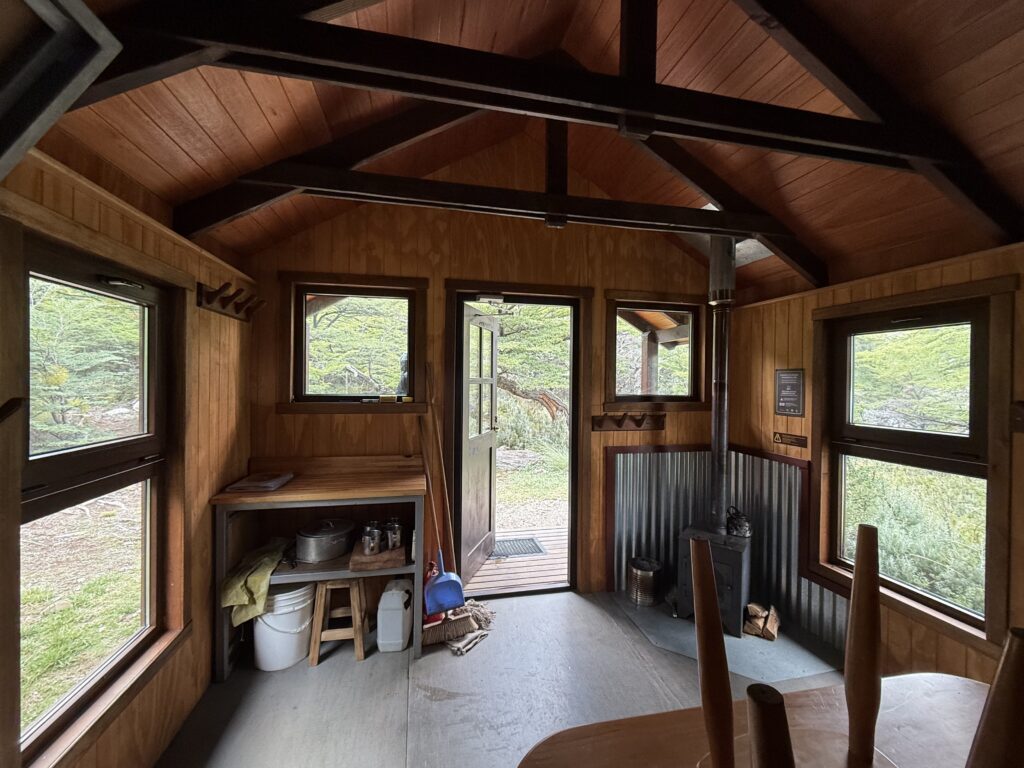
Ten kilometres in, drenched and cold, we reached the first refugio—a small wooden hut with four bunks and a wood stove. We claimed it quickly, lit the fire, and peeled off layers of steaming wet gear, doing our best to dry what we could. For 45 glorious minutes, we thawed before the rightful occupants arrived. Packs and wet gear went back on and we stepped back out into the rain for the final kilometre to the hillside camping area overlooking the lake.
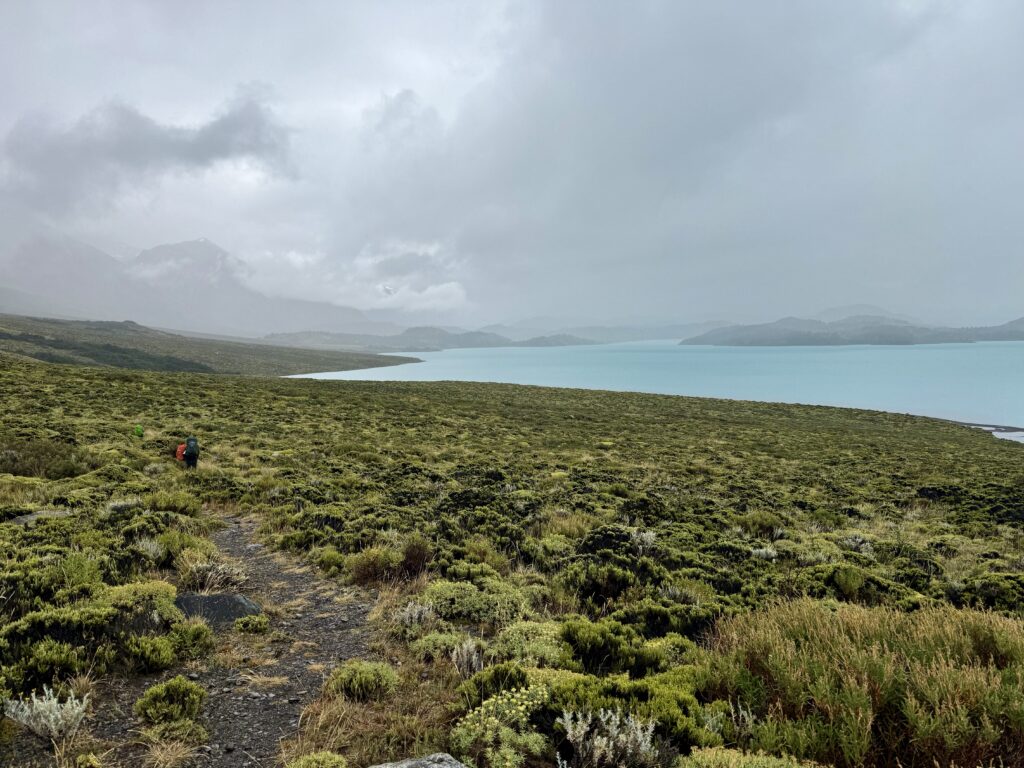
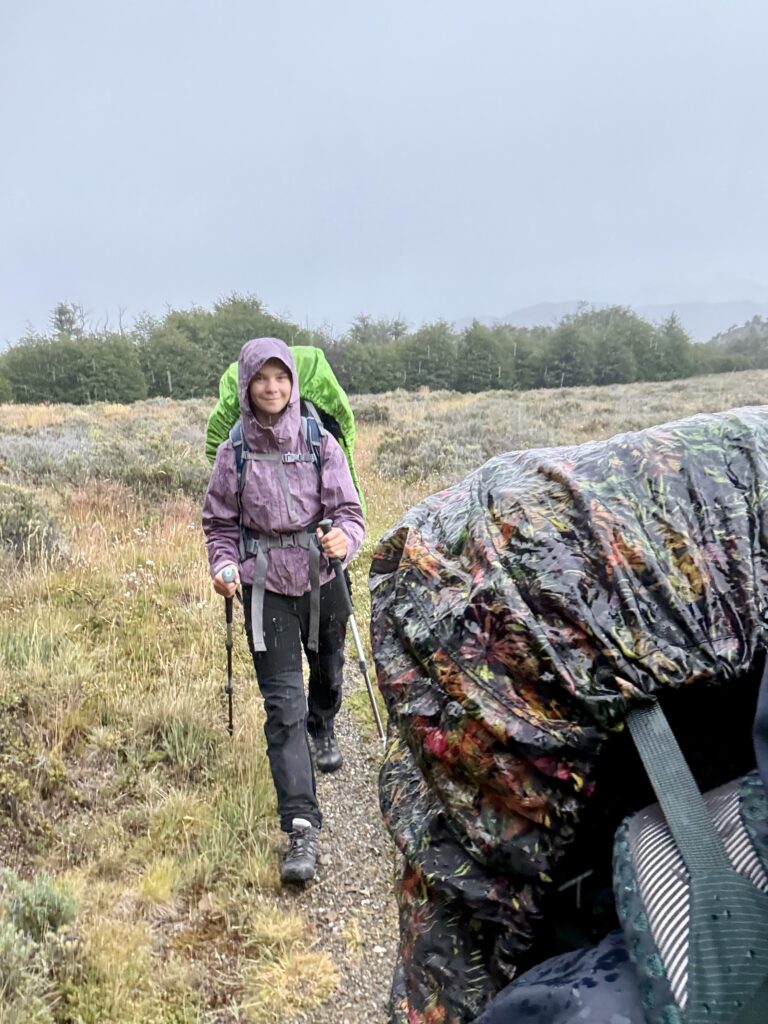
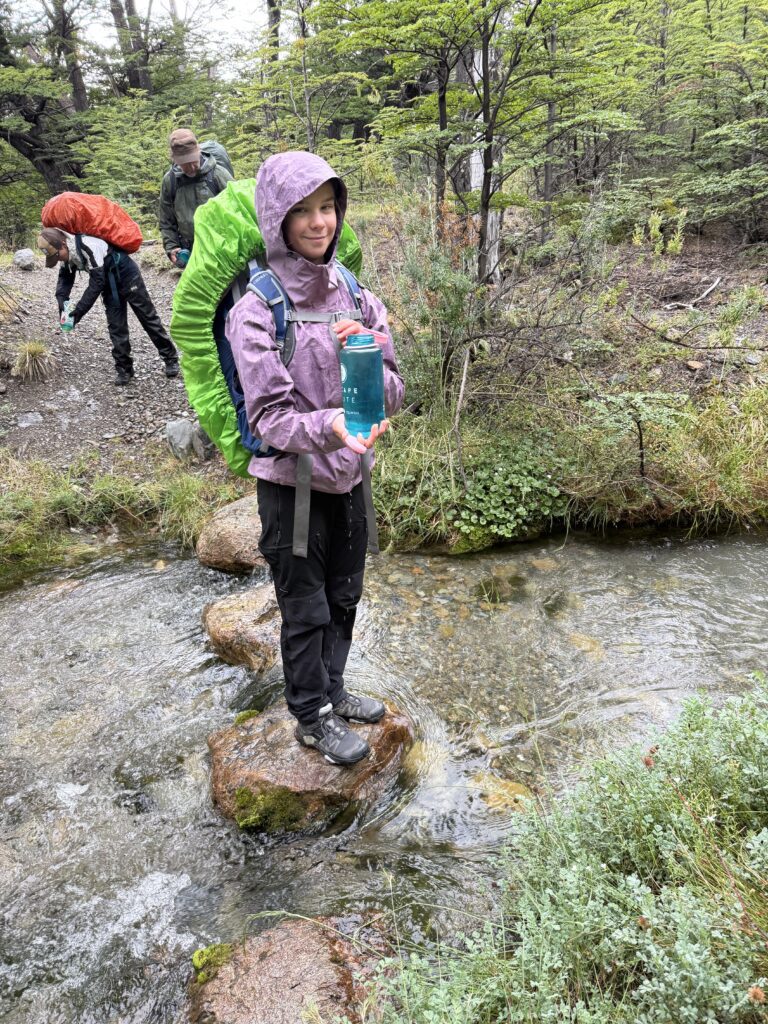
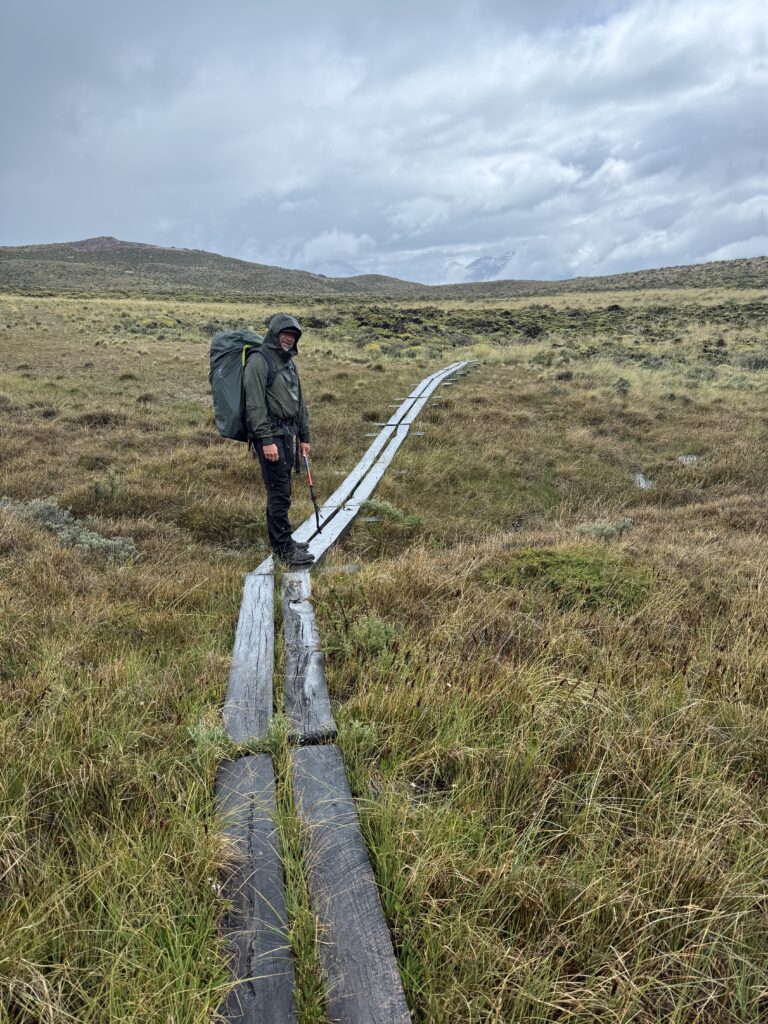
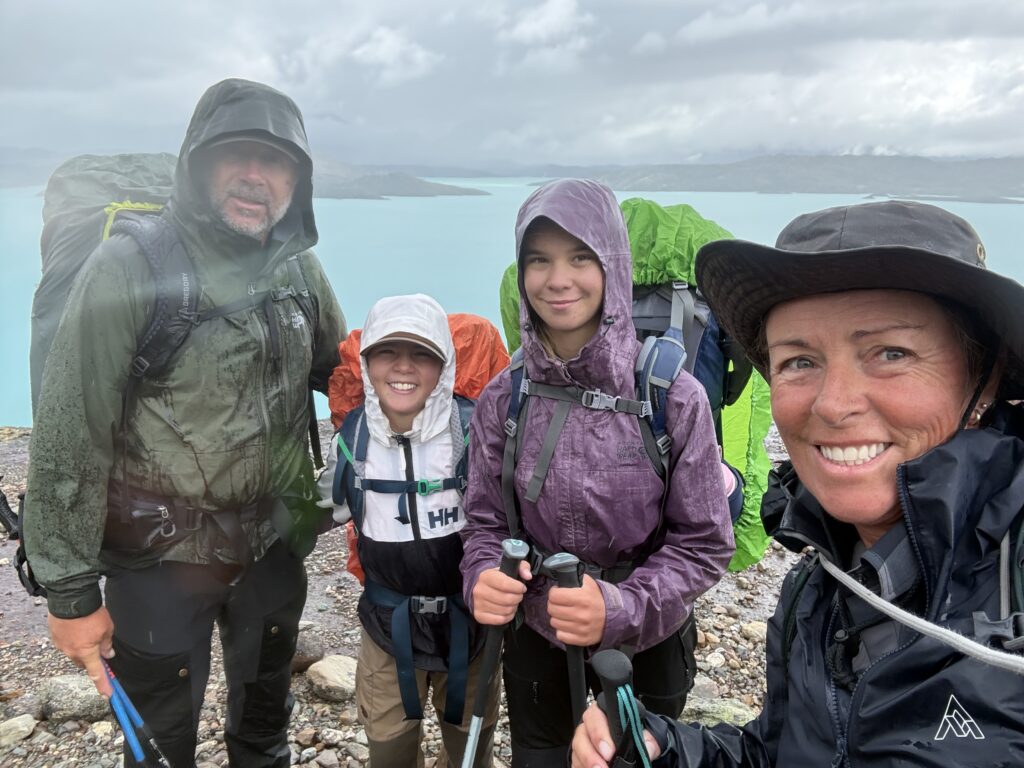
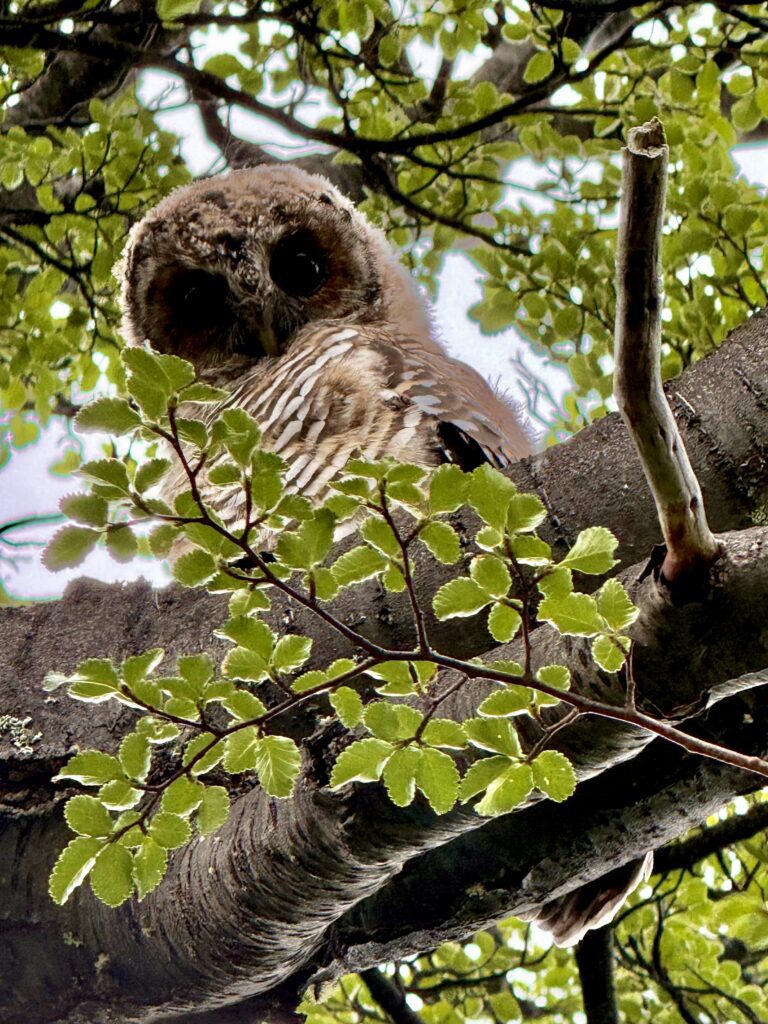
We were alone out there. Just us, the sound of rain and a curious Austral Pygmy Owl.
Tim set up a tarp first, creating a pocket of dry space, though not without sacrifice—one of those tiny biting black flies caught him square on the lip, leaving it swollen and itching for the rest of the evening. Beneath the tarp, we were able to pitch our tent. The kids weren’t so lucky—they set theirs up directly in the rain, moving quickly together but it was soaked through before getting the fly on. All the while, on a branch above them, a little owl perched, watching their every move.
Rain fly on, one quickly dried out the inside with a towel while the other staked the pegs and lines, not a whisper of complaint from either. Water was mopped, gear wrung and hung. And somehow, they loved it, I could tell they were feeling proud of themselves. An uncomfortable challenge met head on and crushed!
Dinner that night was hot, simple and yummy. Cream of mushroom soup thickened with instant mash potatoes and a generous dollop of cream cheese. Followed, of course, by a steaming mug of hot chocolate. We sat together on our hiking seat-pads, huddled beneath the tarp laughing at Tim’s swollen lip & funny speech, trading jokes about our soggy misery. A day we’ll never forget.
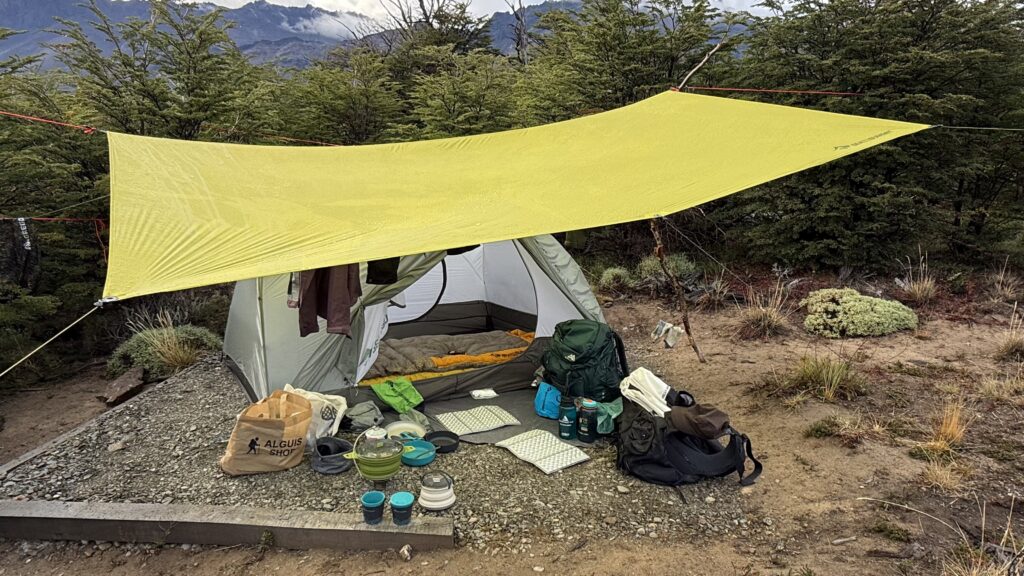
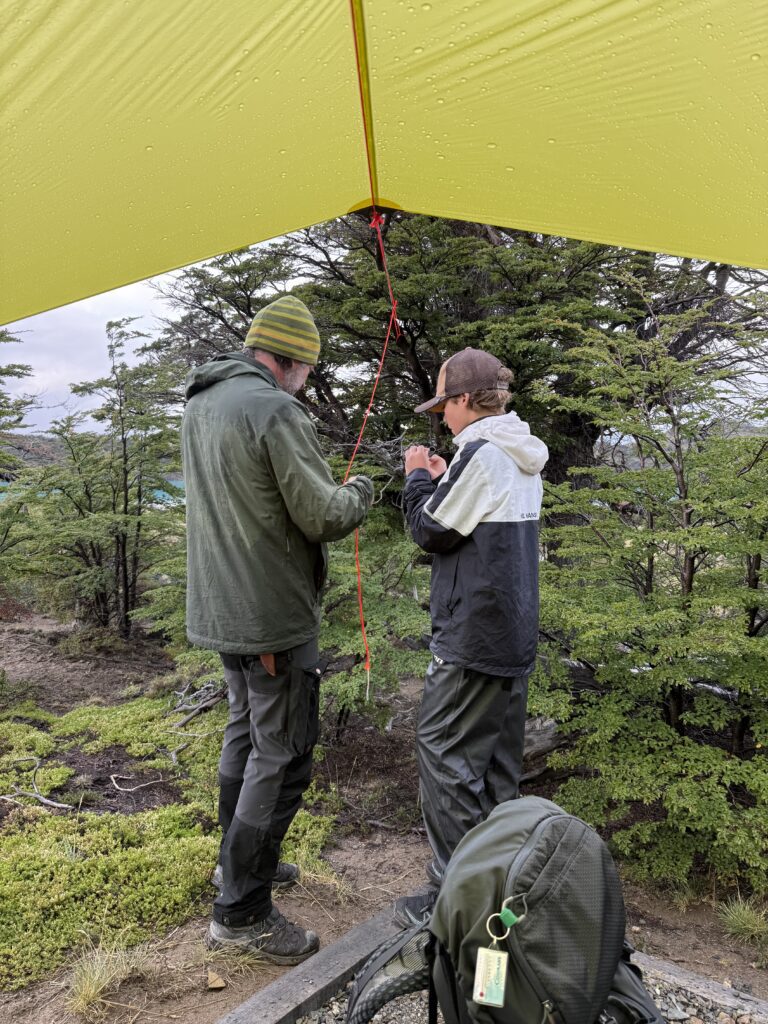
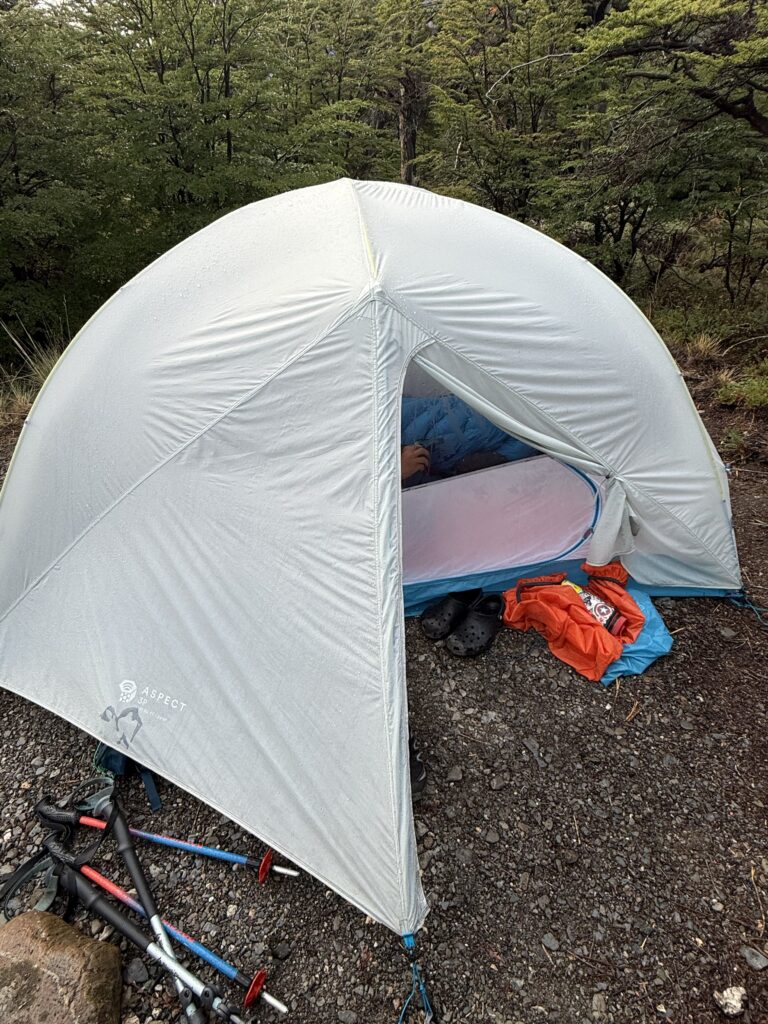
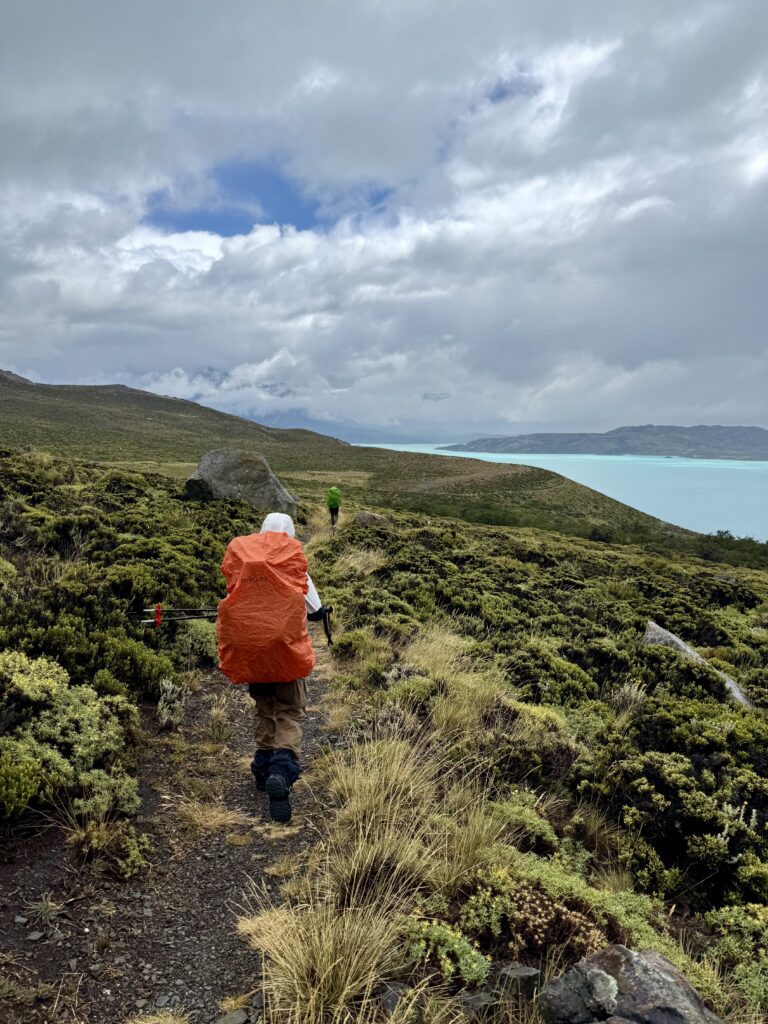
Morning brought blue skies & high spirits.
Dry in our tent, I was barely warm enough in my summer weight sleeping bag. I’m going to have to borrow Wenke’s bag for the O or I’ll freeze. Tim was up first, put the kettle on and laid our boots out in the warming sunshine. While breakfast simmered—porridge oats with brown sugar, apple, and cinnamon the kids emerged. Their tent, however, had turned into its own weather system, showering them with droplets formed on the inside from condensation, not the nicest wake-up, but again – no complaints.
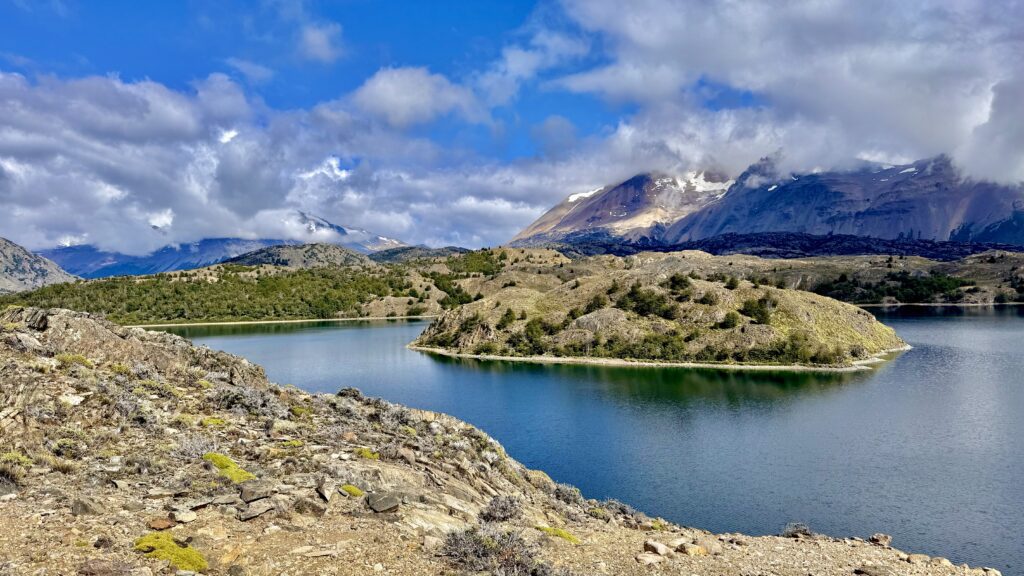
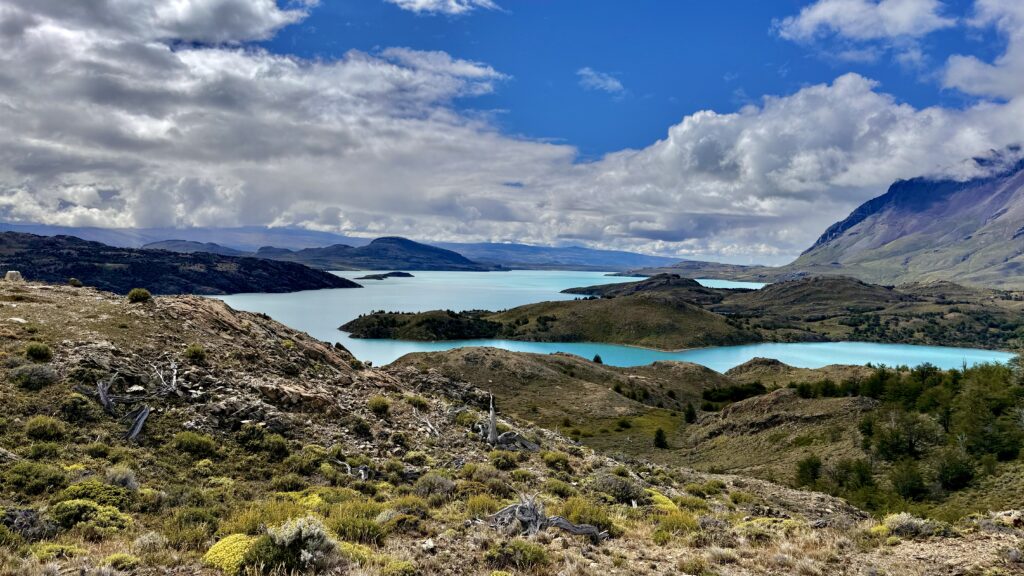
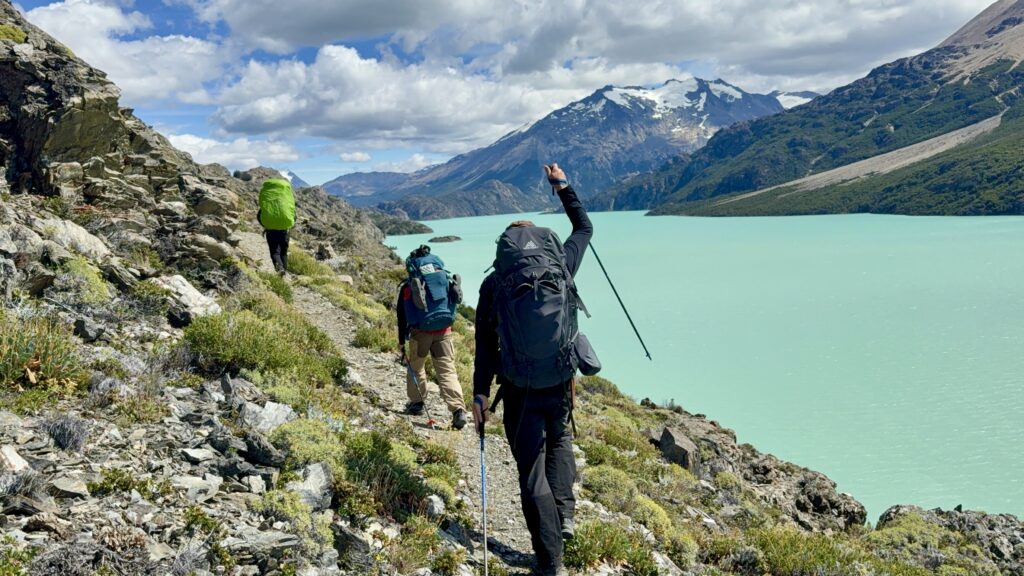
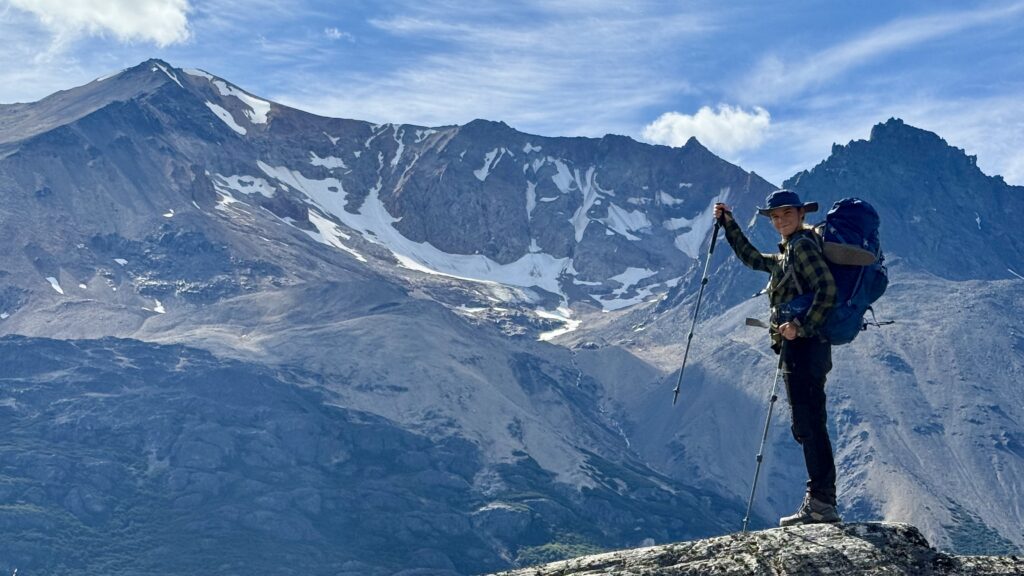
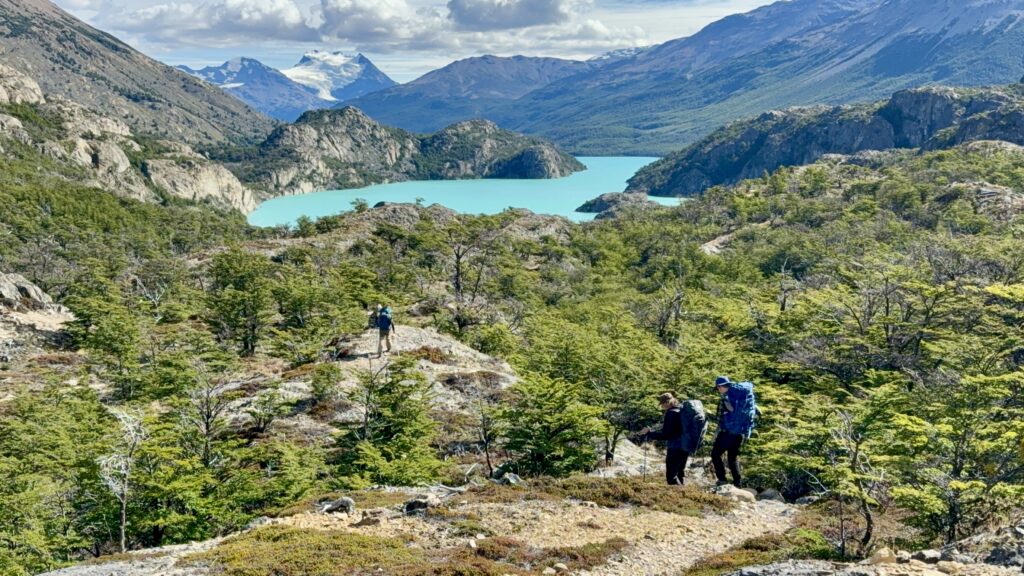
By 10:30am we were back on the trail under a clear sky. Seven kilometres of trail led us along some of the most picturesque terrain with beautiful views out over mountains and lakes to an unused hut set right on the edge of a lake so clear you could drink straight from it. Stopping there for lunch, hanging our wet clothes in the trees, boots and socks spread out to dry in the sun.
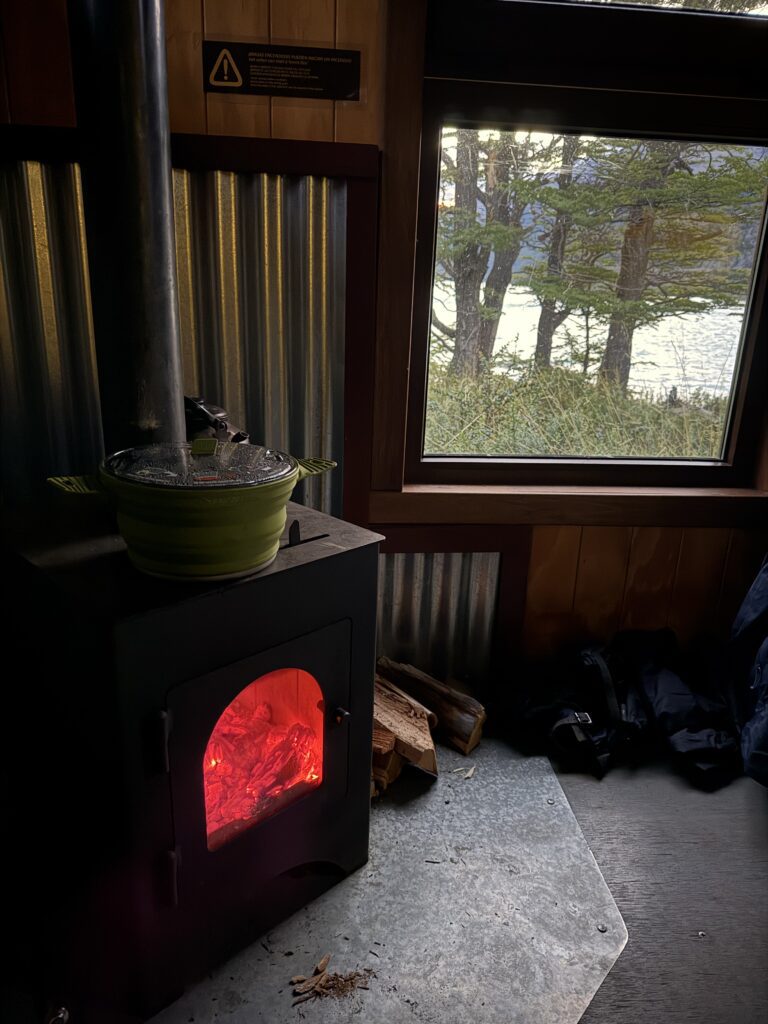
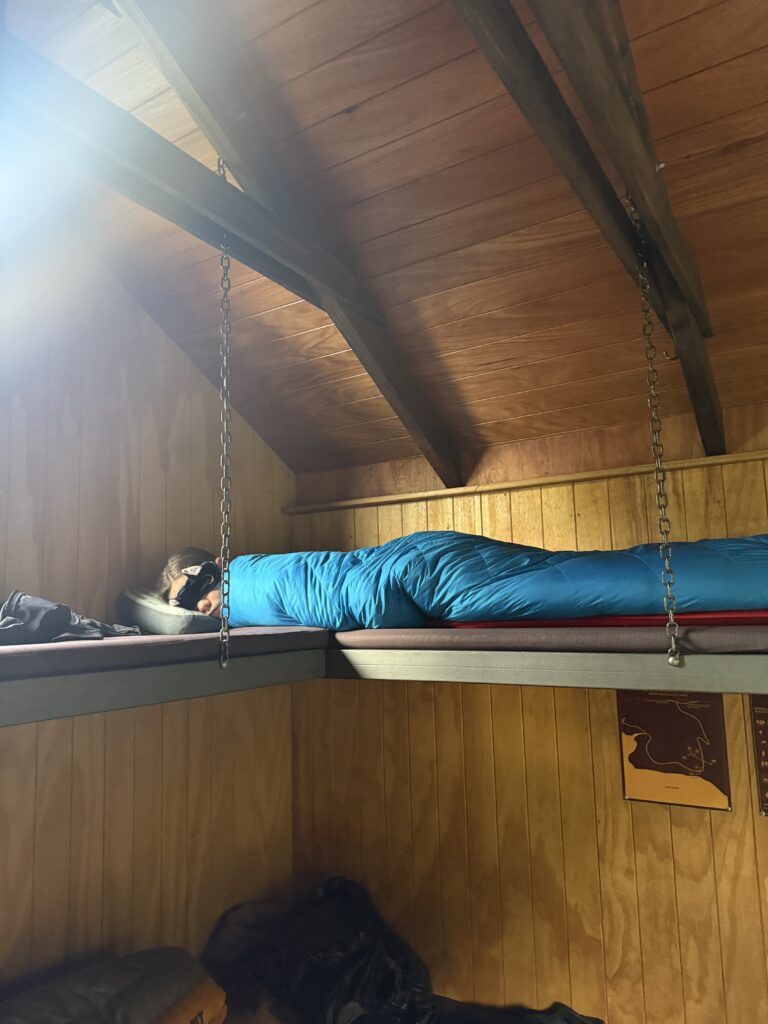
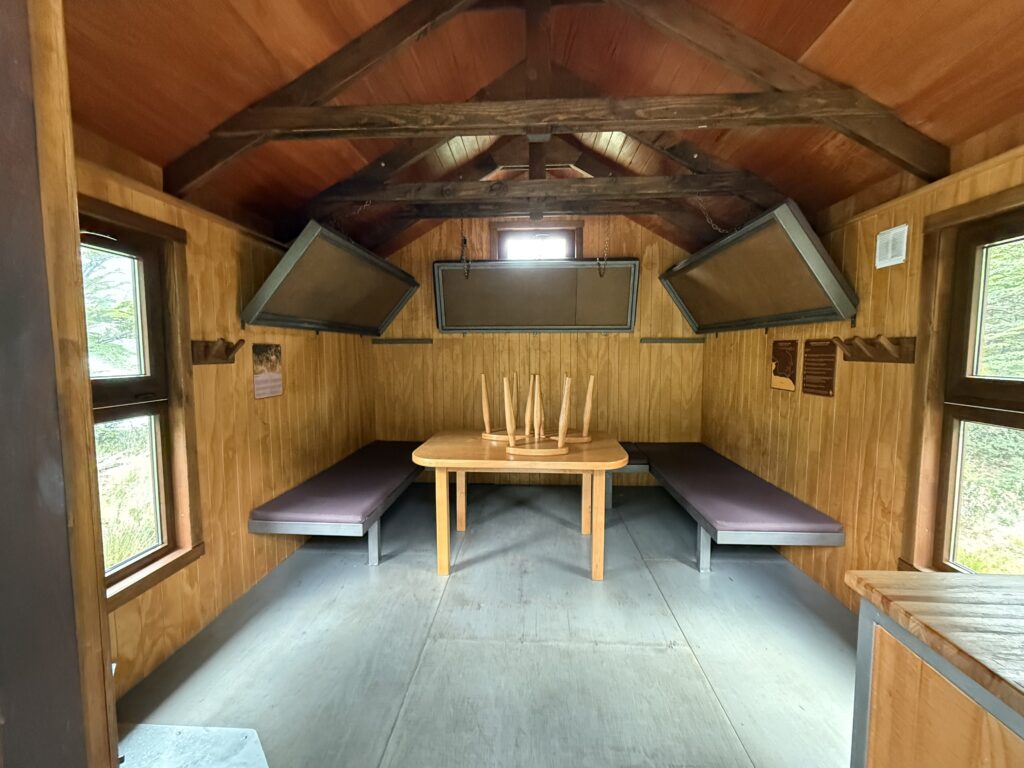
With considerably dryer boots the last 10km traced the shoreline toward the Azara Hut—the most beautiful stretch of the hike. Up and down over glacial worn rock, we arrived mid-afternoon to a bigger refugio on the shores of another lake. Six bunks, a large table, and a small wood stove, this will be our home for the night.
With the last of the afternoon sunshine and wind we dried everything else—tents, sleeping bags, clothes. Having not seen another soul since the first night and assuming the hut wasn’t booked and would be ours.
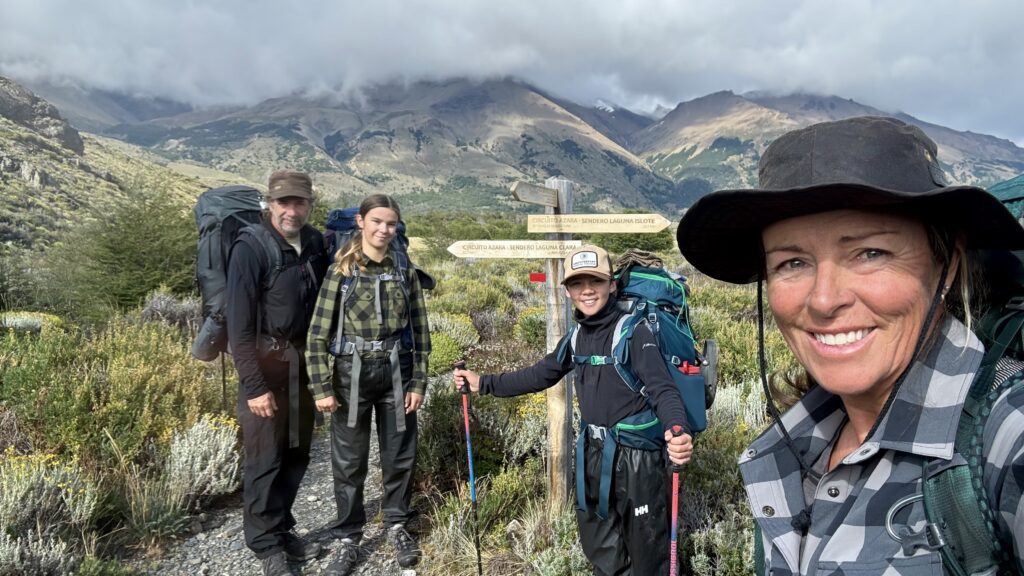
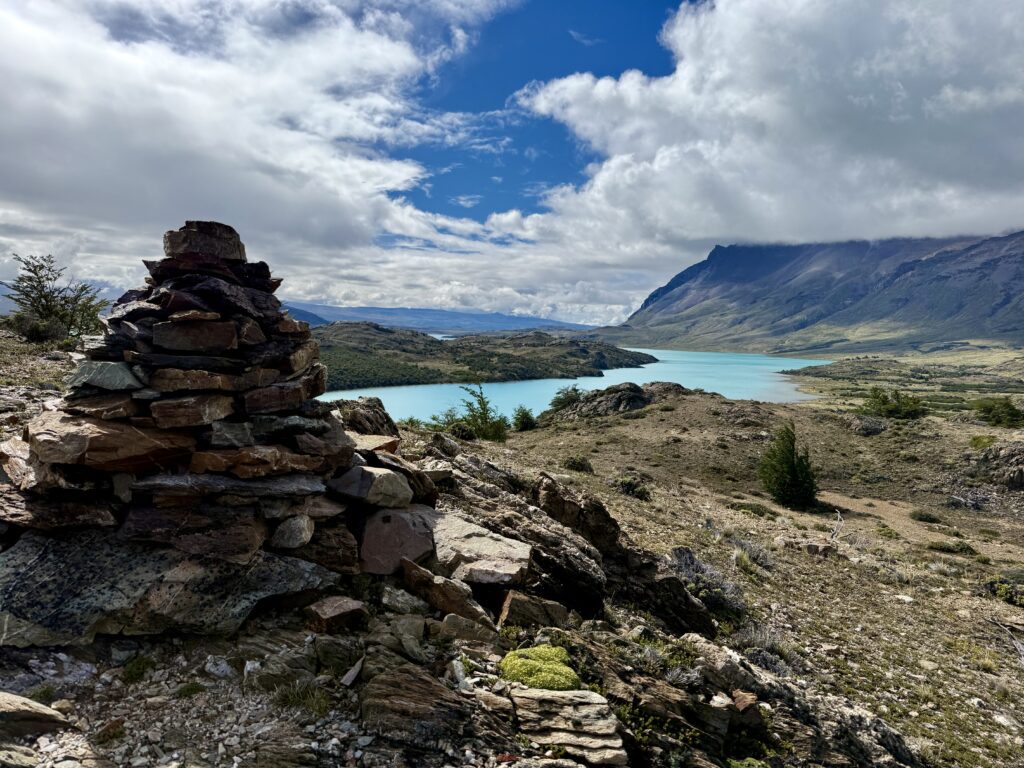
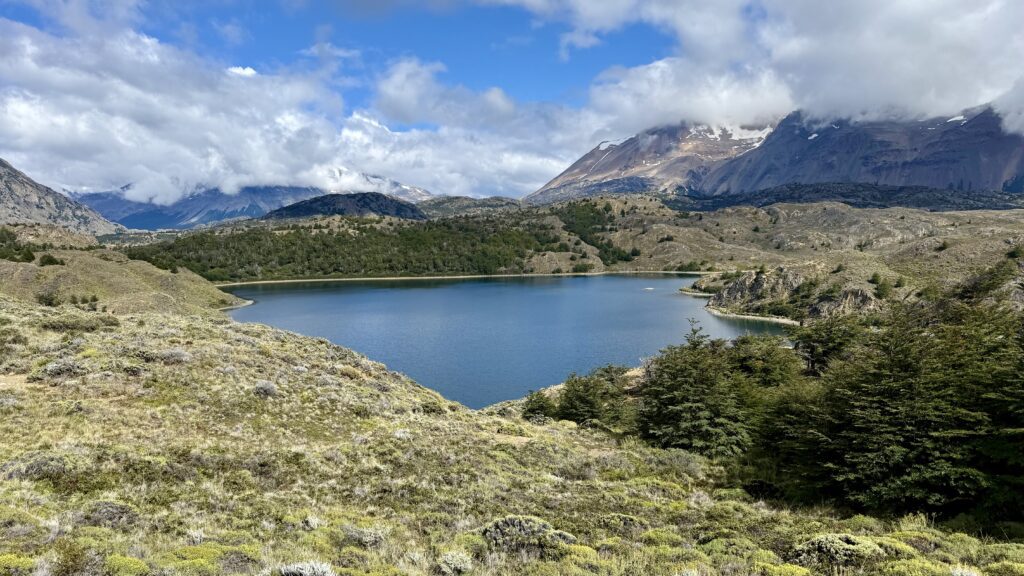
AZARA FALLS
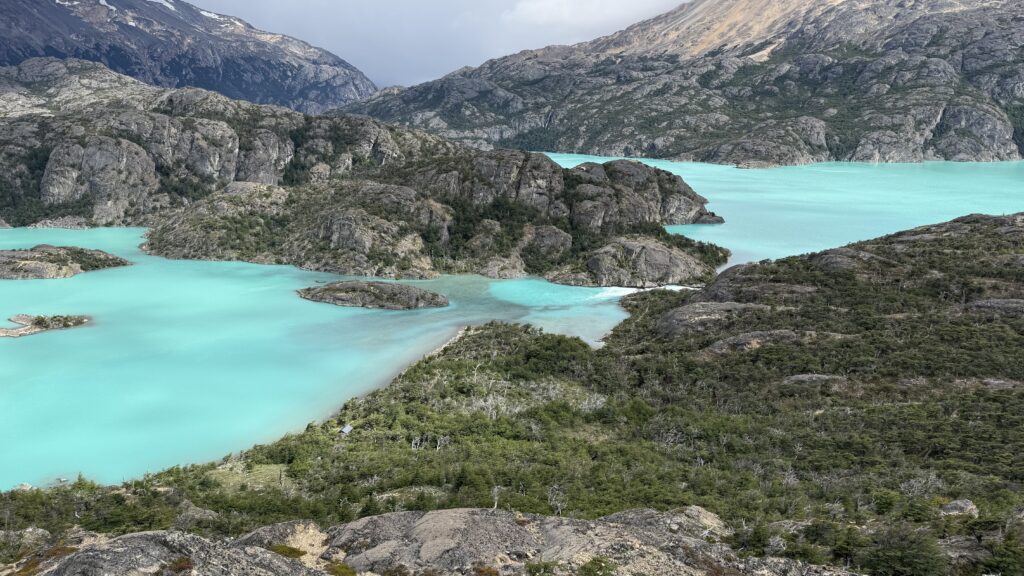
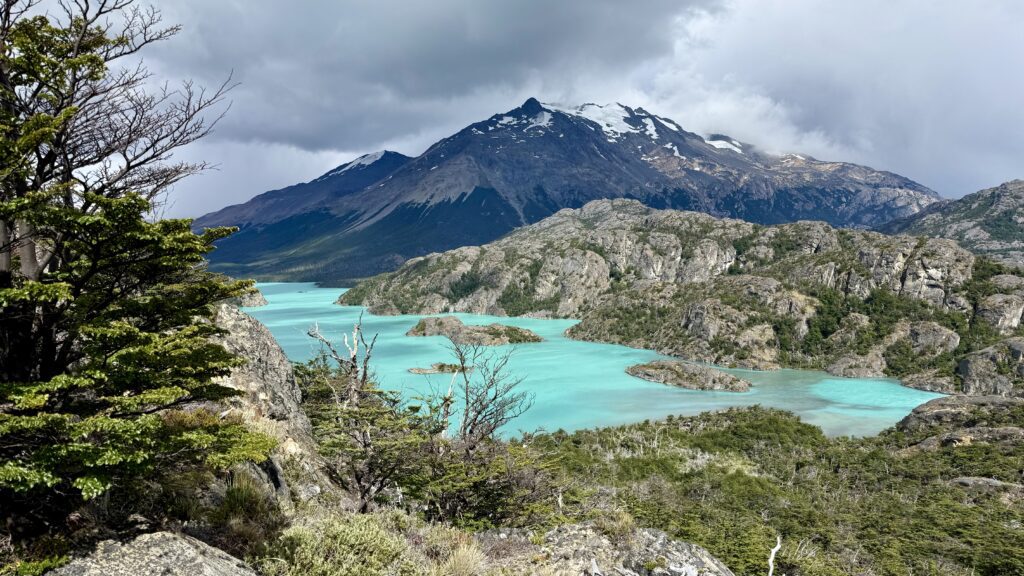
Close by were the impressive Azara Falls where one lake drained into another. The volume of water was astonishing—clear, icy blue, surging over the rocks with relentless force. Mesmerizing and powerful in equal measure.
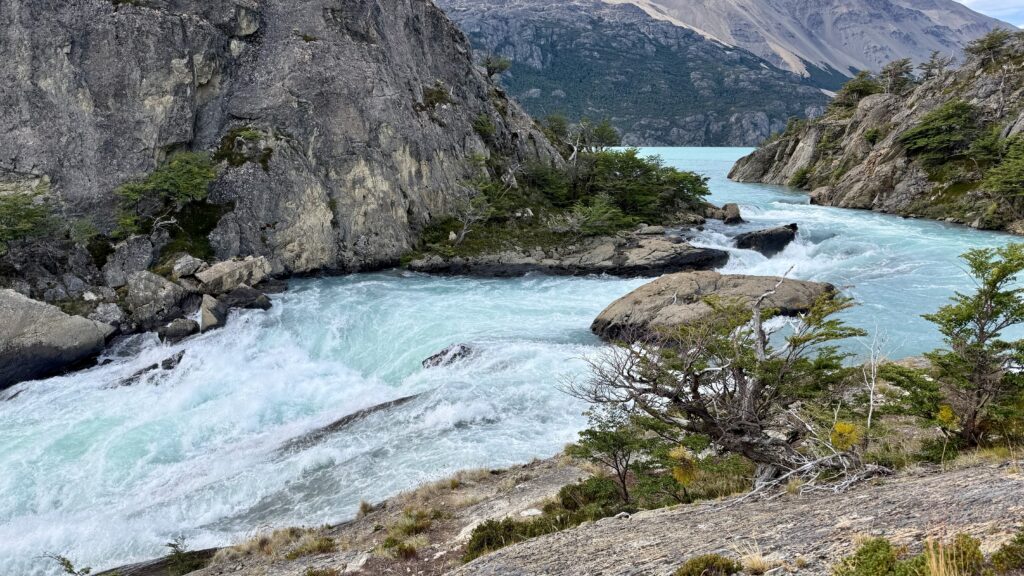
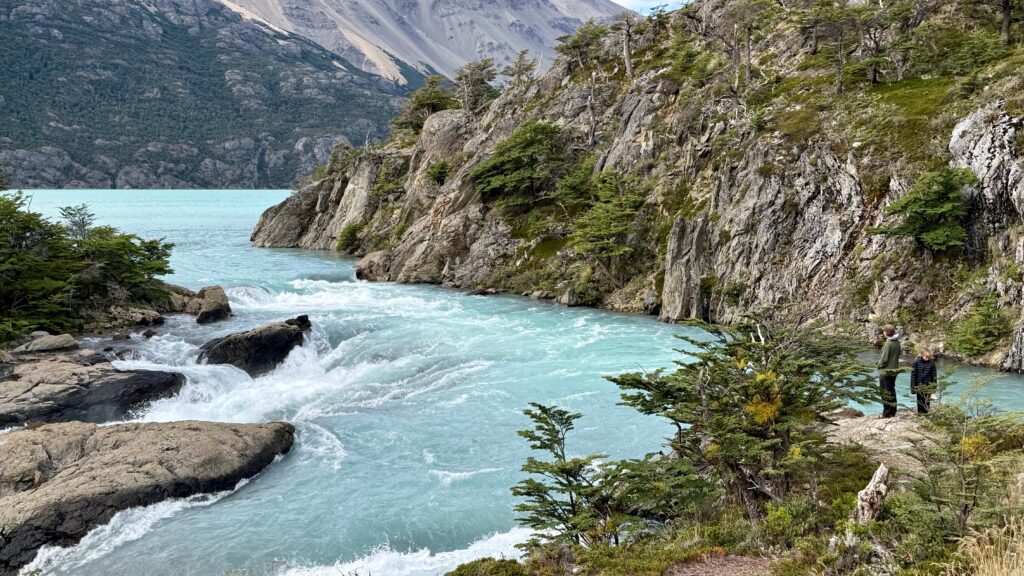
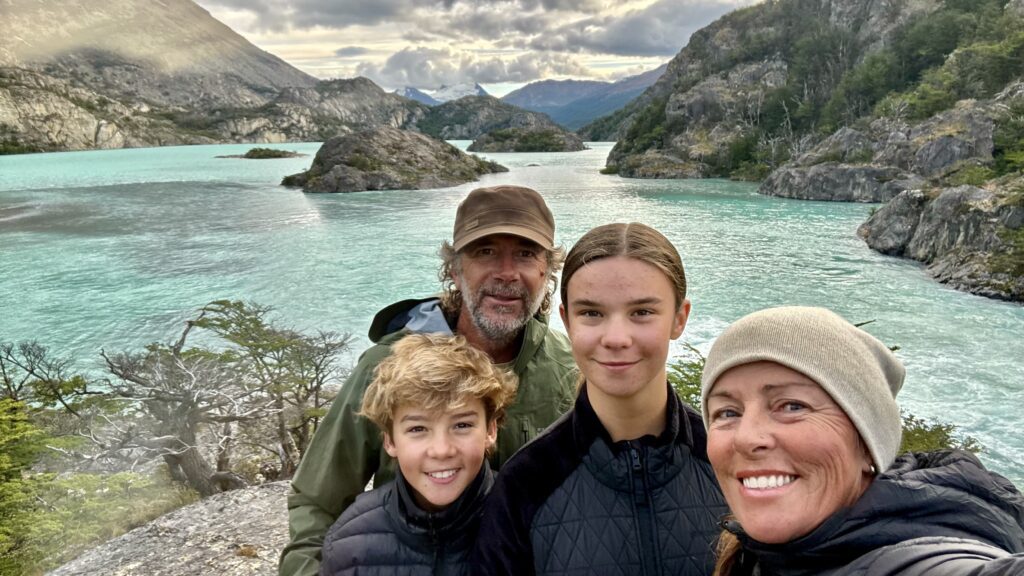
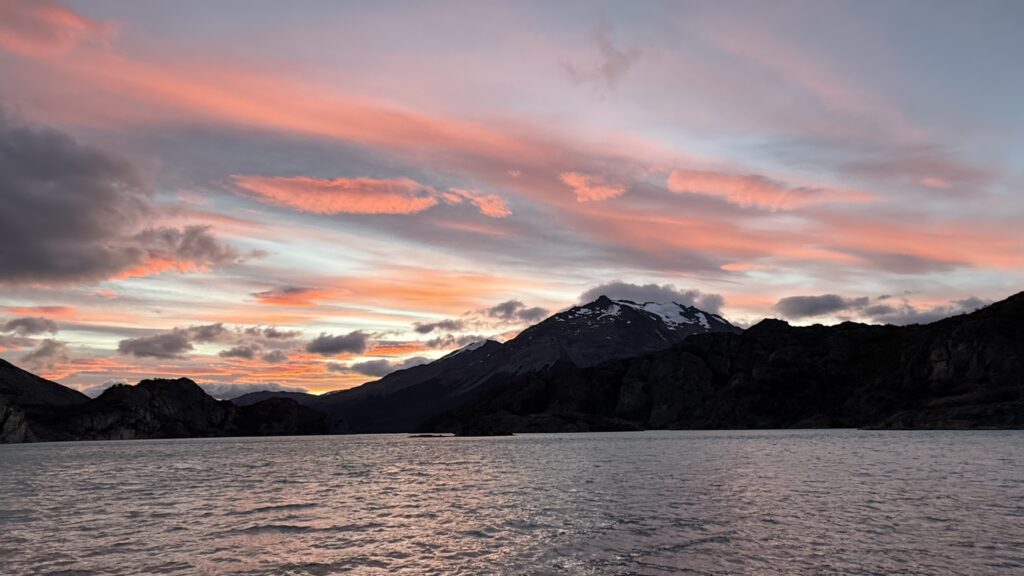
As the sun dipped behind the mountains, the temperature dropped quickly. Inside our cozy cabin the fire crackled. Dinner was another round of soup & mash, hot chocolate & cookies for desert. By 8pm, it was clear no one was going to claim the cabin and evict us. I climbed into my sleeping bag grateful.
DAY THREE
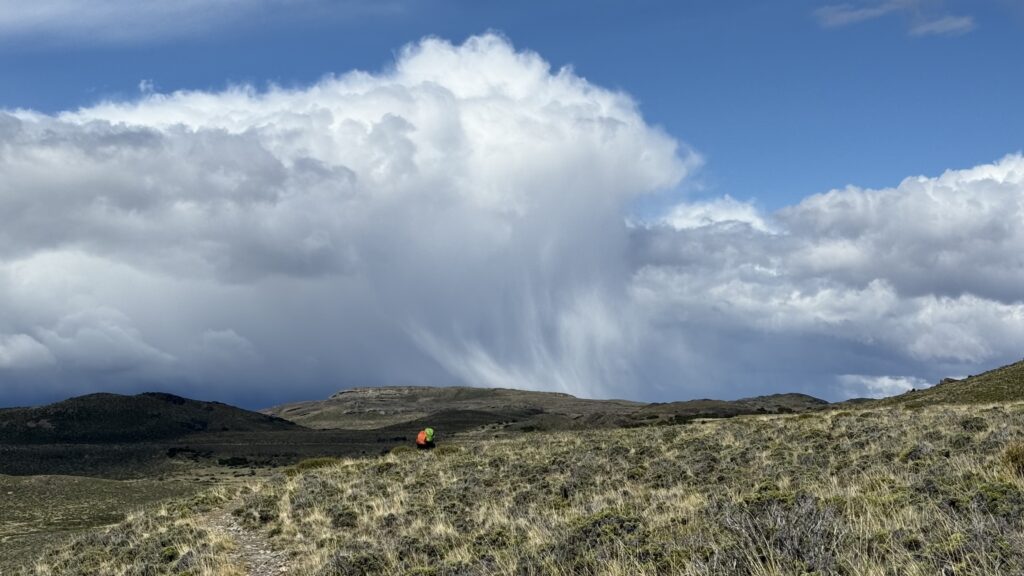
Our final day began under watchful eyes—another owl perched quietly in the tree as we shouldered our packs. Unafraid and curious, he sat there watching us watching him for a good five minutes before we climbed from the hut up to the main trail that would be our final 24km hike out to the truck. Crossing varied terrain, over rounded rock fields dotted with clear tarns that wrapped around the base of a much larger mountain. Our path ahead was clear, but the skies weren’t. Rain clouds unloading curtains of rain that drenched our trail. Up high we could see eight Andean condor circling inside the wet air, not sure why. Gliding effortlessly through mist before later flying by then landing just up from us, wings spread wide, turning on the spot to dry in the sun.
The last hour was rain again. Not wanting to play the same gambling game again, Jaxon and I pulled on rain pants early. Tim and Charley were sure it was just a quick shower. But it wasn’t. By the time we reached the truck, they were soaked, but the sun had turned on the heat so nothing really mattered any more.
Leaving this area we drove to another part of the park for the night in hopes of catching up with either Sara & Huw or the French family. Our plan was to do another 1 night, out & back hike at the other end of the park. But changed our minds with the weather forecast which was for constant rain.
THE MAJORY GLEN
From the park, we made our way out to the East coast, then south toward Río Gallegos—one of the last full-size towns before Ushuaia. A brief stop for diesel, nothing more.
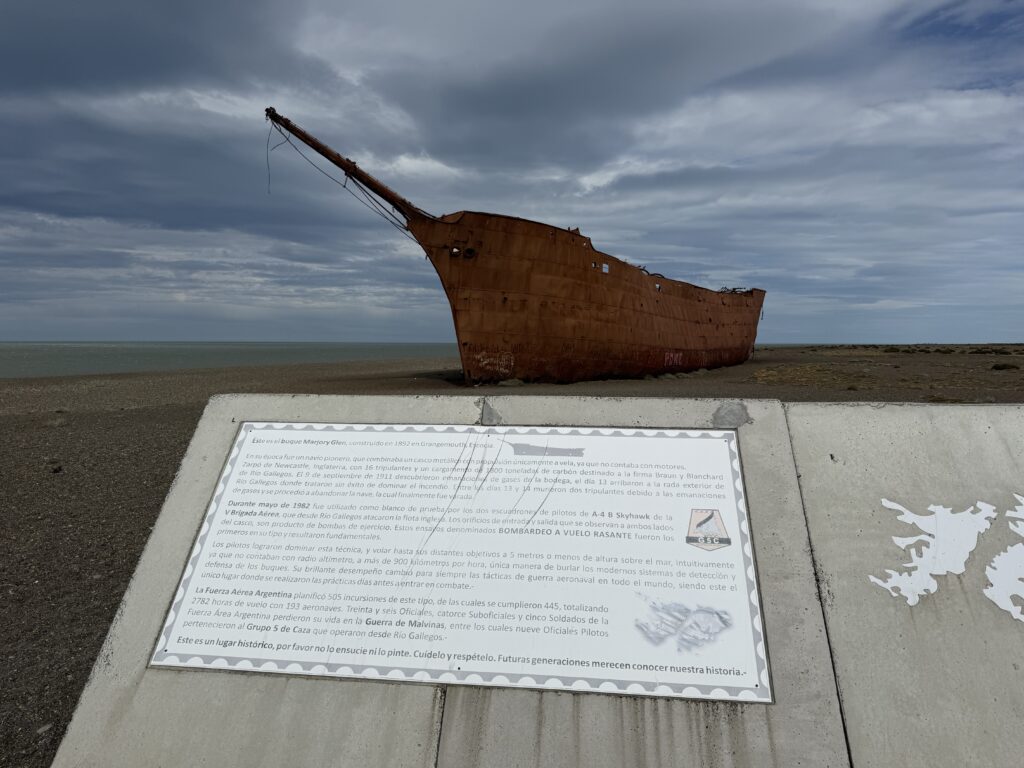
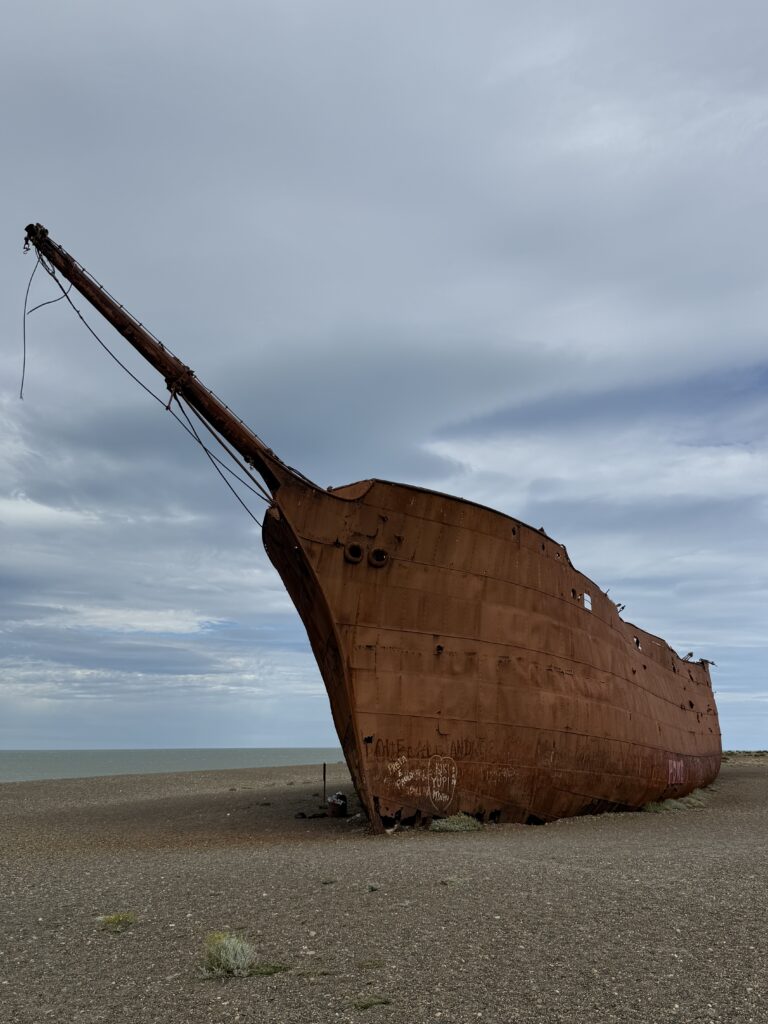
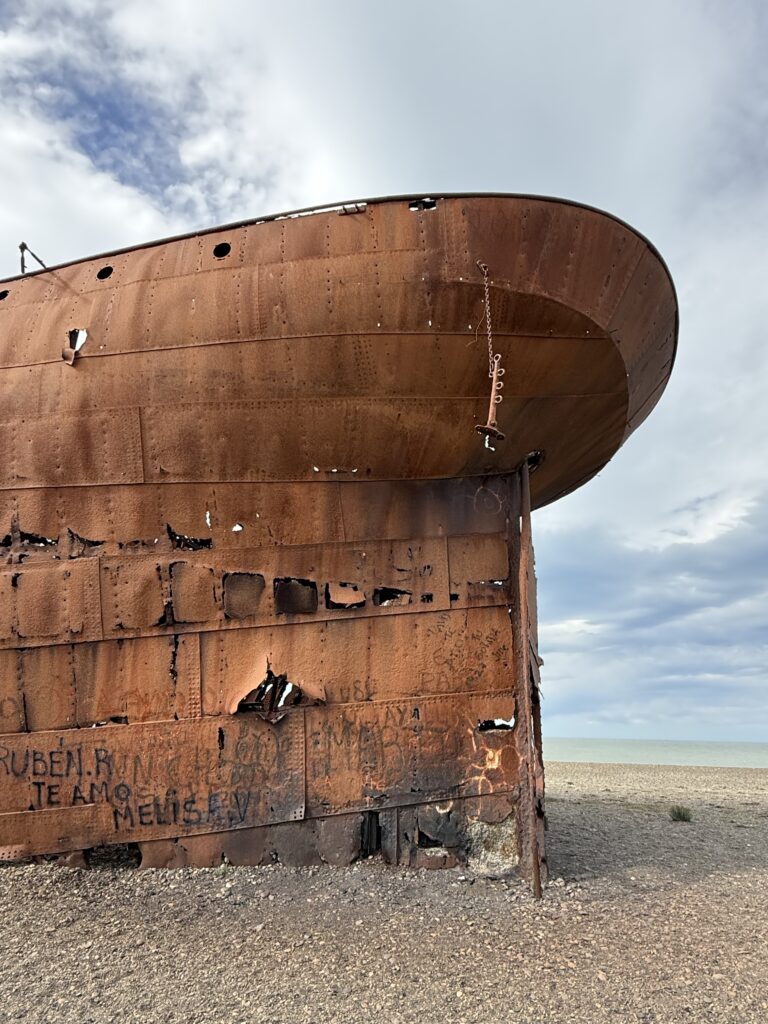
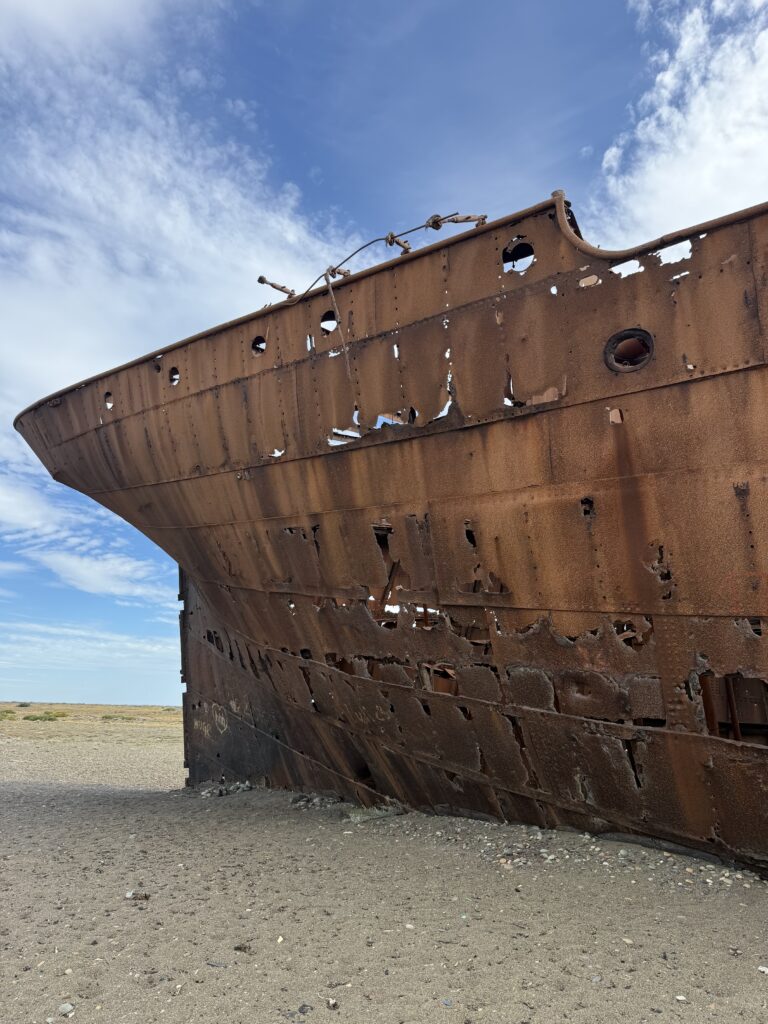
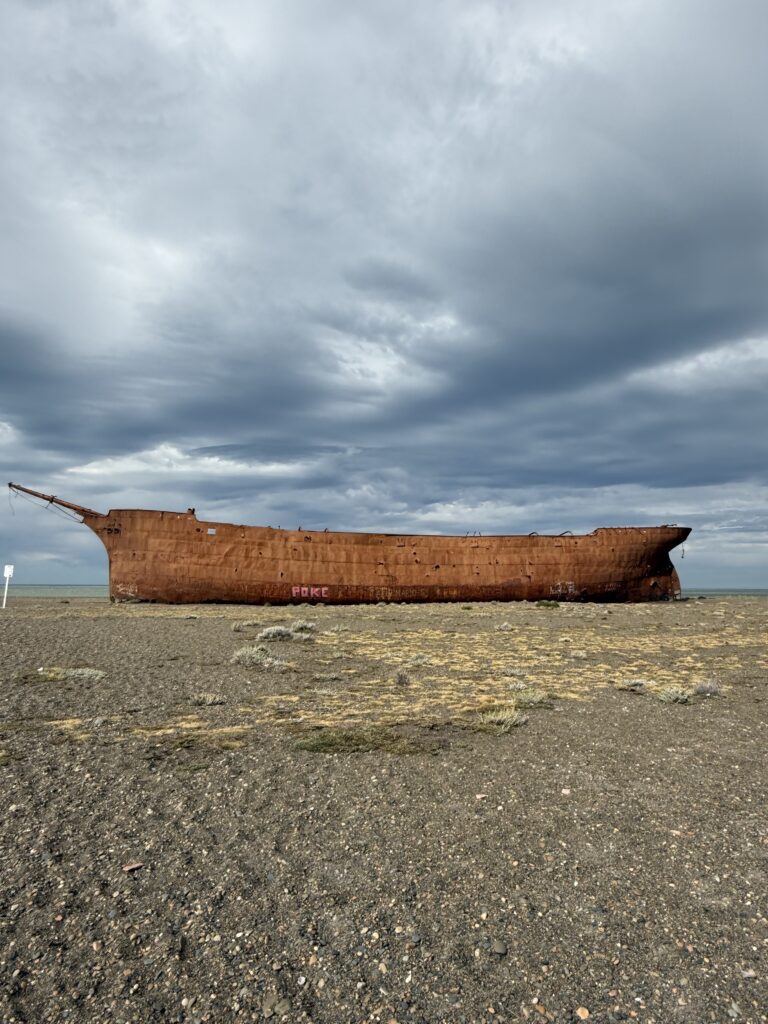
Just outside town, we visited the wreck of the Marjorie Glen. Built in 1892 in Scotland as a steel-hulled cargo ship, she ran aground in the early 20th century. A victim of Patagonia’s unforgiving winds and waters. Today, her rusted hull lies half-buried along the shoreline. Her rusting skeletal remains were also used for target practice by pilots from the Falkland Islands.
From there, we pushed south along the east coast. Passing endless hours driving through a landscape that barely changes—dry, wind-scoured grasslands towards Ushuaia.
One Response
Great story Sarah. The family are a team. Wonderful. That old hooty owl watching it all..:)
Argentina. The horror stories of the past that don’t end!!
https://www.youtube.com/watch?v=3lI-bpYJk1Q&list=RD3lI-bpYJk1Q&start_radio=1