
BLOCKADES #2 and #3
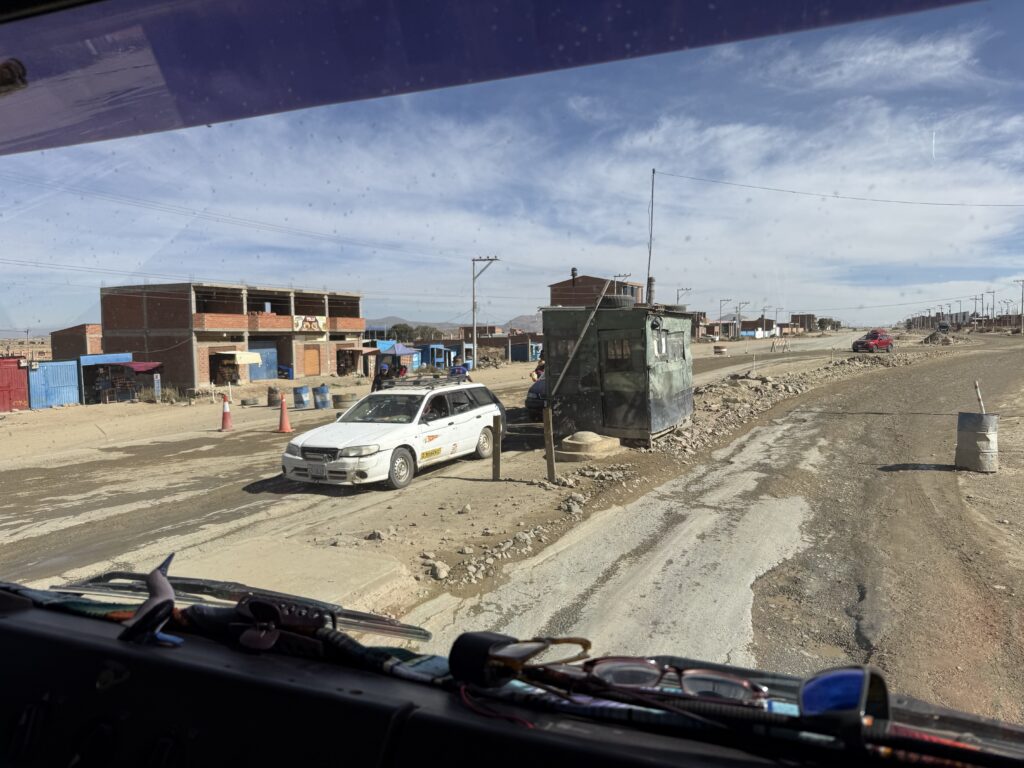
10-13 May 2026. From last nights camp on a quiet patch of land far from the road we watched the sun go down and light up the sky brilliantly. Back on the road early the next morning we enjoyed roughly twenty kilometres of smooth pavement before, at the toll booth, it abruptly turned into what was supposedly a temporary construction detour. For the next twenty kilometres we rattled through thick dust, brutal corrugations, heat, and relentless vibrations. Judging by the total absence of machinery or workers, construction looked long abandoned. It could be months — maybe years — before the highway is completed.
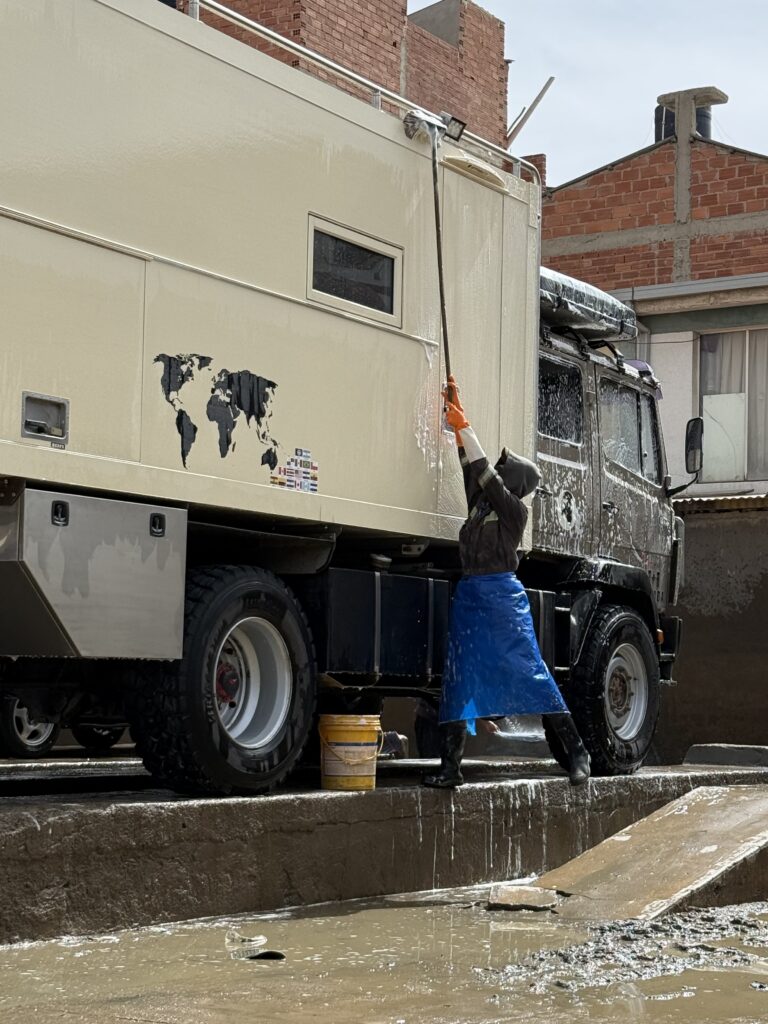
In the next town we stopped to wash the truck, watching layers of desert dust and salt finally disappear beneath the spray. Nearby we found a roadside BBQ stand serving pork, rice, and beans, where the owner warned us the road ahead was blockaded and likely would remain so for days. He advised us to avoid all roads toward La Paz.
Naively optimistic, we kept going anyway.
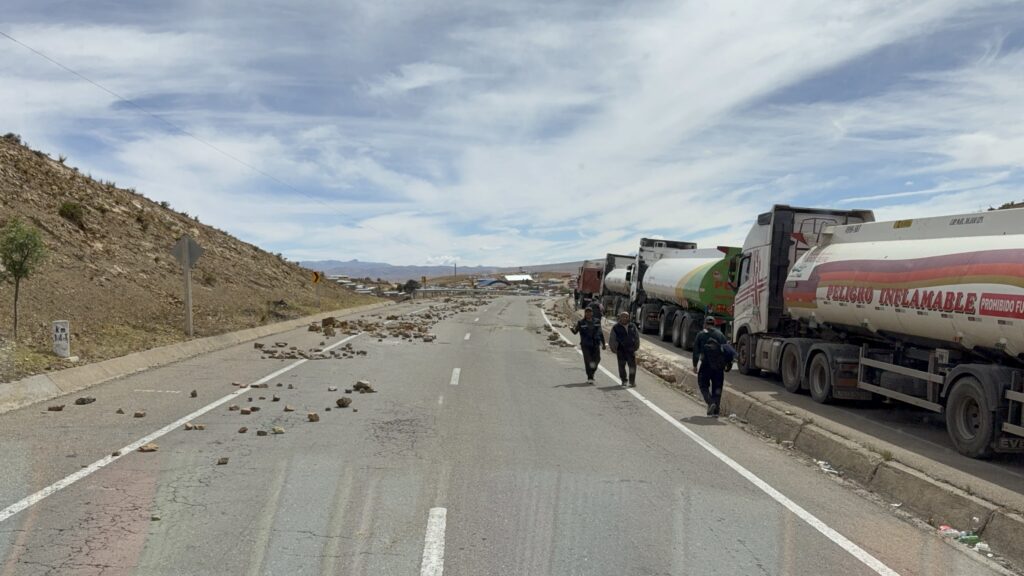
At the first blockade we drove cautiously past parked trucks toward the front of the line, introduced ourselves as tourists, and politely asked if we could pass. To our surprise, they waved us through.
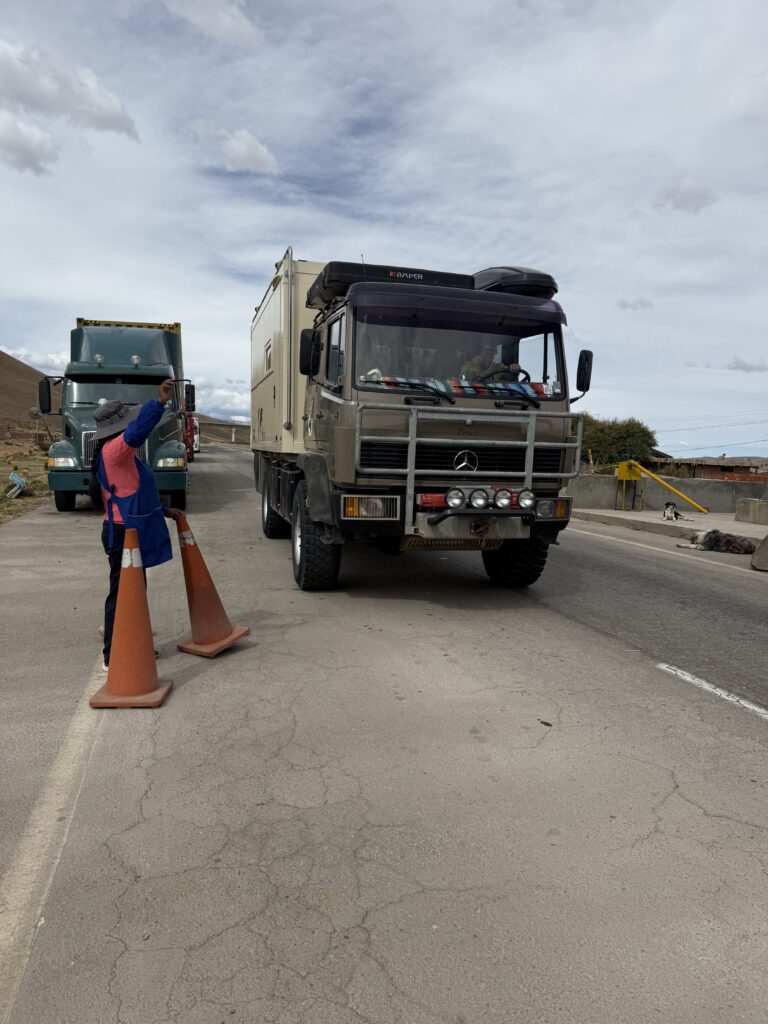
Five kilometres later we reached the next blockade.
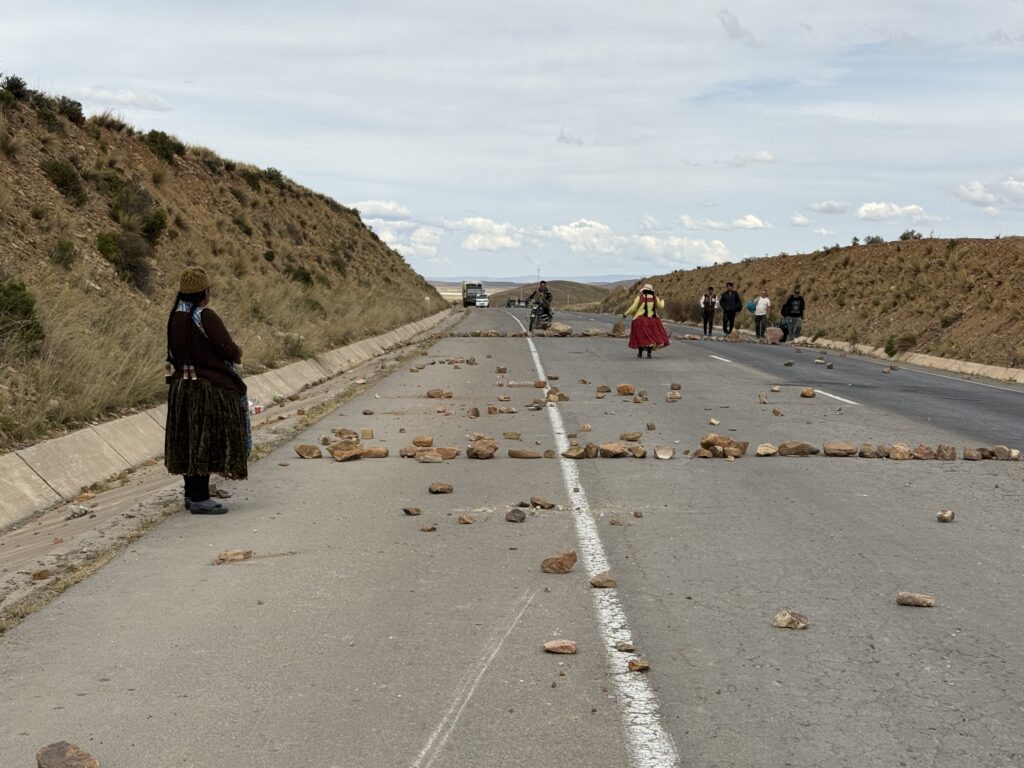
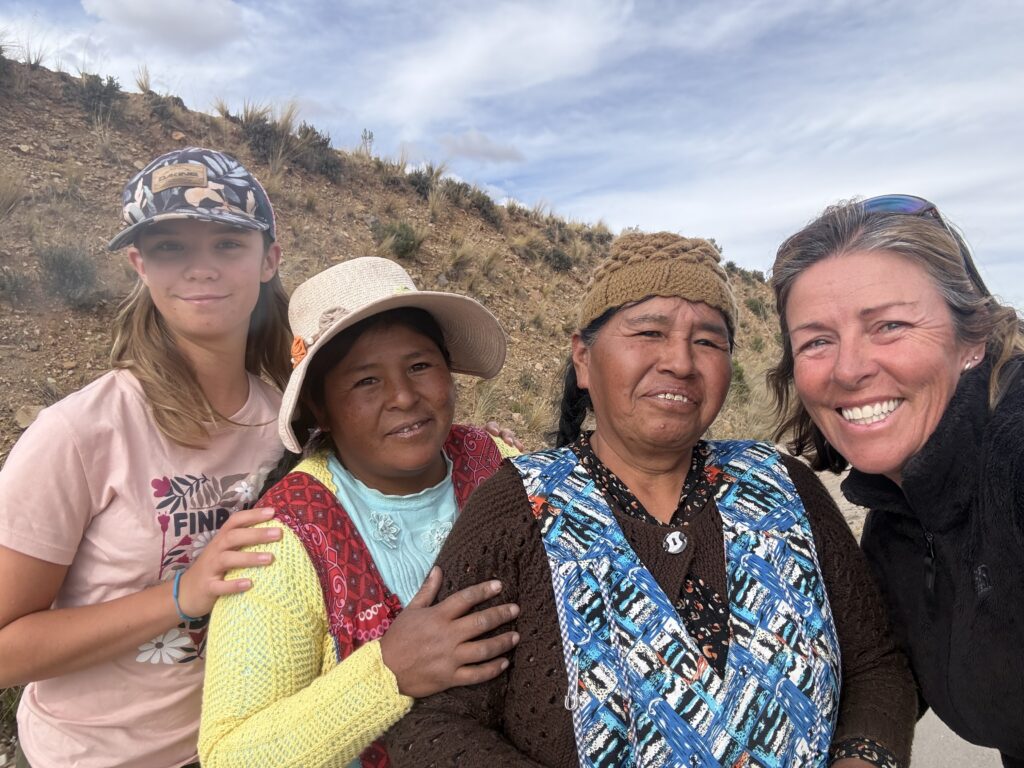
THE ROCK SLINGING LADIES
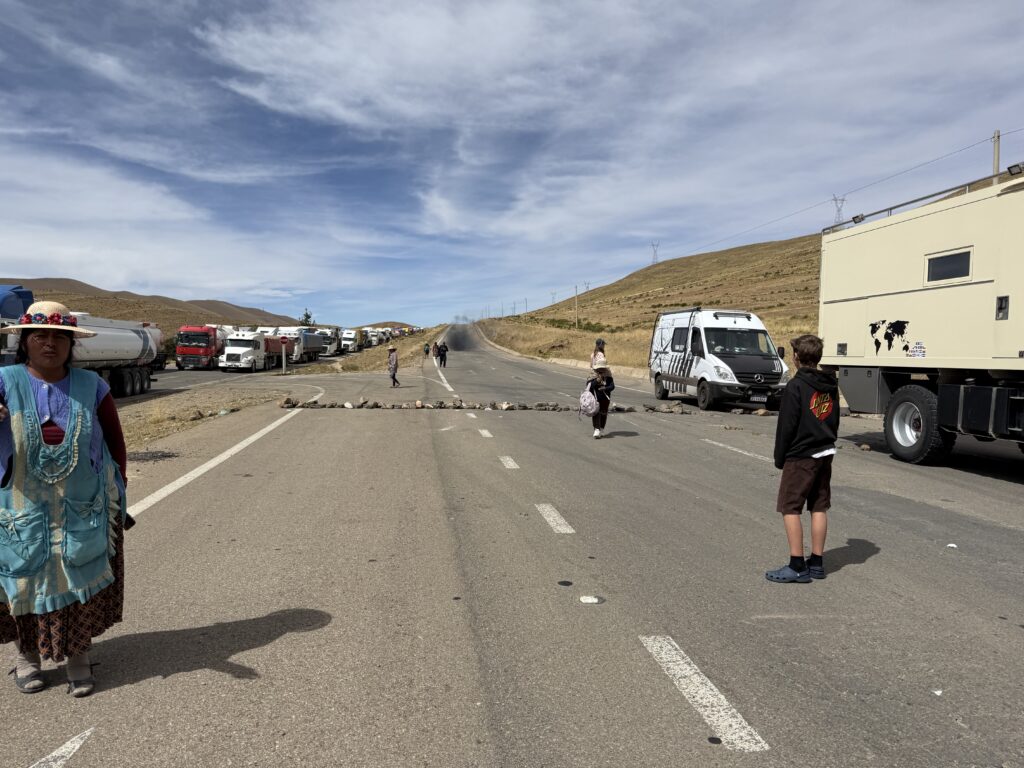
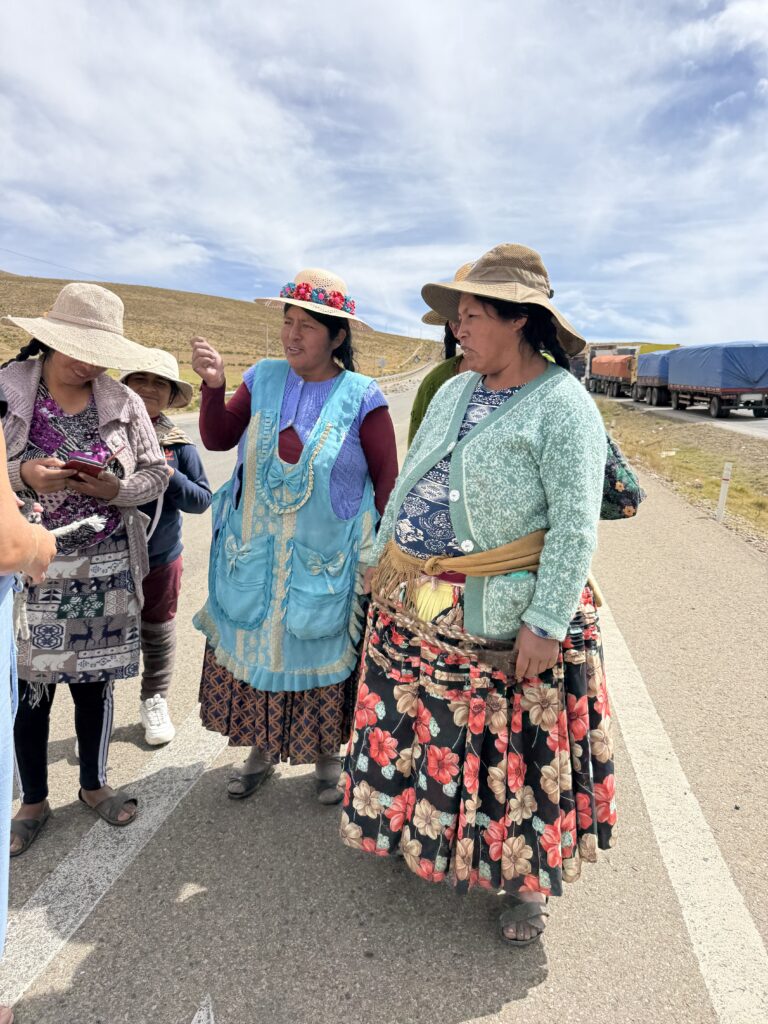
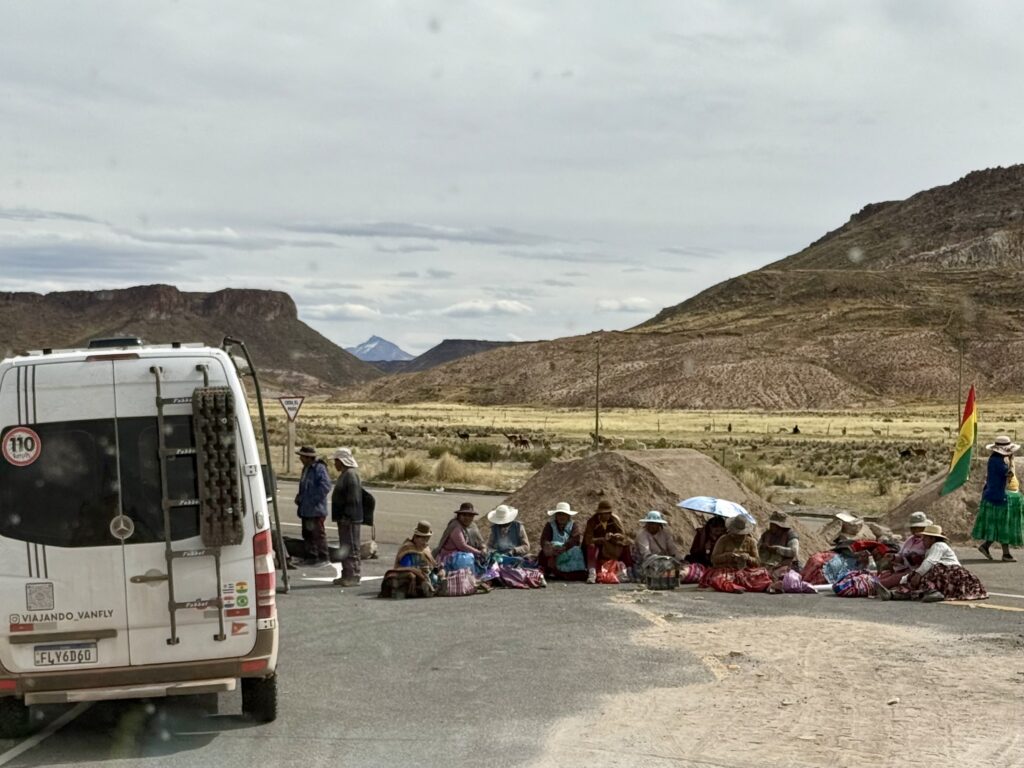
This one was controlled by two women calmly hurling rocks at any approaching vehicle. They used long crochet slings that launched small rocks with surprising speed and accuracy. Pedestrians, however, passed freely. I walked up to speak with them, and they explained their frustration with the president, poor road conditions, fuel shortages, and the rising cost of living. The road, they said firmly, would not reopen until 5pm. I stayed and chatted with them for a couple of hours. The older lady, a year younger than me, spoke slowly, the younger at 40 was already a grandmother of a teenager, spoke so fast I could hardly make out a word.
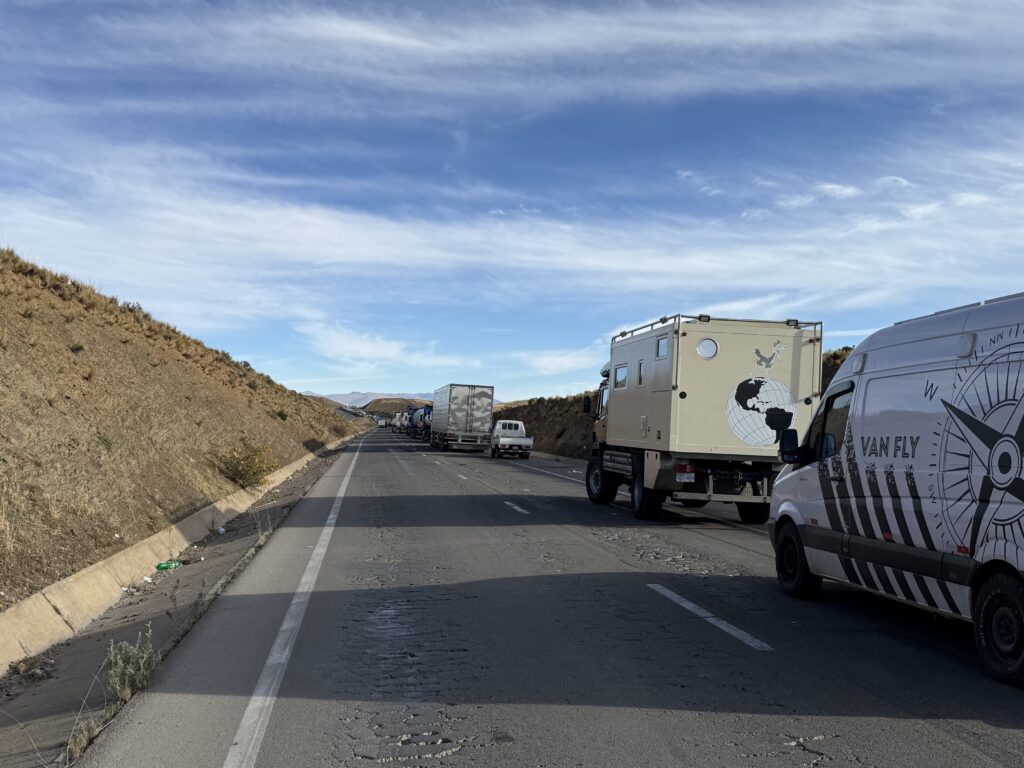
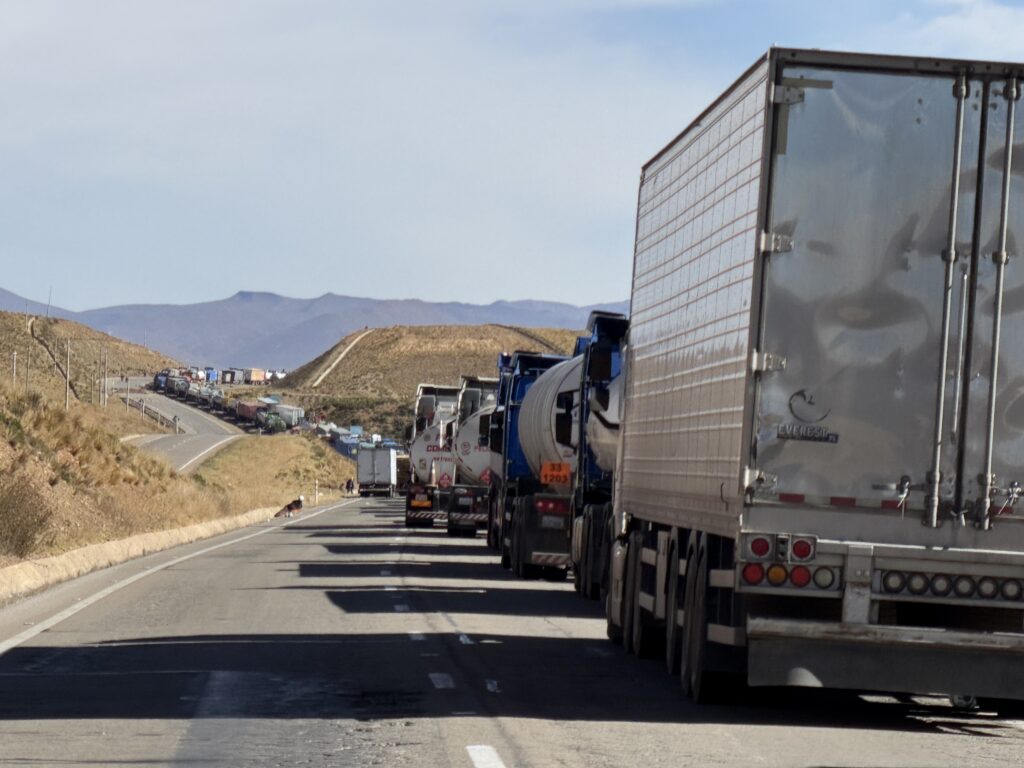
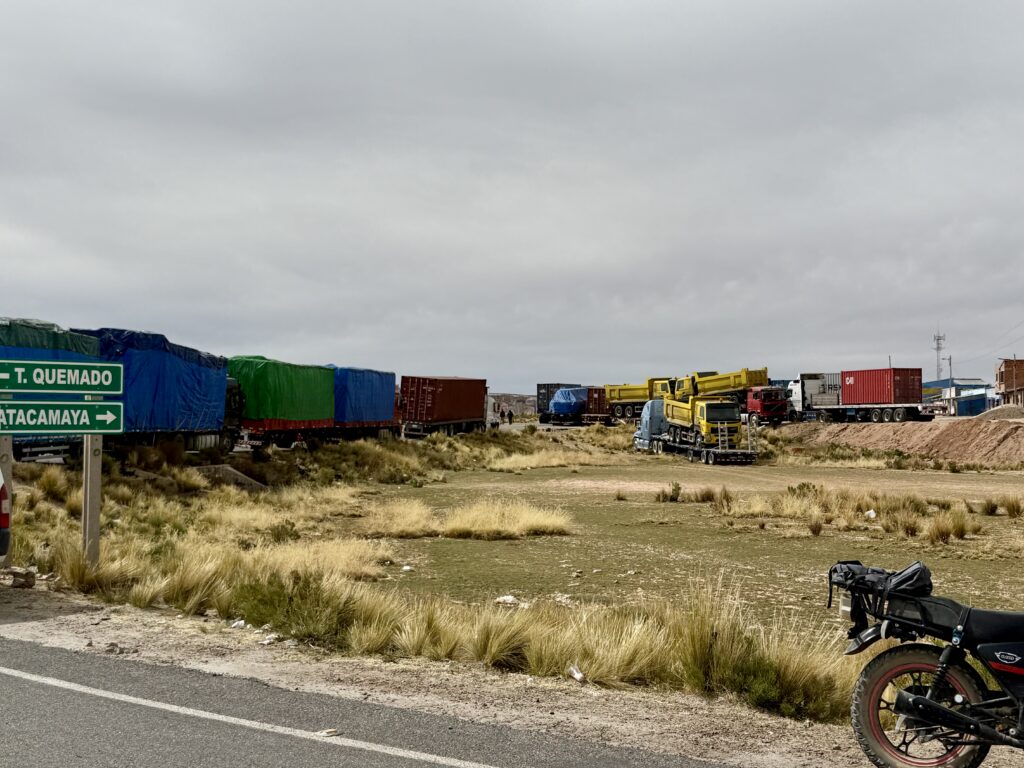
At 5pm it did open — briefly — only for us to encounter yet another blockade stretching further than we could see.
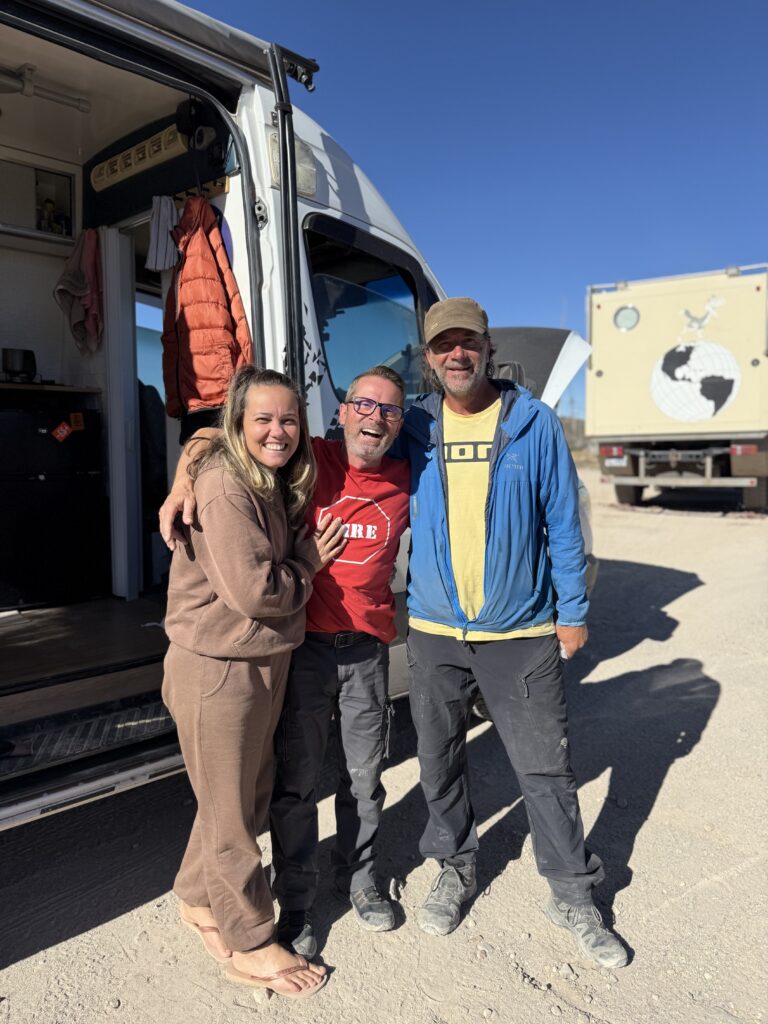
The next vehicle to pull in behind us was a couple, Marco and Julia from Brazil travelling in a Sprinter-style camper on an extended road trip around South America, also on their way to La Paz. Marco spoke English and Spanish so he and Tim walked the long line of stranded trucks gathering information. Rumours suggested the road might reopen at midnight.
It didn’t. We slept in the line up.
The following morning brought more waiting, more conversations, and less hope. Eventually we decided to abandon the idea of remaining in Bolivia entirely and head west into northern Chile before continuing north into Peru.
Marco and Julia agreed and decided to join us.
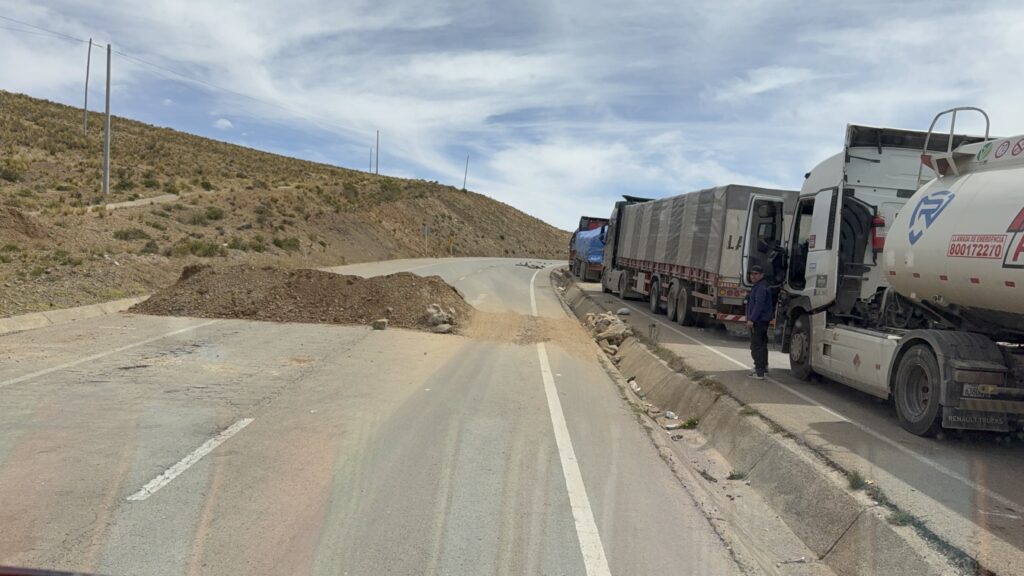
Out of the big line up we then had to pass the next blockade to be able to drive through a small village. This one wasn’t nearly as friendly as the last. It wasn’t until I showed them photos of the other two ladies did they mildly warm up when one recognized her sister.
I took these photos without them knowing before they reluctantly let us pass.
BLOCKADE #4
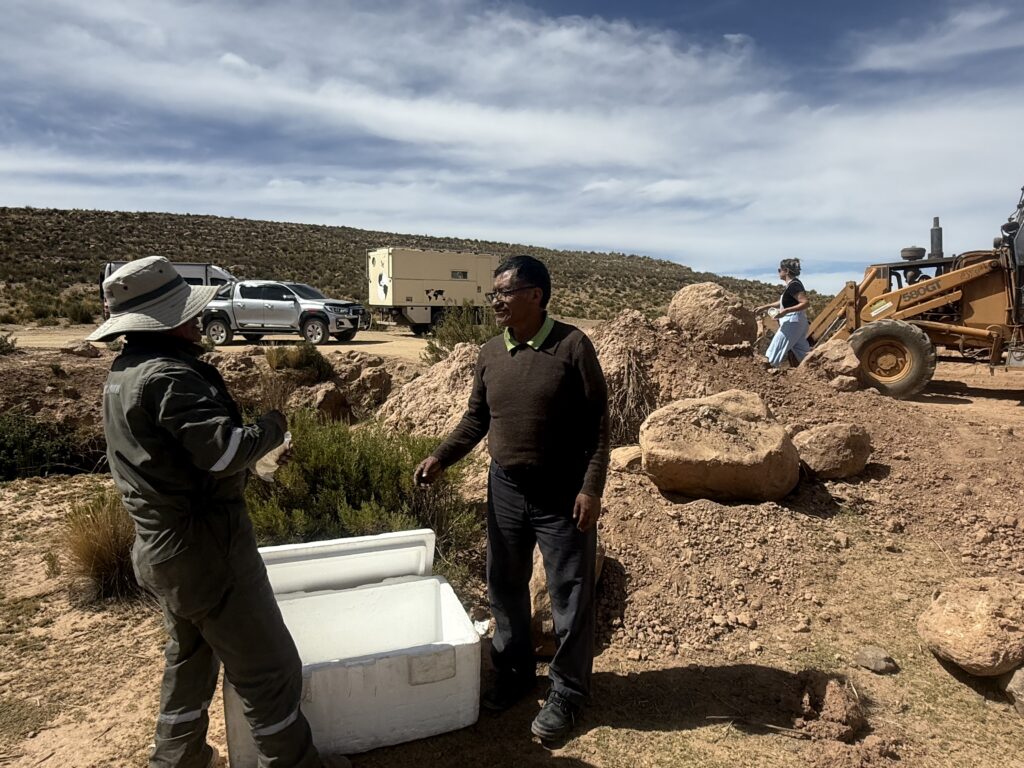
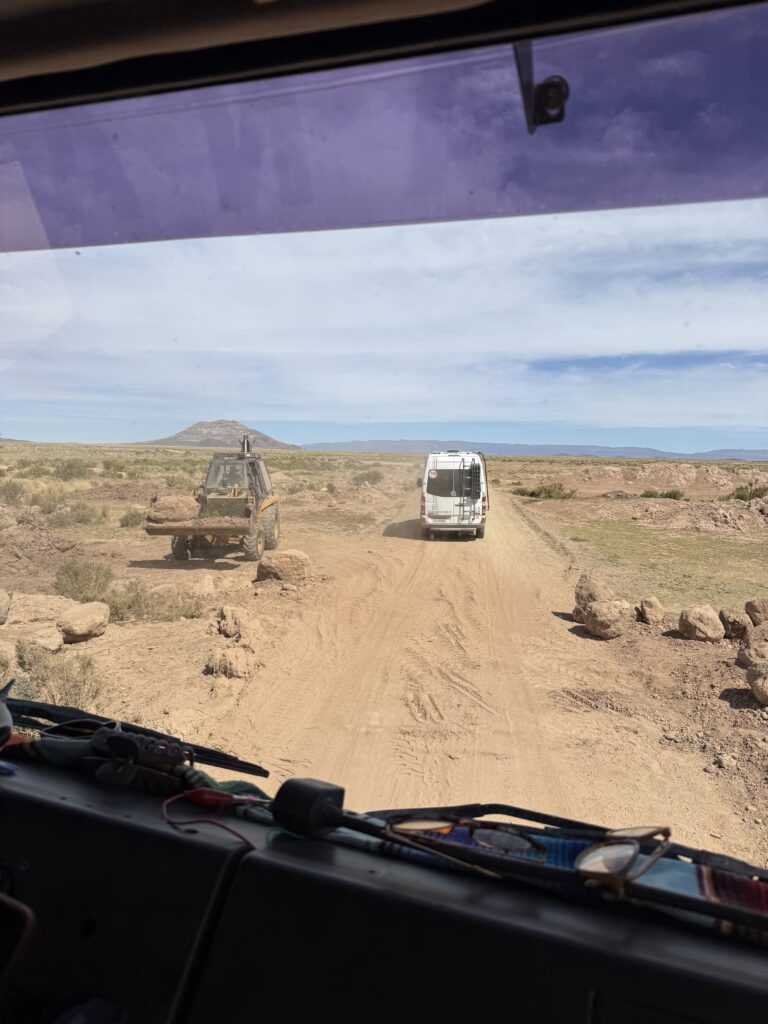
Once off the highway and through the small dusty village we drove 30km to the next roadblock. This was kinda funny as this man had used his backhoe to close off the road. Saying we can pass, but first have to buy some of his cheese! I thought I understood what he said first time, but didnt’ understand because it didn’t make any sense. But there he is, with his cooler of cheese.
Once we paid, he moved and let us pass. His cheese, while not our taste, Marco & Julia enjoyed it.
BLOCKADE #5
Our dirt road eventually lead us to another dirt intersection where many people had gathered. Rocks, tires and wood planks across the road. We parked and walked up to the men. Marco introduced us, explained our situation and asked if we could pass. The conversation resulted in the men saying they believed the previous road might reopen briefly later that evening. Feeling optimistic once more, we debated our options, then turned around and returned to the village we’re just come from to wait. Thankfully we didn’t have to buy another cheese round to pass.
Back in the village we parked off to the side in an empty space strewn with garbage, made dinner and waited.
Five o’clock came. Then seven. Then nine. Midnight.
Nothing.
The next morning we awoke to see the protest had grown significantly larger. It was obvious the road was not reopening anytime soon. Damn it. I’d had enough and said it was time to leave. Mcarco once more went to chat with the locals who simply said NO.
It was time to leave.
Retracing yesterday’s dirt track, no cheese selling farmer with the backhoe today, we returned to the previous blockade where we’d originally been granted passage. But overnight the numbers had grown dramatically here too. Shit, I’m hoping we haven’t missed our opportunity.
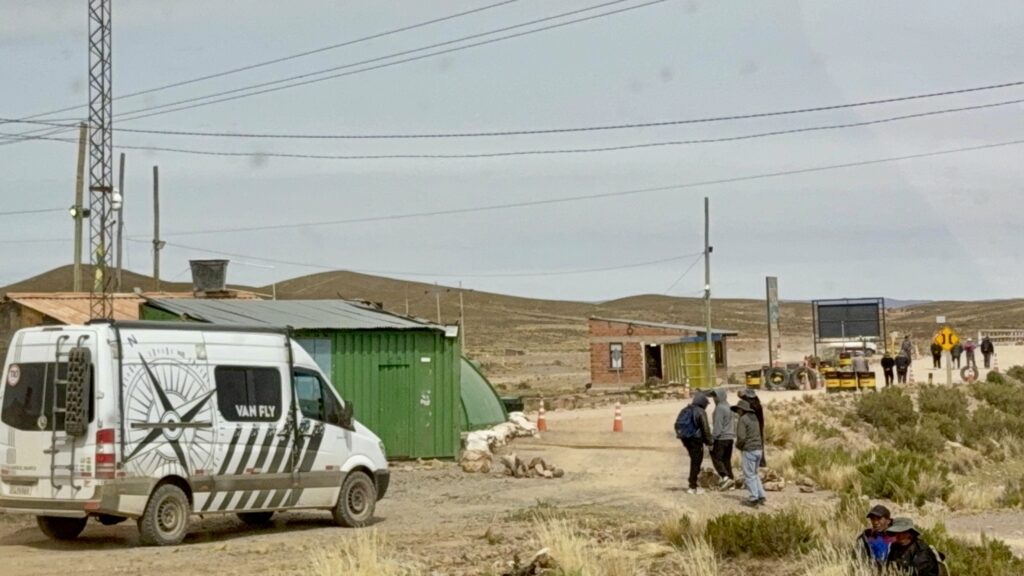
We parked and approached on foot. This time the answer was firm: nobody passes!
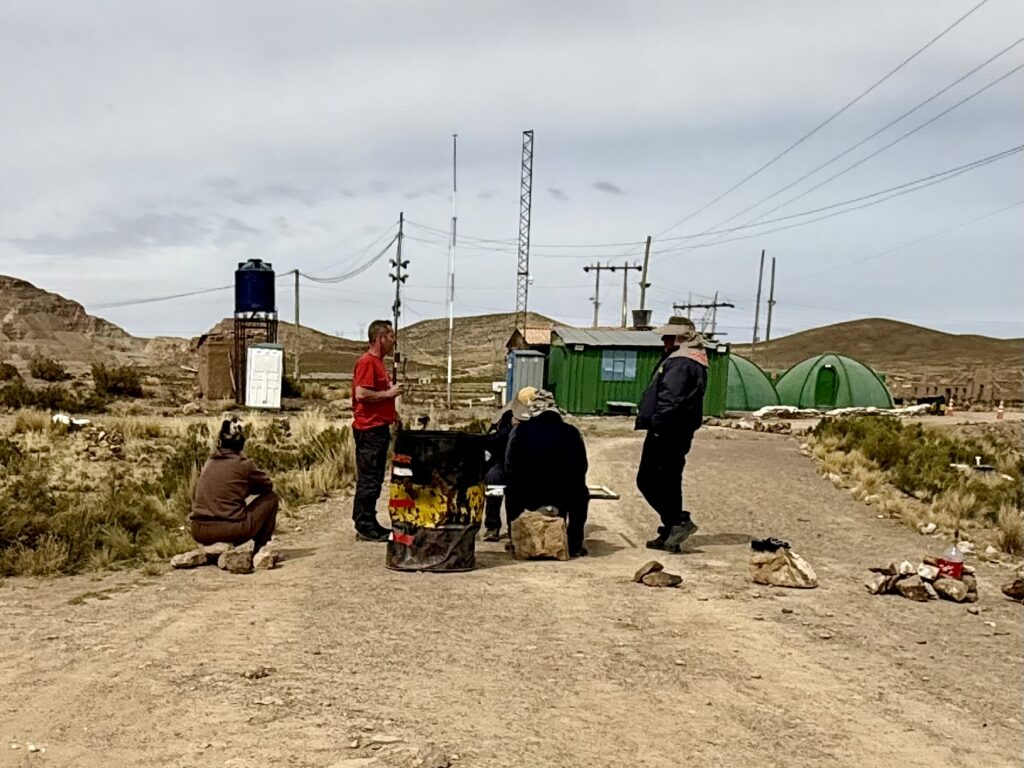
We tried to chat with the ment who ignored us. Eventually they pointed us toward the elder in charge then returned to their card game. We approached, introduced ourselves, and Marco explained who we were, our intention to leave the country peacefully, and acknowledged their grievances respectfully.
The elder listened carefully while chewing a massive wad of coca leaves bulging from one cheek, occasionally spitting vivid green saliva onto the dirt. After a long pause, he finally nodded.
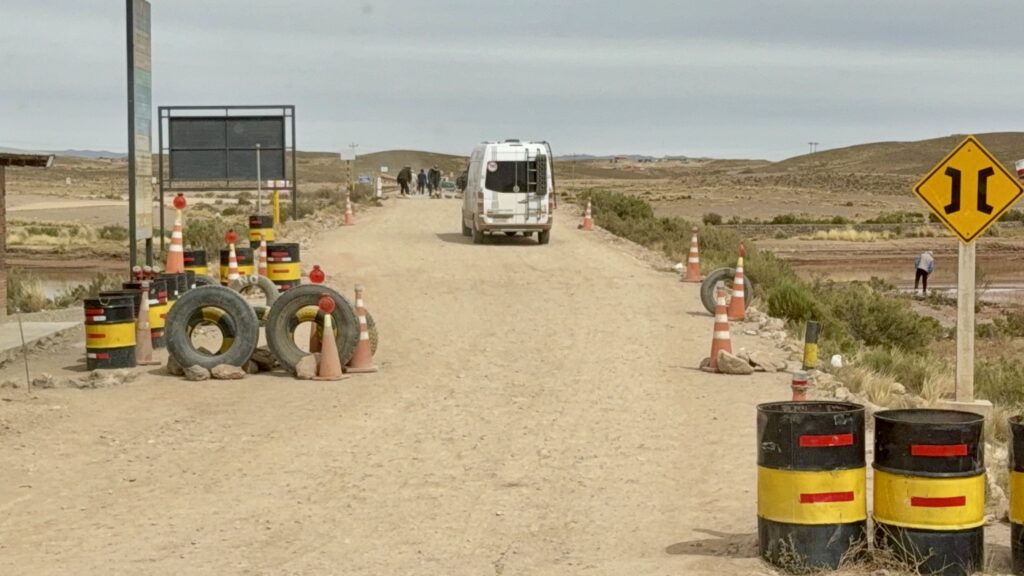
His men removed rocks, tyres, and wood before lighting a firecracker to signal the next blockade on the other side of the bridge that we’d been granted safe passage.
We thanked them sincerely and drove through quickly before anyone could change their minds.
By this point, the stress had become overwhelming for Julia, who broke down emotionally walking back the van. Personally, I never truly felt unsafe — tense perhaps, uncertain definitely — but not threatened. Maybe it was simply a cultural difference in how we each processed the situation. She was afraid of being stuck between two blockades with no options.
BLOCKADE #6
Tim & I were happy, we were making progress in the right direction. With each blockade affirming we’d made the right decision to leave the country. We know that tension can change quickly, if an angry group at a blockade or even an individual decided to start throwing rocks, we could be in trouble.
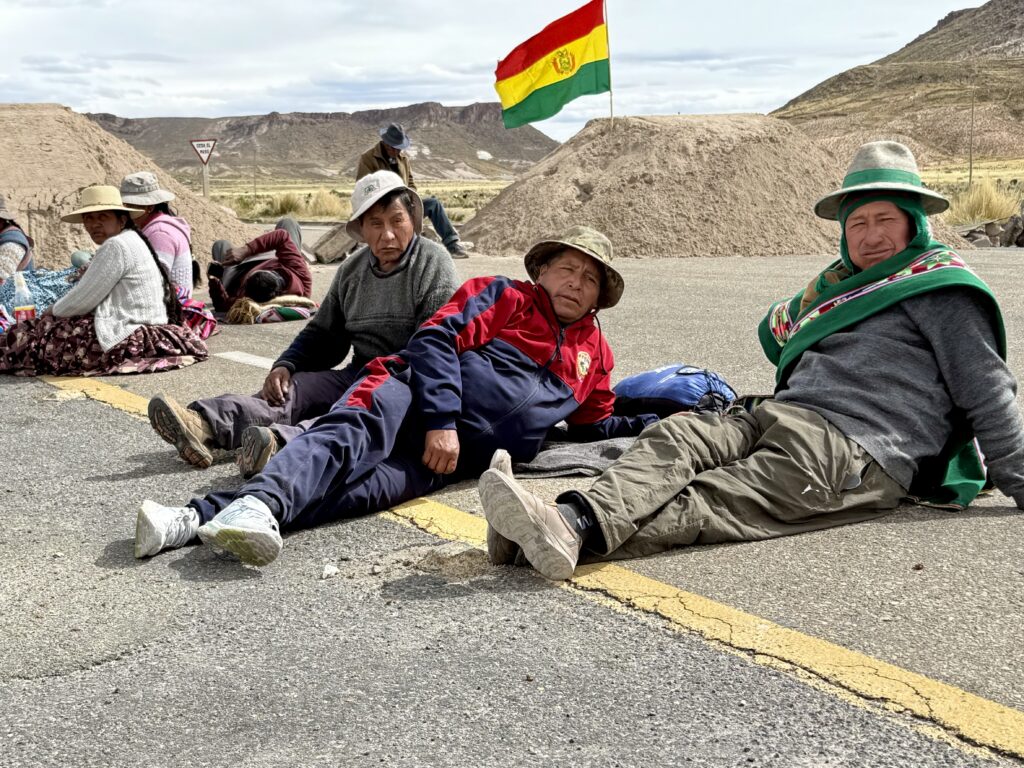
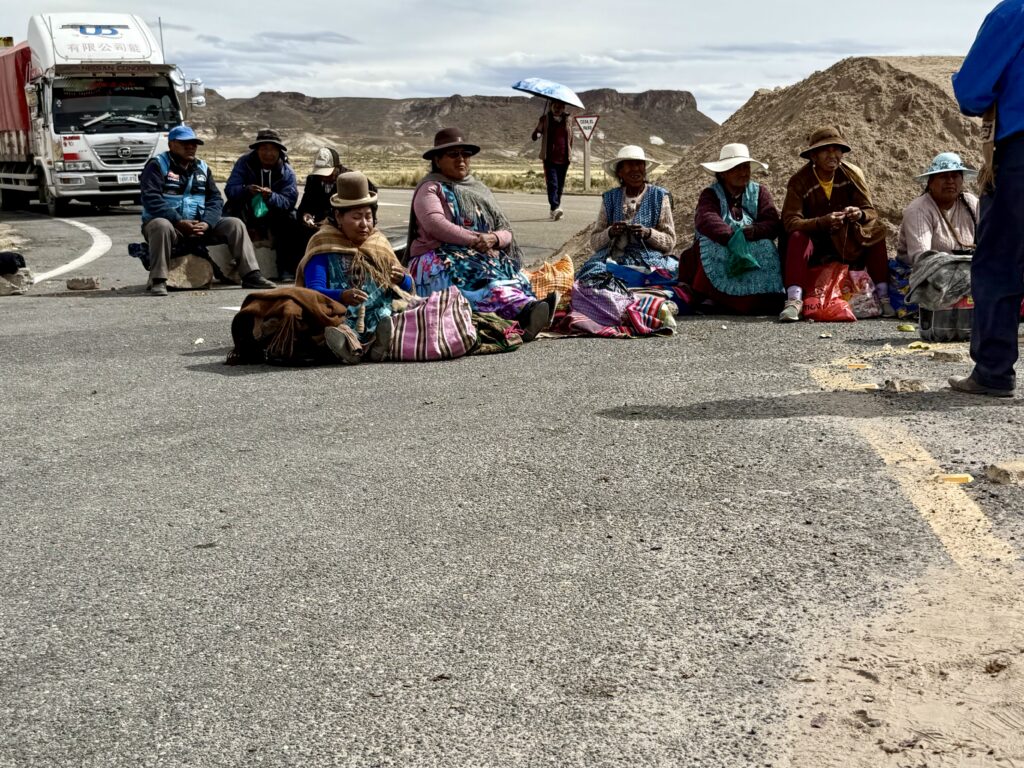
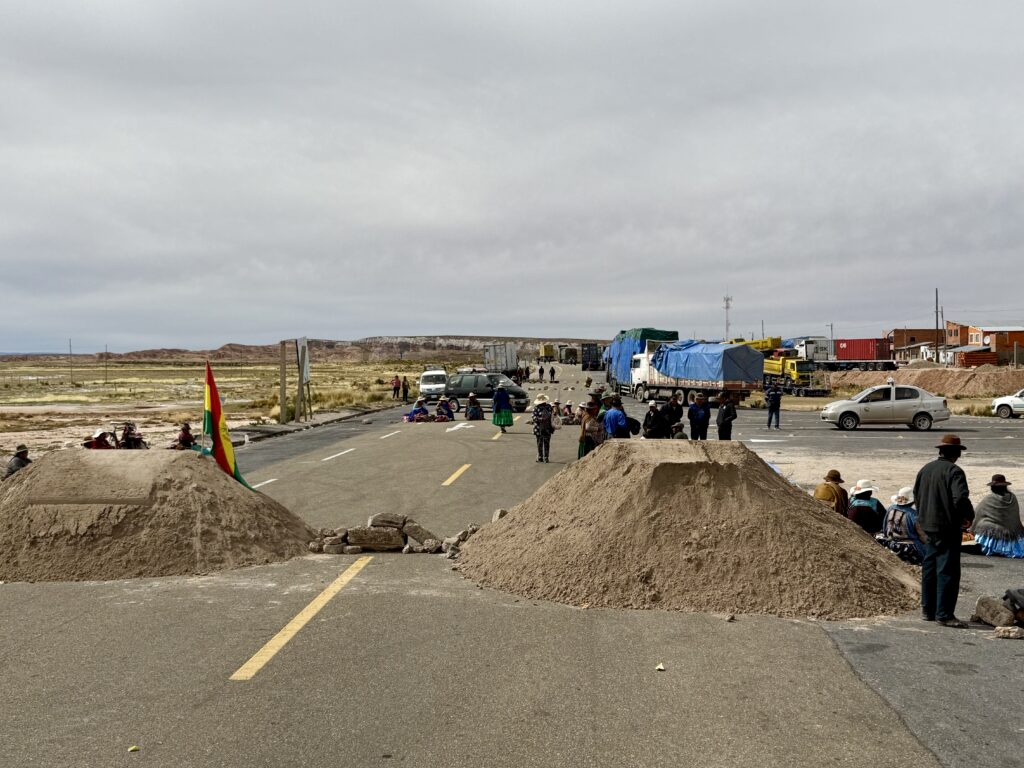
Seventy-five kilometres later we encountered another major blockade, possibly the largest yet. Heavy machinery had piled huge mounds of earth across the highway, completely preventing vehicles from passing.
Women sat together spinning wool and knitting, everyone chewing coca leaves that also littered the ground. Cooking fires lit. These people had clearly been there for days and looked prepared to stay for as long as necessary.
Once again, we approached respectfully.
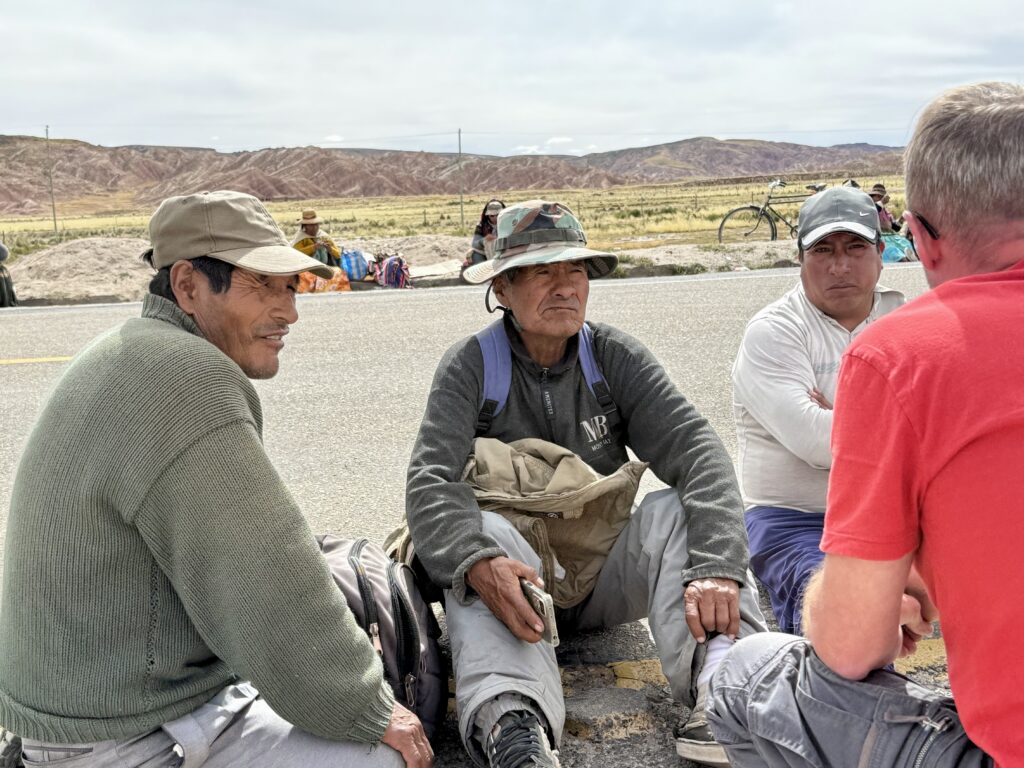
The men greeted us kindly. Marco repeated our situation, where we’d come from, and our intention to leave Bolivia via Chile. The elder — missing all but one, green front tooth — asked detailed questions about the other blockades, truck numbers, and protest activity. He seemed pleased to hear how widespread the demonstrations had become.
After a brief discussion in Quechua amongst themselves, they agreed to let us pass.
Phew!
That proved to be our final blockade.
BOLIVIA – CHILE BORDER
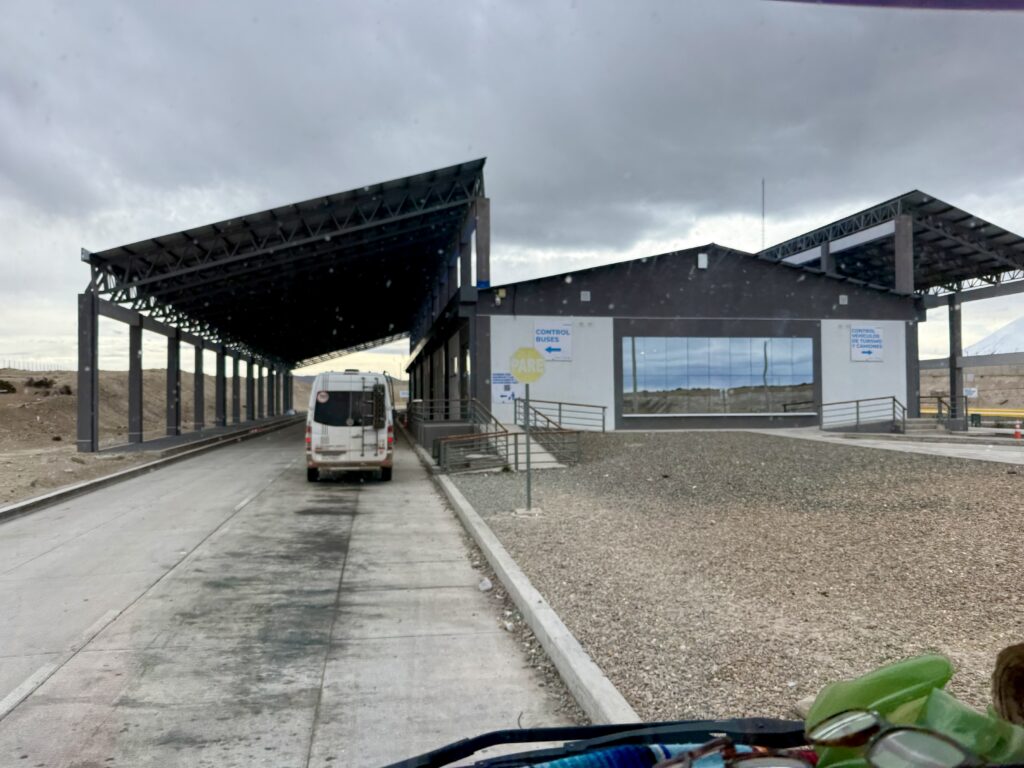
The Chilean border sat high at 4,500 metres — a modern but eerily empty building with virtually no traffic crossing due to the unrest. Immigration officer requested the kids’ birth certificates for the first time on the entire trip, wanting proof the children were ours. Unfortunately my maiden name appears on their birth certificates while my passport carries my married name, creating fifteen minutes of confused head-scratching before they reluctantly stamped us through.
Crossing into Chile also meant stricter agricultural inspections. We’d carefully hidden our frozen Argentine meat, but I’d completely forgotten about a fresh jar of honey, which was immediately confiscated.
The inspectors, however, were incredibly friendly. I did my best in broken Spanish while they answered in broken English, and somewhere along the way we built enough rapport that, as we prepared to leave, the chief inspector quietly handed my honey back with a smile and wished us a safe journey.
A VIOLENT VOLCANIC PAST
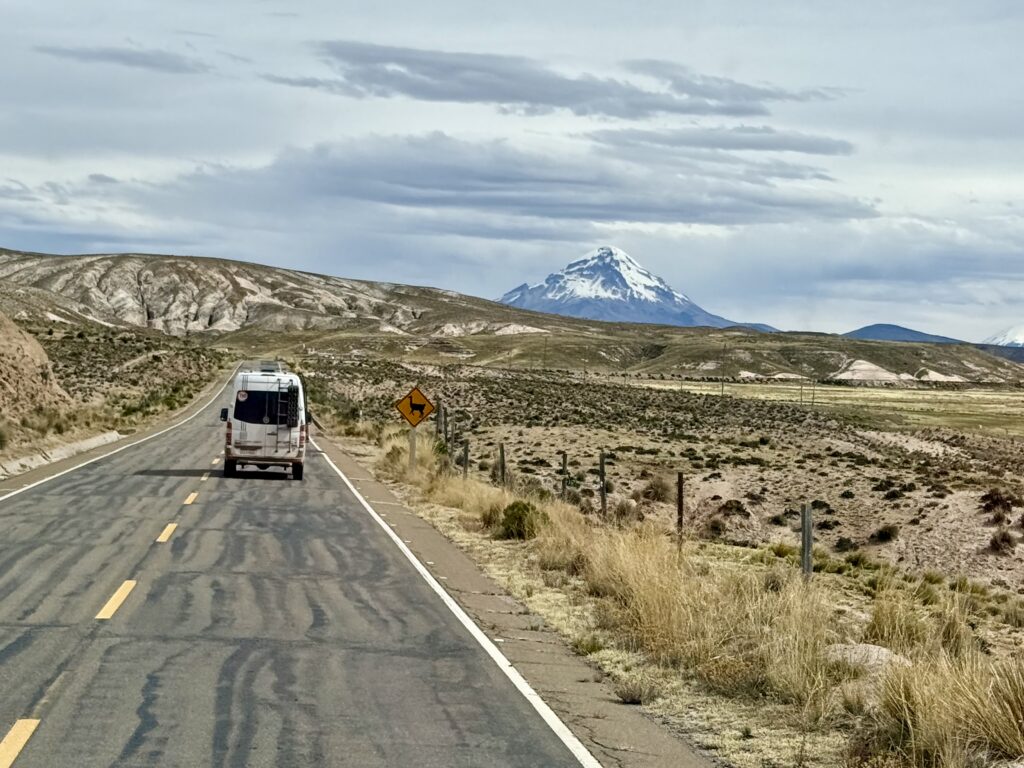
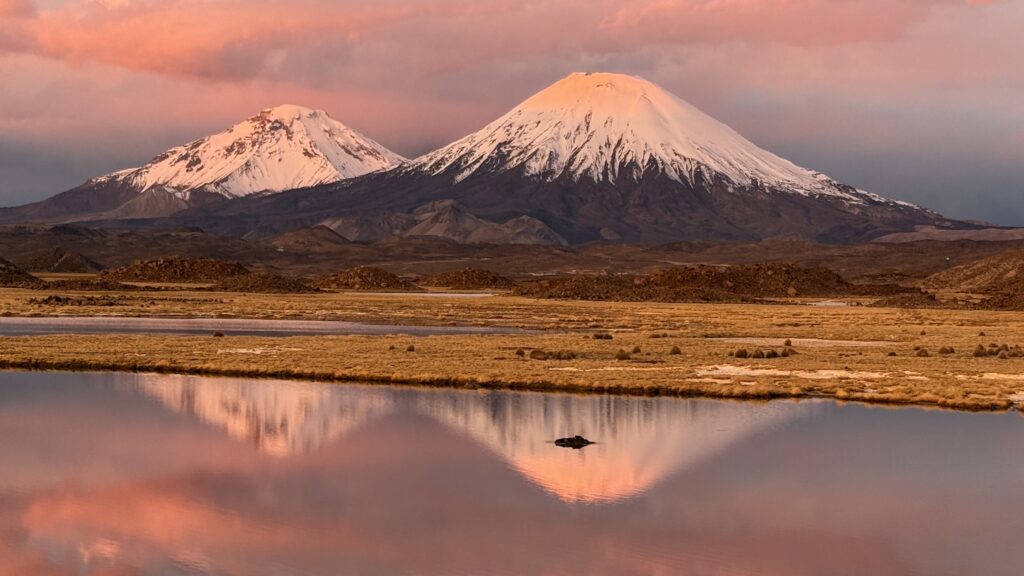
Crossing from Bolivia into northern Chile felt like driving through the raw beginnings of the Earth itself. Towering above the altiplano were perfect conical volcanoes, their snow-dusted peaks rising from a landscape painted in ash, sulphur, and iron-red rock. This entire region sits within the Central Volcanic Zone of the Andes, formed over millions of years as the Nazca tectonic plate slowly grinds beneath South America, forcing magma upward and building the immense chain of volcanoes that now line the border. Ancient eruptions blanketed the high plains in lava and ash, while prehistoric inland seas slowly evaporated to leave behind the vast salt flats and mineral-rich lagoons scattered across the desert.
While our camp for the night was in a powdery carpark on the side of the road, our drive down to the wee town was through some incredible volcanic landscapes that was illuminated by one of our most spectacular sunsets on the trip.
As it turns out, we made the right decision to leave the country. Now several weeks later BBC news reports Bolivia’s declining situation.
May 24th, The Public Works Ministers convoy was ambushed while overseeing roadblock clearance to allow humanitarian aid to enter the capital city of La Paz & El Alto. Demonstrators attacked with rocks and dynamite!!
The demonstrators were hoping to put pressure on Bolivia’s centre-right President Rodrigo Paz to resign just six months after taking office over his government’s austerity measures, with his alignment with the US another divisive issues.
May 26th, Congress in Bolivia has passed a bill which will make it easier for the president to declare a state of emergency and deploy soldiers to quell protests.
The move comes after almost a month of road blocks and demonstrations by miners, farmers and indigenous groups, which are demanding President Rodrigo Paz resign.
May 28th, Bolivia’s President Rodrigo Paz has warned the country is “at breaking point” after a month of anti-government protests that have led to seven deaths and hundreds of arrests.
Demonstrators led by unions and indigenous groups have set up roadblocks across Bolivia causing serious shortages of basic goods and paralyzing large parts of the nation.
Groups are calling for fuel subsidies to be reinstated and a rollback of austerity measures, as well as the resignation of Paz.