
11 – 15 April. We are yo-yoing back and forth across the borders at a dizzying pace, but least we are hitting a different location each time.
Now that the truck is fixed and 99% of the oil leaks are plugged, we can continue on our journey. Our truck is European, so there are very few mechanics back in BC who can work on it. Down here, this truck is everywhere—mechanics are familiar with it and parts are readily available. So we’re making the most of it, keeping everything in good condition. And of course, we don’t want any more issues. Argentina, on the whole, is more expensive than Chile, which is why we chose to return there for the work.
BACK ON TRACK
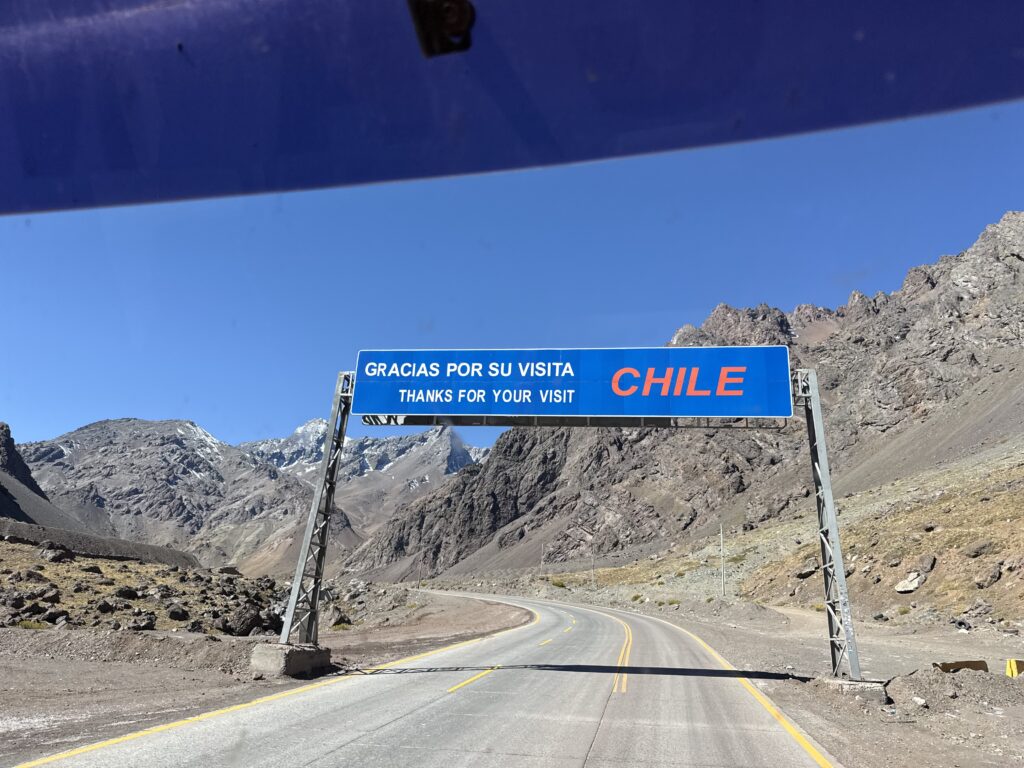
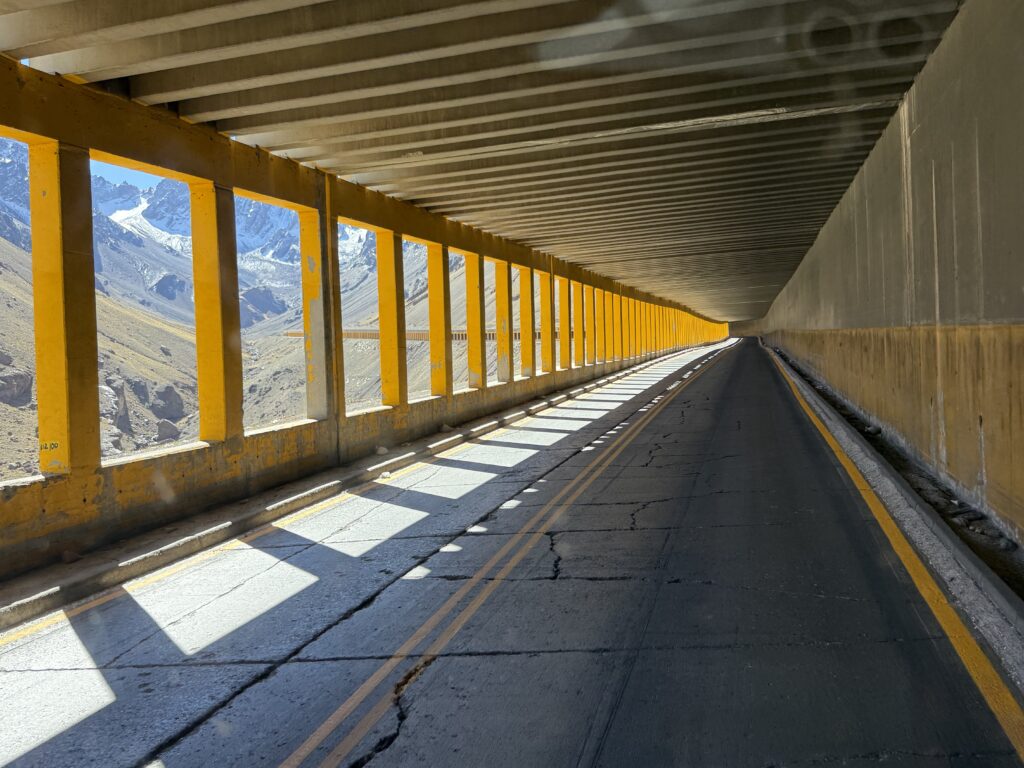
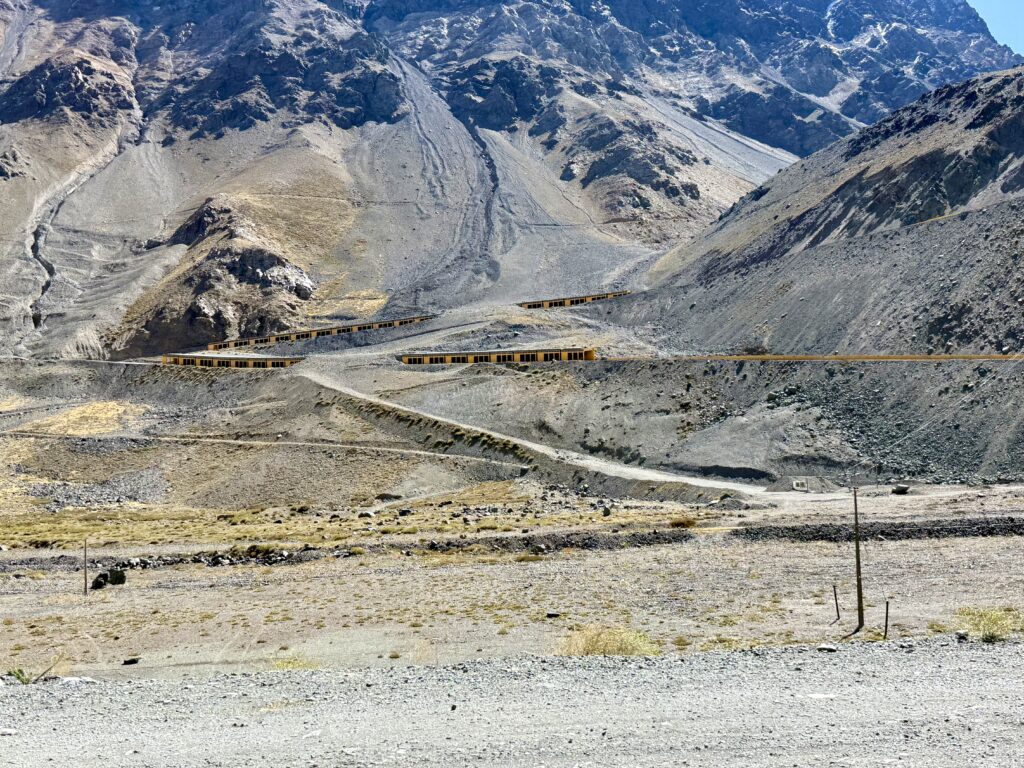
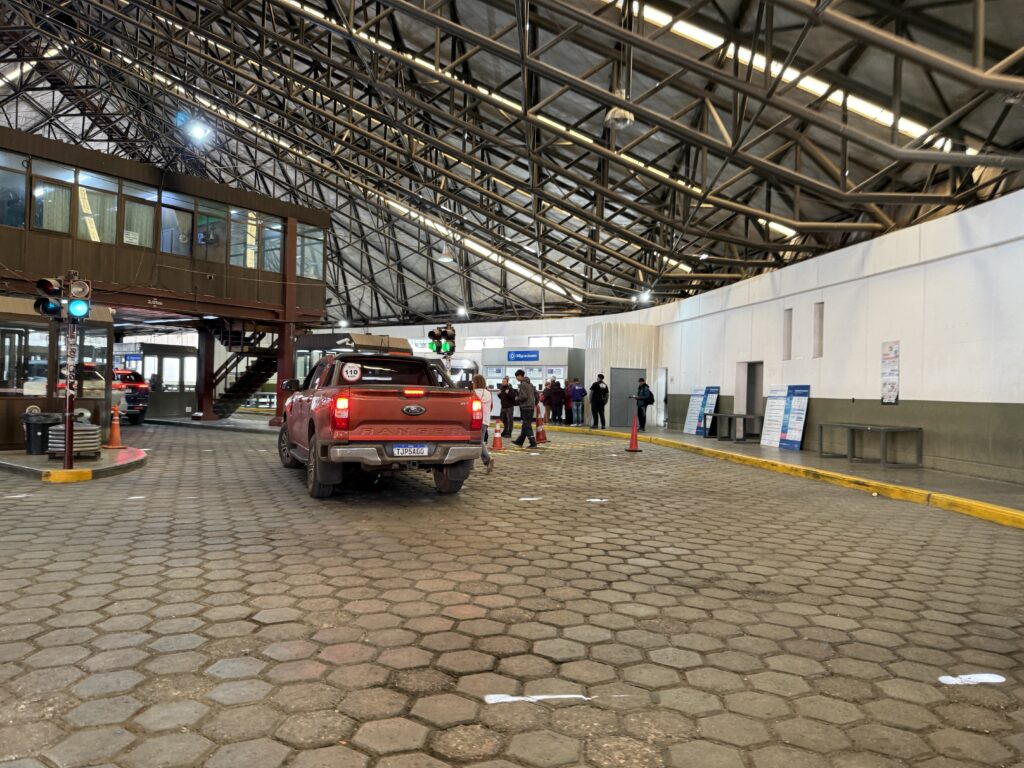
This time we crossed at the higher altitude pass of Paso Pehuenche at 2,553 metres along a beautiful stretch of road winding through the mountains. Here, the road passes beneath long avalanche tunnels, offering protection from snow and rock. Because of heavy winter snowfall, the border control is housed inside a massive building. I’m hoping the search doesn’t extend beyond the fridge—I’ve tucked away a couple of food items I’d rather not lose.
Success—we’re through and cleared in no time. I think our Spanish is improving; we can understand most of what people are saying, provided they speak slowly and clearly. Answering is another story—beyond basic conversation, we’re lost. The kids understand more than we do, but are sometimes too shy to speak.
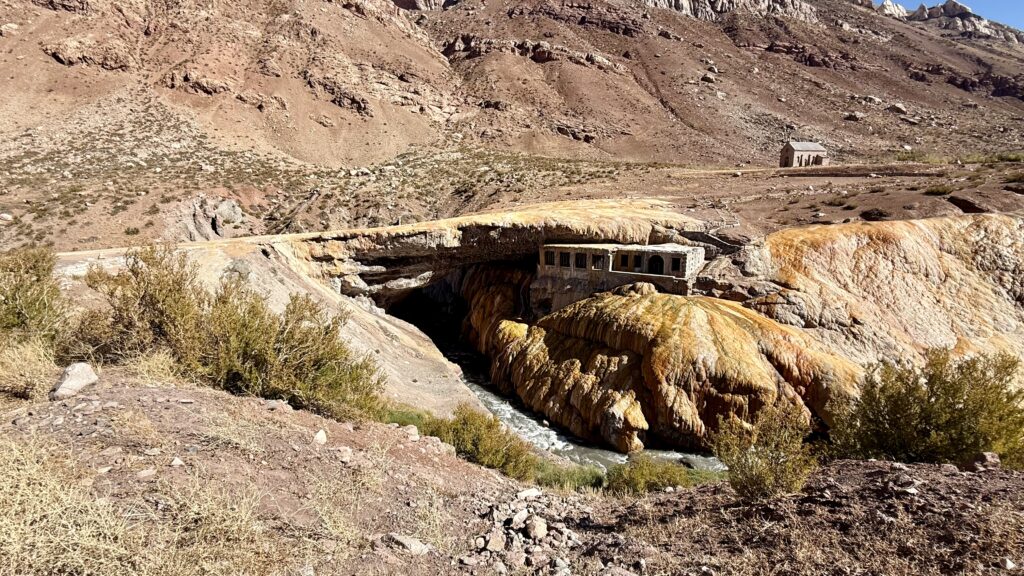
Descending from the border, just 10km down we stop for a quick look at Punta del Inca—a natural rock bridge spanning the Río Las Cuevas, its arch stained in vivid shades of orange, yellow, and green by mineral-rich thermal waters. Once the site of a grand spa hotel, it was later destroyed by an avalanche. I hope no one was inside at the time!
Here are a few places we’ve visited over the past week…
MENDOZA
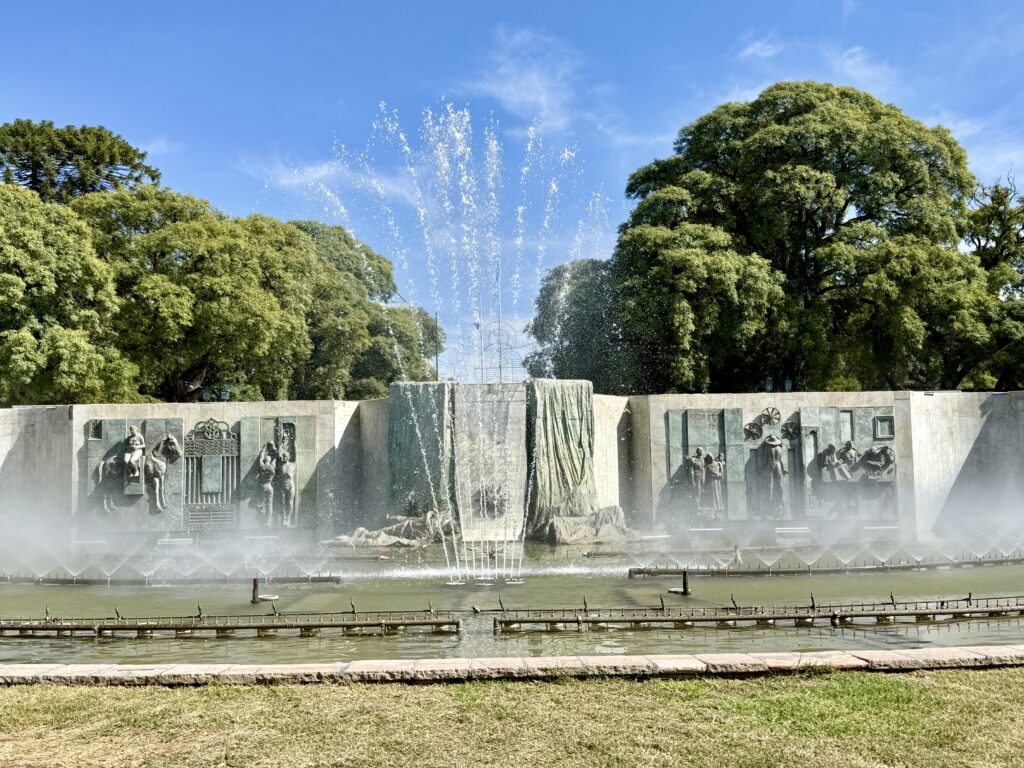
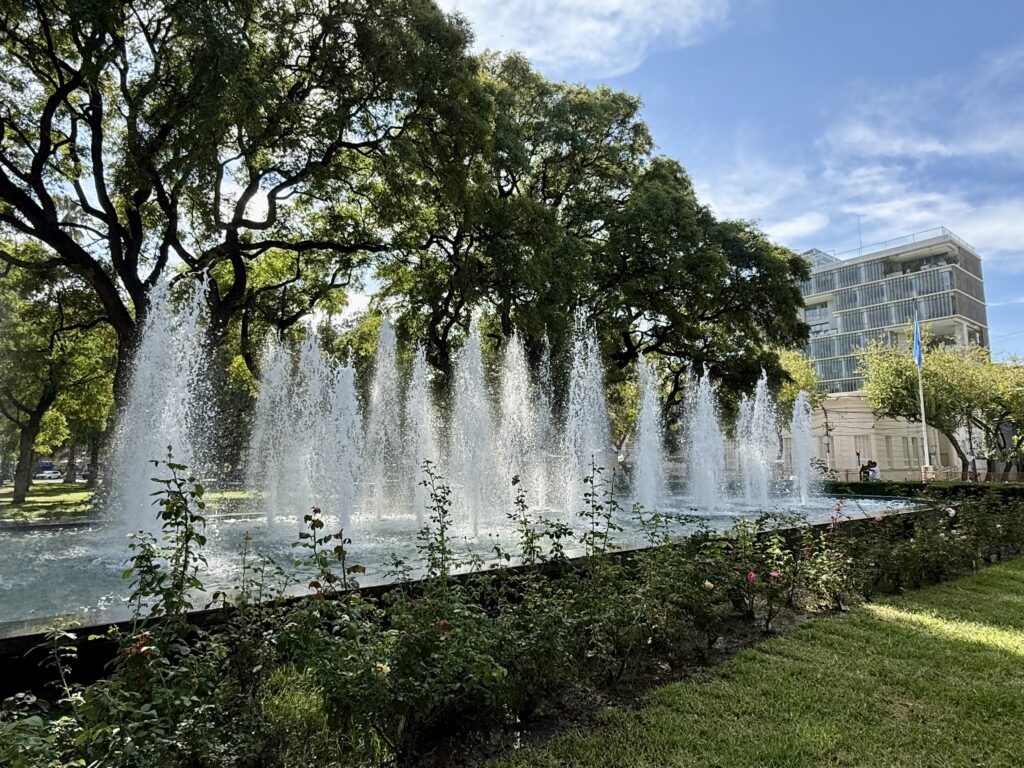
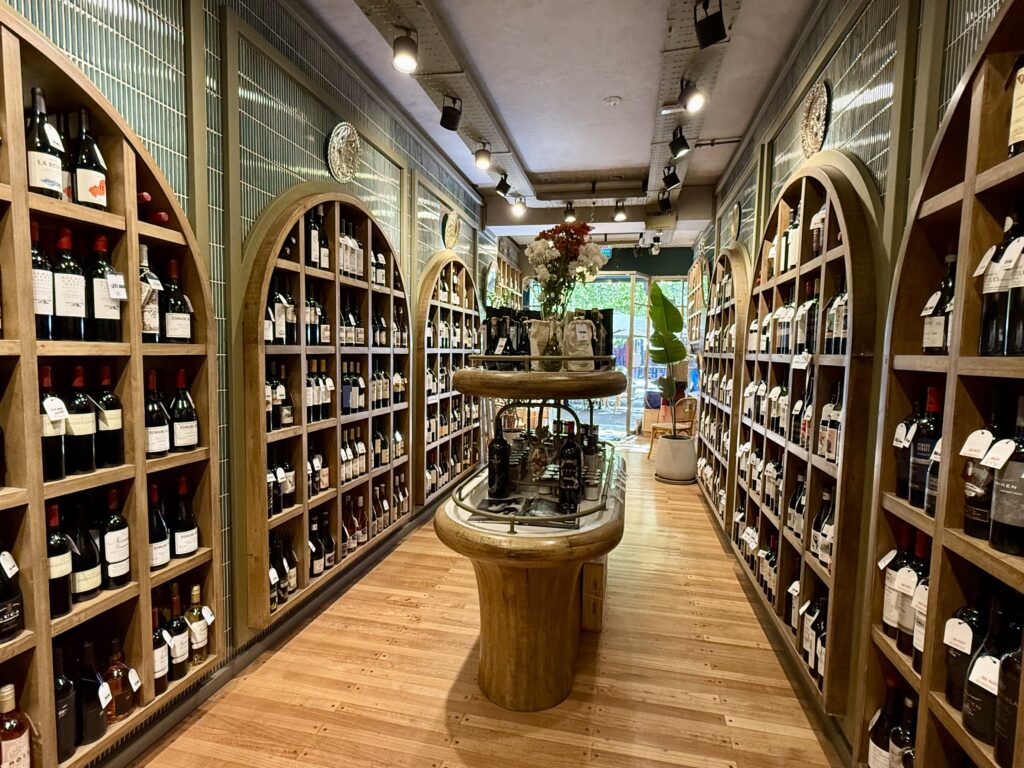
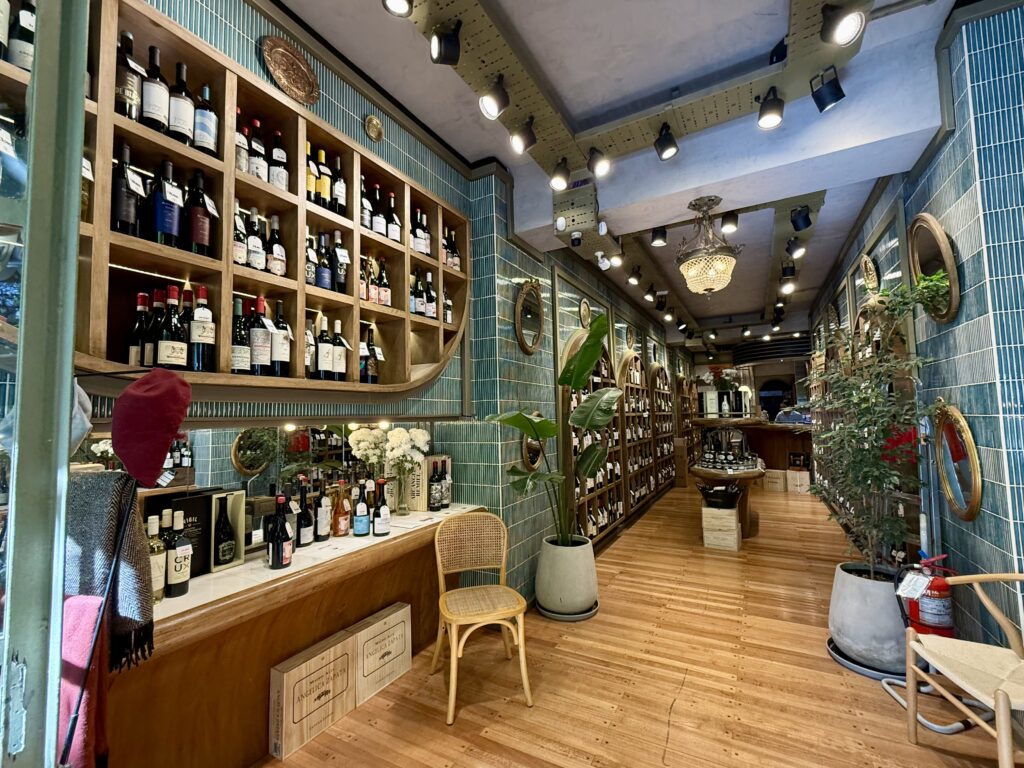
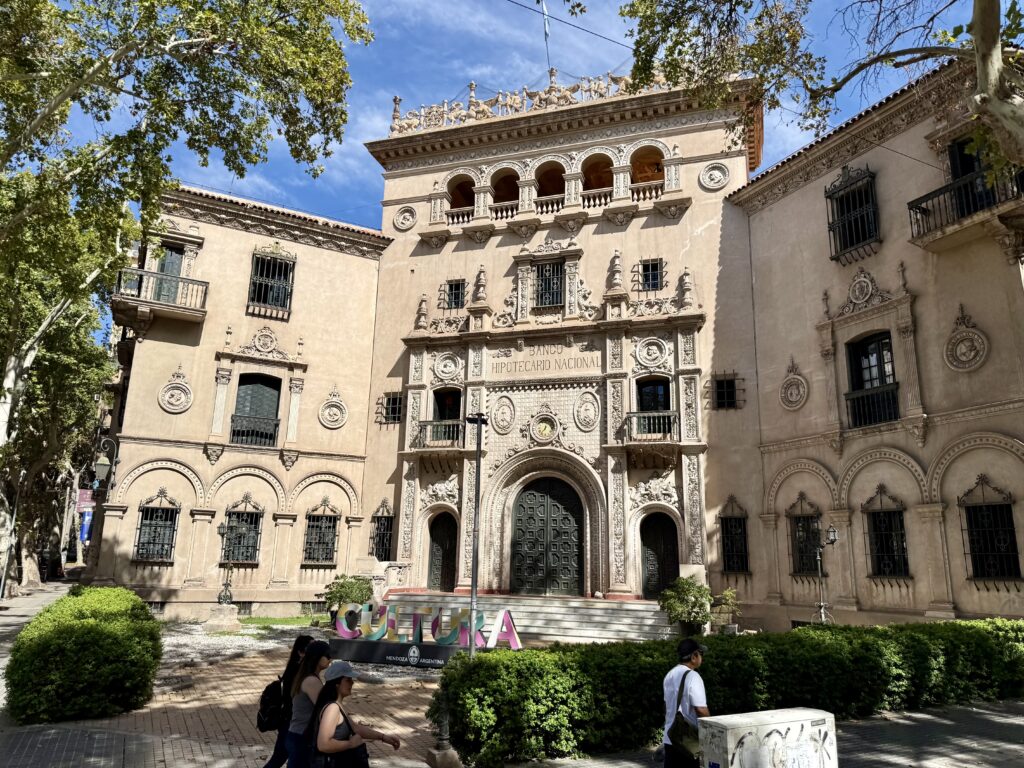
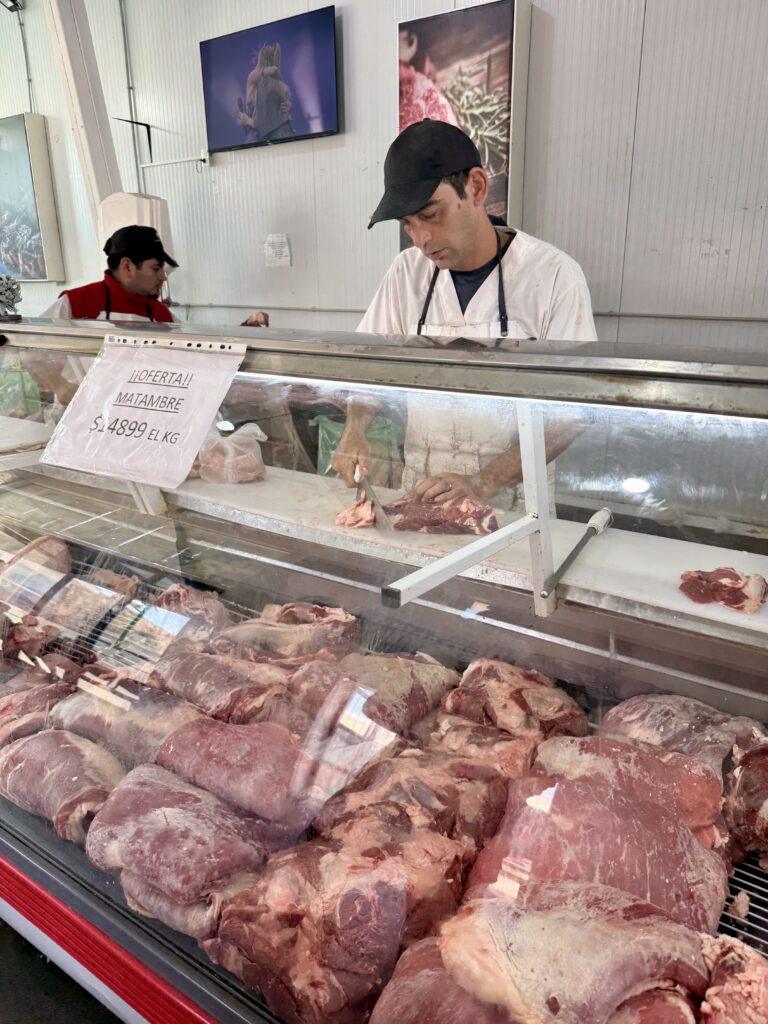
Just a drive through visit to the famed wine region of Mendoza. It’s Sunday, and the city is 95% closed. Streets are almost empty, making it very easy for us to stop briefly at the Plaza de Armas, stroll through the gardens and pedestrian streets, grab an ice cream, and head back north. Having just spent a week in Santiago, the kids have no interest in exploring another city—and strongly protest the idea of a wine tour. But do stop at a butcher shop and stock up on steaks & sausages for the bbq on our way out of town.
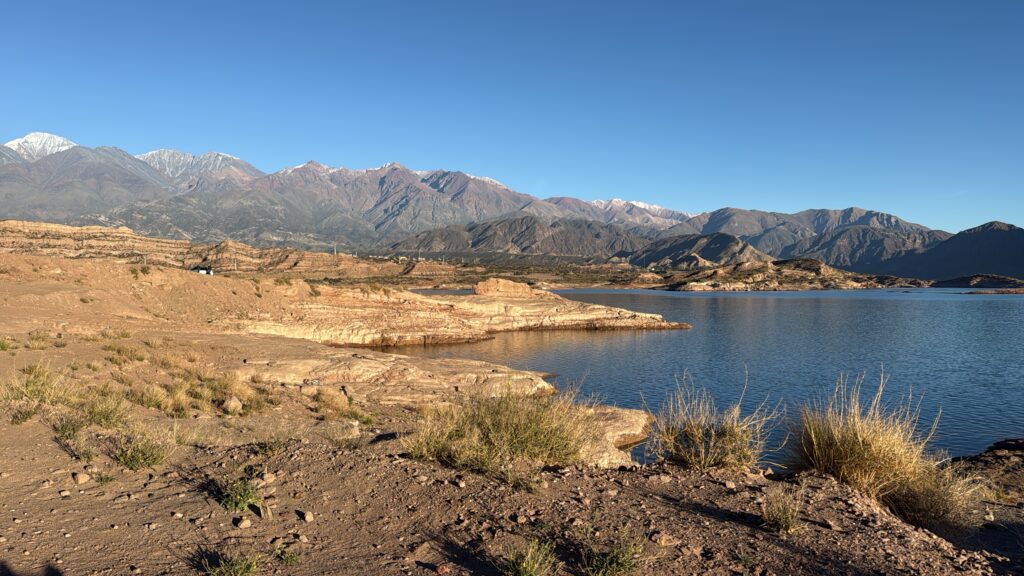
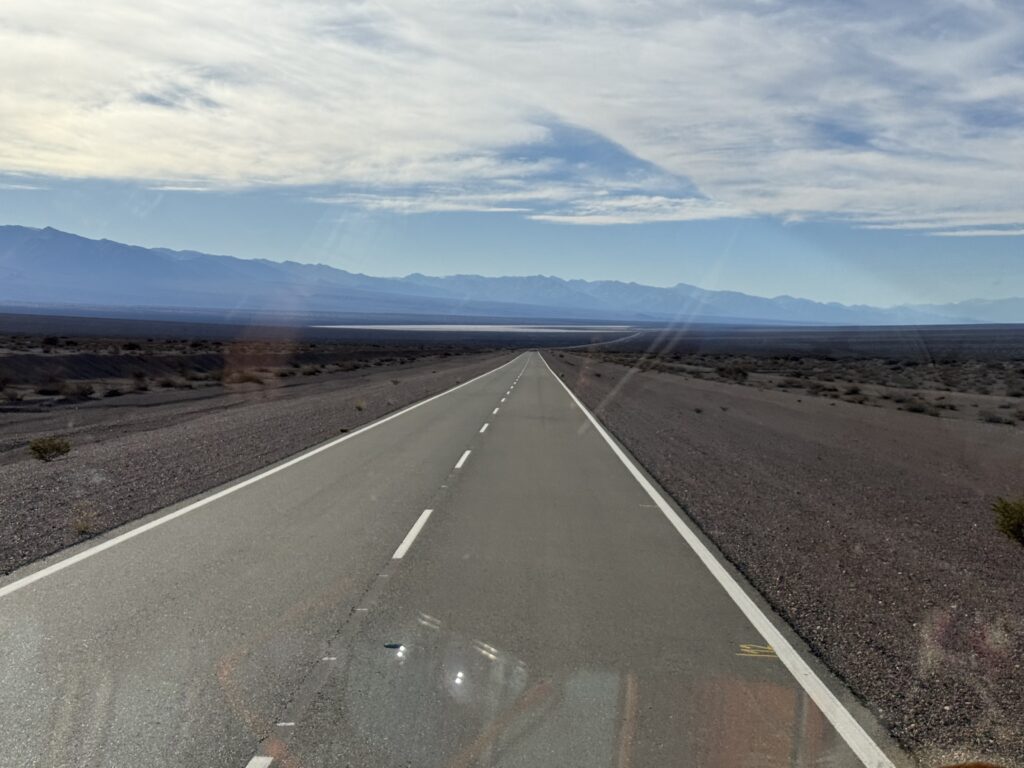
So, on we roll. Back past the lake where we camped the night before, and onward into a land of deserts, volcanoes and vast landscapes of nothingness.
ROADSIDE GARBAGE OR SHRINES
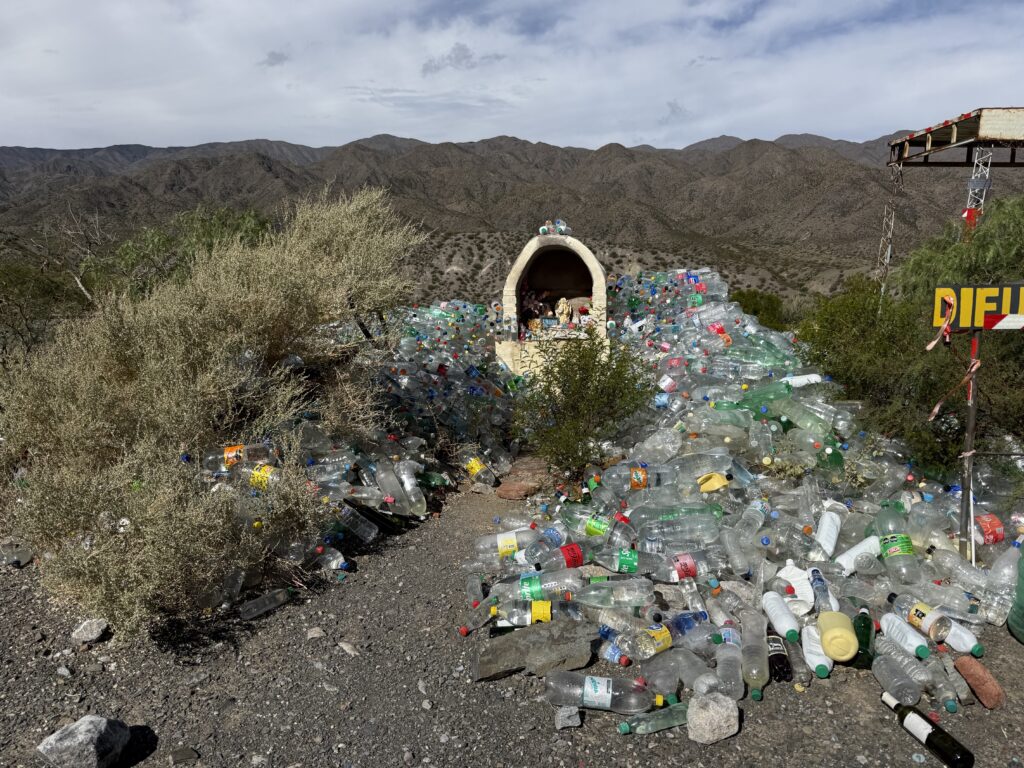
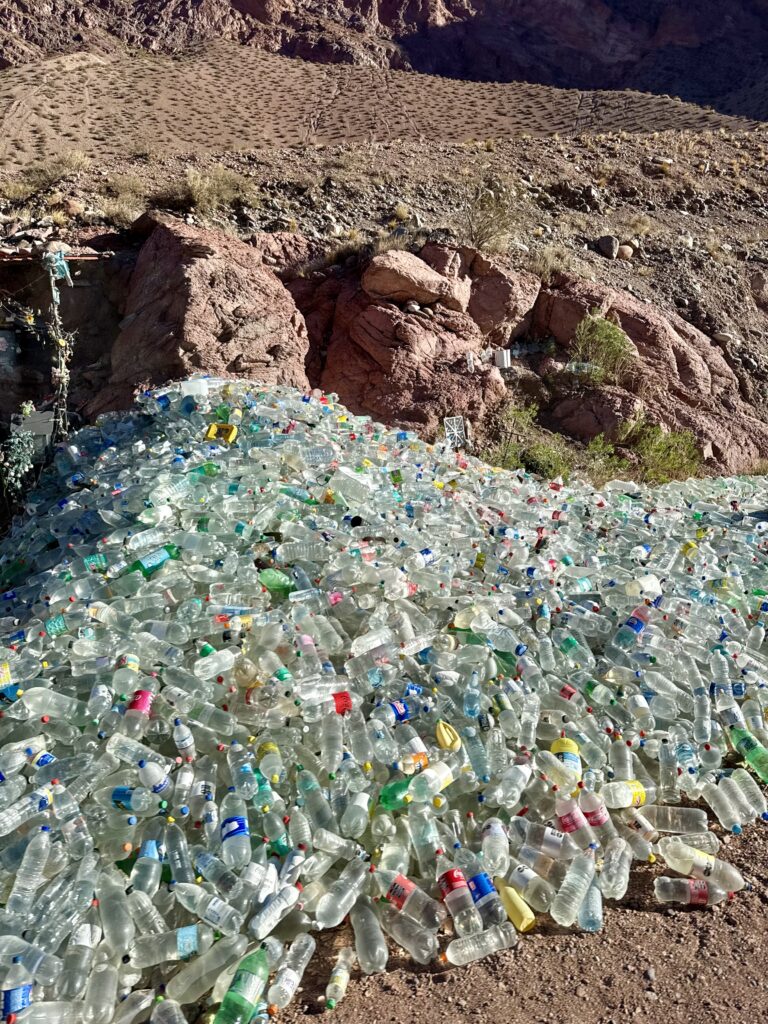
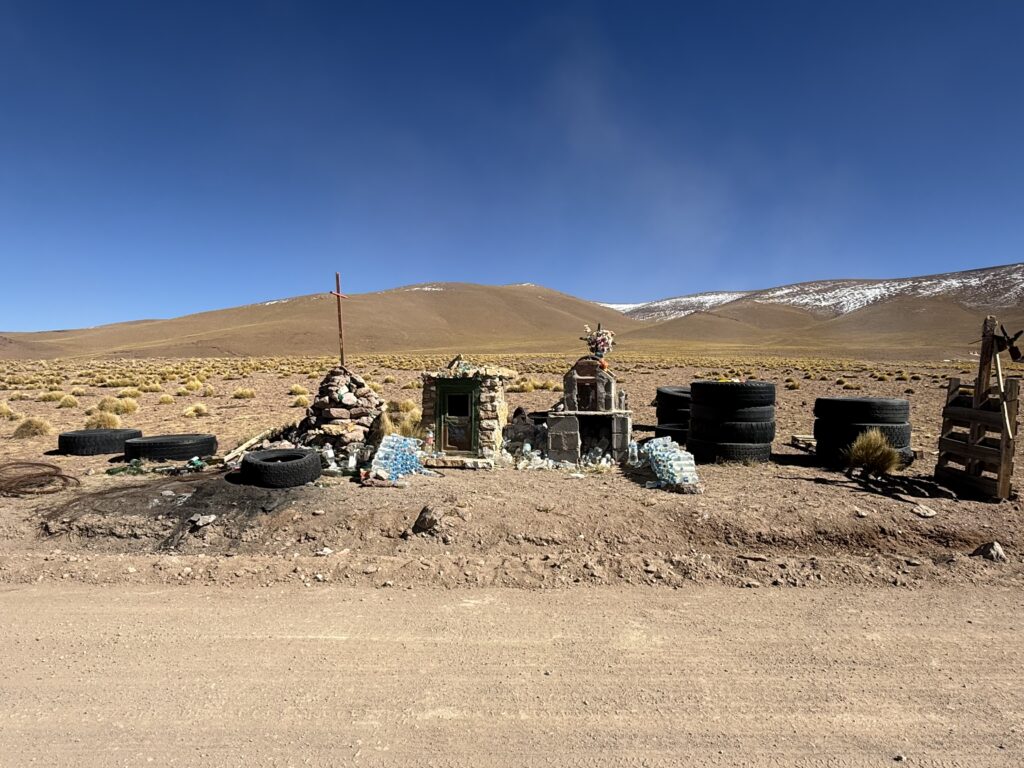
Like in any country there are too many roadside crosses and memorials marking the location of where someone died. But now we’re seeing something different. Roadside memorials are surrounded by water filled plastic bottles. Some have a dozen, others have hundreds! Googling I’ve found out that they are actually shrines where travellers come to make offerings, water, to the gods in hope of safe passage through the desert.
The tale is linked to Difunta Correa, a kind of unofficial folk saint. According to the legend, she set out across the desert carrying her baby, searching for her husband who had been taken away during the civil wars. She never made it—she died of thirst in the heat. Days later, travelers found her body, but the baby was still alive, somehow sustained. Seen as a miracle, people began leaving bottles of water along roads and at shrines so that she would never thirst again, and in thanks for protection on long desert journeys.
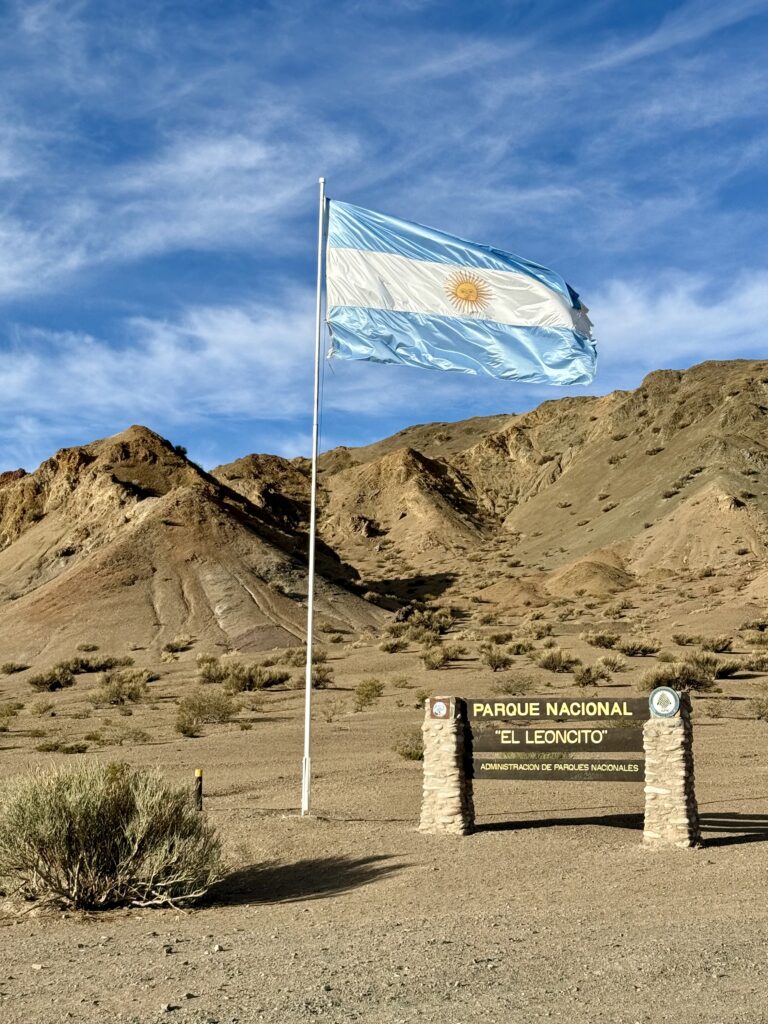
EL LEONCITO NATIONAL PARK – NIGHT SKY
OMG, this country is enormous—like Brazil, with hours of long, straight roads that feel a bit boring, yet geologically interesting at the same time. To break it up, we’ve been listening to podcasts: The Diary of a CEO—Steven Bartlett is a great interviewer with some really interesting guests and topics.
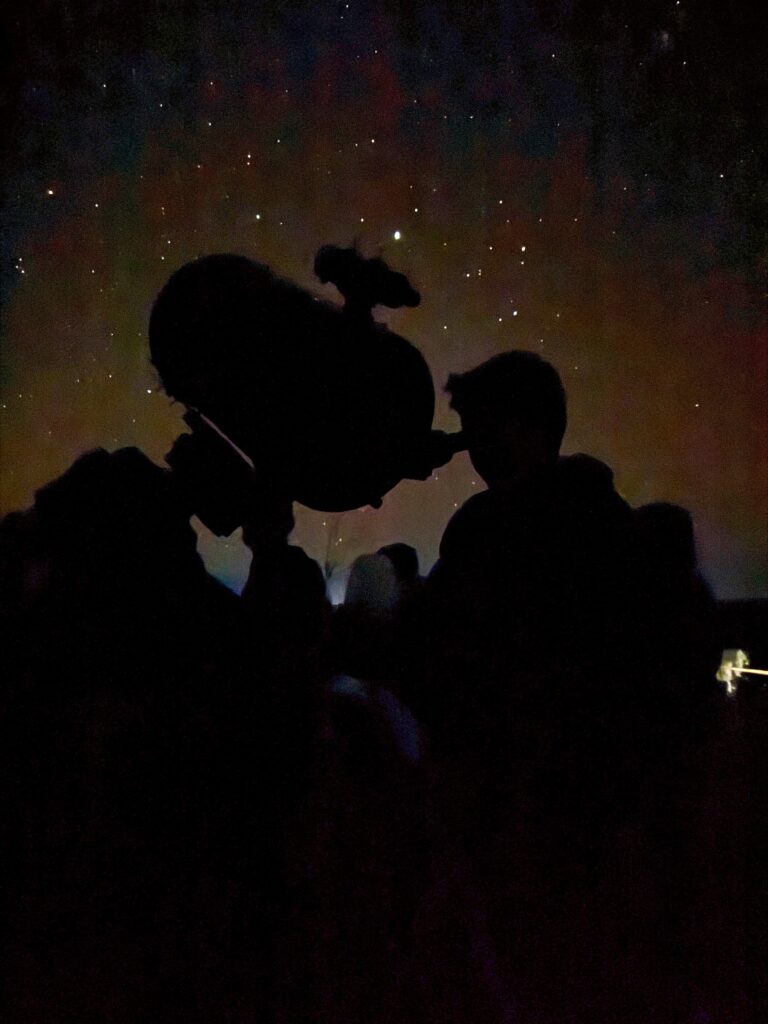
Further up the road, we start to climb into the high-altitude valleys towards Leoncito National Park, which sits far from light pollution, home to some of the clearest skies in South America. It’s also home to the renowned Complejo Astronómico Observatory. Perched high on a hill, the sky stretches far beyond 180°, offering a truly mind-blowing view of the Milky Way.
We joined a 1.5-hour stargazing tour—entirely in Spanish—which made it just as challenging as it was fascinating, our brains working hard to keep up. Through two powerful telescopes, the Milky Way came into view in incredible detail, with dense star clusters and faint nebulae you just can’t see with the naked eye.
It was a fun experience, but honestly, not really worth the $50 CAD entry fee—especially when locals pay half. We’ve started calling that the “tourist tax,” which, to be fair, we understand. I did manage to negotiate a bit though, and the man at the front desk gave us 25% off.
That night, we camped within the park—no fees.

SEVEN-COLOURED MOUNTAINS
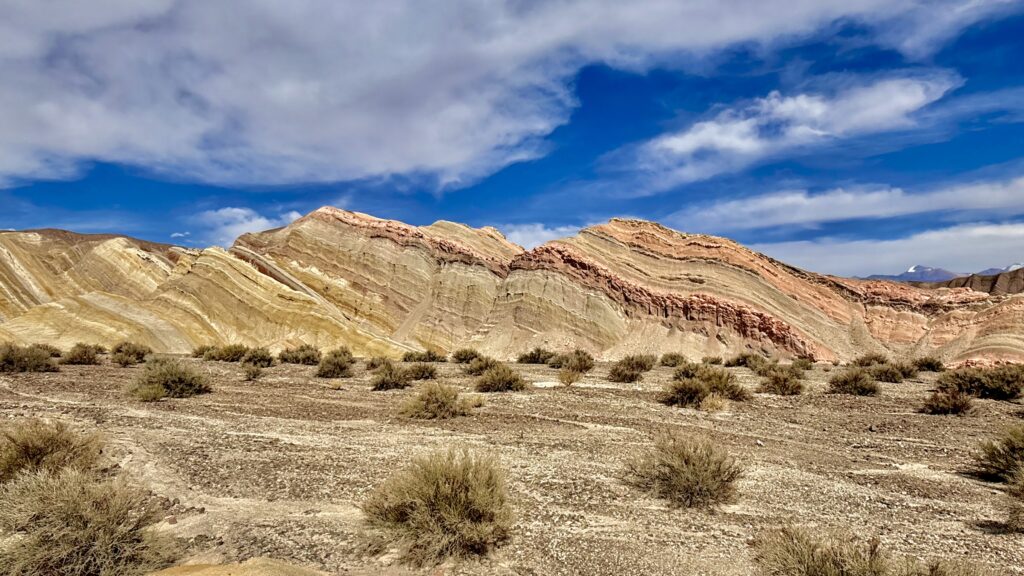
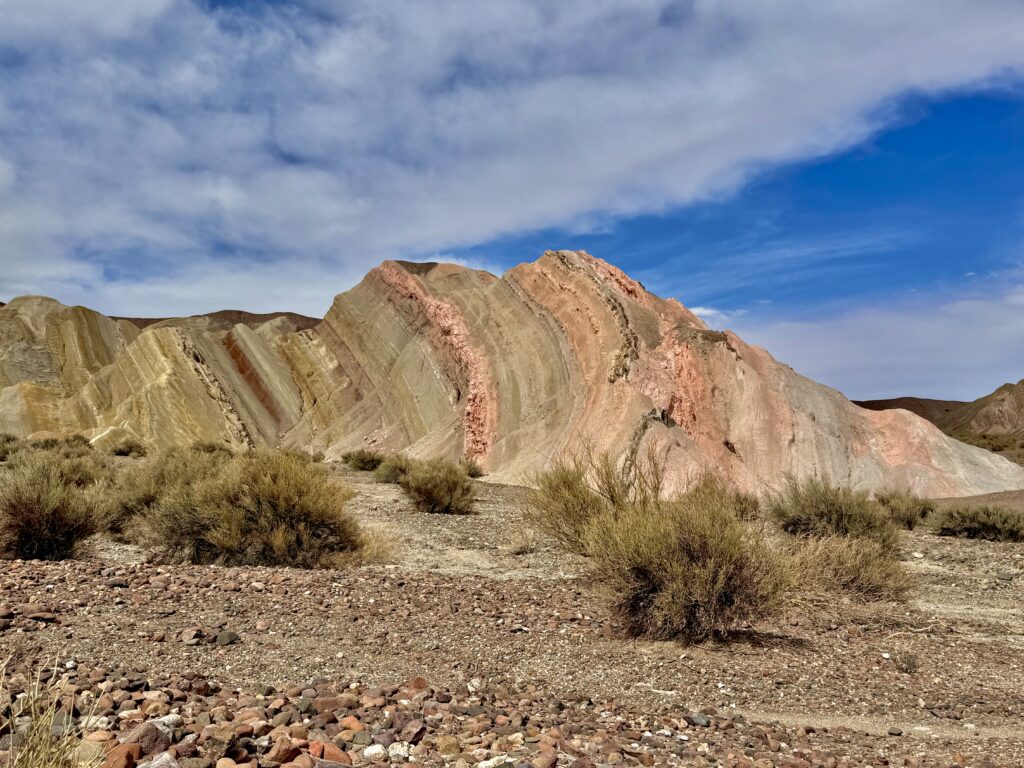
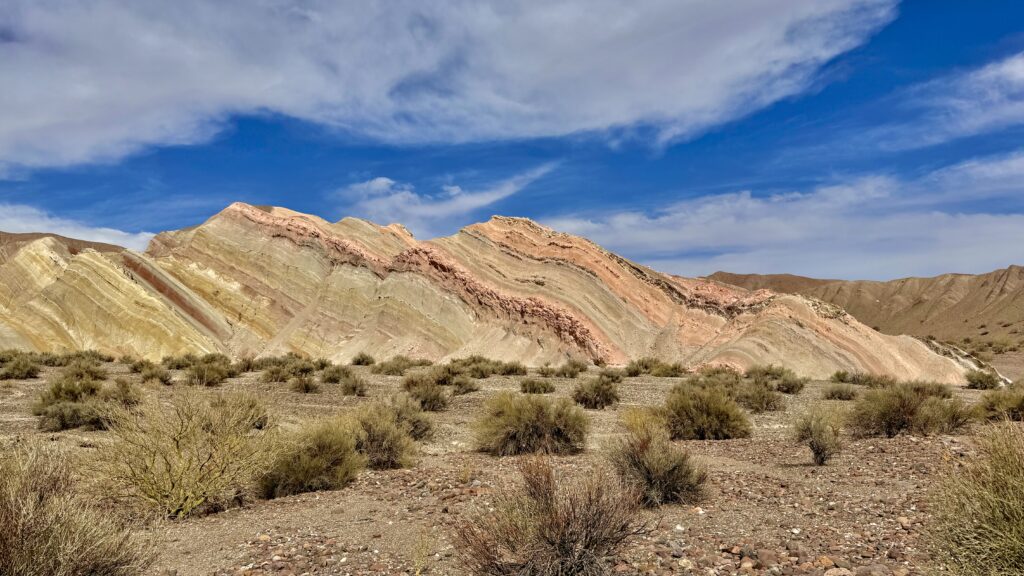
As the sun came up, and the stars faded away, we traded the cosmos for colour. A short drive up the road brought us to the “seven-colour” mountains, where hillsides rippled with mineral-rich bands. Iron oxides paint deep reds and striking pinks, copper minerals bring greens and blues, while layers of clay, sand, and volcanic ash create yellows, whites, and ochres. The standout was an almost surreal pink mountain—its soft hue the result of oxidized iron mixed with lighter sediments—delicate, natural, and unexpectedly beautiful against the stark desert backdrop.
ABANDONED SPA HOTEL AND RODEO LAKE
The valleys continue to stretch wide as we drove north—vast and empty, flanked by the rising spine of the Andes. The road long, straight, and hypnotic. Still on Ruta 40, we cut through a landscape that felt both exposed and immense, where distance plays tricks and everything seems closer than it is.
By late afternoon we reached Rodeo Lake, its surface alive with wind. Kiters boosted high into the air, hanging there for long, effortless seconds. We watched from the shore, seriously tempted to stay a few days and kite ourselves. But reality set in—there was nowhere to camp without being fully exposed to the relentless wind, and with Jaxon having grown a good four inches since leaving home, his wetsuit will no longer fit. Cold water without it wasn’t really an option. Reluctantly, we kept rolling.
Our route north was set—we were chasing down Huw and Sarah in ‘Gwenda-the-Defender’, a couple of days ahead, with plans to tackle the Puna Route together.
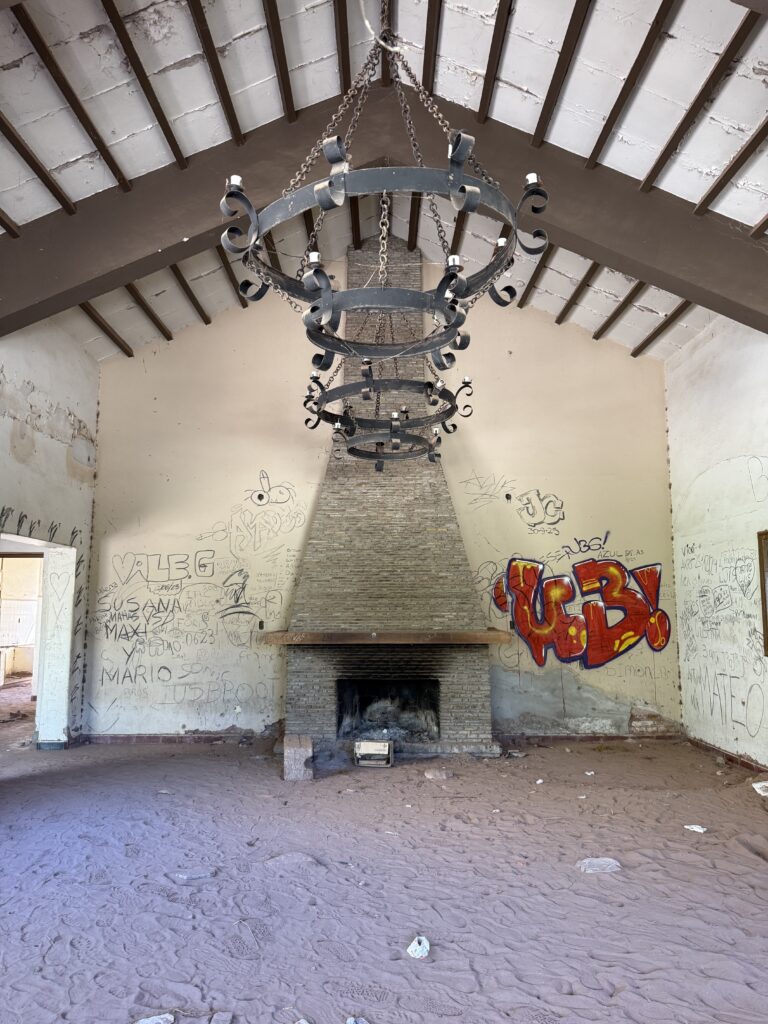
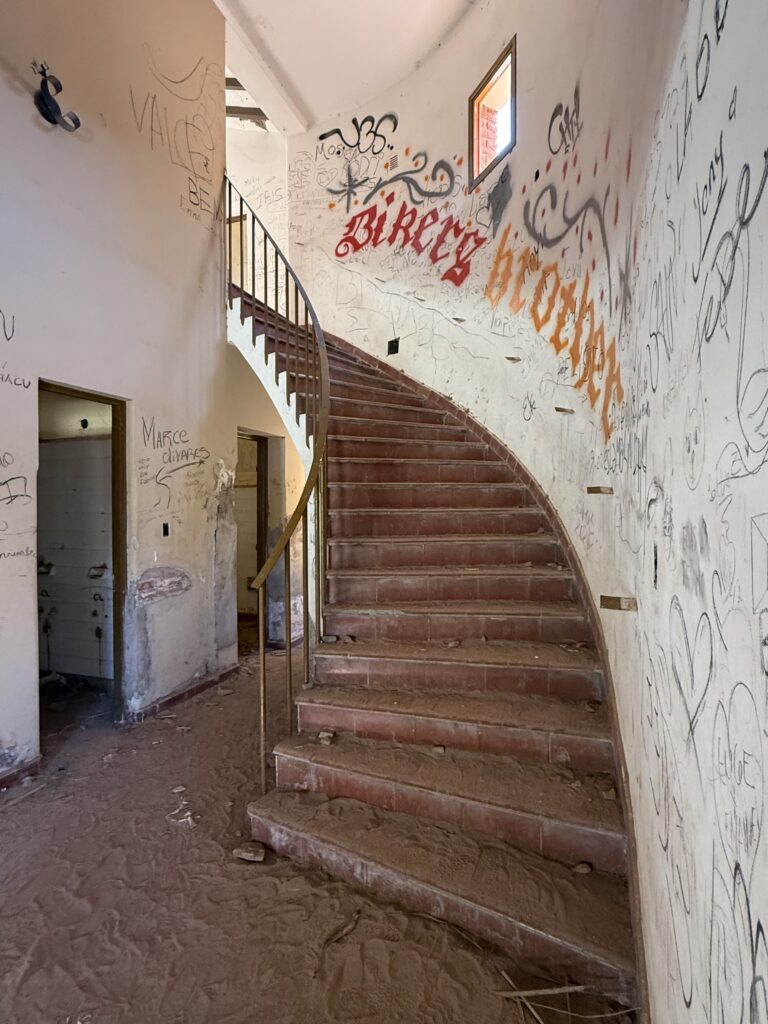
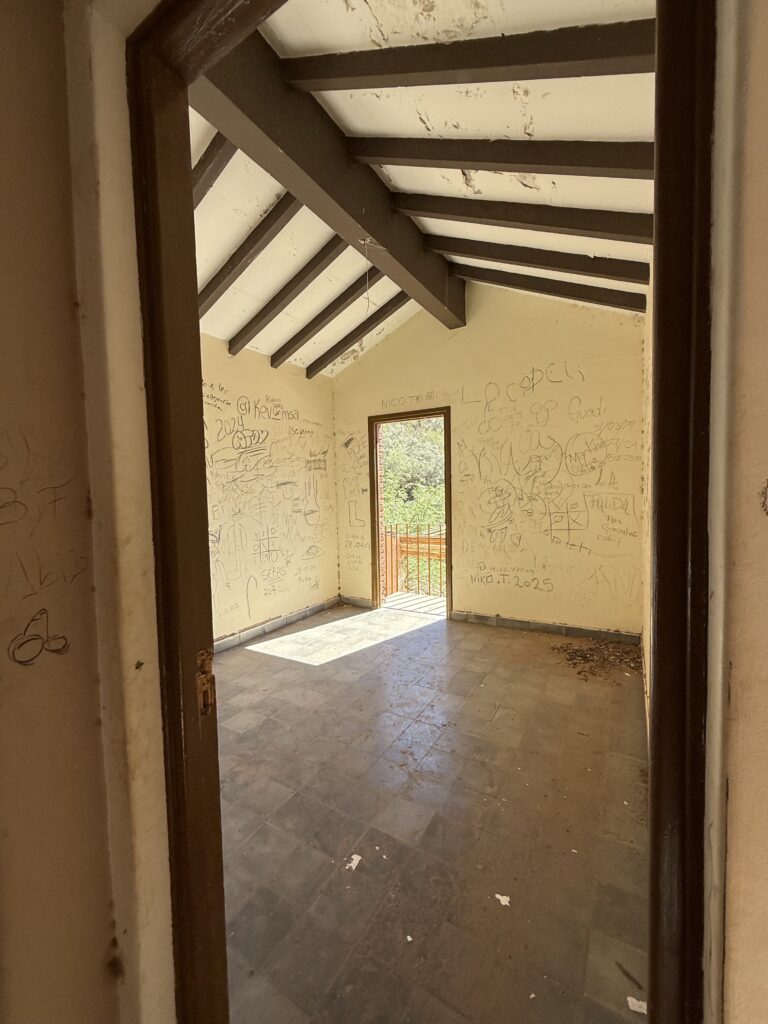
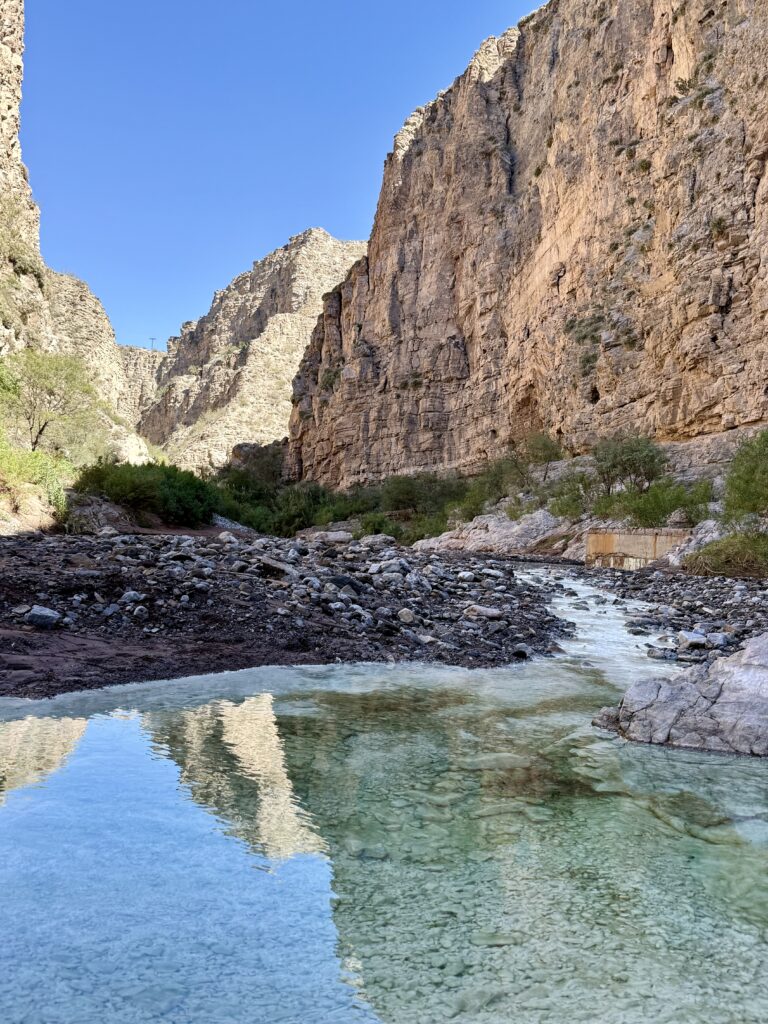
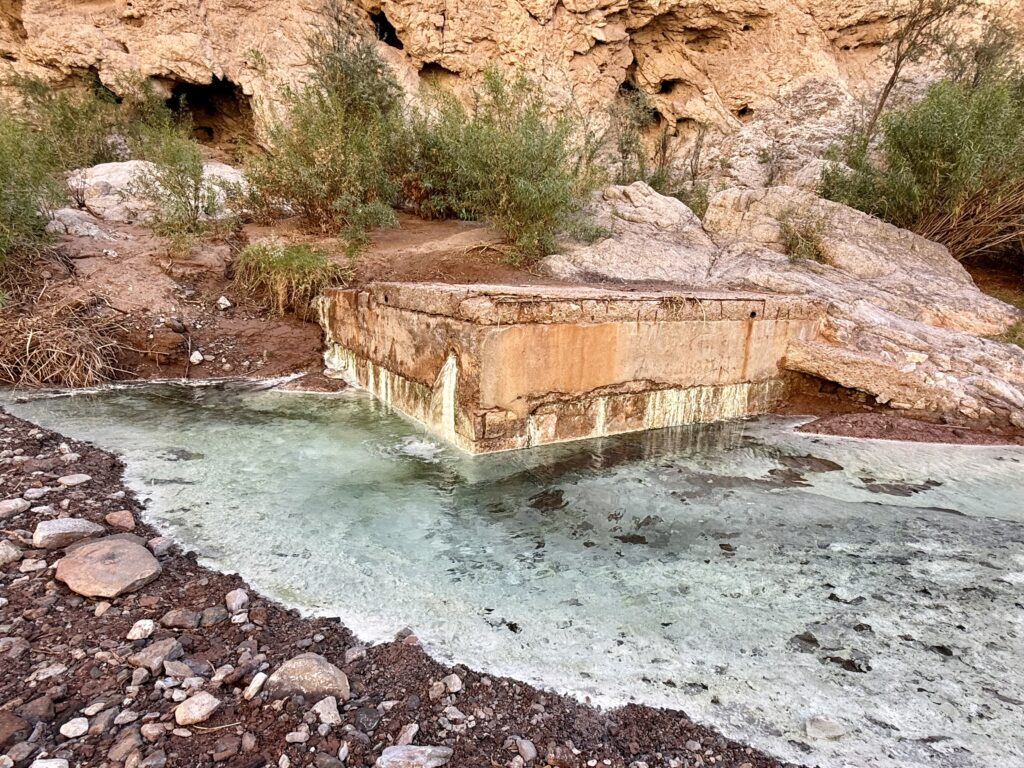
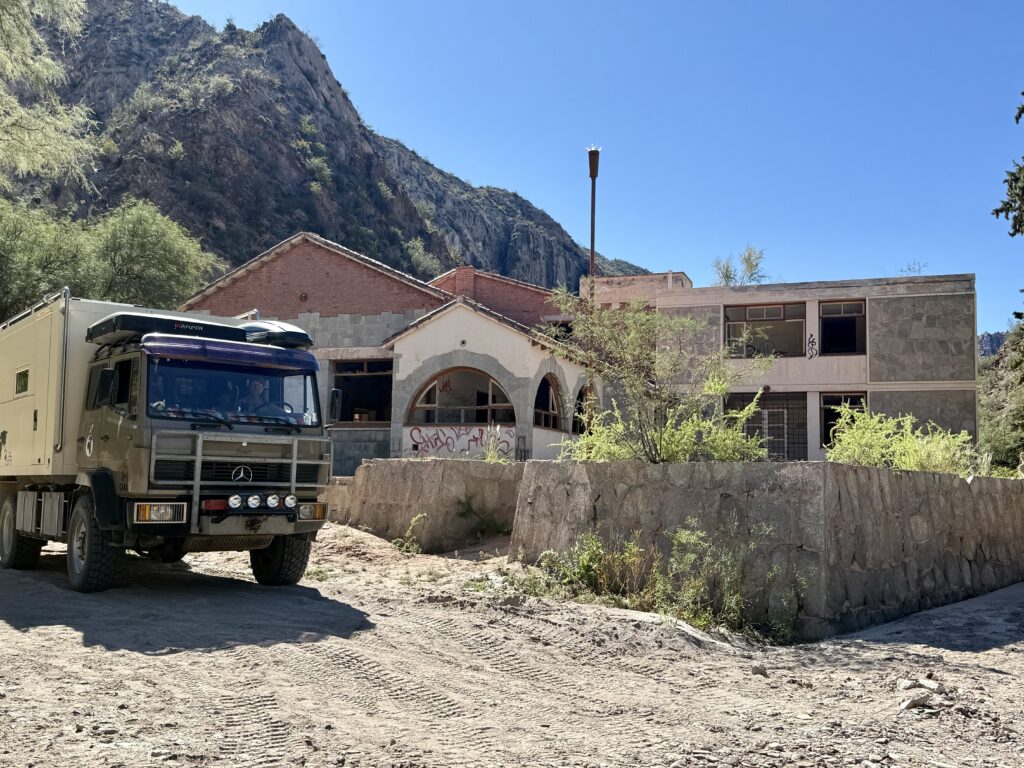
Stopping for lunch, we turned down a short, rough dirt track. At the end, tucked into a narrow canyon near La Ciénaga, we found the remains of another abandoned spa hotel.
Another couple was there in their Landcruiser, doing exactly the same as us. Ari, from Argentina, and Jenny, from Colombia, had spent over ten years in NYC before settling in Buenos Aires. Now they’re exploring these remote corners—places they feel are slowly disappearing behind gates and entry fees—wanting to see them while they remain wild.
It was a beautiful setting. The old hotel sat seemingly out of harm’s way beside a gentle stream. But further up, the canyon walls tightened, and the air carried the unmistakable scent of sulphur from nearby thermal springs that once fed the baths. The same canyon that gave it character also sealed its fate. At some point, flash floods tore through—ripping apart sections of the building and leaving behind a jumble of debris and broken dreams.
CHILECITO
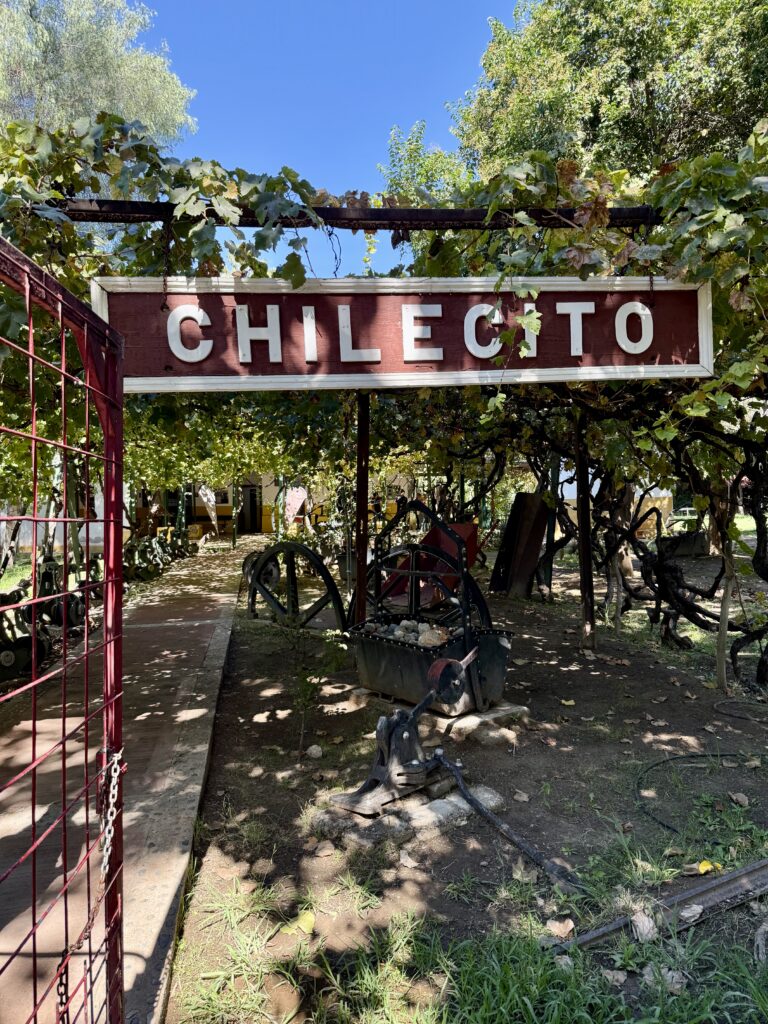
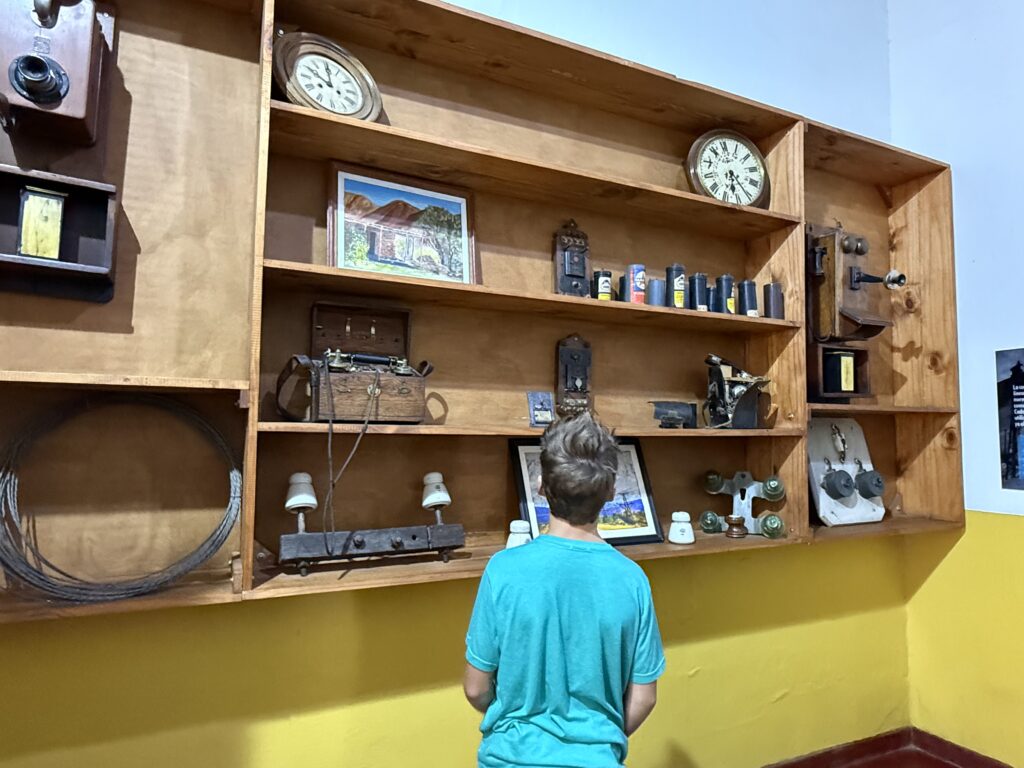
Chilecito was the next town we came to. With a history of its own, born from a once-booming mining era. In the late 19th and early 20th centuries, it thrived as a hub for gold extraction from the nearby Famatina Mountain Range, where rich veins drew both investment and ambition.
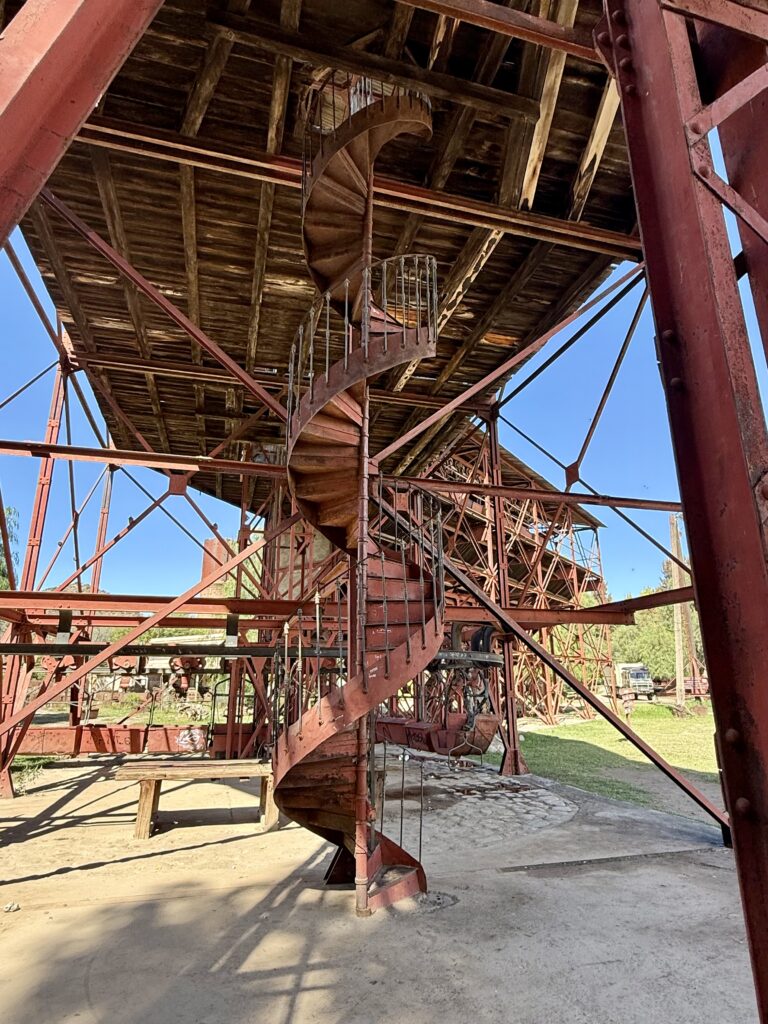
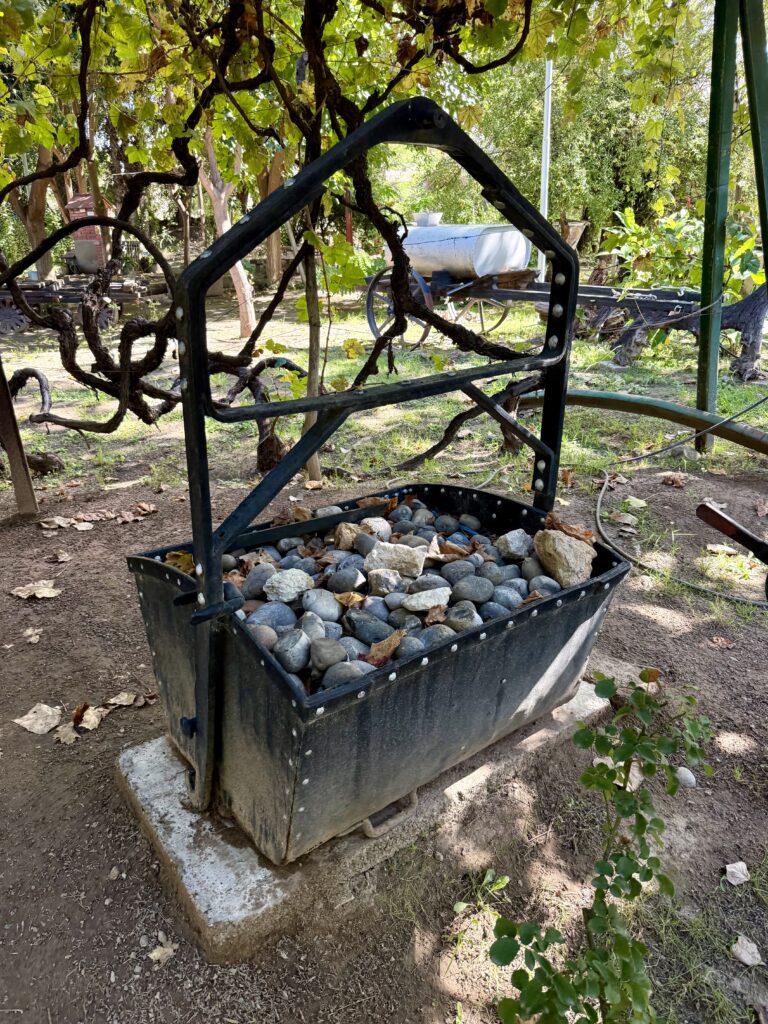
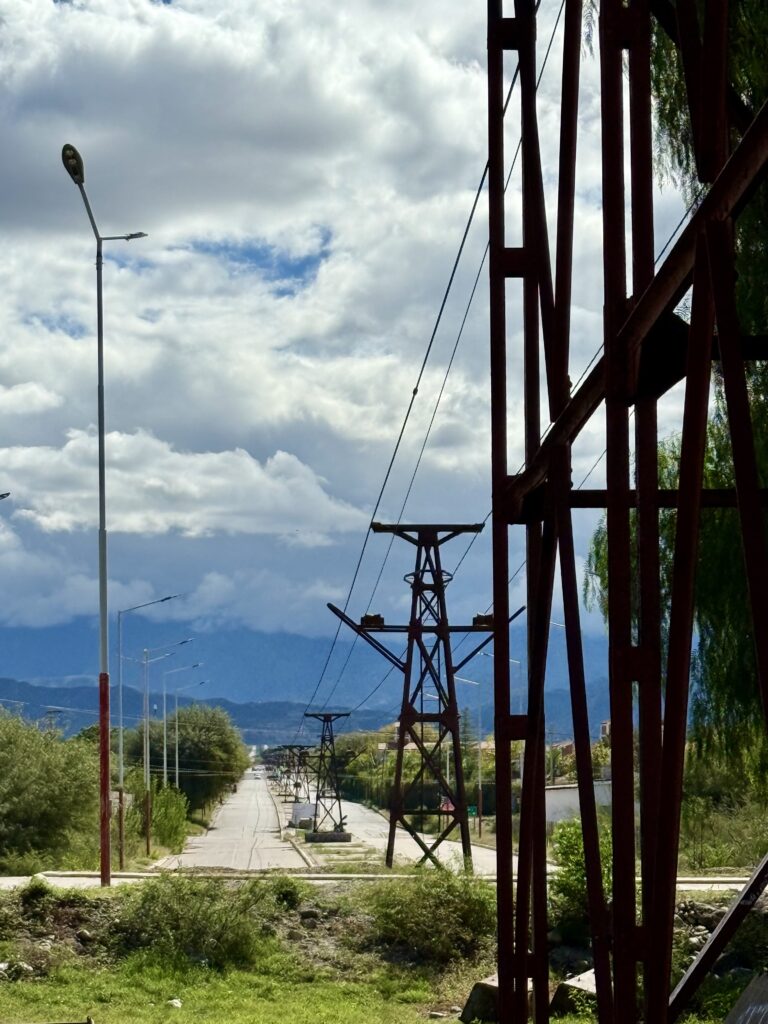
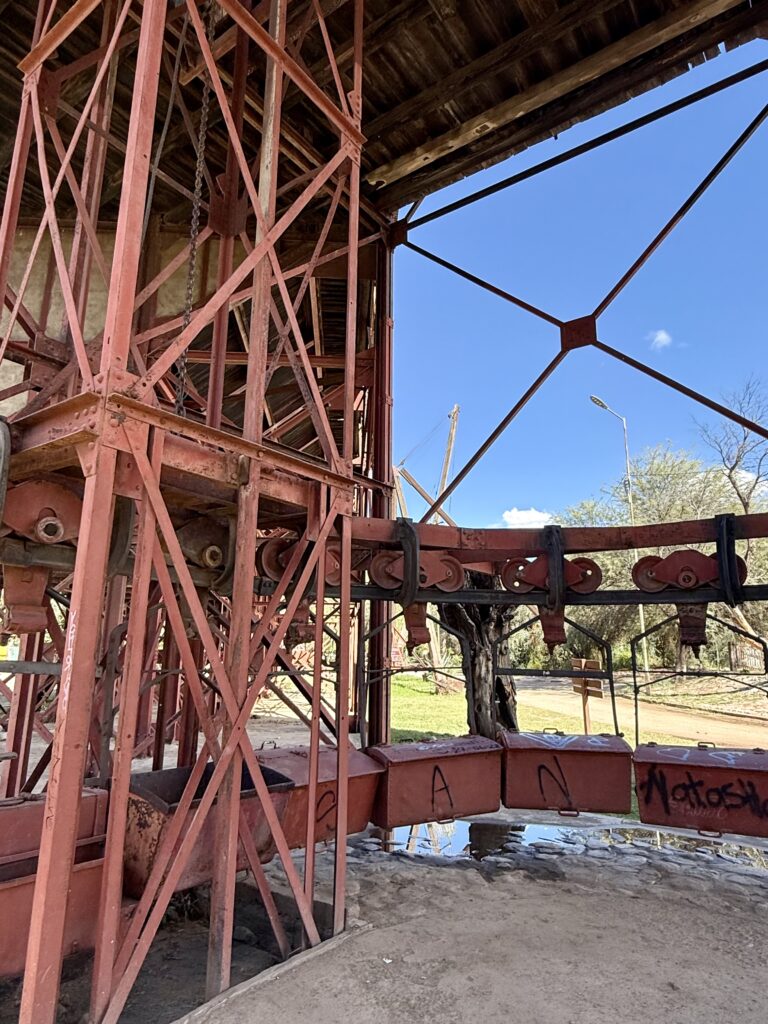
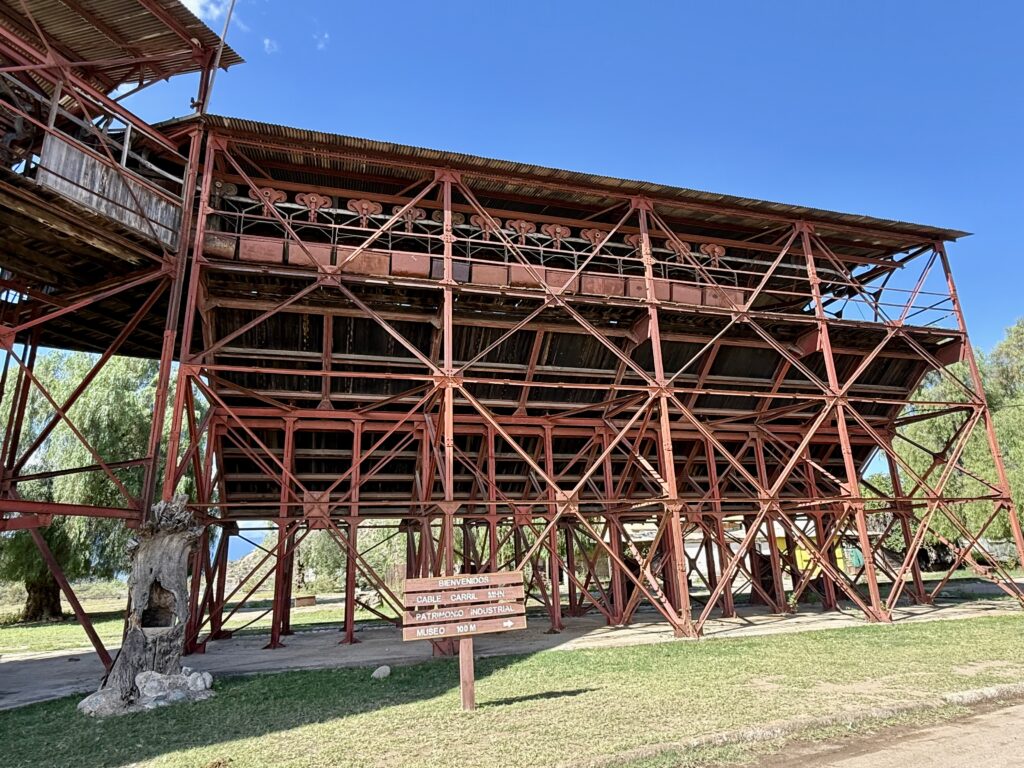
The real engineering marvel was the Cable Carril de Chilecito—a vast aerial cable system built to transport ore from the high-altitude mines down to the town below. Spanning over 30 kilometres and climbing steep, unforgiving terrain, it was considered one of the most advanced systems of its kind in the world. Today, its rusting towers still stride across the landscape—a lasting reminder of the scale and determination behind the operation.
But like many mining towns, the boom didn’t last. Harsh conditions, high costs, and dwindling returns eventually brought operations to a halt. What remains is a town shaped by that history—where the desert, mountains, and remnants of industry still quietly tell the story.
That night we find a place to camp off the road and ups the hill a way. Following a dirt road that lead further than we felt like driving. We are completely alone, it’s perfectly peaceful. Jaxon sleeps up in the roof tent. Tomorrow we push on to Belén.