
RUTA 40 HALF WAY POINT, ARGENTINA
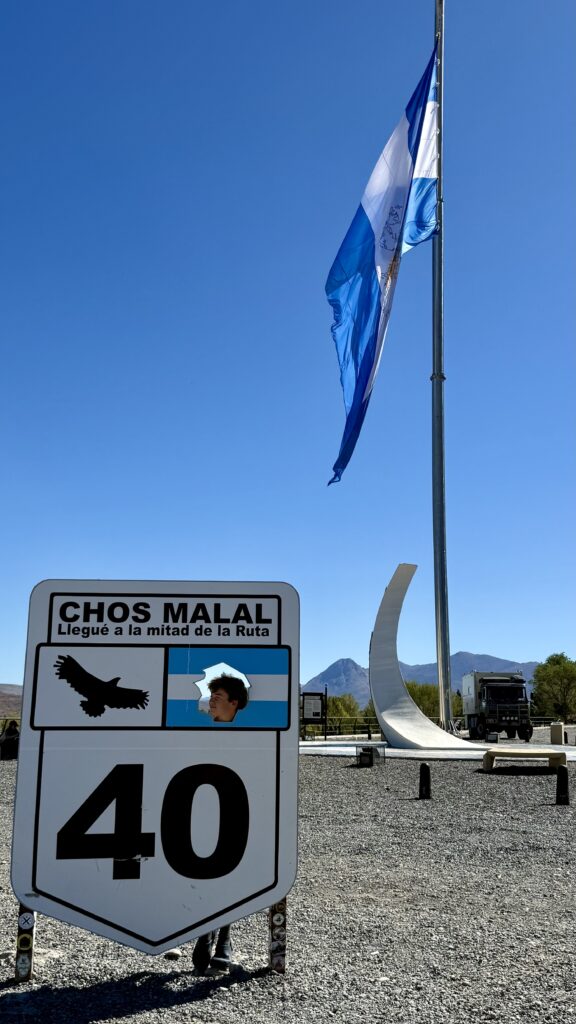
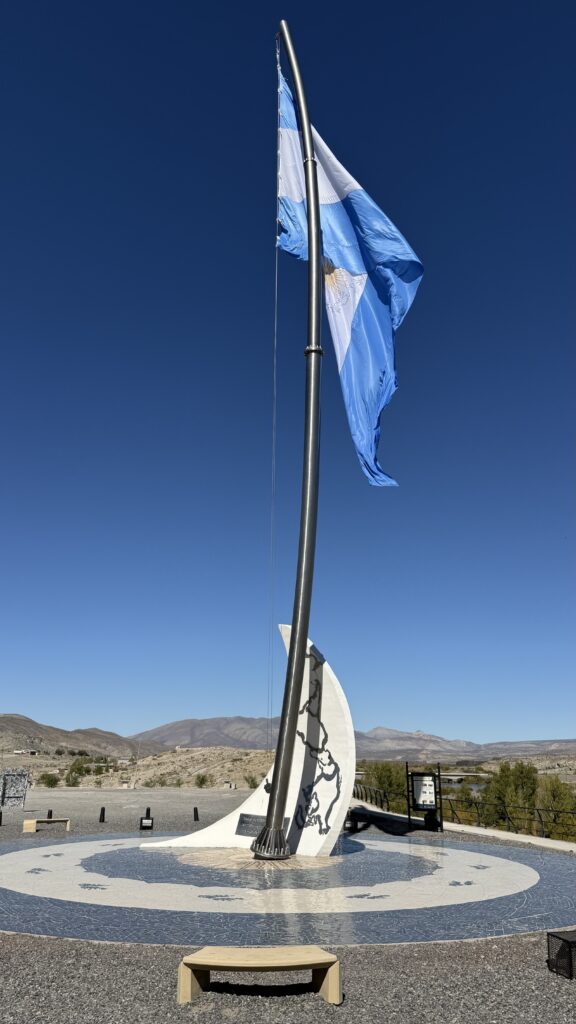
3 – 10 April. From our last laundry stop we continue along the Ruta 40 North. Stopping at the half way point on the 40 in Chos Mall. Ruta 40 runs over 5,000km along the spine of the Andes, from La Quiaca on the Bolivian border to Cabo Virgenes in Southern Patagonia. Here is a transition zone where the Patagonian steppe meets the Andean foothills. Made for a photo stop and leg stretch.
BACK INTO CHILE
4 April. Crossing back into Chile once more, we went through the now-familiar border routine—this time hiding the last of our fruit and veg. After so many crossings back and forth, it was starting to feel a little ridiculous. It would be nice if they opened the borders like in Europe.
We crossed at the higher altitude pass of Paso del Portillo at 4,200m. A beautiful stretch of road winding through wide, open landscapes. Dropping back into Chile, we took the quieter back roads—partly for the scenery, partly to avoid the tolls—before eventually joining the highway on the outskirts of Santiago. The underground tunnel system made navigating the city surprisingly easy, and we popped out on the northeastern side without trouble.
After a quick grocery stop, we headed back up to Las Varas campground, where we’d stayed four months earlier on our way south. Pulling in just before dark, we introduced ourselves to the two other vehicles there—a couple from Germany and another from Belgium.
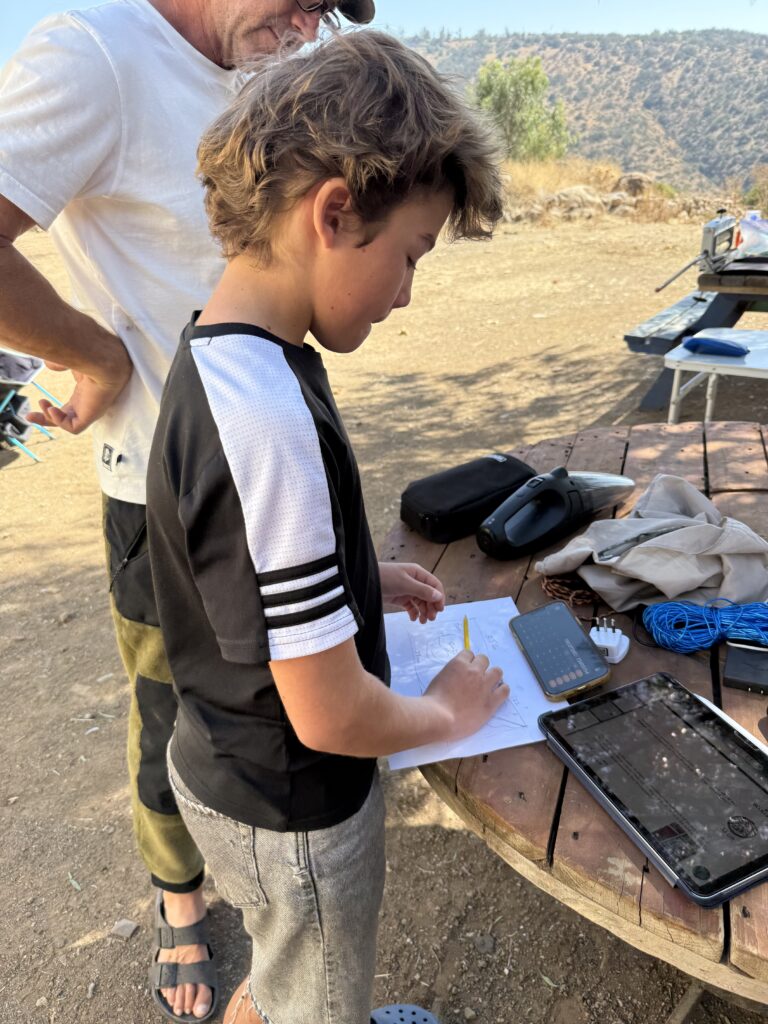
The next morning was for chores. I tackled the last of the laundry while the kids got back into their schoolwork. With only a couple of months left in the school year, there’s a bit of catching up to do. We were there 2 nights, Mario & Wenke arrived on the second.



KAUFFMAN MERCEDES, SANTIAGO
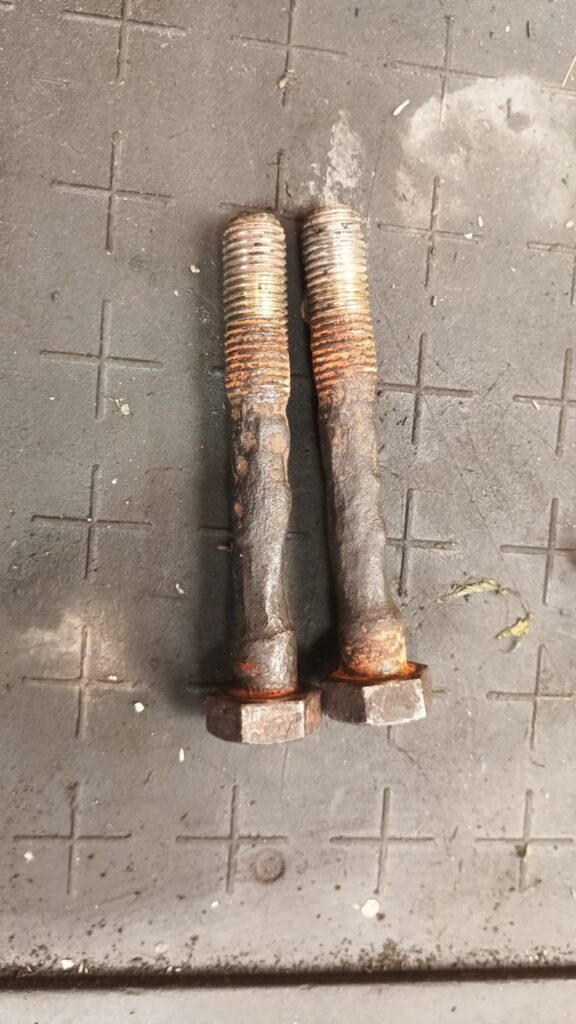
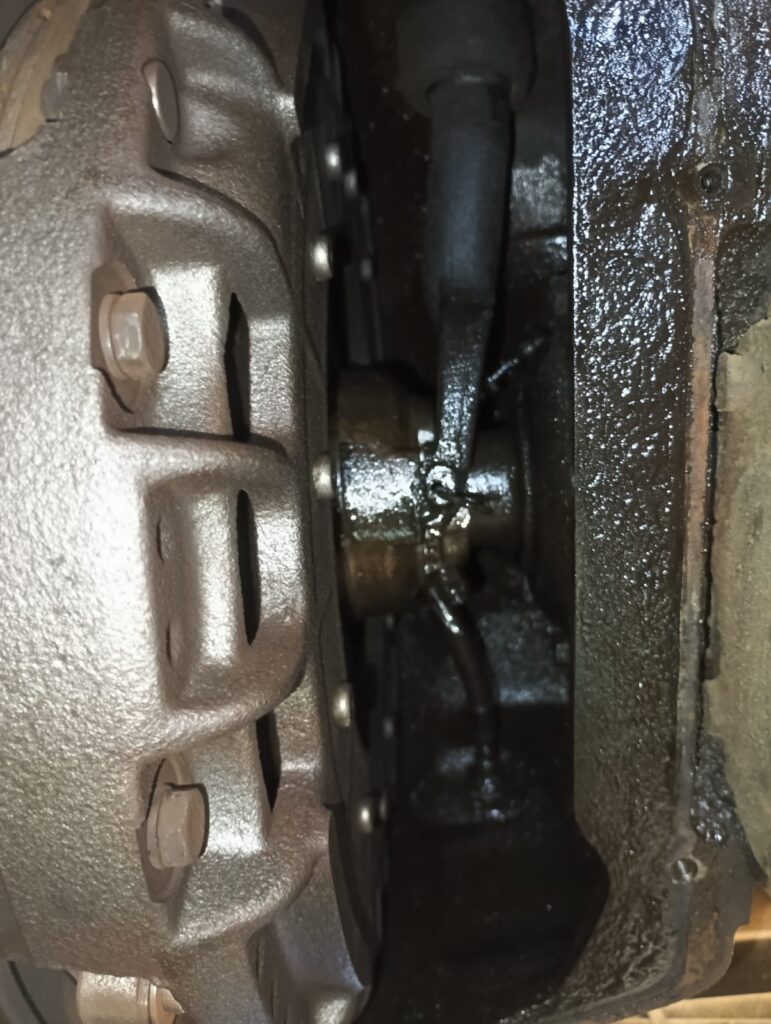
Monday morning, 8:30 sharp, we pulled into Kaufmann Mercedes-Benz for round two of Bruce’s maintenance. This time it was more involved—the oil pan needed to come off for a new gasket, and Tim had them install a pneumatic actuator that couldn’t be done further south as it required a slight modification, and seal replacement on the fuel injection lines. During the inspection, they also found two worn bolts that needed replacing. The result: another week in the workshop.


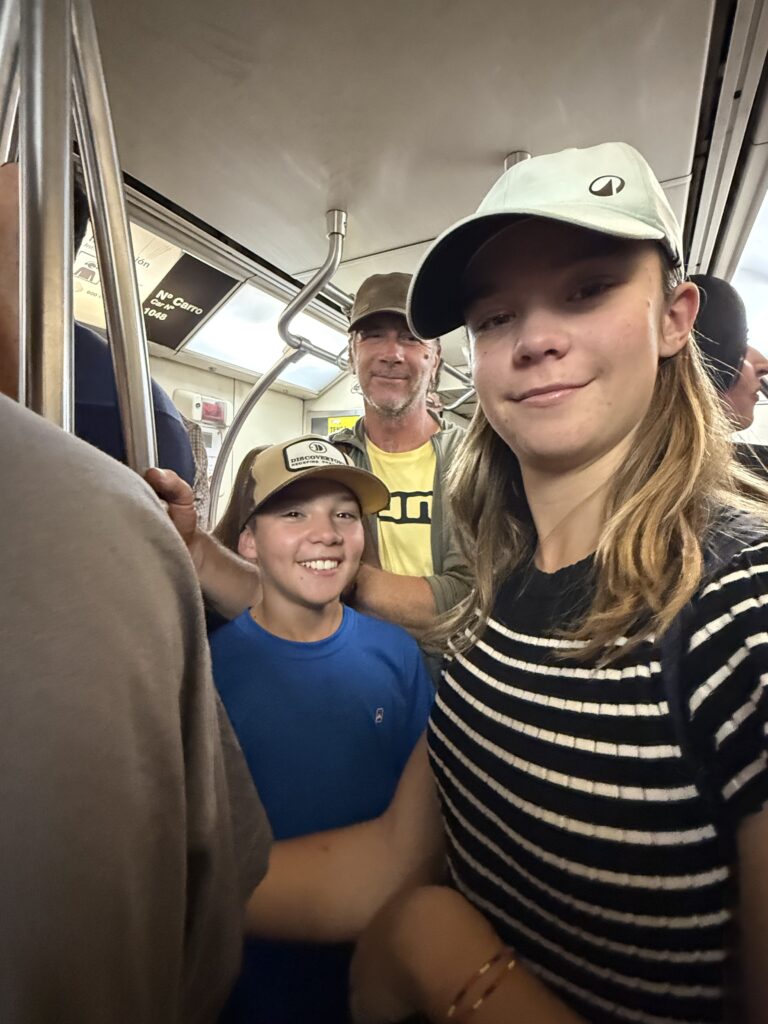
So once again, we packed up the essentials and caught an Uber to an Airbnb—a comfortable two-bedroom apartment in a quieter part of the city. For the next week, we found a routine of schoolwork in the mornings, exploring in the afternoons. Navigating our way around the city easily on the metro.


MUSEUM OF HUMAN RIGHTS AND MEMORY
One of the more confronting visits was to the Museum of Memory and Human Rights. Built to document the human rights violations during the dictatorship of Augusto Pinochet, the museum is not an easy place to walk through. Testimonies, photographs, personal belongings—each exhibit tells part of a much larger story of loss and survival.
The kids found it difficult to take in. The idea that a government could turn so completely against its own people was hard to grasp. The visit ends at a wall of faces—hundreds of photographs, each one a life interrupted. It stays with you.
The final room is one that quietly stops you in your tracks. A vast wall stretches floor to ceiling, over 2 levels. covered in hundreds upon hundreds of photographs—faces of those who were detained, disappeared, or killed during the dictatorship of Augusto Pinochet between 1973 and 1990.
There are more than 3,000 documented victims of execution and disappearance, and thousands more who were imprisoned and tortured. Each photograph represents a person with a life, a family, a story—students, workers, parents—ordinary people caught in something unimaginable.
Standing there, it’s the scale that hits you first, then the detail. Rows of faces, all looking back, each one demanding to be remembered.


MUSEUM OF NATURAL HISTORY
Needing something lighter, we walked over to the National Museum of Natural History. The shift in tone was immediate. Here we moved through the story of the Earth itself—from its formation to dinosaurs, early human history, and modern day. We spent an hour wandering the exhibits, an easy reset after the weight of the morning.


BARRIO ITALIA & BARRIO LASTARRIA
Enjoying the funky neighbourhoods
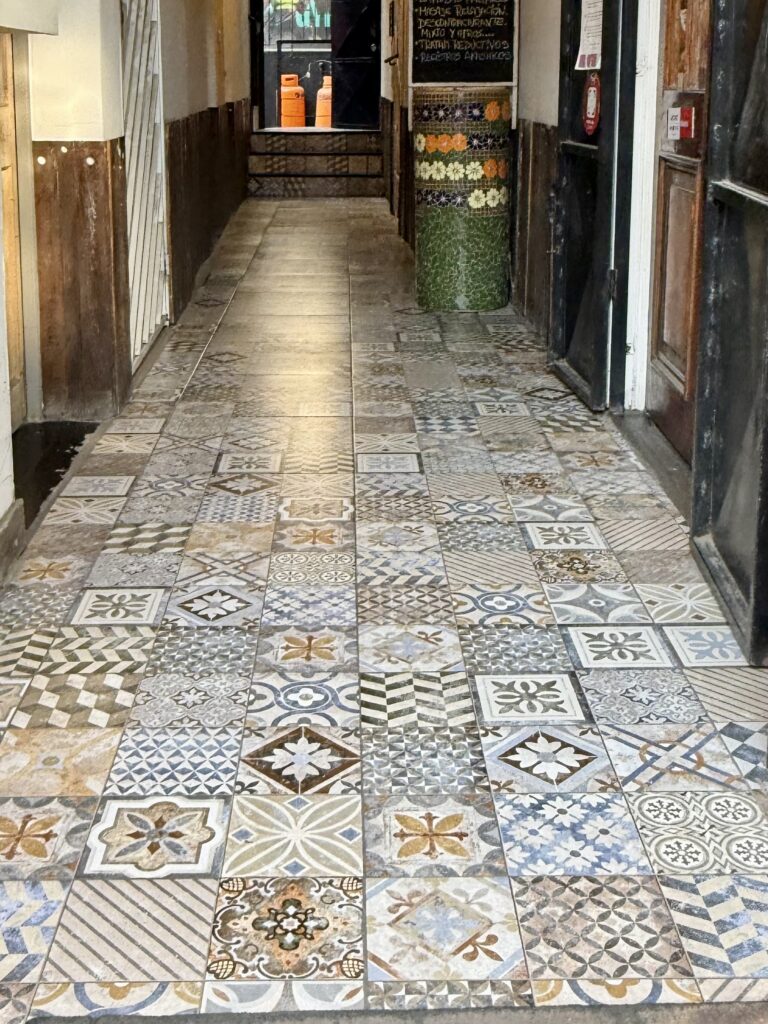
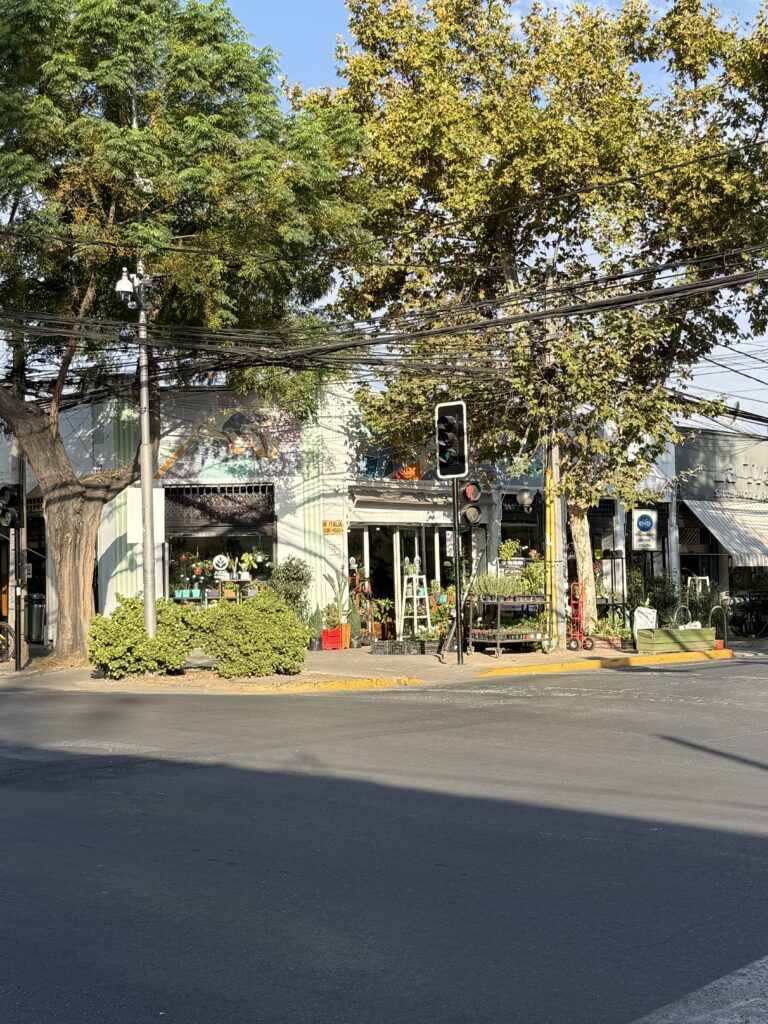
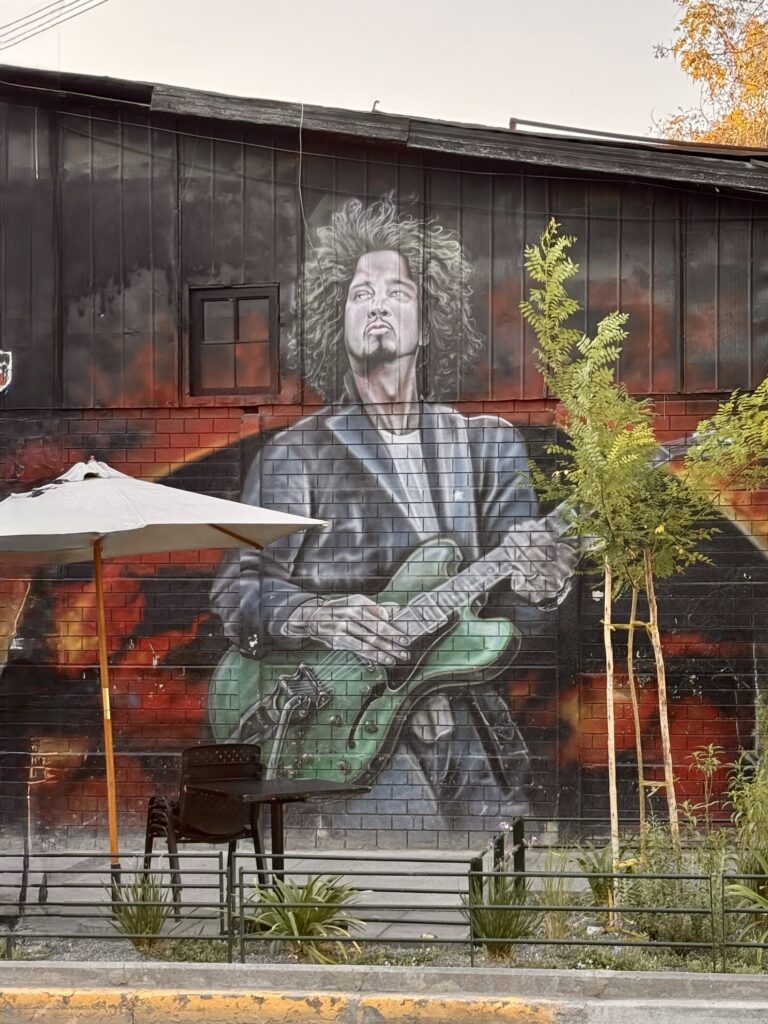
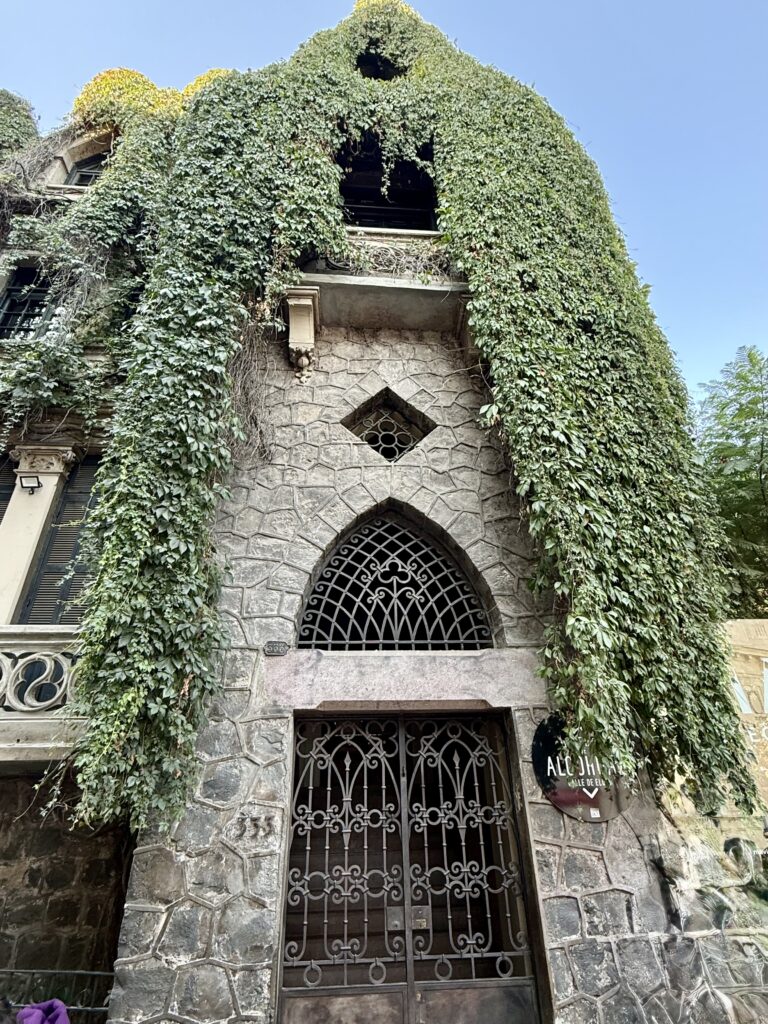
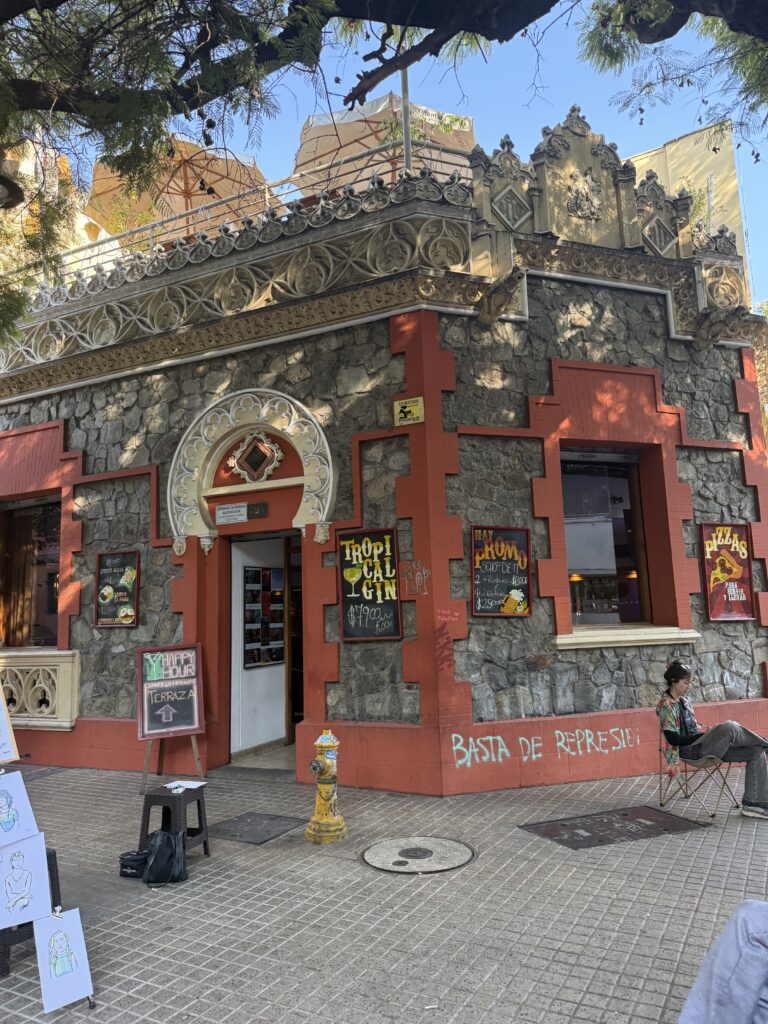
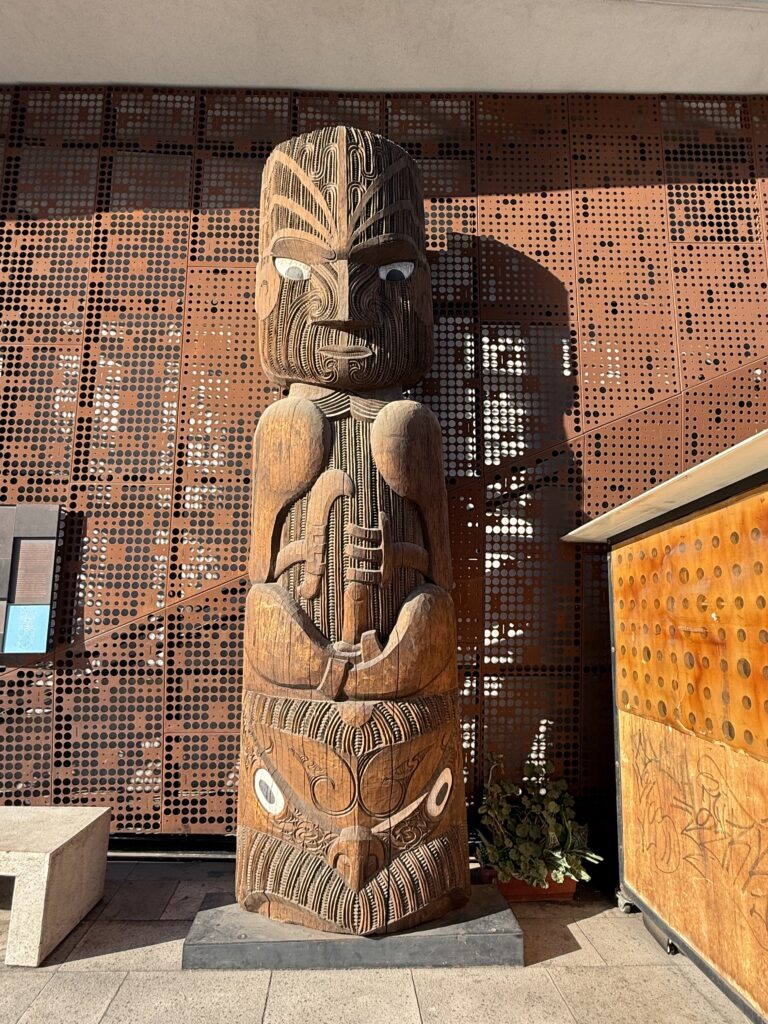
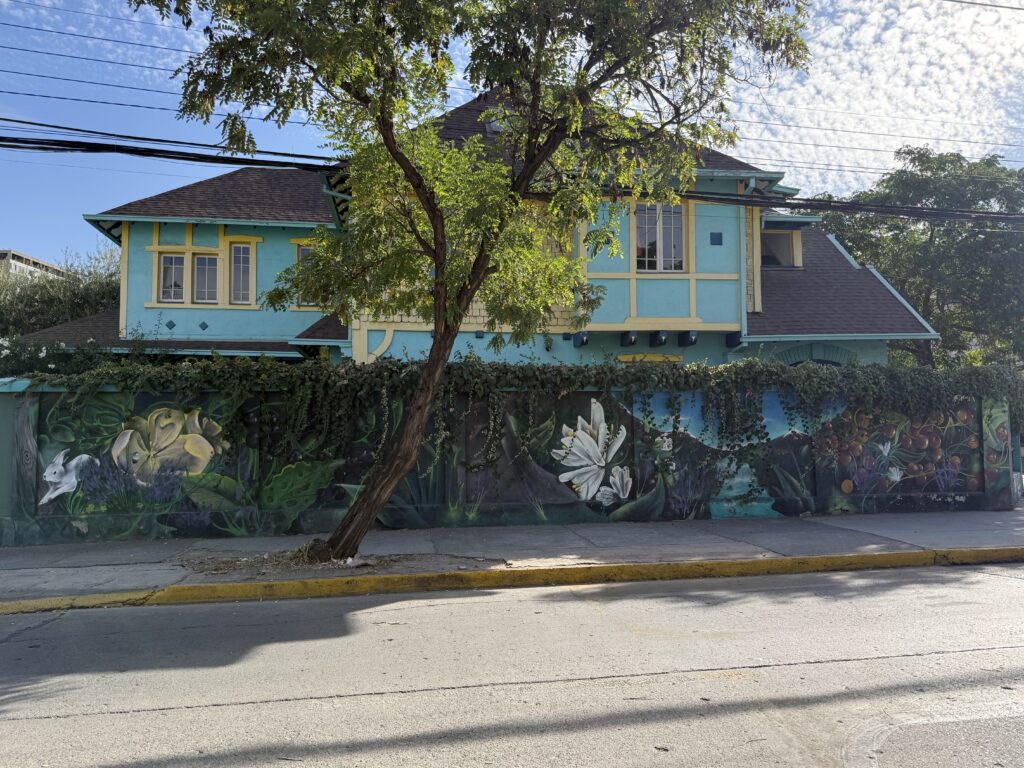
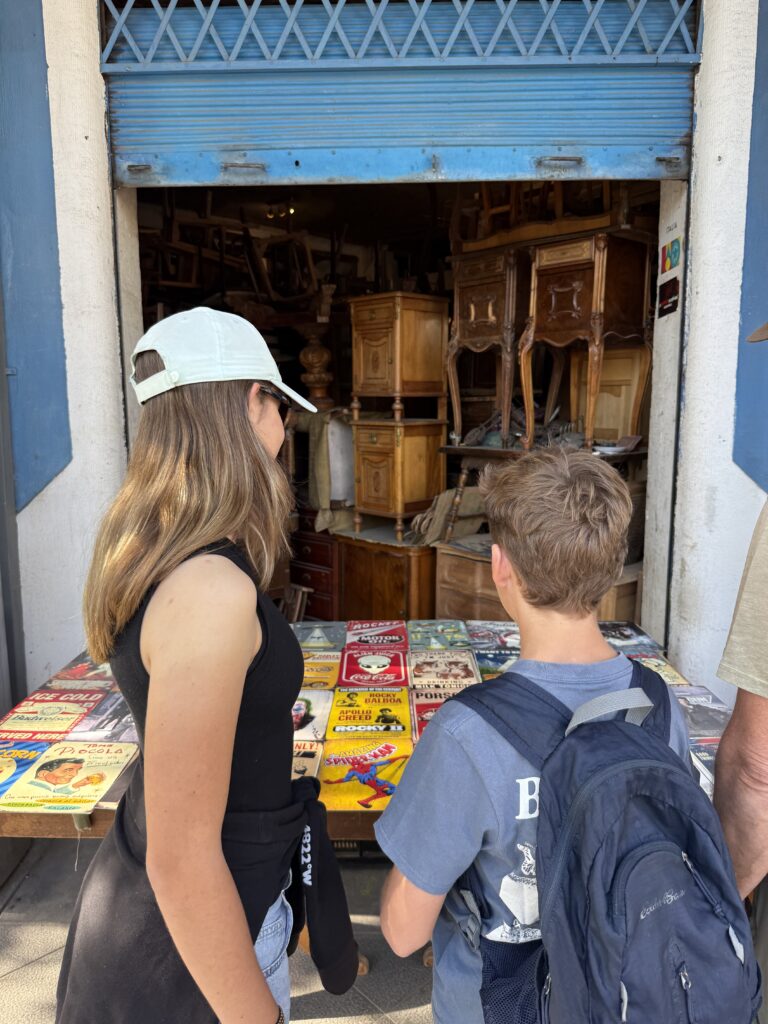
We also spent an afternoon wandering Barrio Italia, with its mix of small cafés, restored houses, antique furniture stores, and independent shops. It has a relaxed, creative feel. We spent a few hours wandering around without much direction. Nearby, Barrio Lastarria felt a little more polished, busier, but just as enjoyable.
Another afternoon was spent clothes shopping in the same massive mall I’d managed to get lost in last time. Charley has grown—again—and needed a few things that actually fit.
Somewhere in between, we managed to get the drone repaired after a misjudged landing, and colliding with the truck.
HISTORICAL CENTRE
We spent a morning exploring the historic centre, visiting the Santiago Metropolitan Cathedral, passed by the Placio de la Moneda, government buildings and wandered broard the pedestrian streets nearby.


BRUCE IS READY TO ROLL
By Friday afternoon, Bruce was ready. The bill was hefty, but fair—everything matched the original quote, here’s hoping all the work is good. Max Kaufmann happened to be there. He introduced himself and gave us his cell phone, offering help if we needed anything further down the road. So we take that as a personal guarantee!
At 6pm we said our goodbyes to Mario and Wenke once more. They were picking up their newly adopted dog, Sammy, a gentle, sweet-natured boy. They planned to stay in the city a little longer while he settled in and they sorted their repairs. We loaded up and headed north out of Santiago, glad to be moving again, and glad we’d taken the time to stay.
We drove north out of the city and spent a quiet night in a new neighbourhood. Alone in a dusty parking lot at night, only to be surrounded by morning as a local road cycling club filled the space within twenty minutes. We moved just in time before being boxed in for the day.
A stop at Jumbo Supermarket turned into a highlight—huge, modern, and with a surprisingly good international section filled with German and Swiss favourites. While stocking up for yet another border crossing, we by chance bumped into Gunnar and Tanya, a couple we’d met months earlier in El Chaltén.
Stocked and ready, we prepared to cross back into Argentina one last time. Ahead lay the quieter, more remote stretches beyond Ruta 40, and the high, wild landscapes of the Puna Region.
One Response
So the new Museum for the Remembered and Human Rights, once simply, The Disappeared, is now open again. The memorials along the roadside silent testimony to the pain. Little has changed, it’s just happening somewhere else now, all with a common denominator.
Must feel nice to have a taught Bruce again. Well done to the kids staying focused on their studies.