Uyuni is a tough, wind-scoured town perched at 3,656 metres on Bolivia’s altiplano — part railway outpost, part gateway to the desert. Founded in 1889 as a strategic junction linking Andean mines with Chilean ports, it grew around the minerals that passed through and the workers who hauled them. Its broad streets, concrete buildings, and ever-present dust give it a stark, frontier feel, but its purpose is unmistakable: Uyuni exists because of the surreal white world that begins just beyond its edge.
That world is the Salar de Uyuni, the planet’s largest salt flat — more than 10,500 square kilometres of blinding, shimmering nothingness.
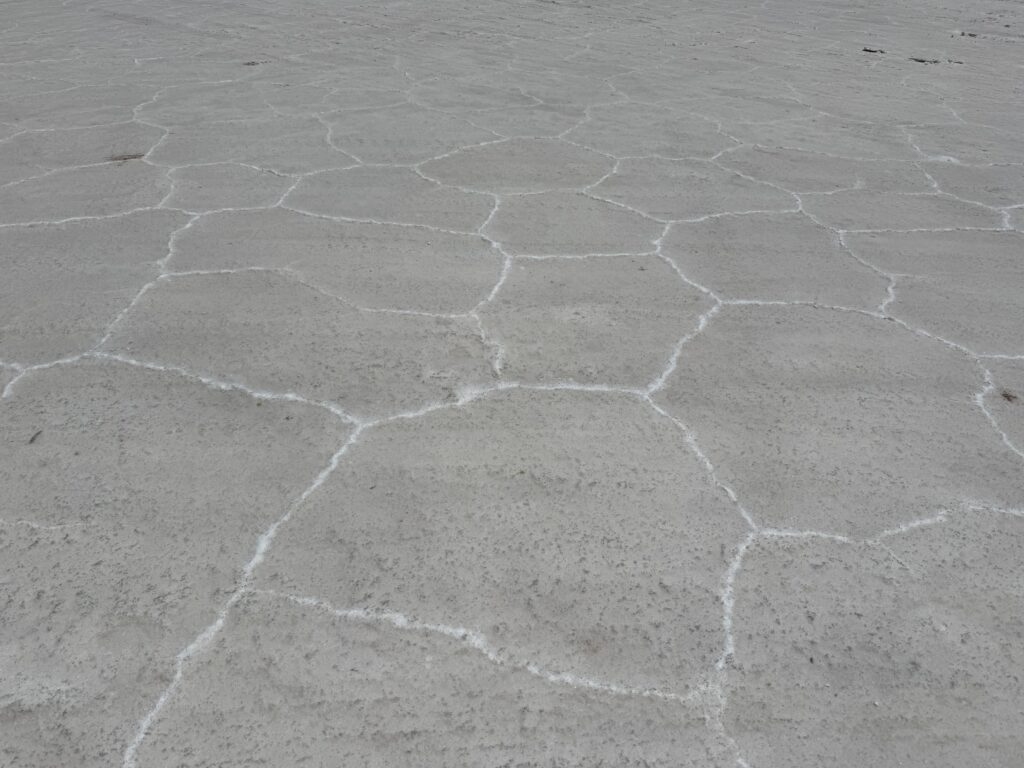
Formed when ancient lakes evaporated, leaving behind a thick crust of salt floating atop mineral-rich brine, it is a place where horizons vanish and scale becomes impossible to judge. In the dry season, the salar is a vast white canvas; in the wet season, it becomes a perfect mirror, reflecting sky and cloud so completely that land seems to dissolve. It’s geologically young — a landscape reduced to light, space, wind and silence
THE TRAIN GRAVE YARD
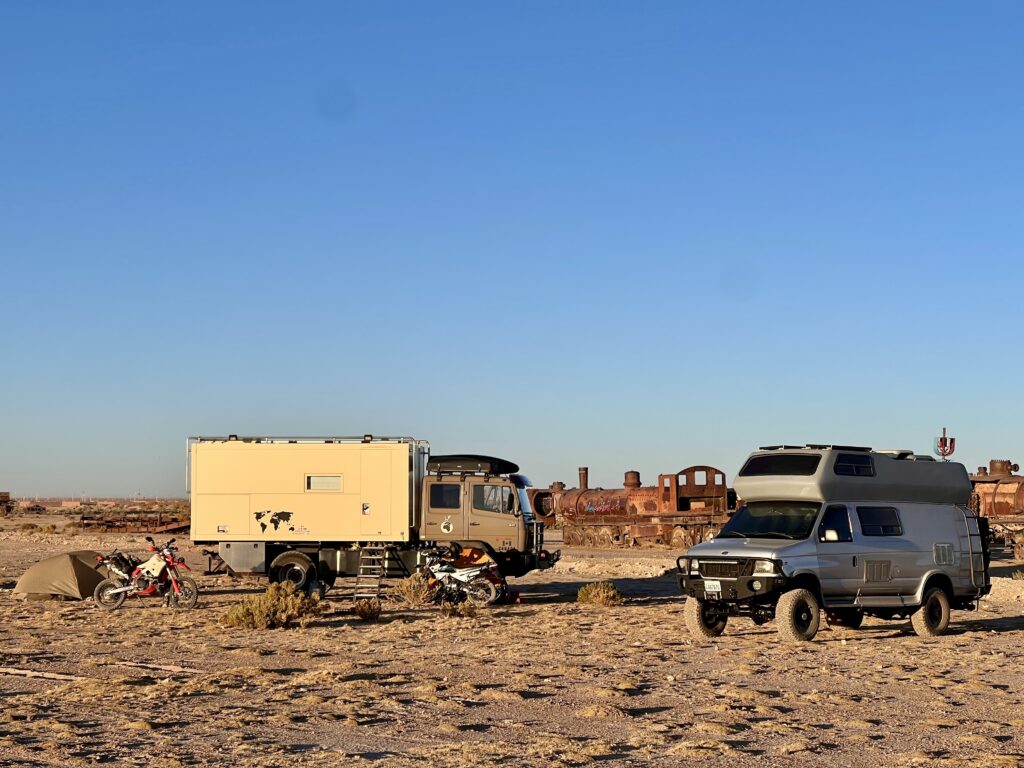
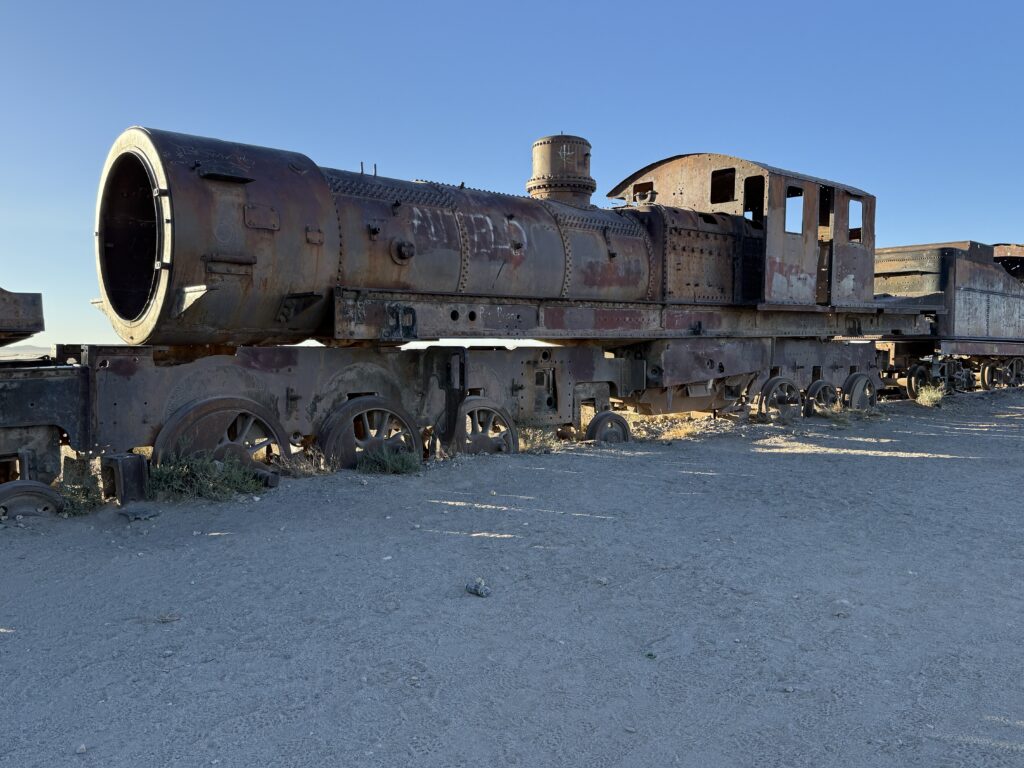
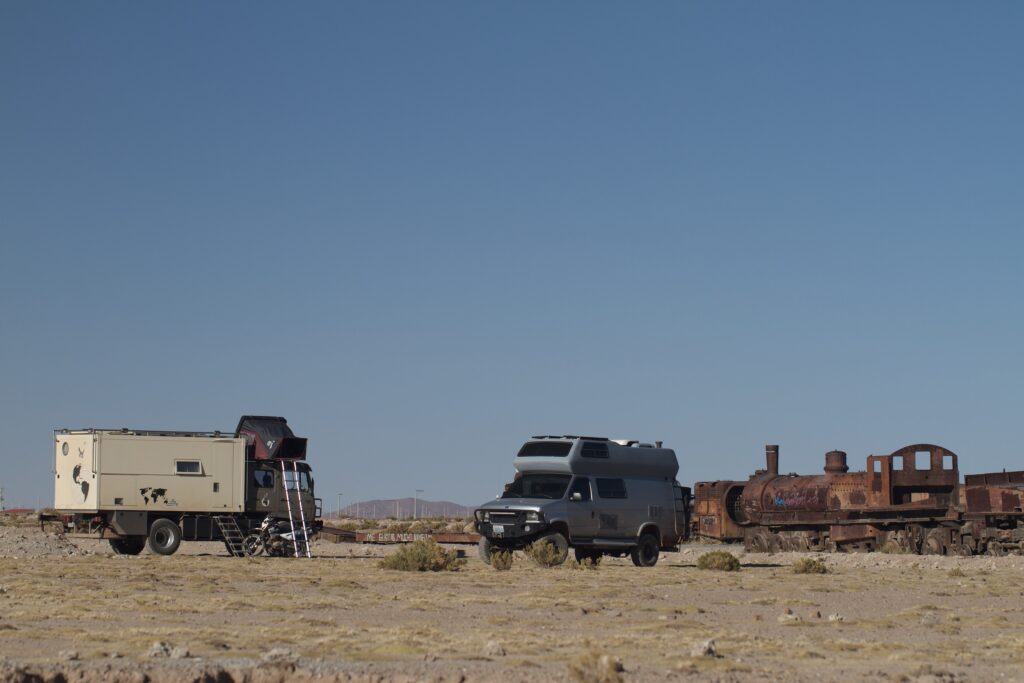
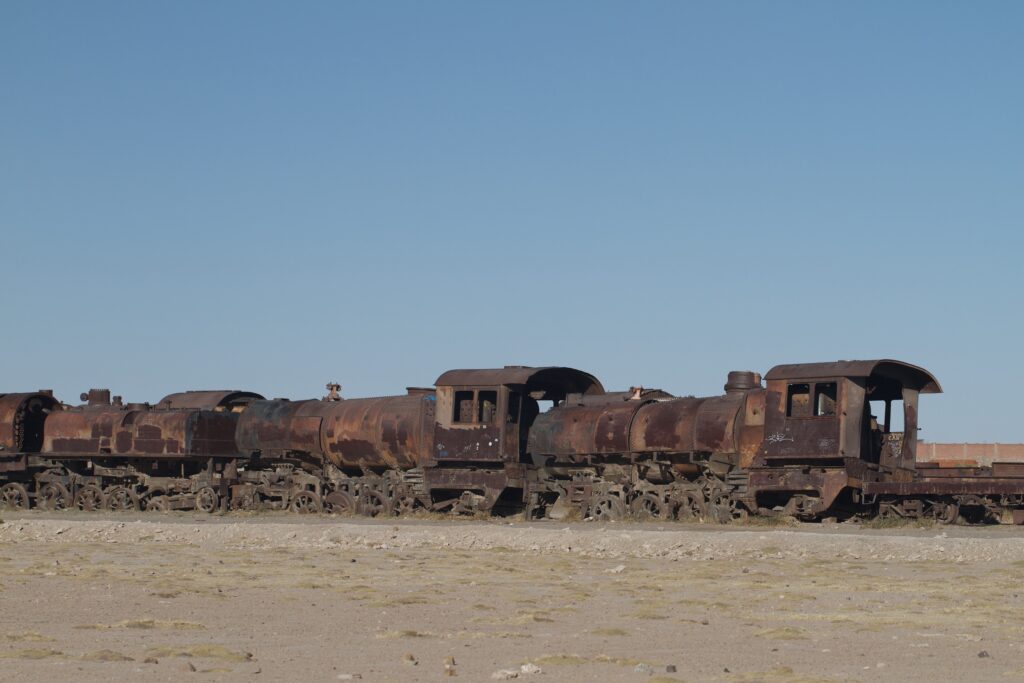
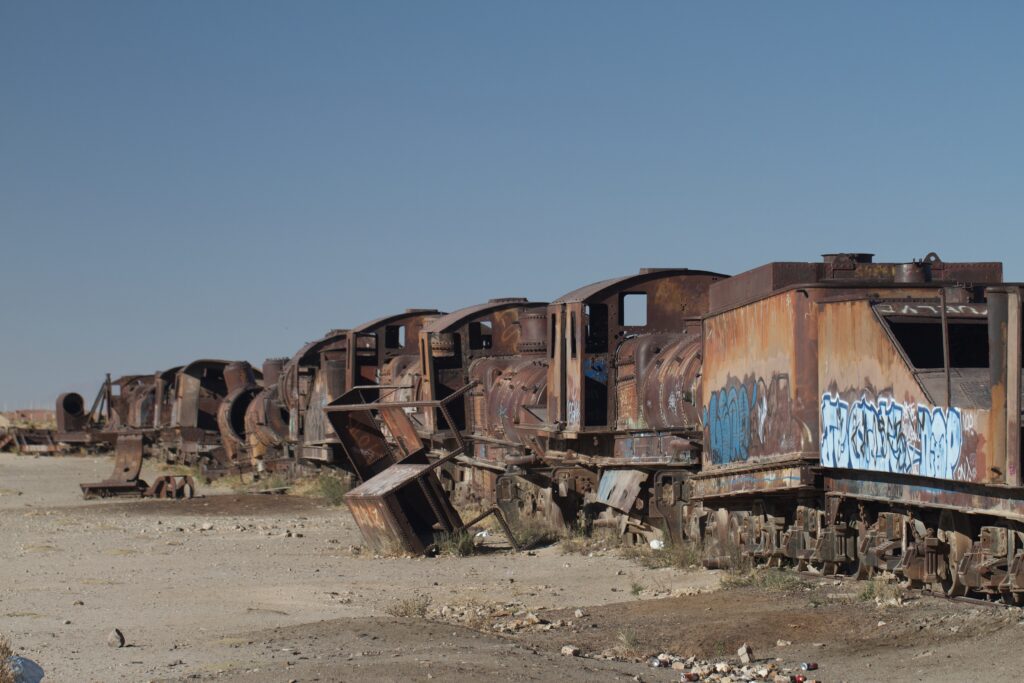
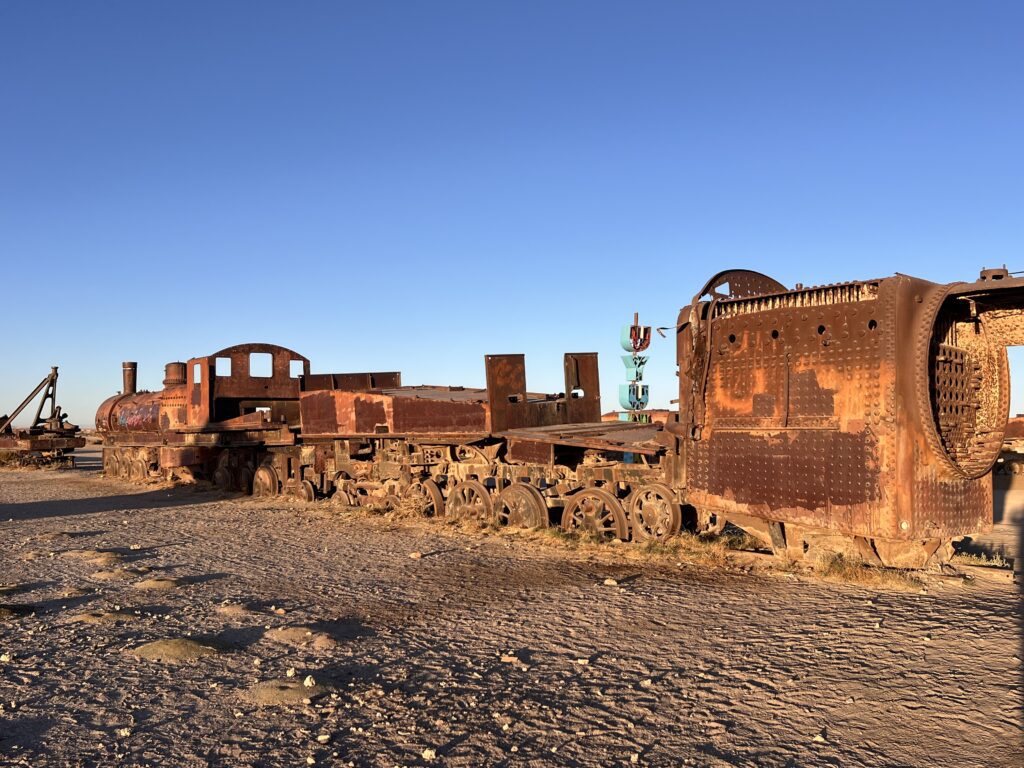
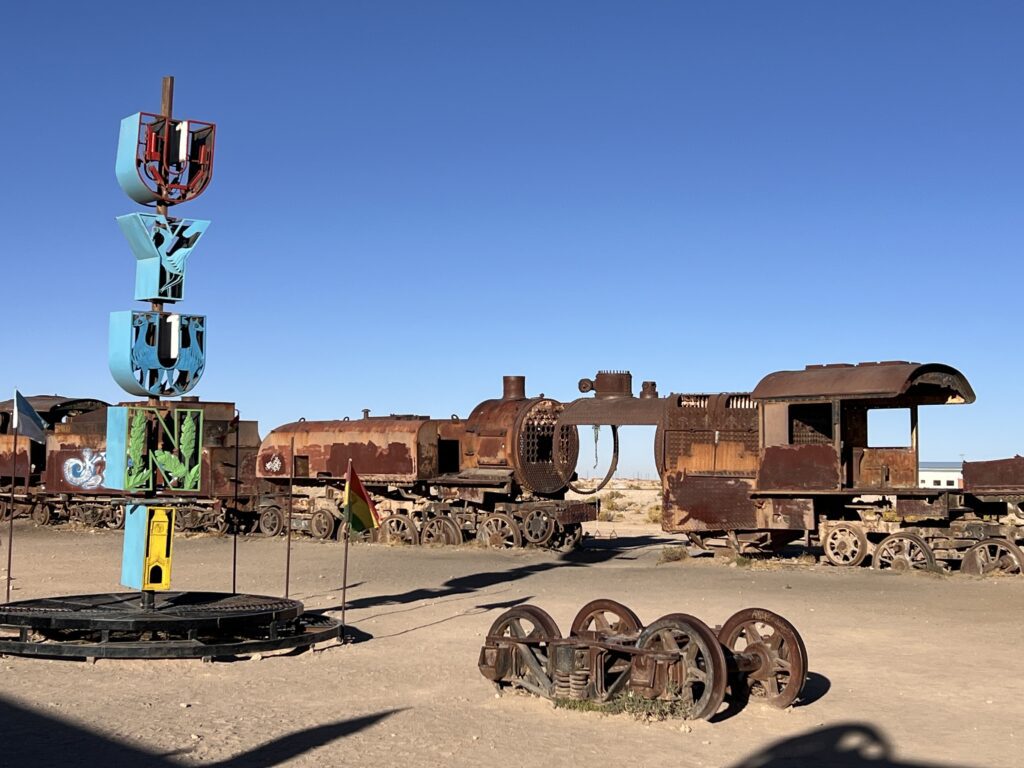
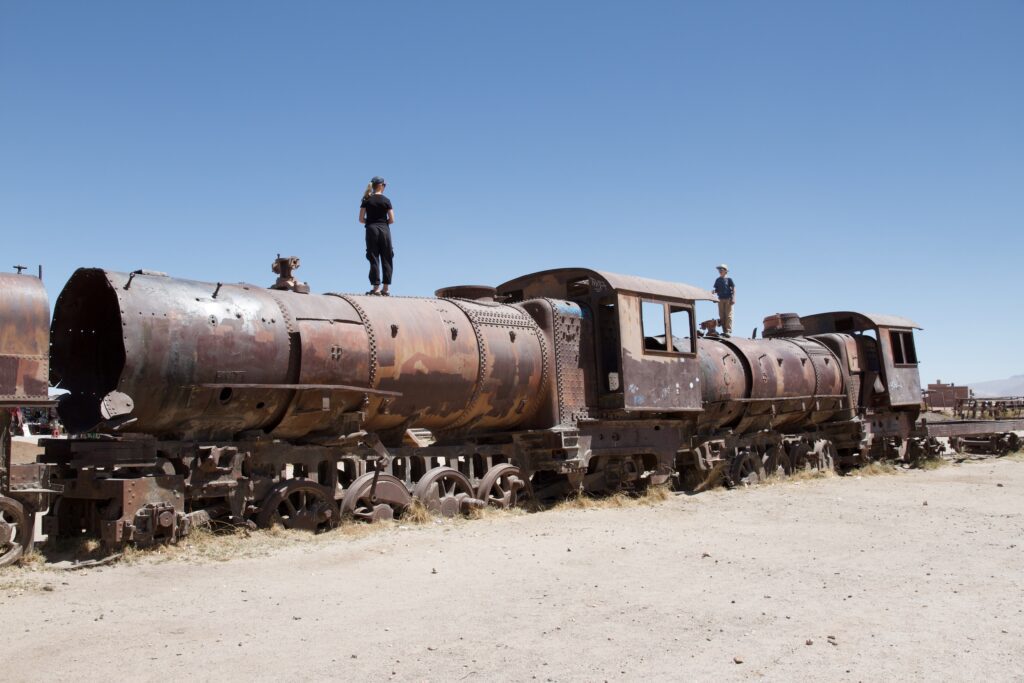
20 – 21 November. ust outside town lies the train graveyard, one of Uyuni’s strangest relics from its mining heyday. When the industry declined and rail lines were abandoned mid-century, dozens of old steam locomotives and carriages were simply left to rust at the desert’s edge. Today they sit half-buried in sand, corroded by wind and salt, slowly surrendering to the elements. Tourists stop to photograph them while our kids play among the hollow shells, and the desert quietly continues its slow, patient reclaiming of both metal and memory.
A MESSY PREVENTION
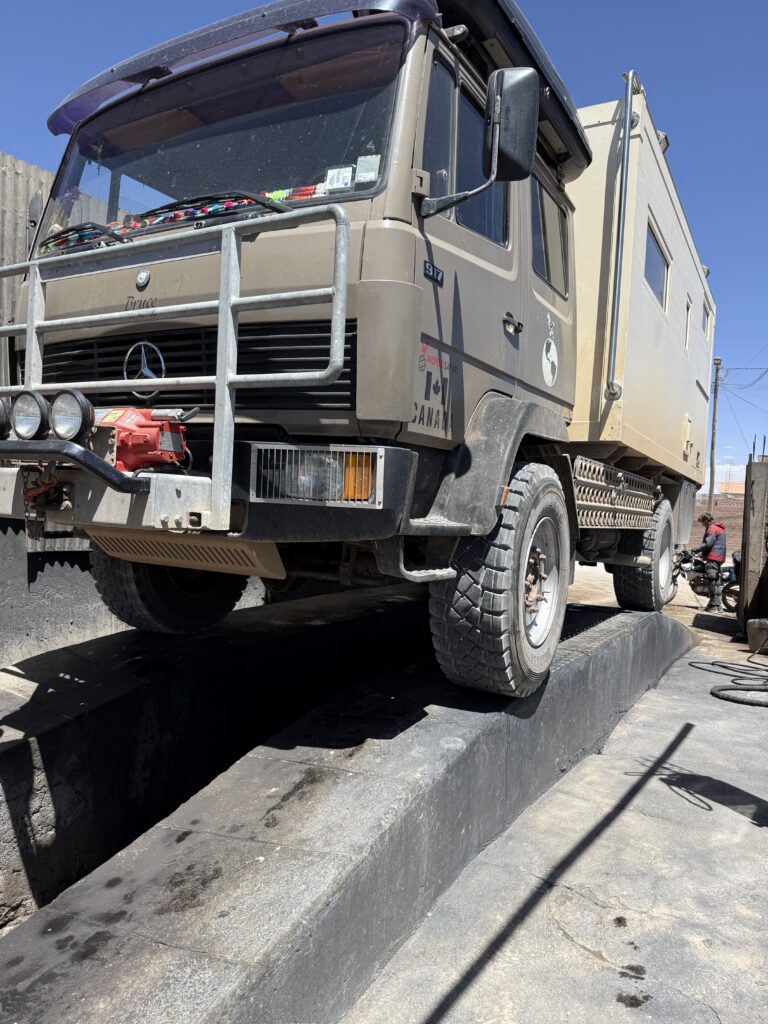
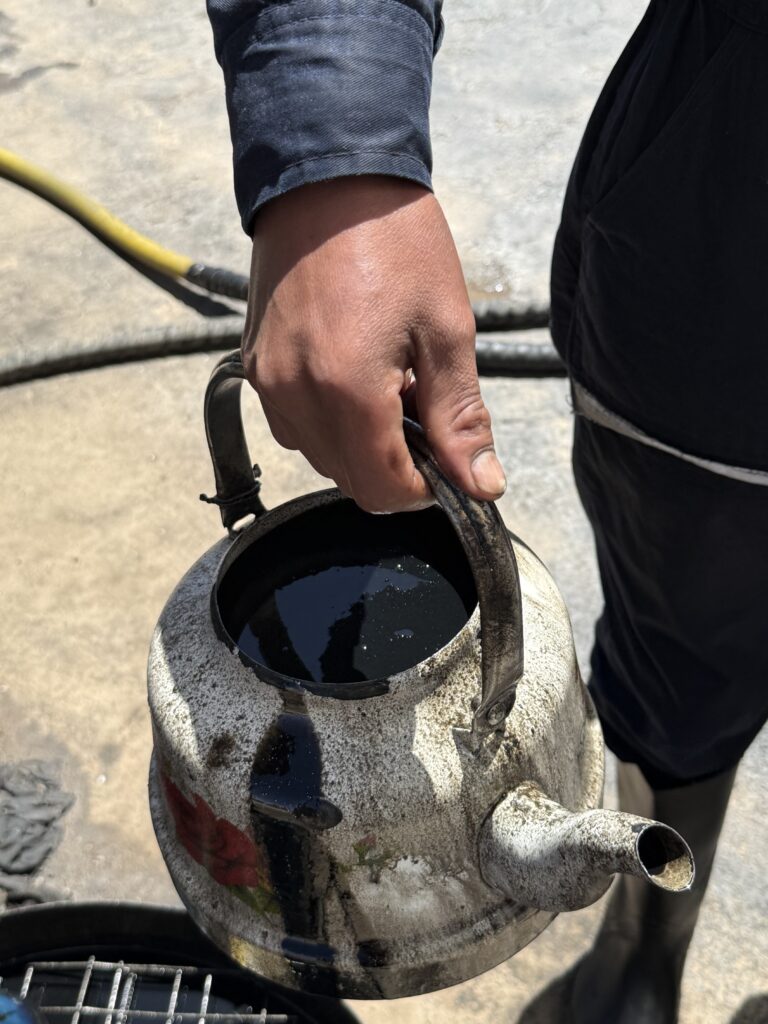
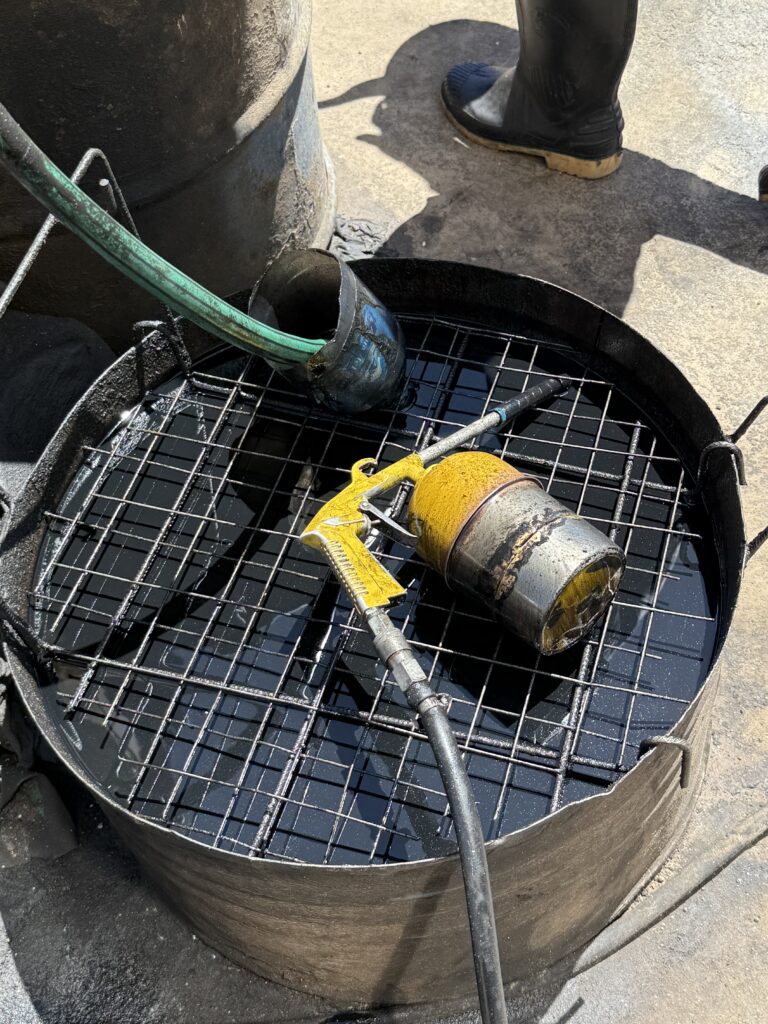
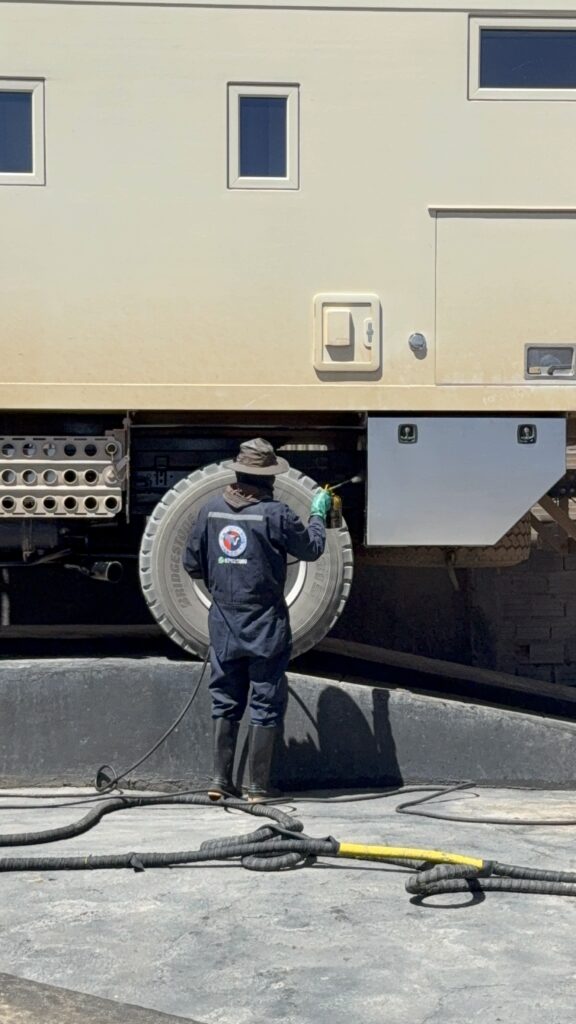
Our day on the salt flats began with a messy but essential step in protecting Bruce from the corrosive salt. For three dollars we had the underbelly of the truck sprayed with a thick mixture of diesel and oil. Driving Bruce almost blindly up on to concrete ramps, that were slightly narrower than the tires for her messy spa service that might save us thousands later. Dripping black goo we paid and set off down the last stretch of pavement and on the salt flat.
EXPLORING THE SALAR
The Salar itself is blinding white, it’s impossible to see without sunglasses. Vast, white, bumpy, and far busier than I’d imagined. Tourism has arrived in force, loaded busses and 4×4 SUV’s pour onto the Salar then disappear on to the horizon, it’s that big!
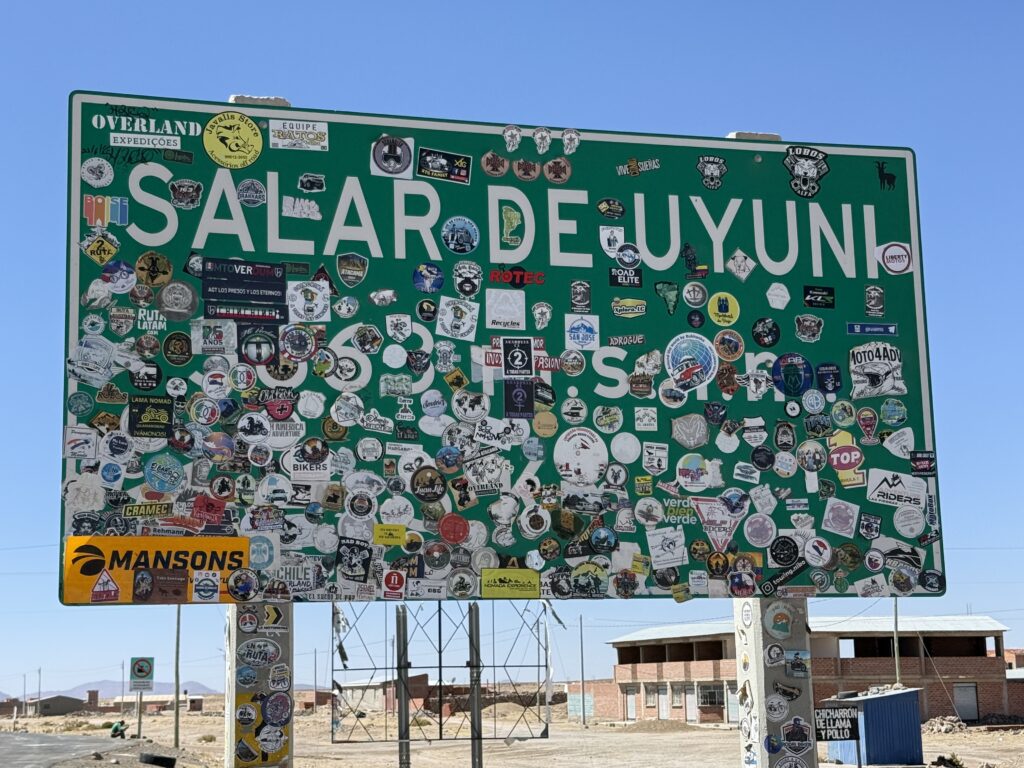
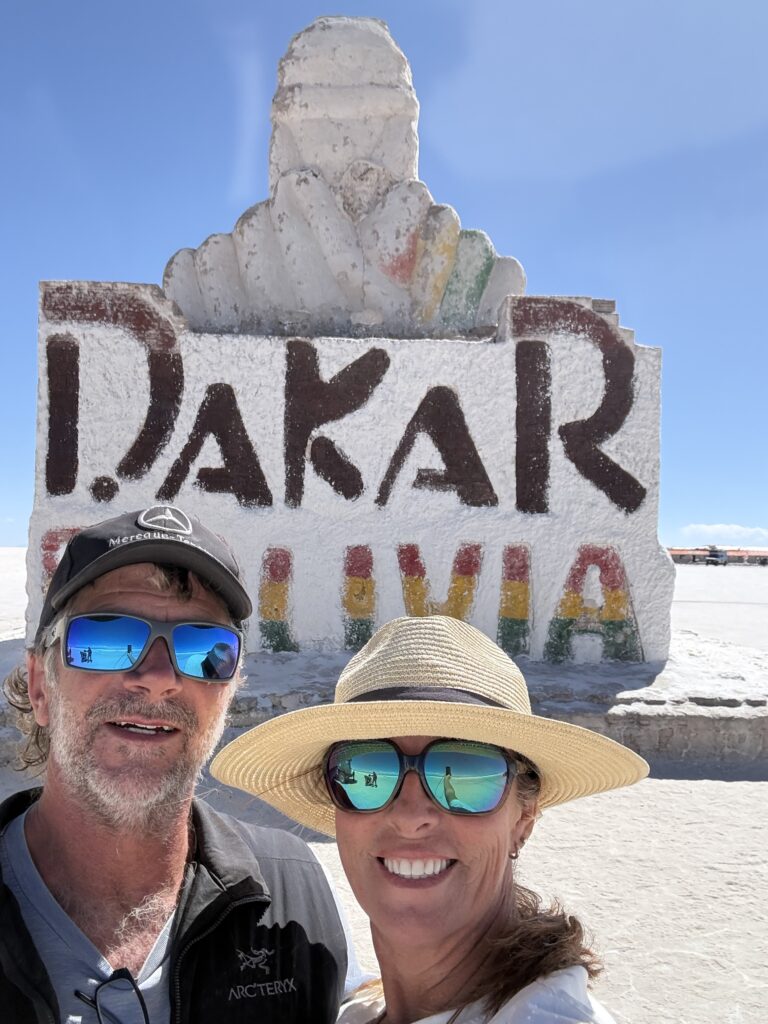
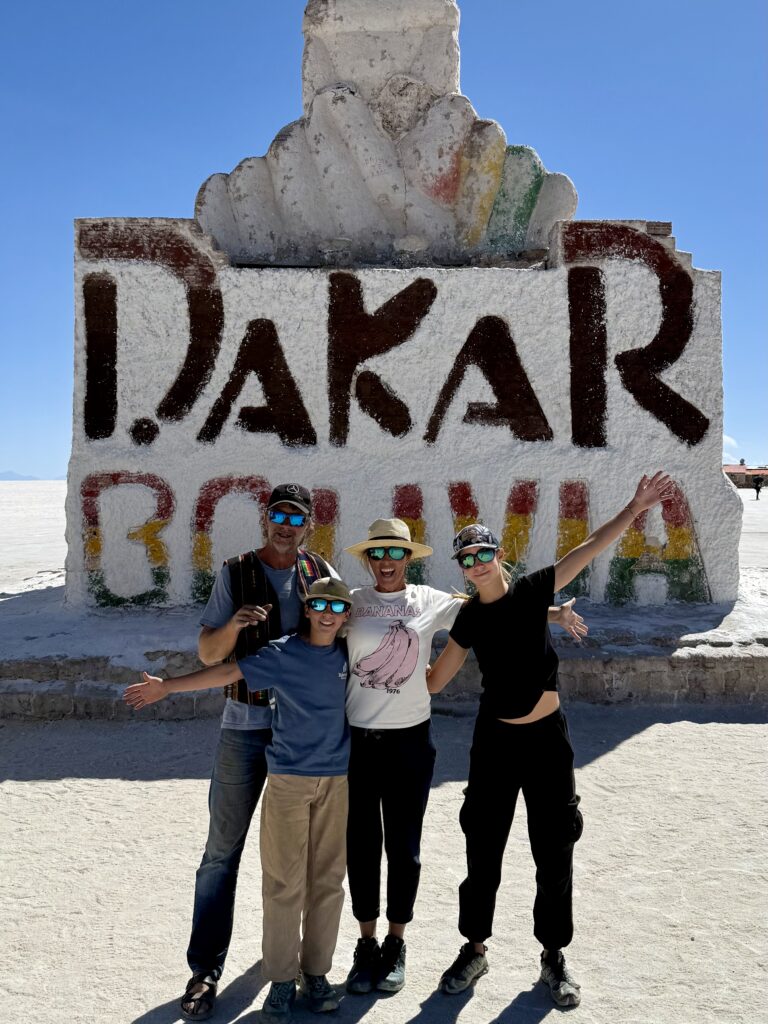
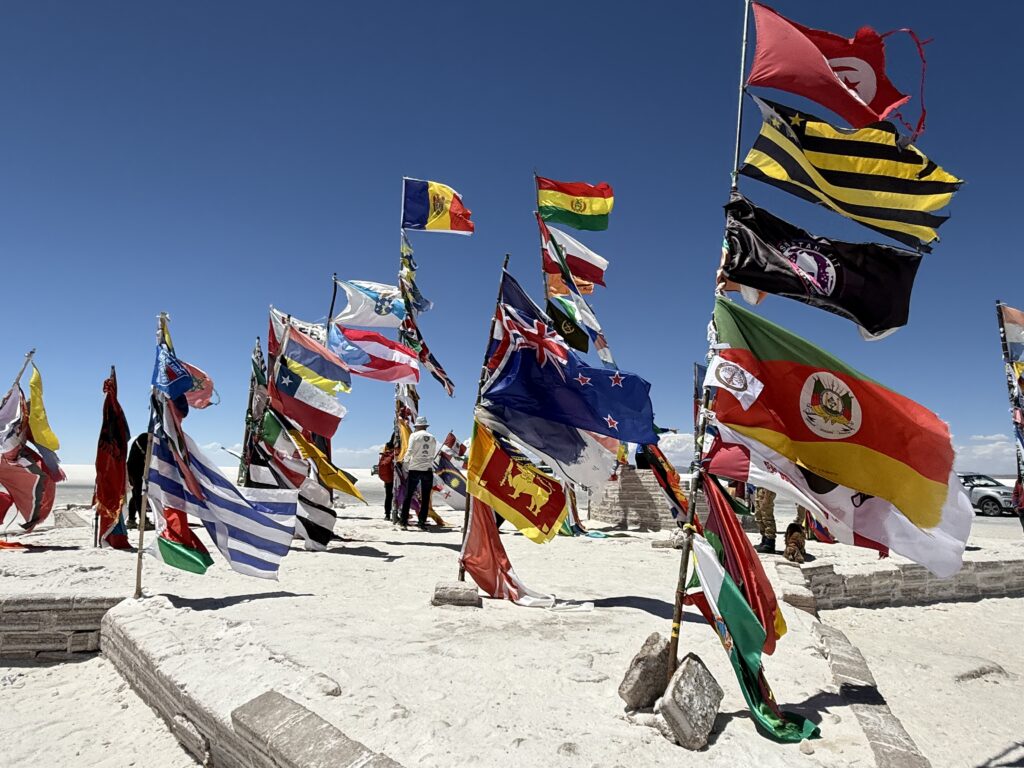
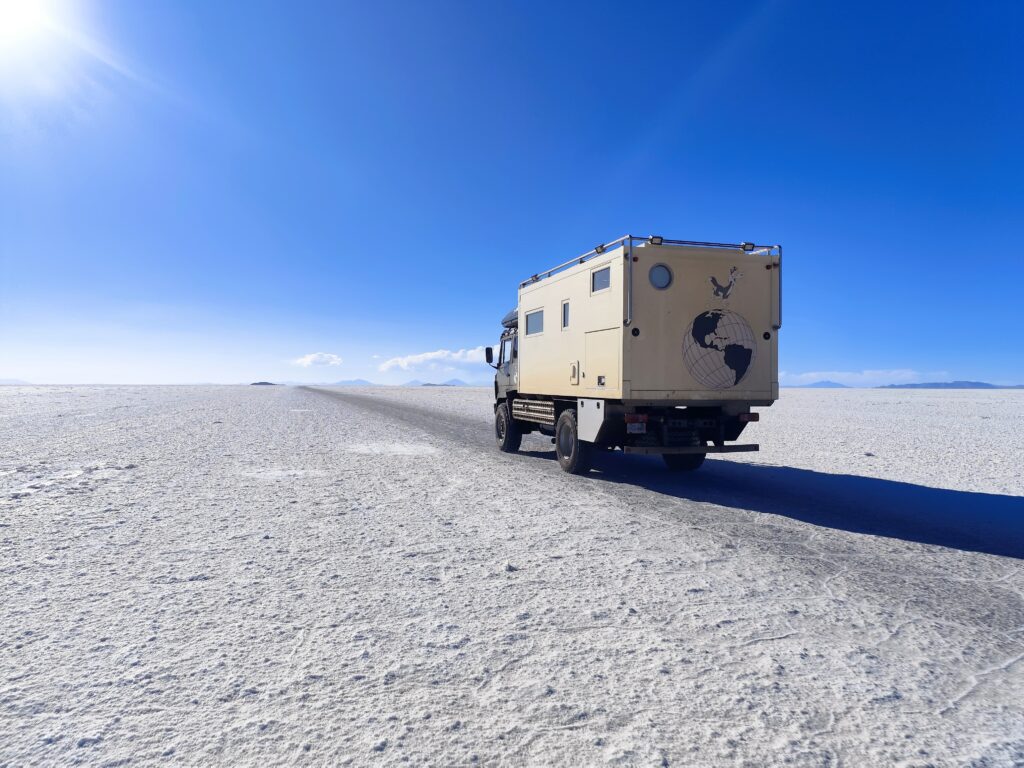
Following one of the main tracks, a dark stripe stained by years of dripping diesel and tyre wear, heading first to meet Alex and Eric at the international flags before we continued toward the island, 35km out for tonights camp.
We know of too many stories of vehicles breaking through the salt crust and sinking axle deep into the mud. Not disappearing entirely, but getting stranded for days waiting for a rescue. For a truck our size, recovery reportedly starts at $1,000 USD. No thanks.
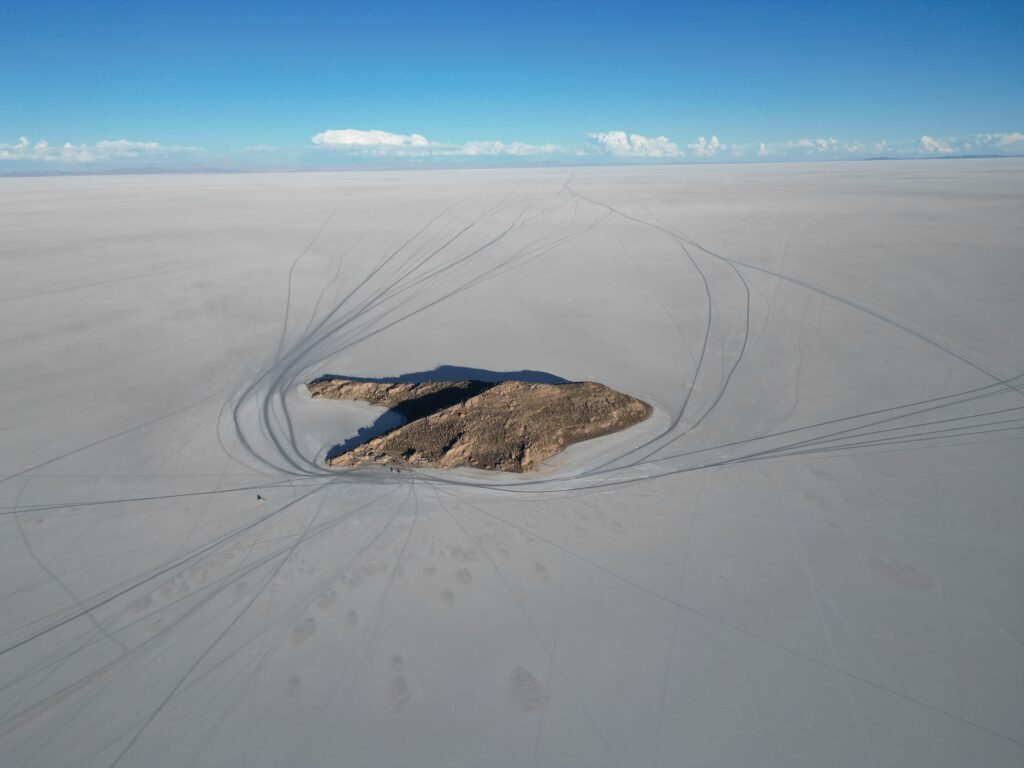
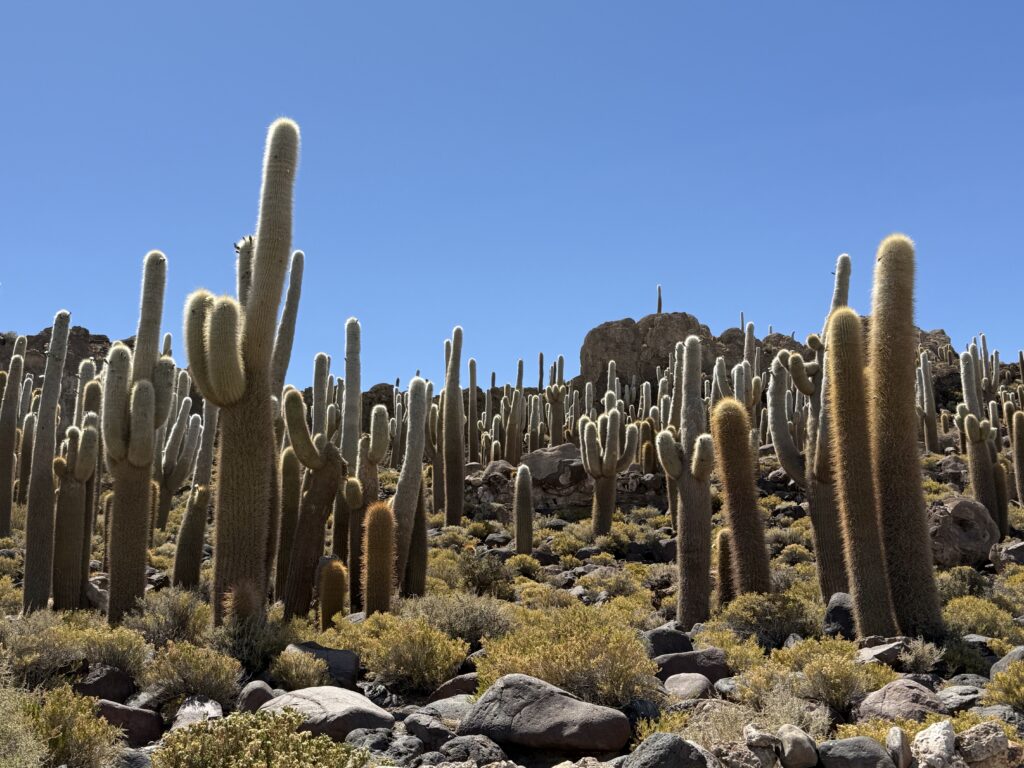
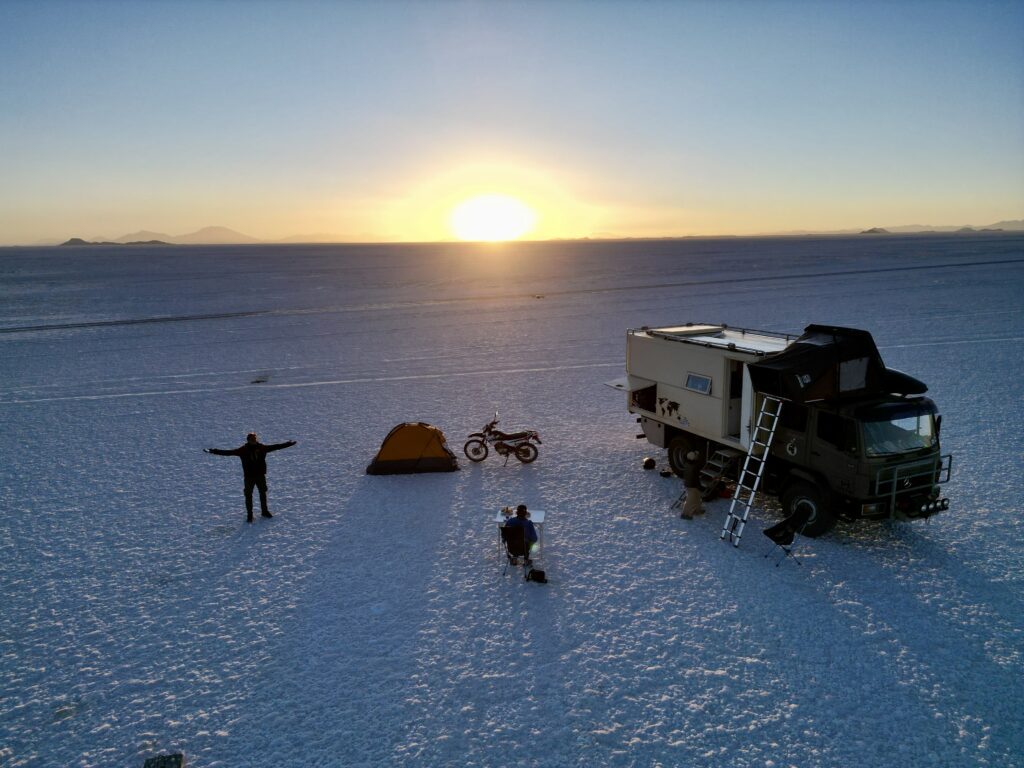
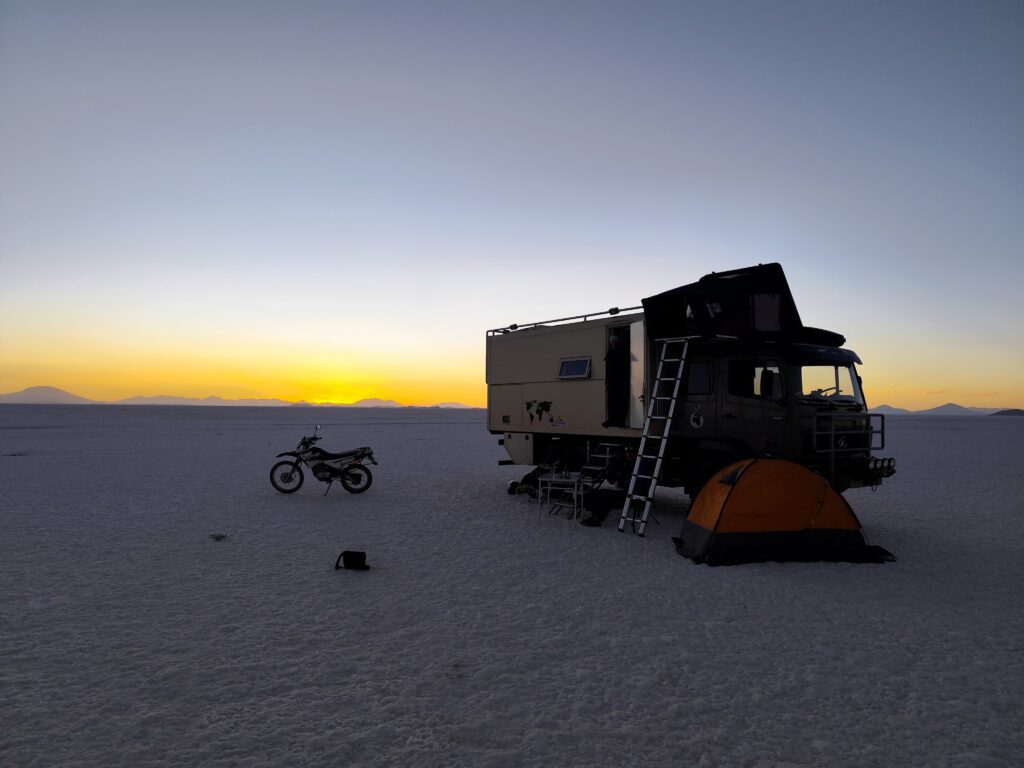
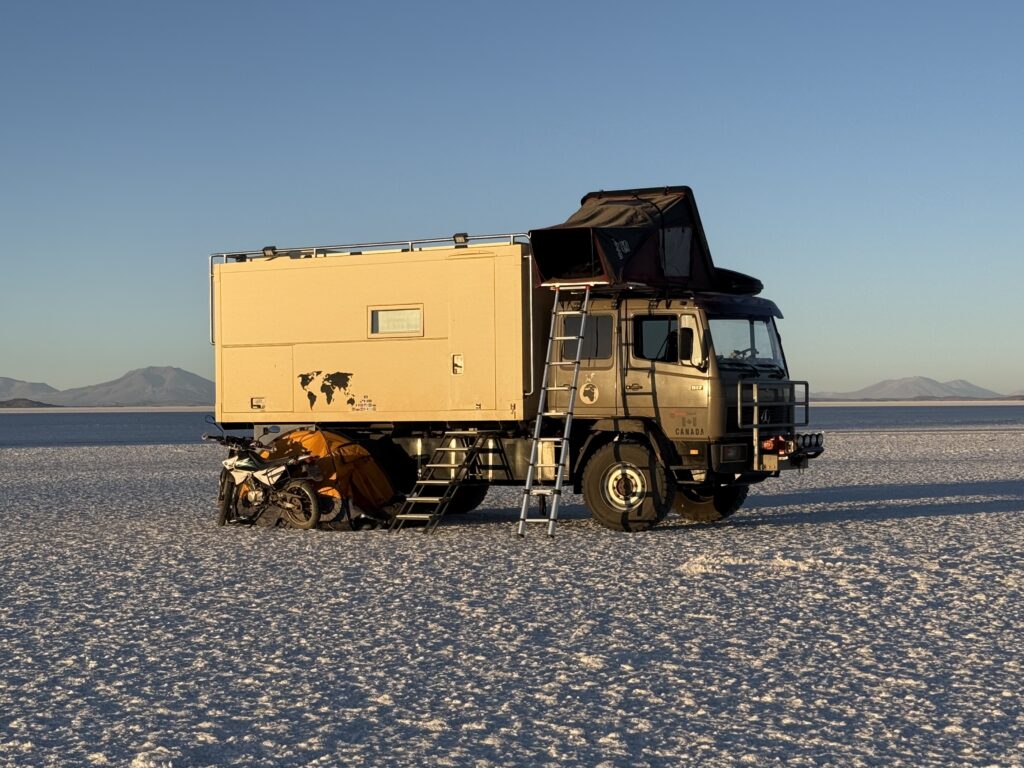
Thankfully the surface was bone dry and the driving easy. We chose a quiet spot about 200 metres from the island, which buzzed with tour groups climbing over it like ants until sunset before we were completely alone.
Apart from the small island, there is nothing out here but white in every direction. Manuel calculated the horizon at roughly five kilometres away, completely unobstructed. Behind us, two more islands hovered in the distance like mirages.

A COLD NIGHT CAMPED ON THE SALAR
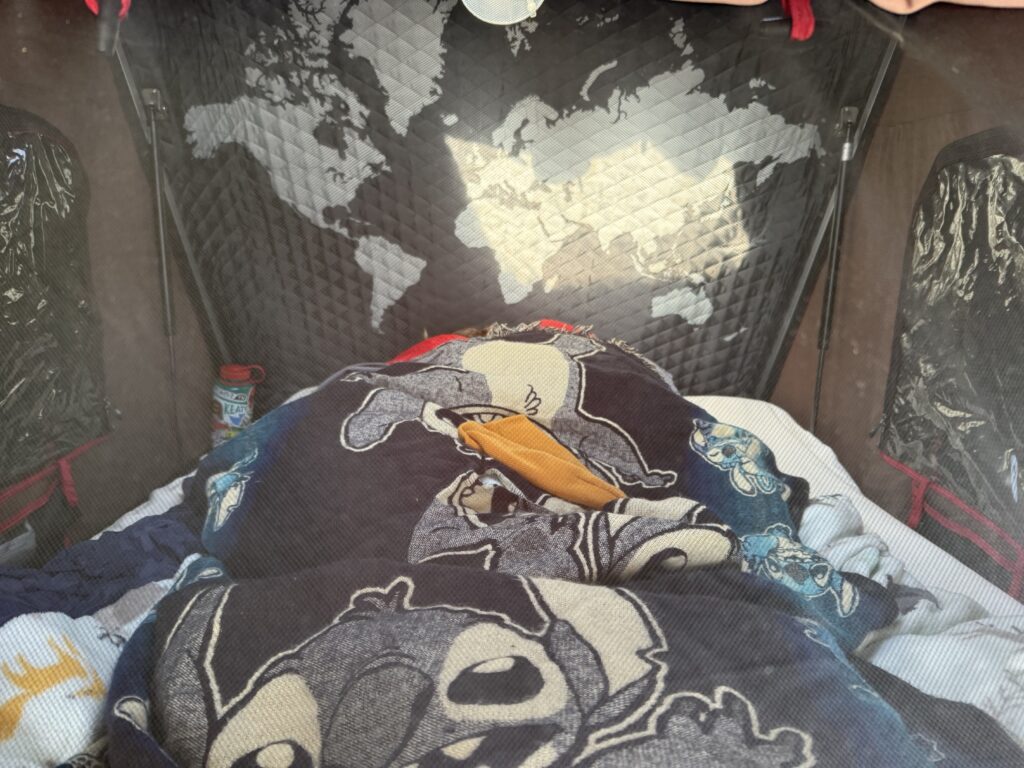
As the sun dropped, the wind rose — sharp, cold and rocking the truck. By sunset it was bitter. We had plans to stay out and watch the stars & snap some photos, but the cold was arctic like & had us all dive inside. Jaxon slept like a baby in the roof tent, snuggled deep in blankets and a down sleeping bag. I was worried Manuel might either freeze or get blown sideways across the flats. But the wind calmed around 11 p.m., and he survived just fine.
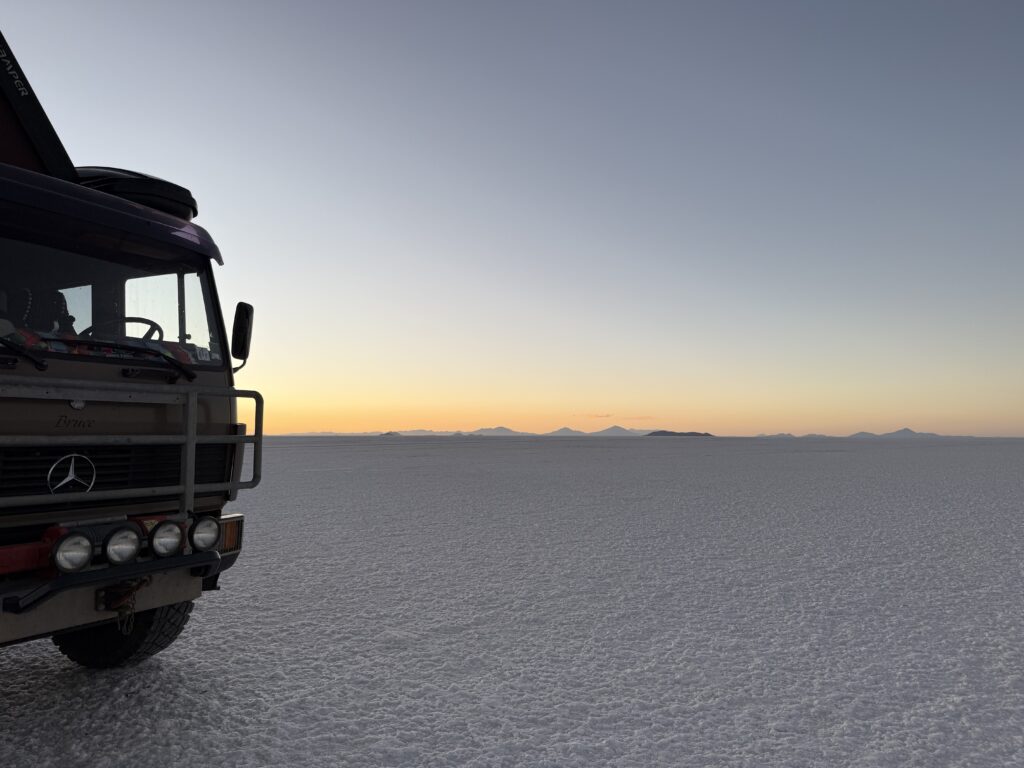
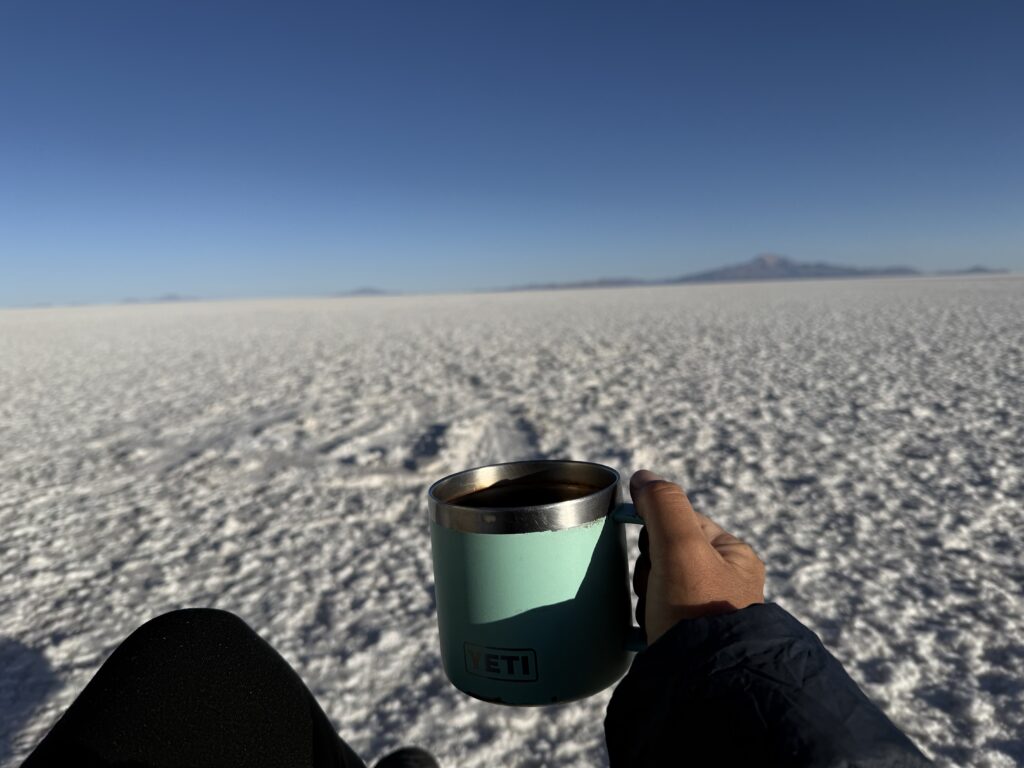
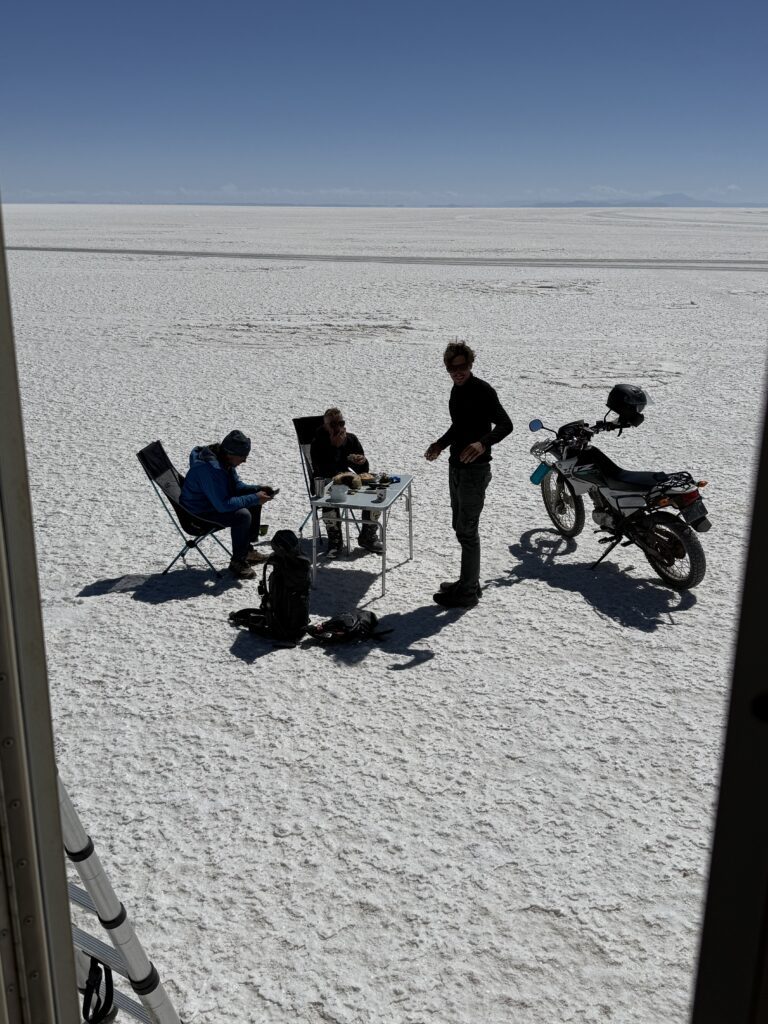
Tim wasn’t so lucky — he’d come down with something flu-like, and stayed in bed the next morning. I crept out before sunrise, quietly with my tea, wrapped in my big down jacket, hat and boots. Enjoyed sitting alone on the Salar, watching as the last stars faded and the first light touched the horizon. In the perfect stillness, it was one of those “I can’t believe I’m actually here” moments.
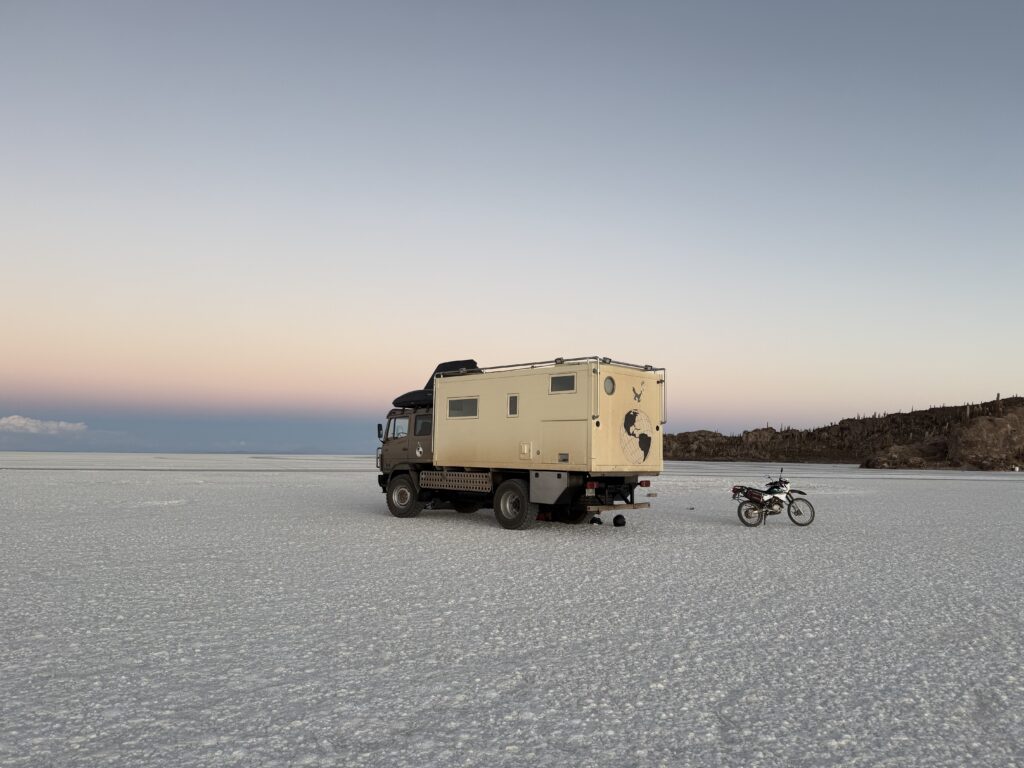
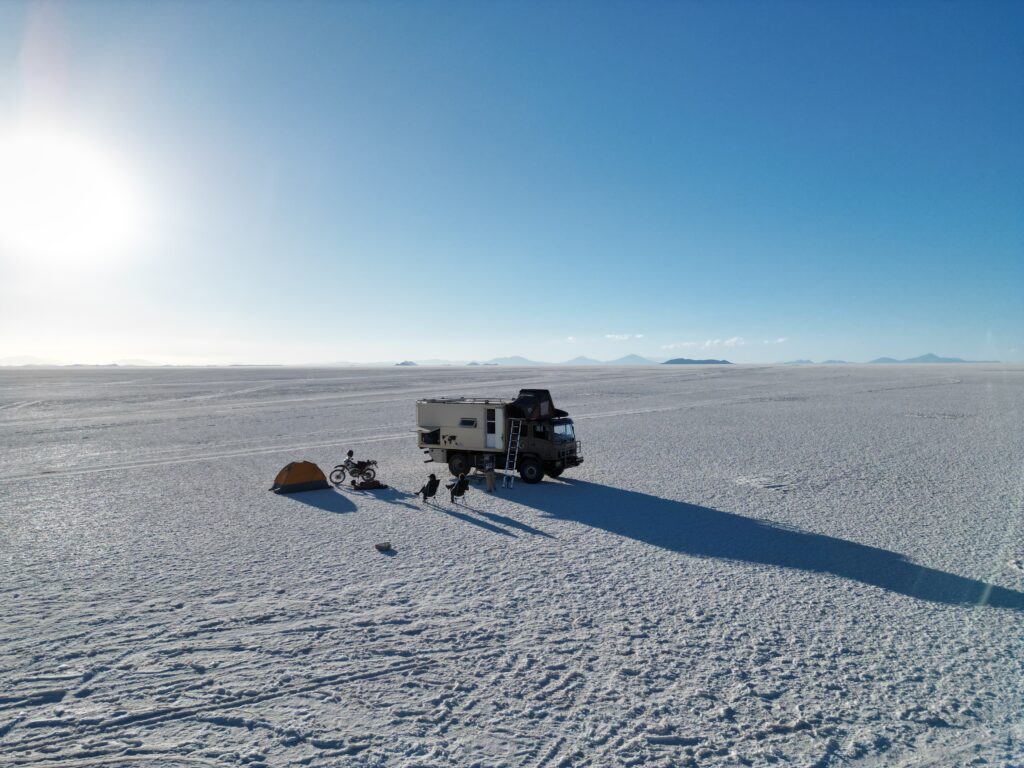
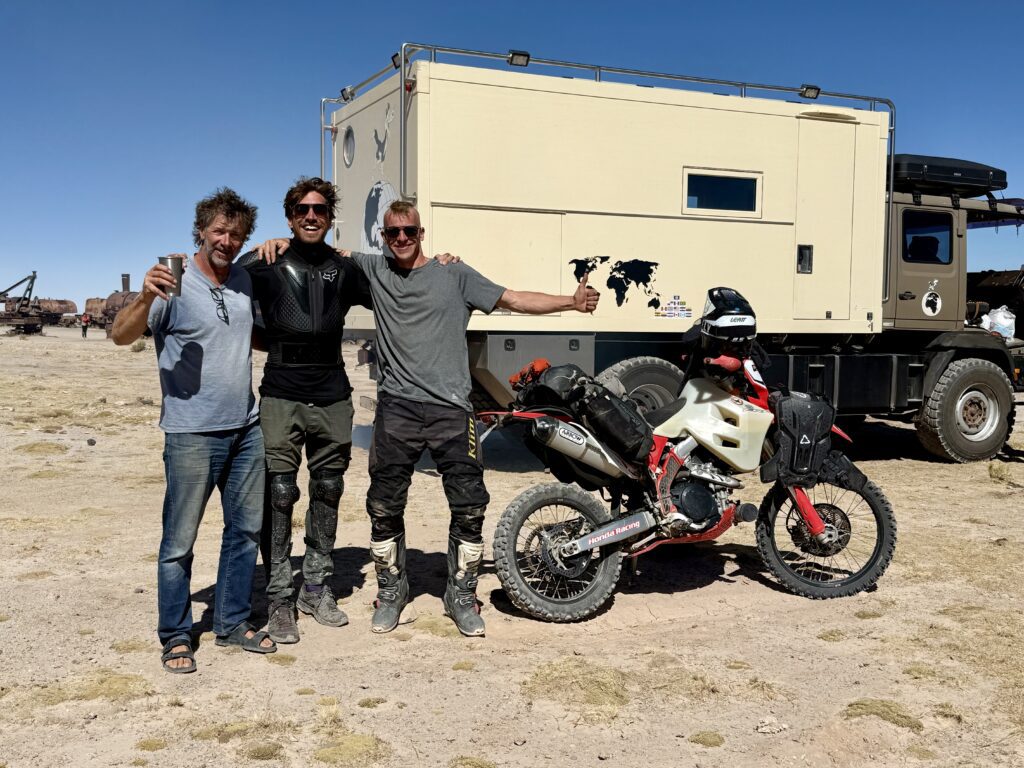
Around 7:30am a lone biker appeared, circled the island, and stopped for a chat. Introducing himself as Fabian from Austria, riding his 400cc motorbike around South America. He stayed for coffee, then breakfast, and before long he’d joined us for the day and then the night — he and Manuel connected instantly and endlessly in German.

SALT MAZE AND STATUES
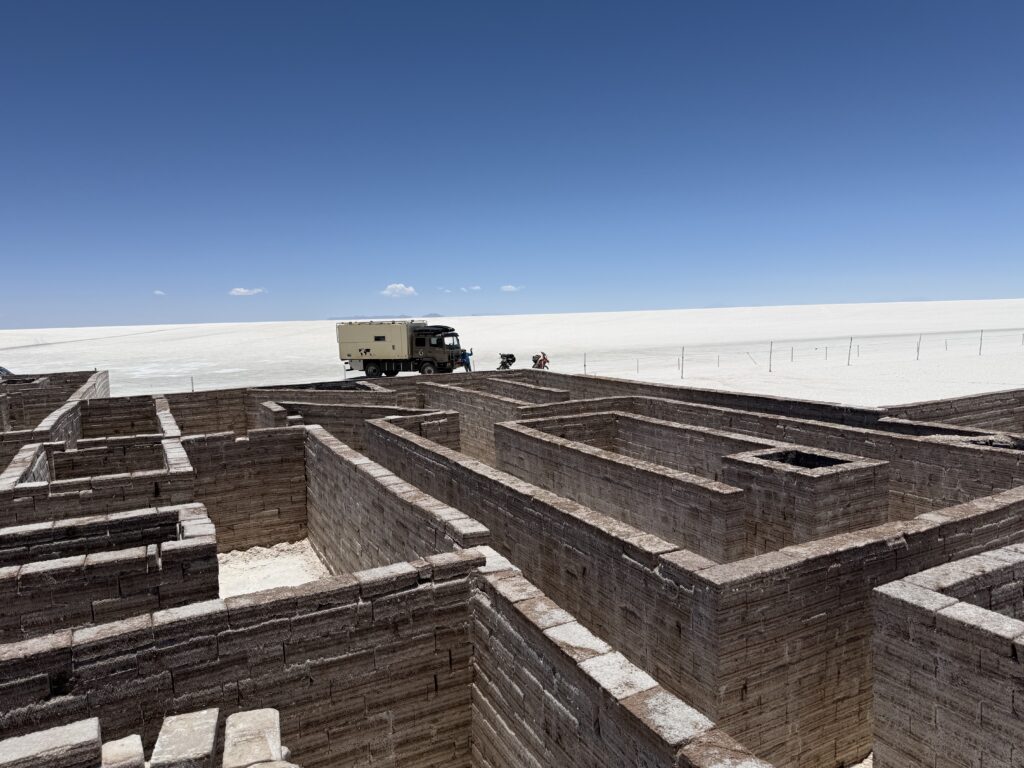
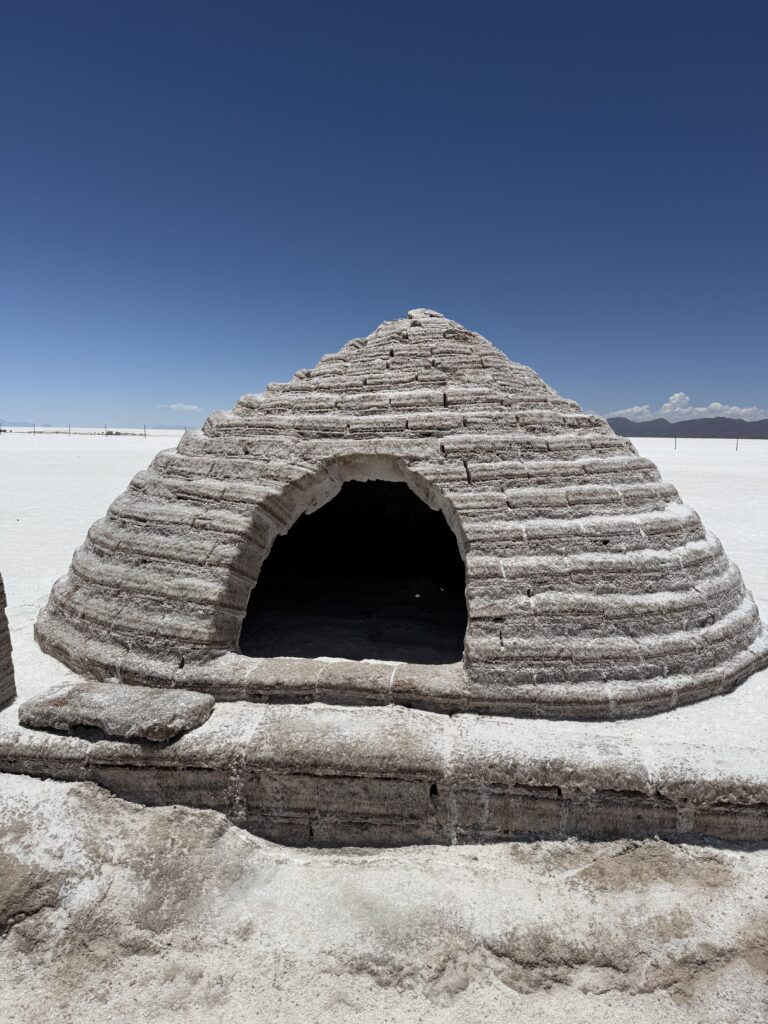
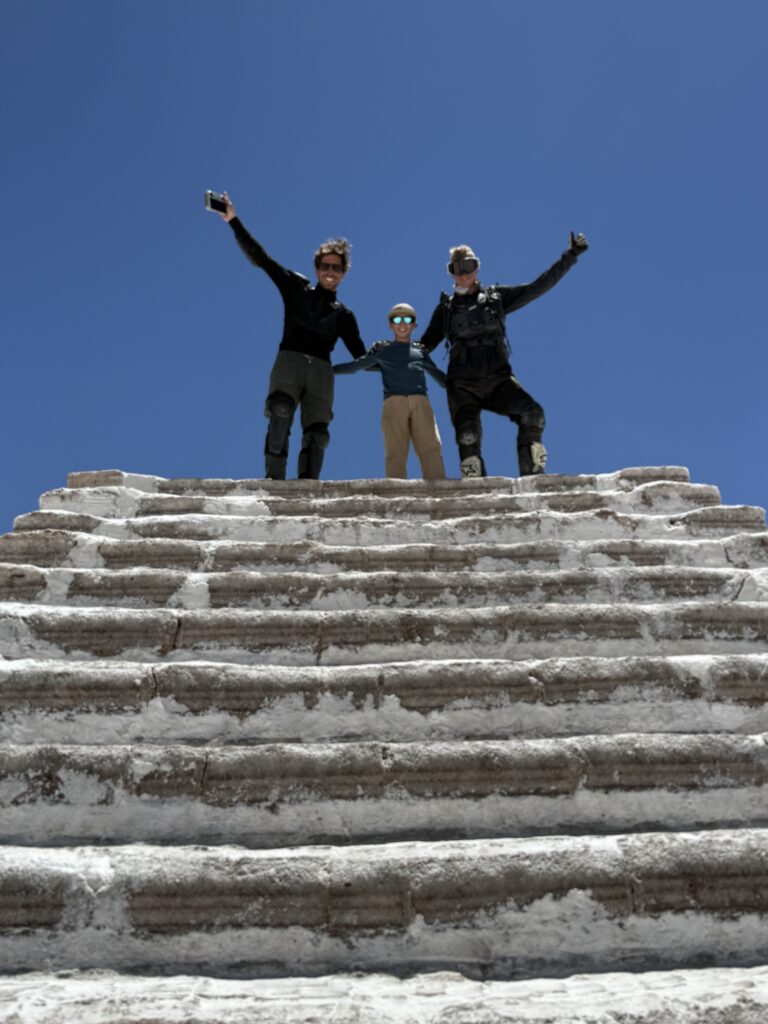
Together we crossed the Salar to visit the salt maze, statues, and the “Stairway to Heaven.” Tim, low on energy, stayed with the truck while the rest of us explored.
To reach the statues we had to leave the main route, following a track that looked well-used. For a while it was fine — until it wasn’t. Small holes scattered the surface, then bigger ones. Thin salt. “Oh no,” a wave of pure dread, no no…please no don’t sink. Tim hit the gas. We couldn’t stop, couldn’t turn too sharply, and my heart pounded as I checked the map — which didn’t help. Needless to say the tension was high, the ground was like Swiss cheese, as all the scenarios flood through my brain all at once.
The statues stood faintly on the horizon, inching closer. Tracks in the surface showed where someone else had recently been stuck. But Tim handled it beautifully, and after an eternal feeling 5 minutes we reached solid ground again. OMG, what a relief, phew!
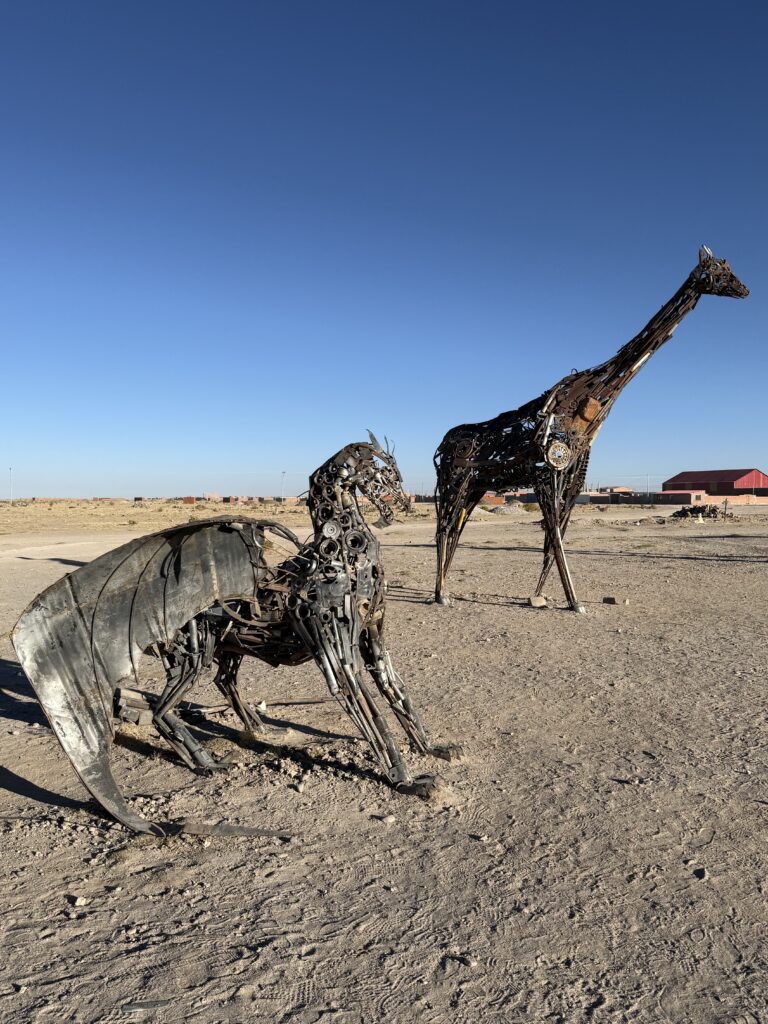
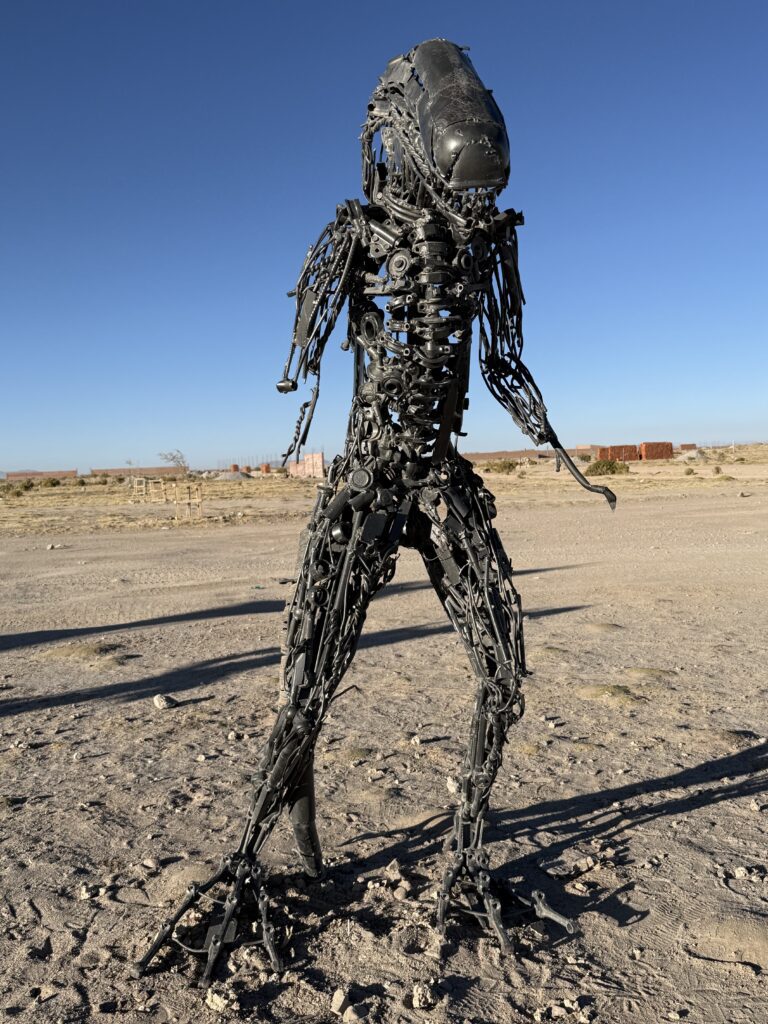
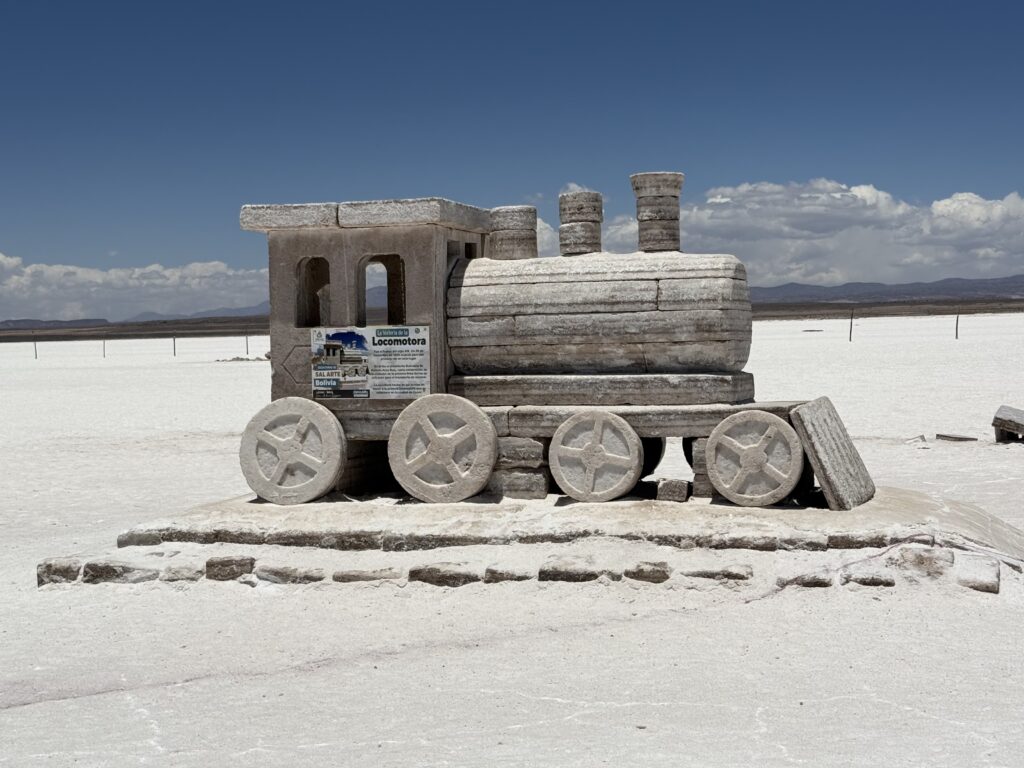
For fifty cents each we wandered the salt maze, posed with the sculptures, and flew the drone before finally leaving. Not wanting to push our luck, and satisfied with our experience, we were happy to feel pavement under the tyres again.
DEGREASING
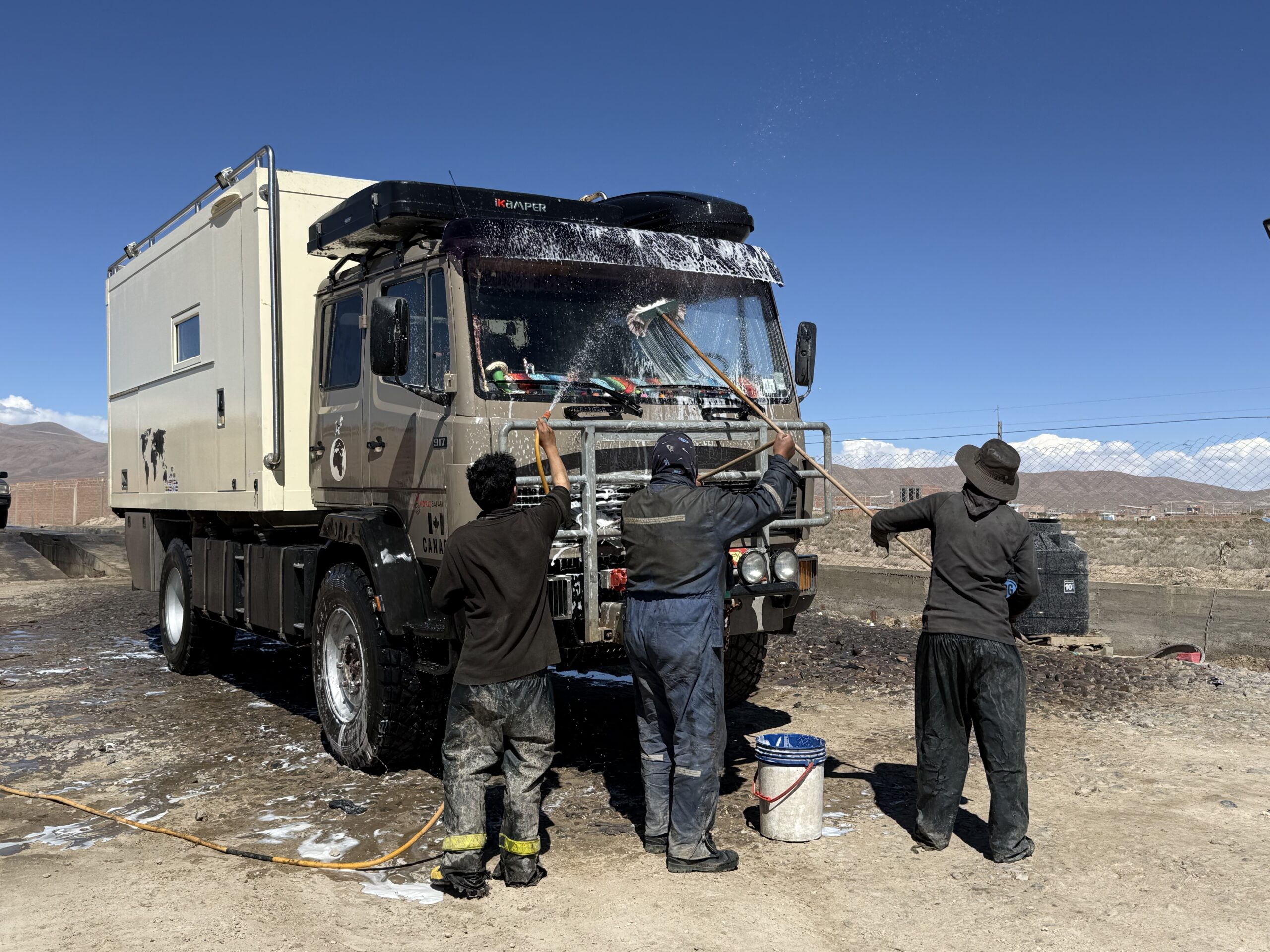
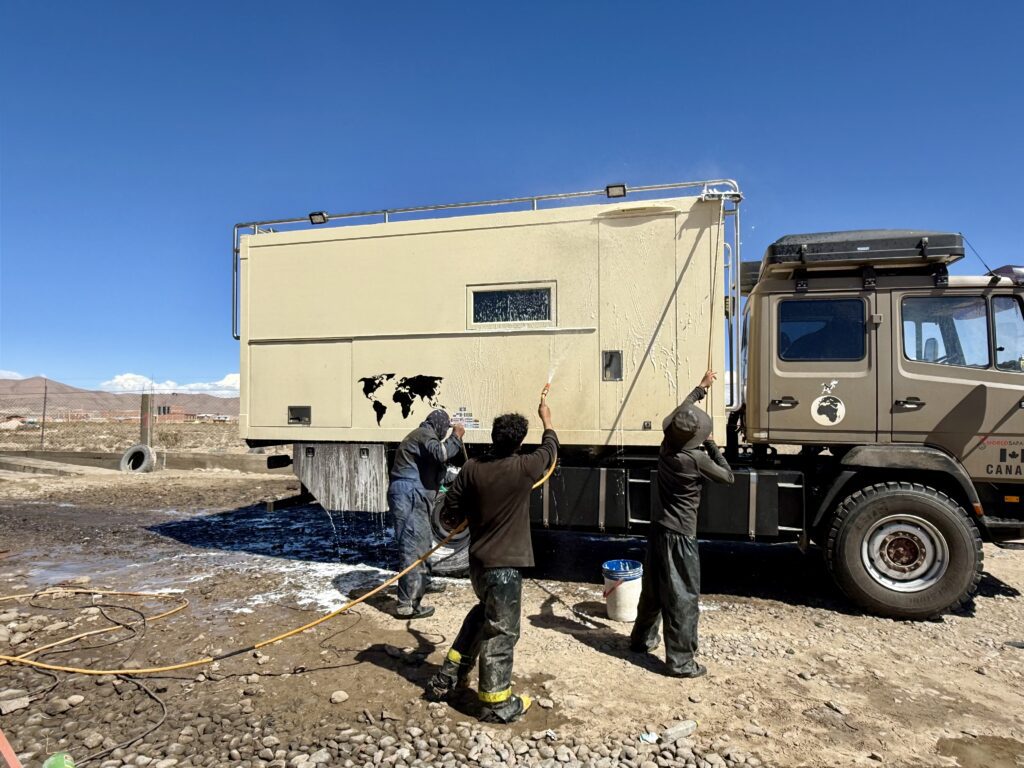
Next came the inevitable cleaning job: stripping off the oily black sludge and salt. Three dollars to apply, ten dollars to remove, three men gave Bruce a good scrub. I’m sure we will be dealing with this black mess for a while yet.
While Tim waited at the car wash, I picked up a few bricks to assemble a makeshift BBQ. Driving back we passed the incredibly long line ups for diesel stretching away in three different directions. Chatting with one driver, he’d been waiting for fuel since 5:30am that morning. In his car with him, a basket of food & bottle of water.
Back to the trains
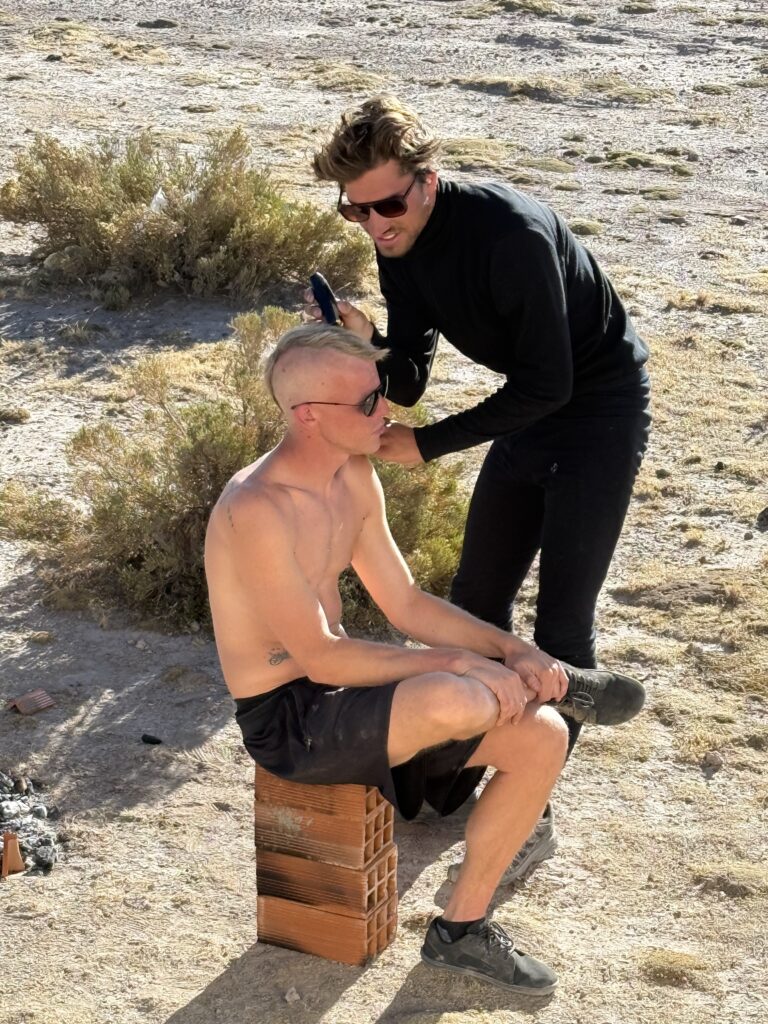
Back to the trains where we met Alex and Eric again, camped there for one more night, Fabian joining us. Tomorrow he’ll head toward Potosí and Santa Cruz. We will head in the opposite direction — toward the western edge of the ‘Lagunas Route’, across Bolivia’s high desert and toward Chile. Another chapter of this journey is just hours away…