
15 – 19th November
The road from Santa Cruz to Samaipata winds steadily up into the cool, green foothills of the Andes, trading the heat of the lowlands for misty curves, dense cloud forest, and sudden viewpoints that made us pull over just to breathe it all in.
SAMIPATA
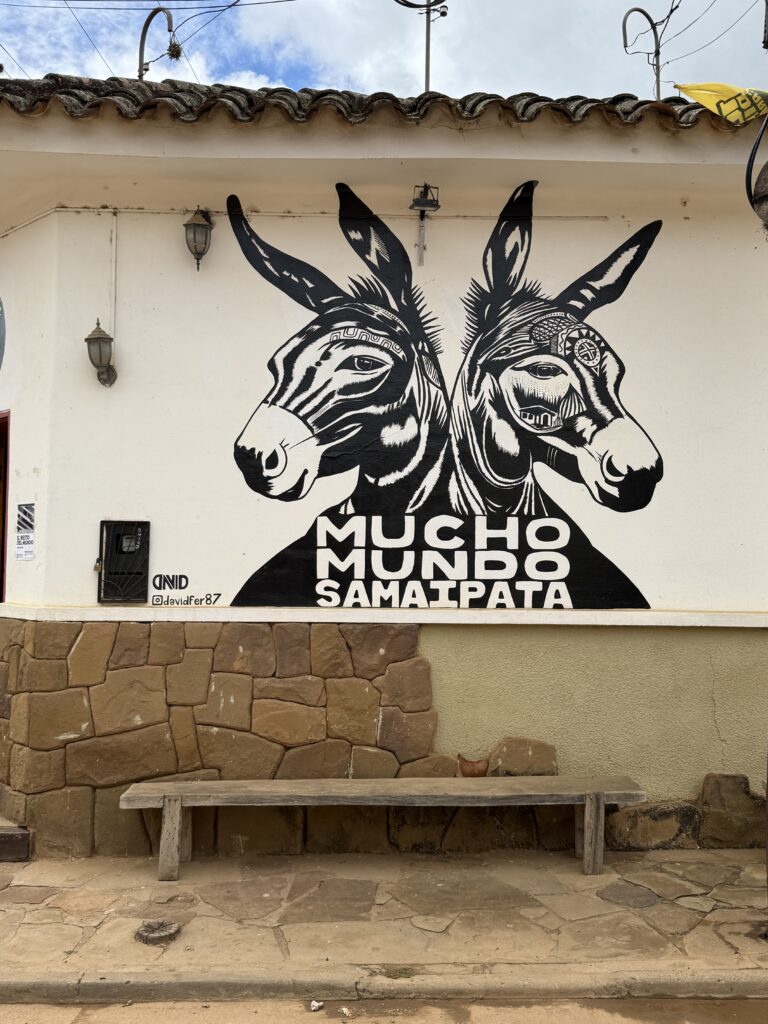
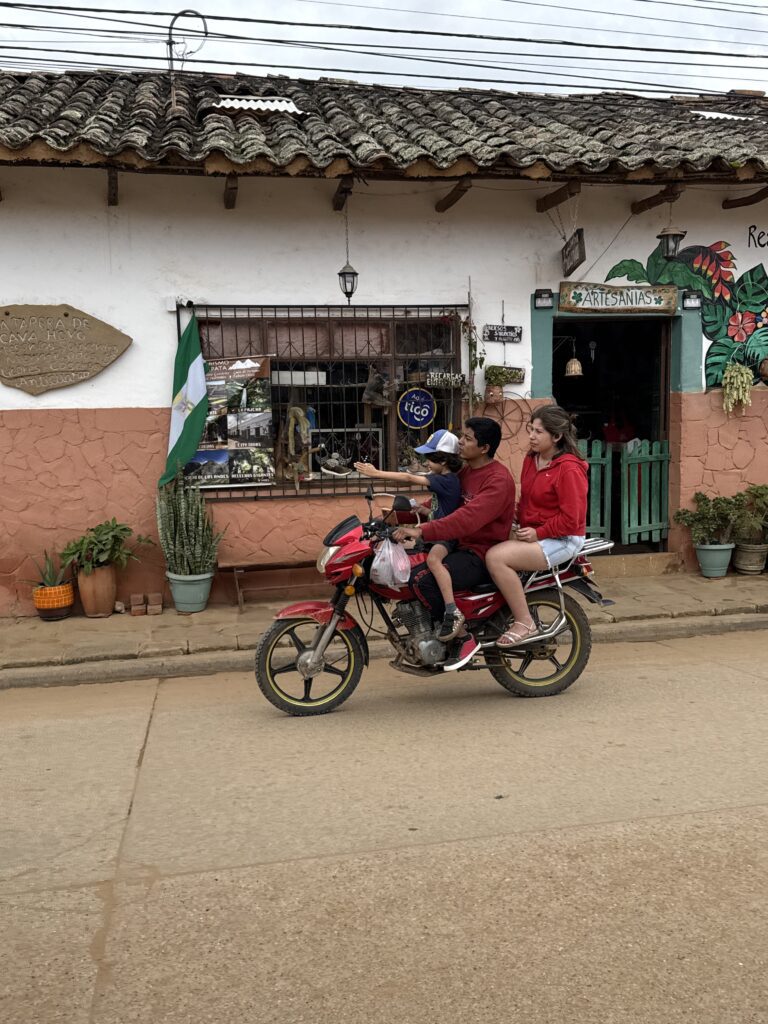
Samaipata is a relaxed, bohemian little town with cobbled streets and a central square shaded by enormous old trees. We parked on a quiet side street and wandered slowly, soaking up the small-town charm before settling into a café for an hour to indulge.
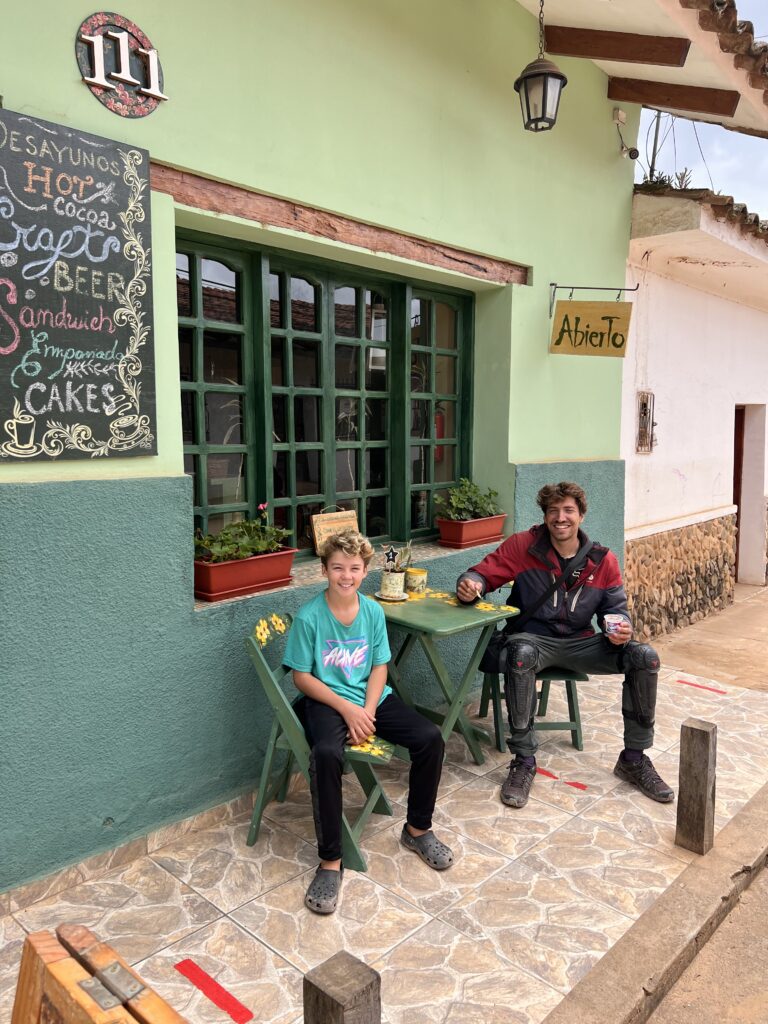
The café itself was a treasure—once a family home built 120 years ago, now lovingly restored and transformed into a warm, character-filled space. The owners, an Argentine–Bolivian couple who spoke excellent English, had kept the soul of the old house alive by turning its original doors into quirky wooden tables and filling the shelves with local artisan crafts. A lush garden stretched out the back, and even the bathroom was so beautifully done that you almost wanted an excuse to visit it. The food was just as memorable—especially the apple pie with ice cream, which left Jaxon wanting to lick the plate.



El FUERTE SAMIPATA
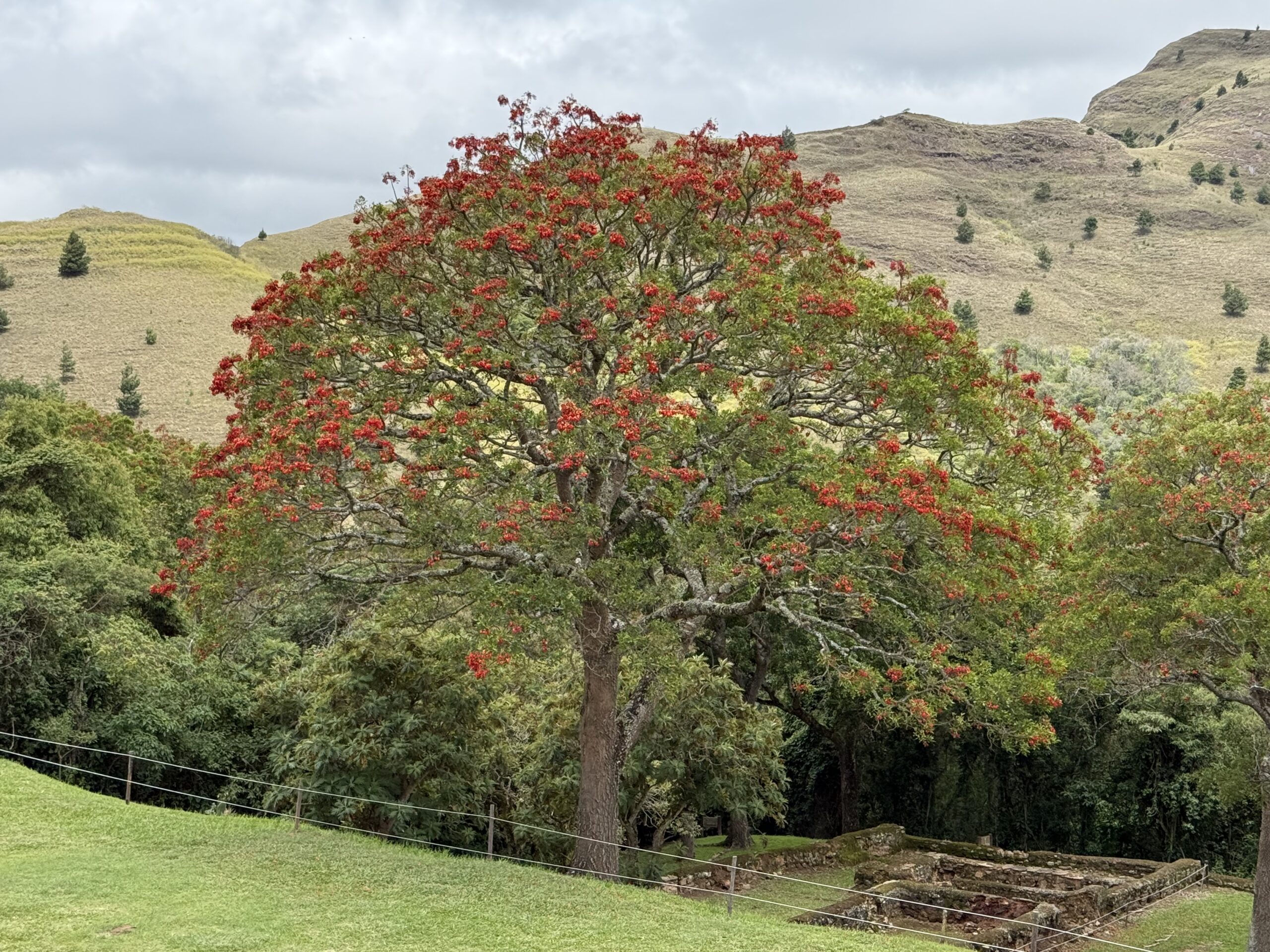
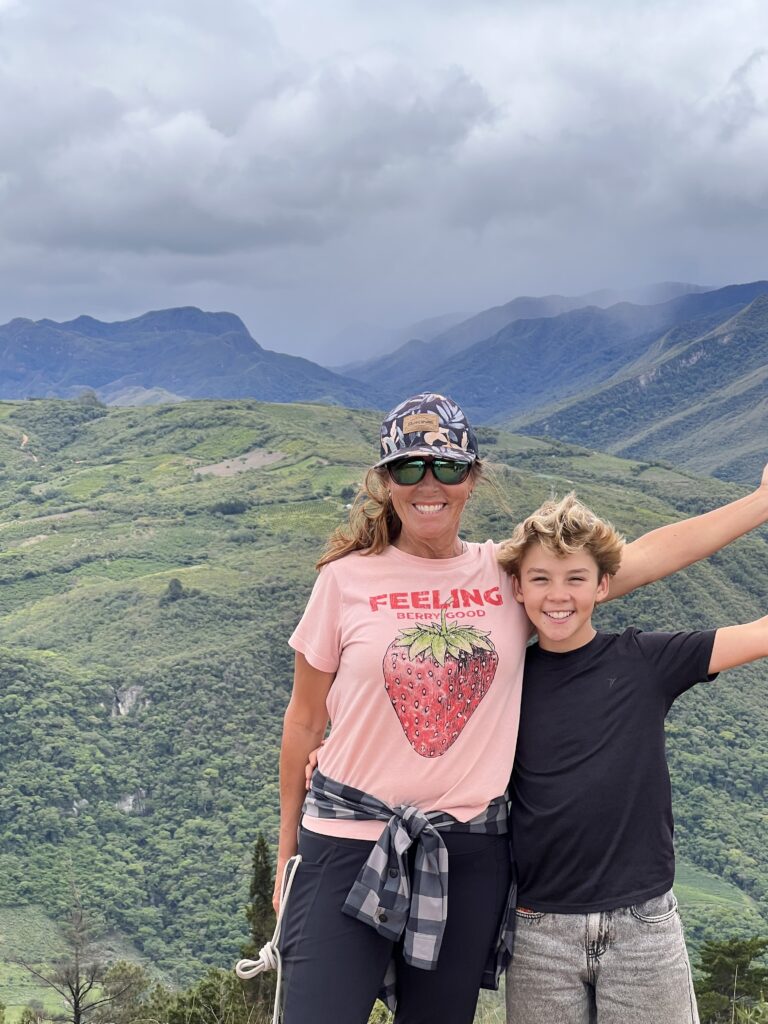
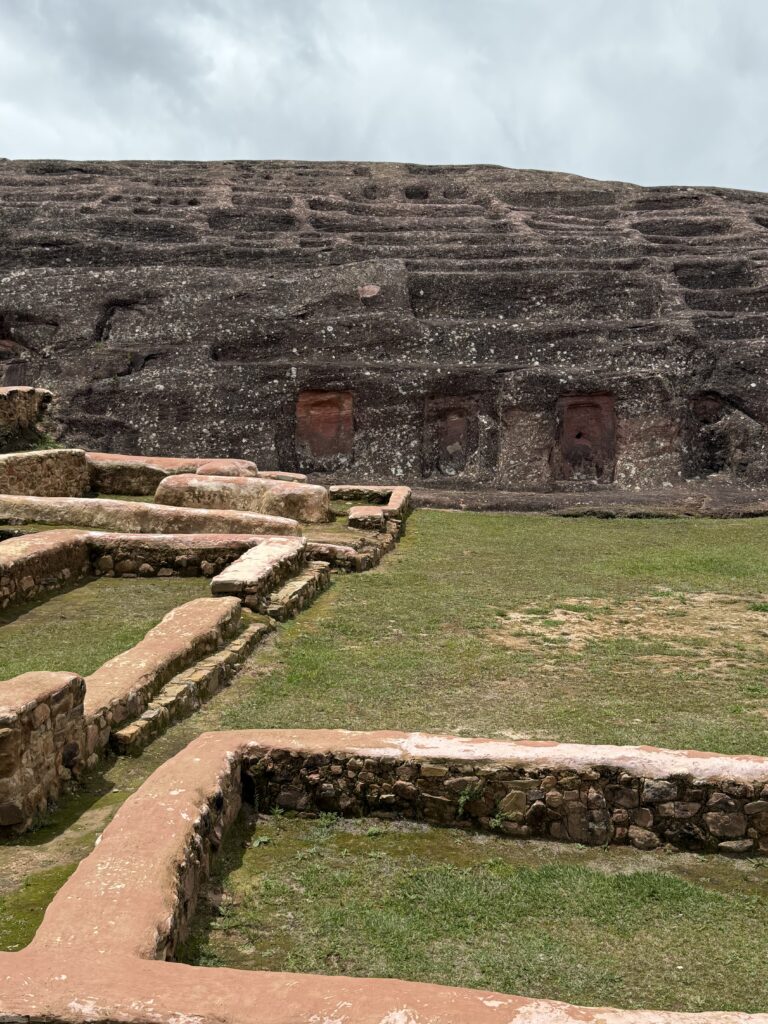
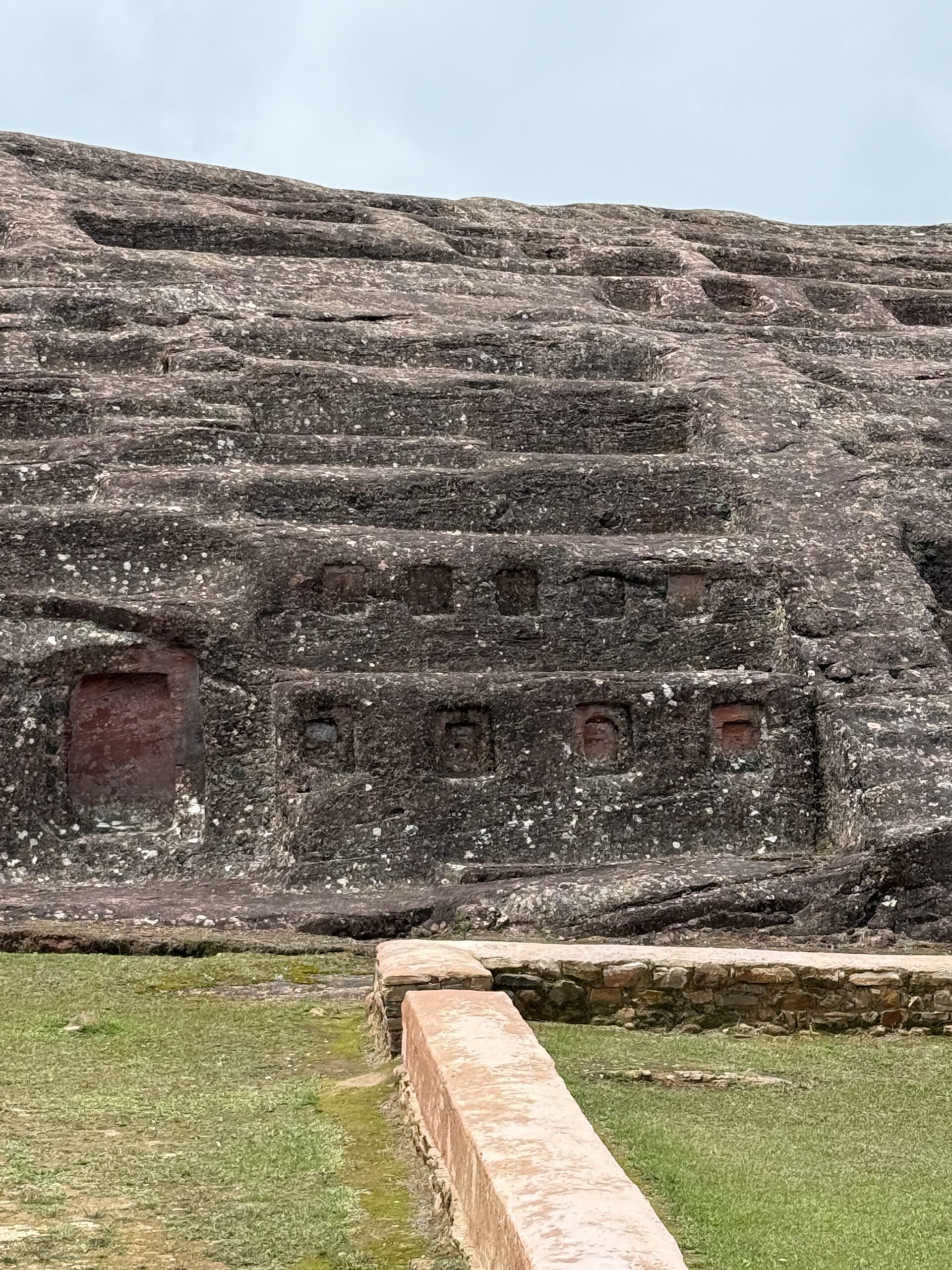
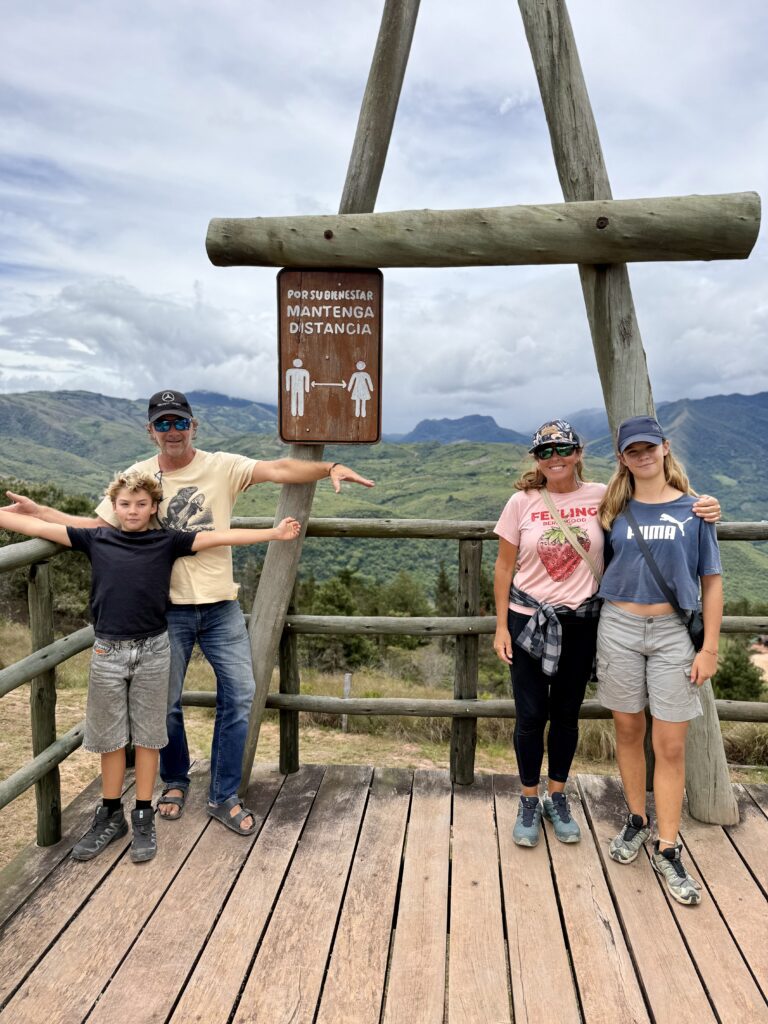
Just ten minutes up the road from Samaipata are the ruins of a vast pre-Incan rock fortress carved into a single sandstone ridge. Its pitted channels, ceremonial niches, and intricate carvings bear the marks of ancient cultures—the Chané who began it, the Incas who expanded it, and later the Spanish who briefly used the site. The geology is just as striking: weathered red sandstone shaped by wind and centuries of footsteps, still standing exposed to the open sky. Not as spectacular or interesting as the ruins we’ve seen in Peru, but still worth a visit and a lovely walk around.


SUCRE
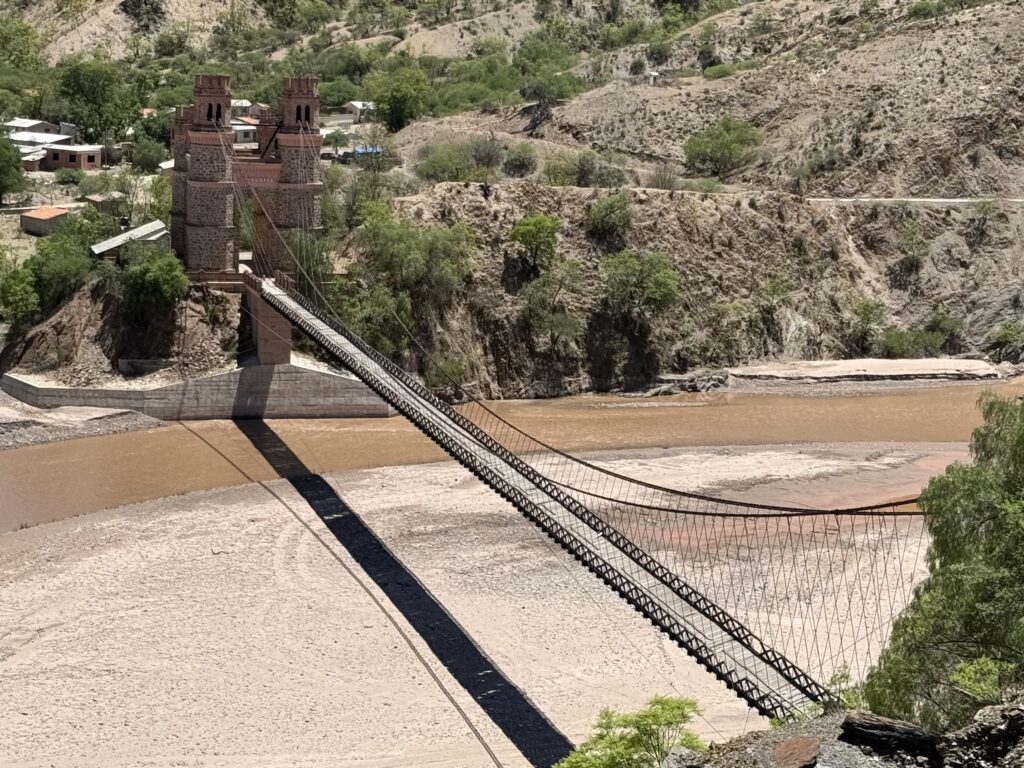
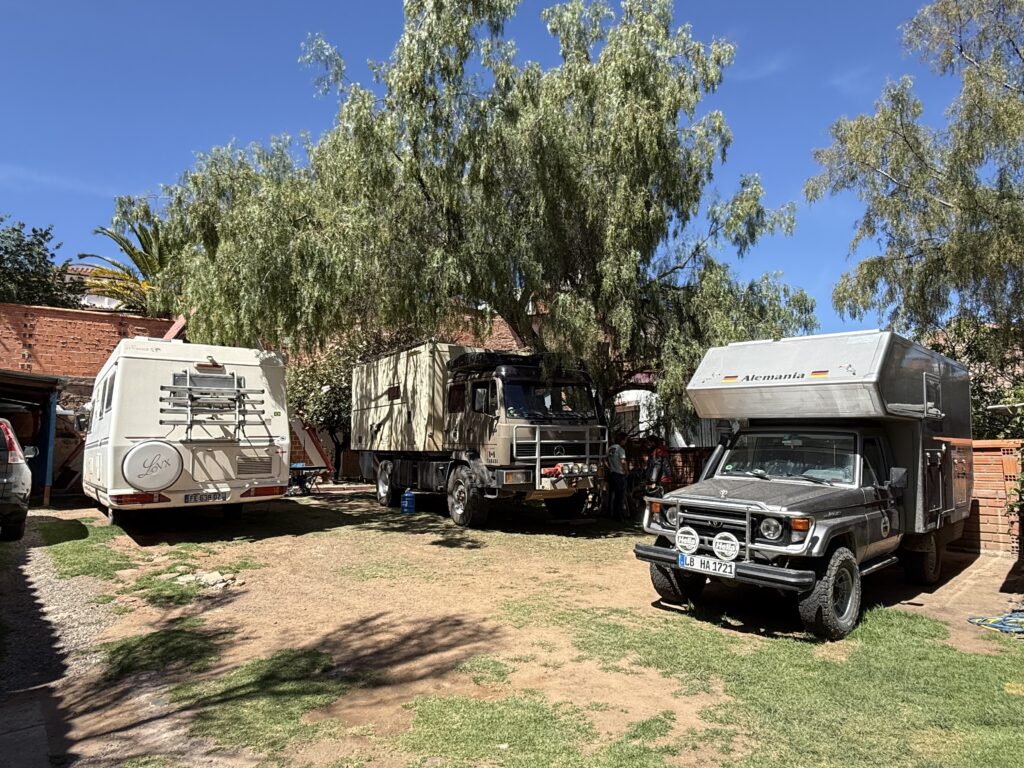
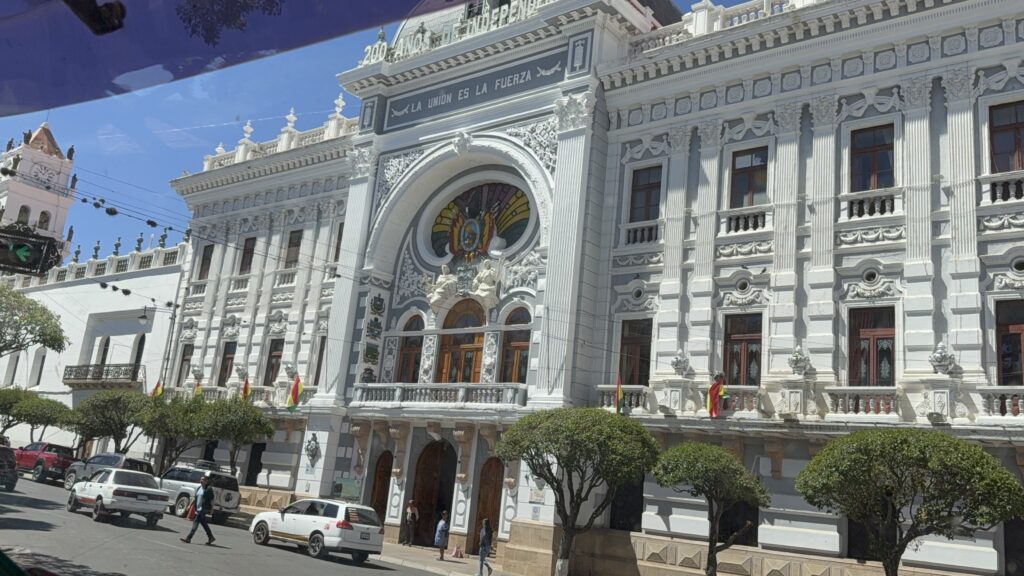
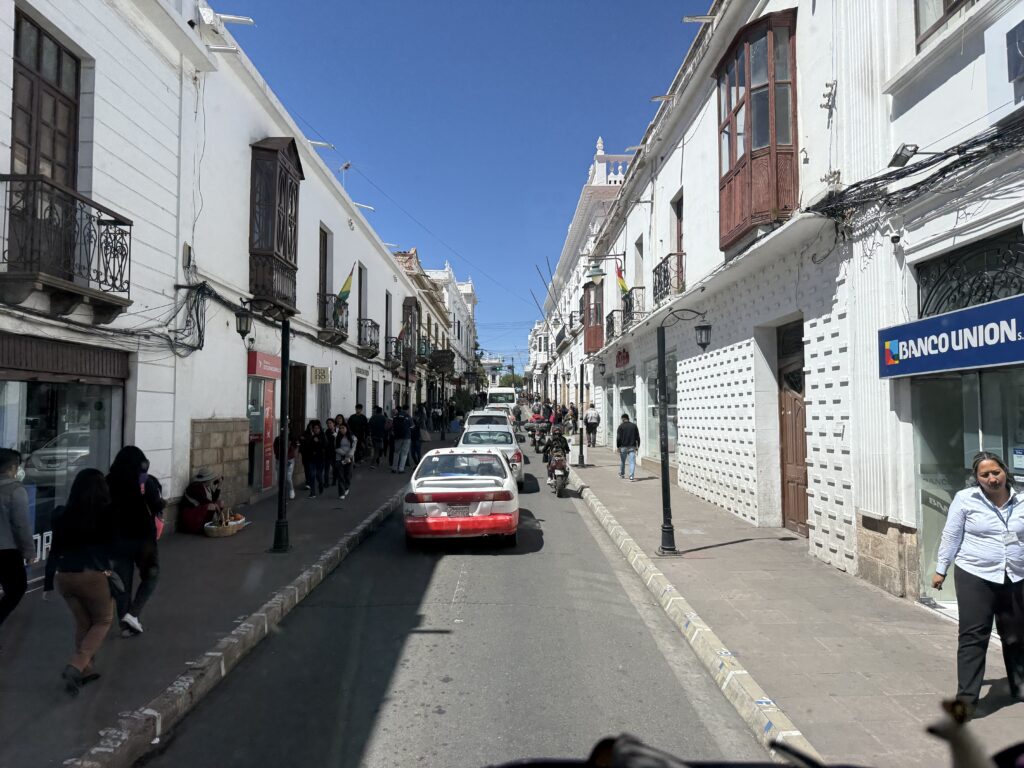
After exploring the ruins, we continued toward Sucre—past the bridge that every traveller photographs, including my dad. Past long line-ups of trucks waiting, sometimes for days for fuel—and into the old town. We camped at the same tiny property where Dad and Jen had stayed just the year before. Founded by the Spanish in the 1500s, the city still carries its colonial elegance: arched courtyards, ornate churches, and wide plazas. Today Sucre is youthful and cultured, home to universities, cafés, and museums that blend old with new.
10 HOURS EARLIER…
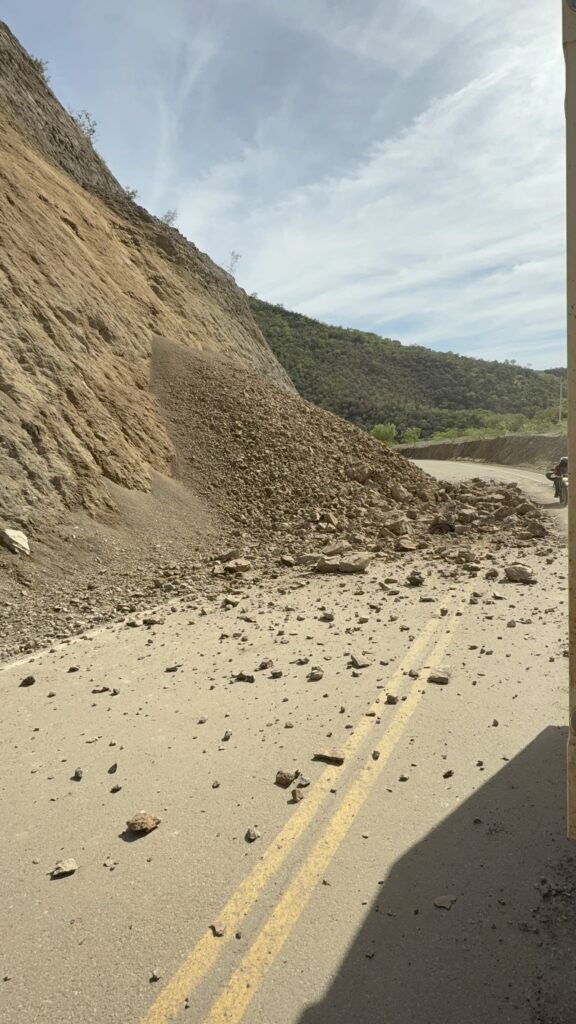
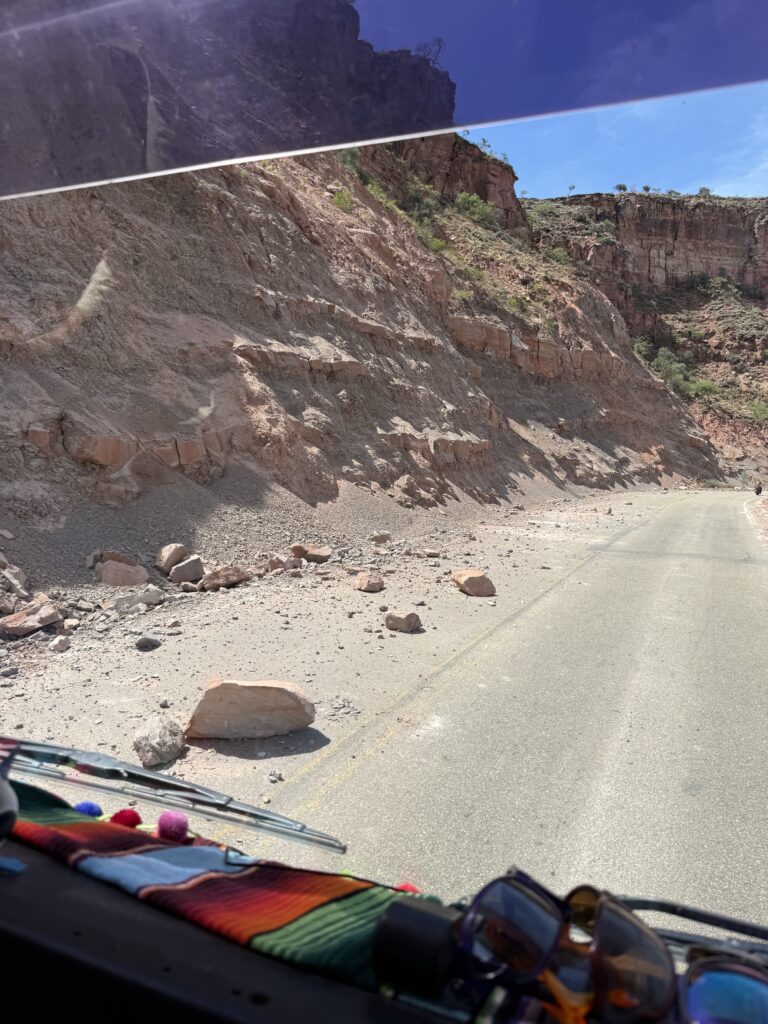
The morning after we arrived in Sucre, news reached us from Samaipata. Overnight heavy rain—less than ten hours after we’d passed through—had triggered a landslide that claimed the lives of six people and completely closed the road. Thinking back to our own drive, weaving around fresh debris and the remnants of earlier slides, it was unsettling. A reminder of how quickly conditions can change in these mountains, and how fragile the roads—and the lives along them—can be.


WORK FIRST – EXPLORE SECOND
Our first morning in the campground was spent draining and scrubbing our water tanks after discovering that our last “clean” fill-up was in fact loaded with silt, clogging a new filter we’d replaced only a month earlier. Luckily we had one more filter with us. We will have to be very careful now, as these filters aren’t available anywhere in South America. While we sorted that out, the kids hit the schoolbooks.
That evening, we strolled into town, browsed the streets, and tucked into surprisingly good pizza and pasta at a local Italian restaurant. Prices are so reasonable here—our bill came to just $5 USD per person. Manuel met us there; he’d stayed at a hostel the first night and joined us at the campground for the second.
DINOSAUR WALL
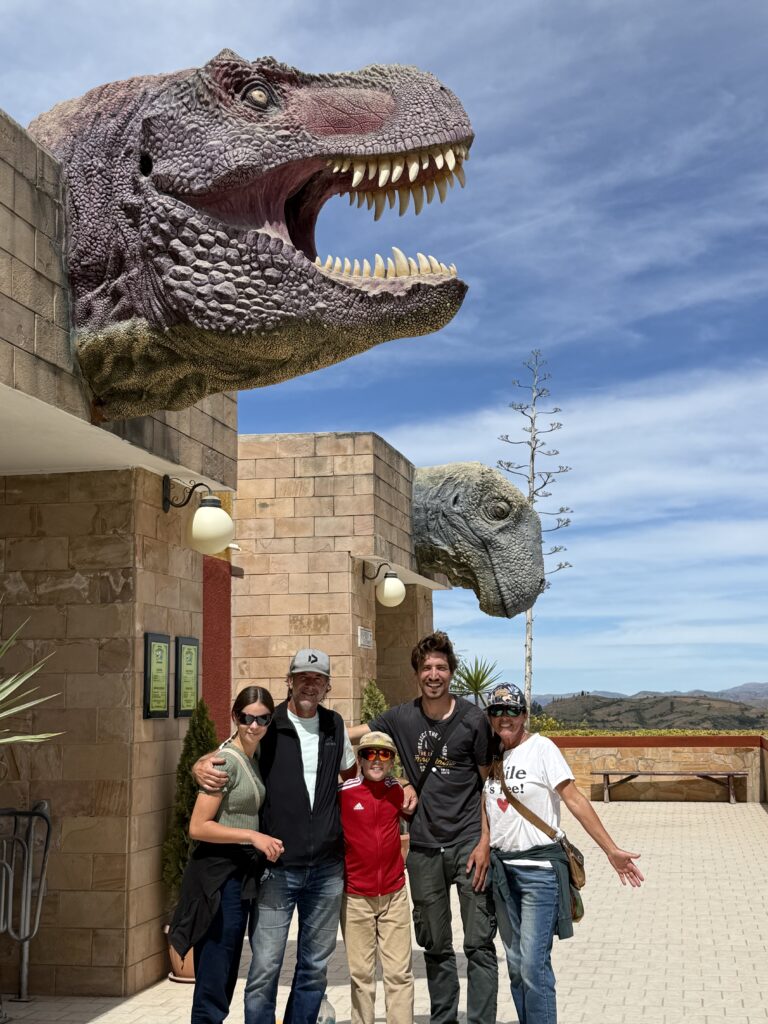
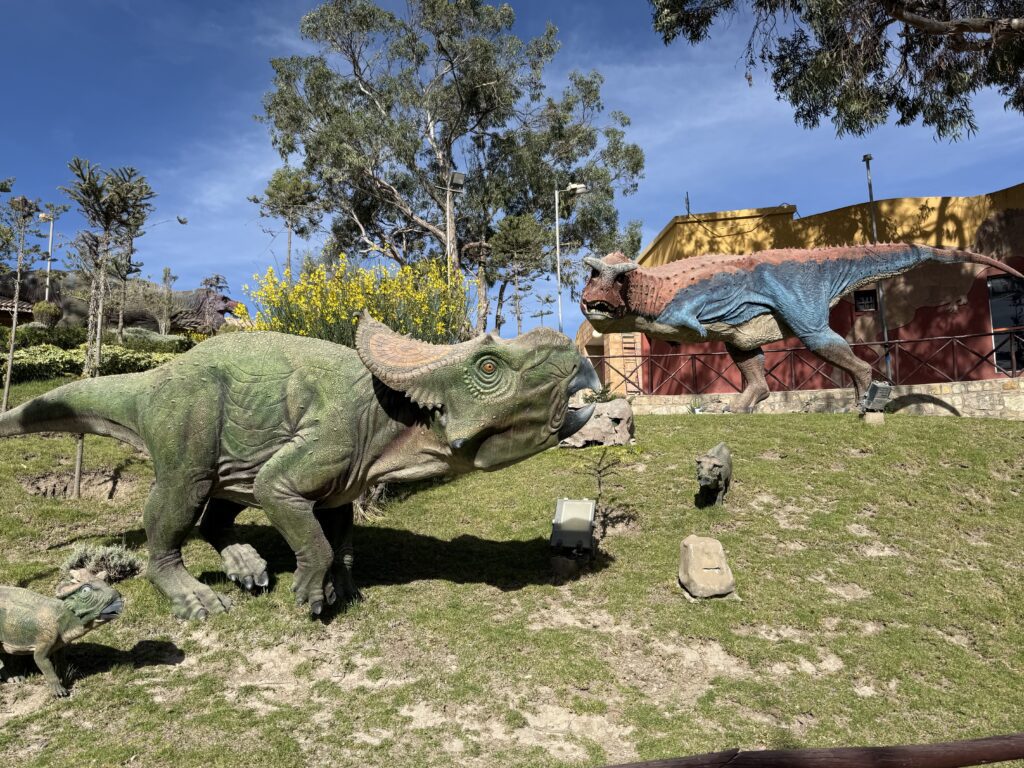
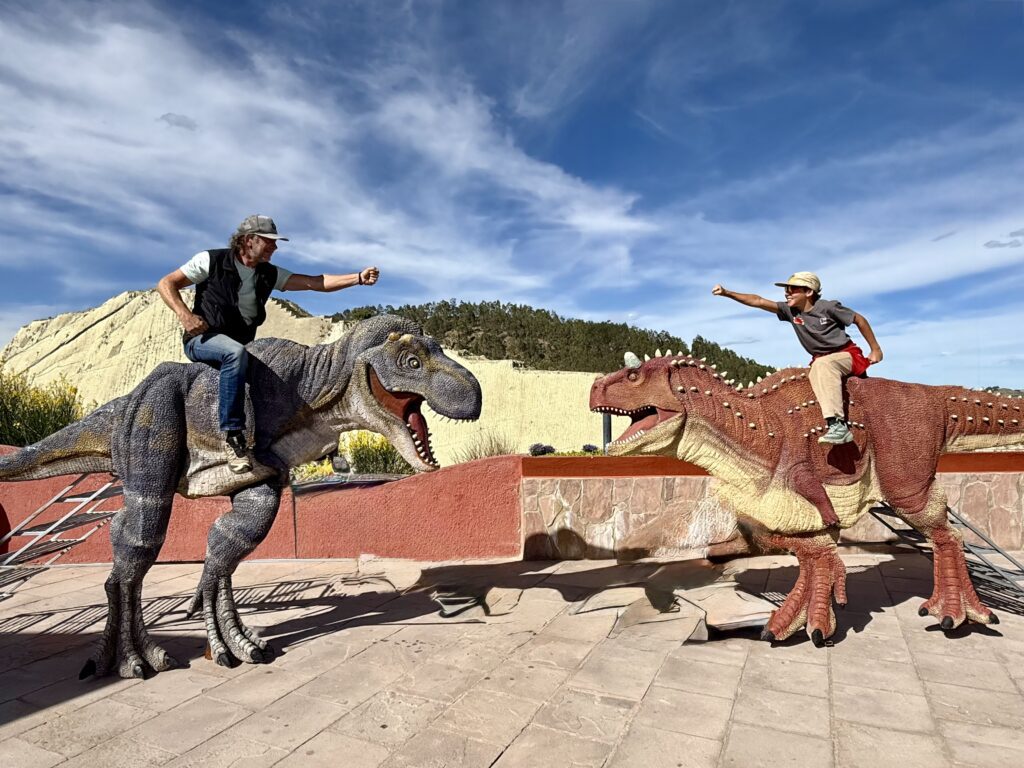
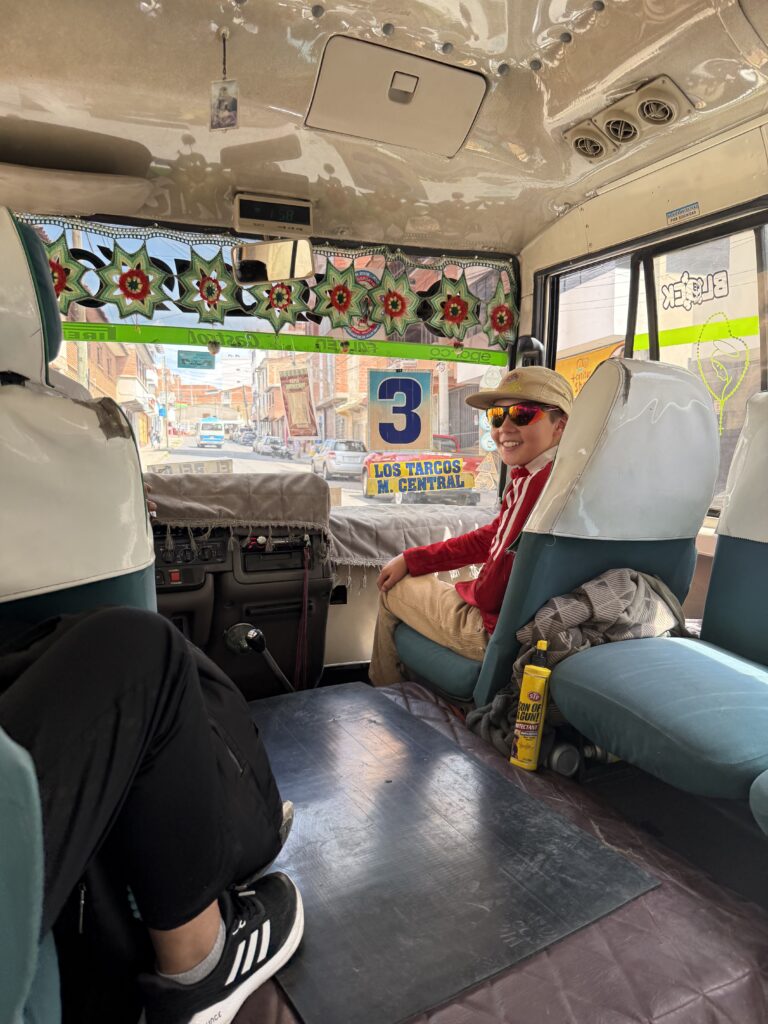
On our second day in Sucre, we set off to see the famous Dinosaur Wall—an adventure that began with simply trying to locate the route for public bus #4. After walking for an hour, we finally found it. The bus looked to be at least 50 years old with its original, well-worn seats. We rattled out of the city toward the cement quarry where one of the world’s largest collections of dinosaur footprints was discovered. Mining excavations in 1994 exposed the giant limestone wall covered in thousands of tracks.
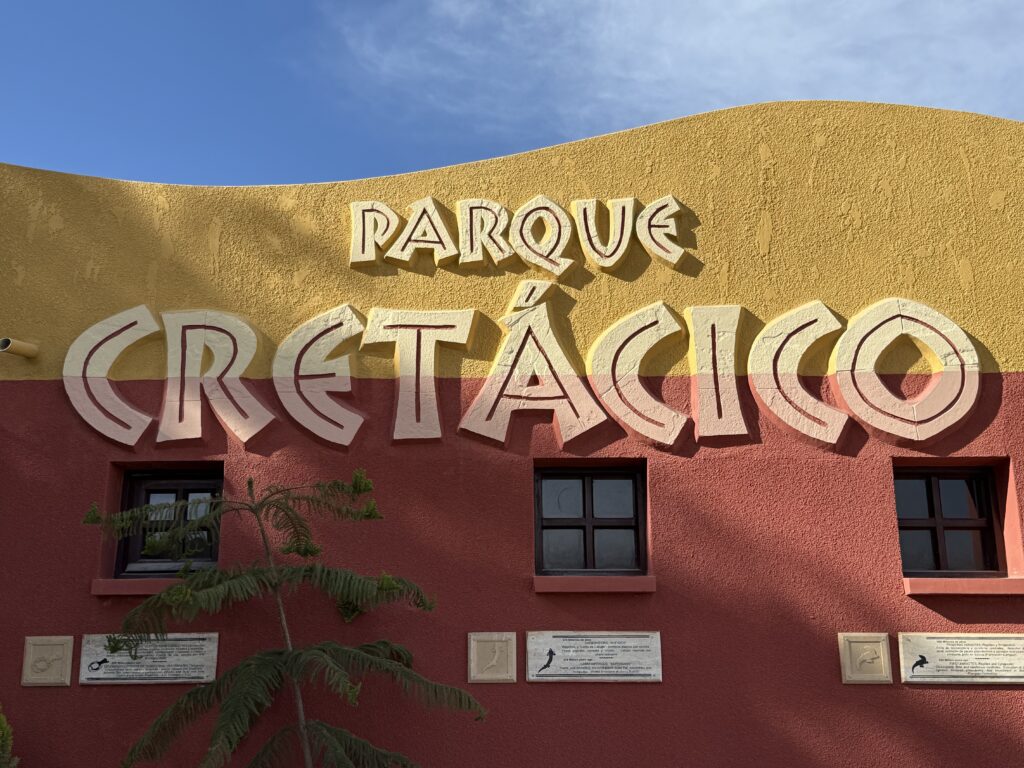
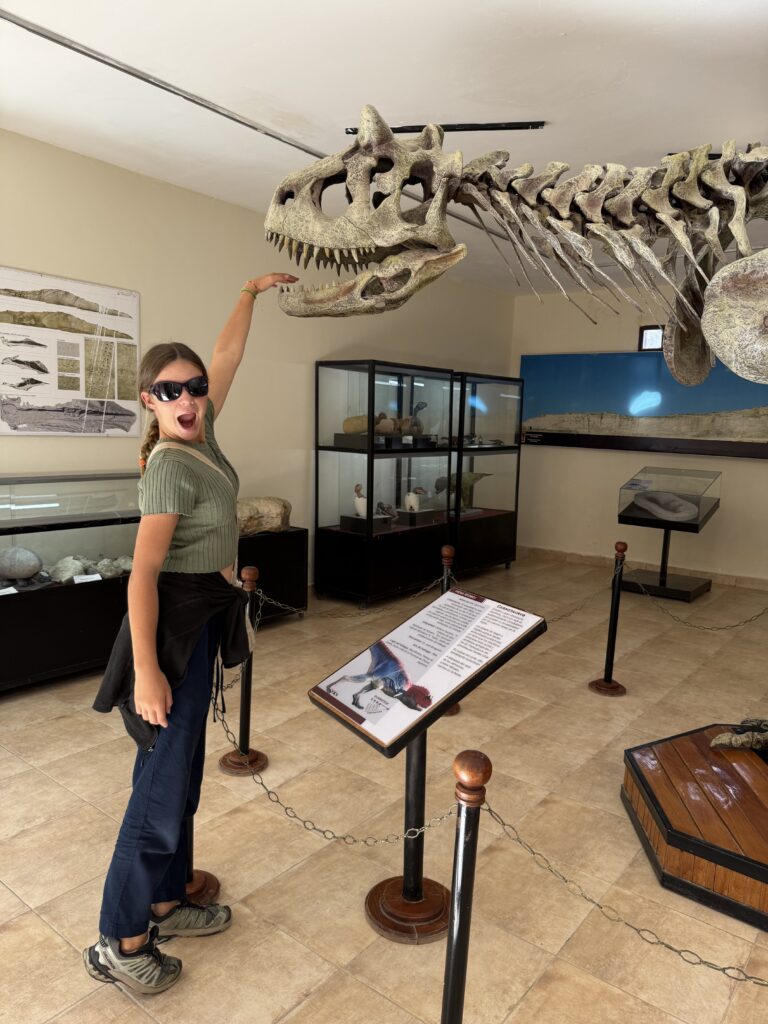
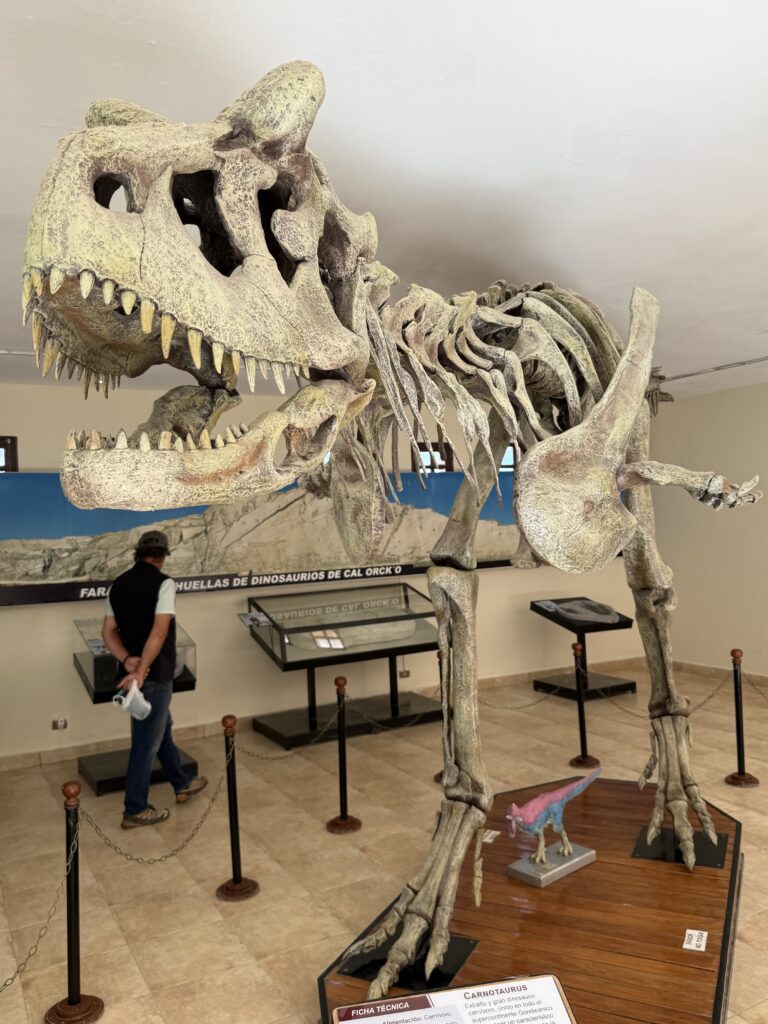
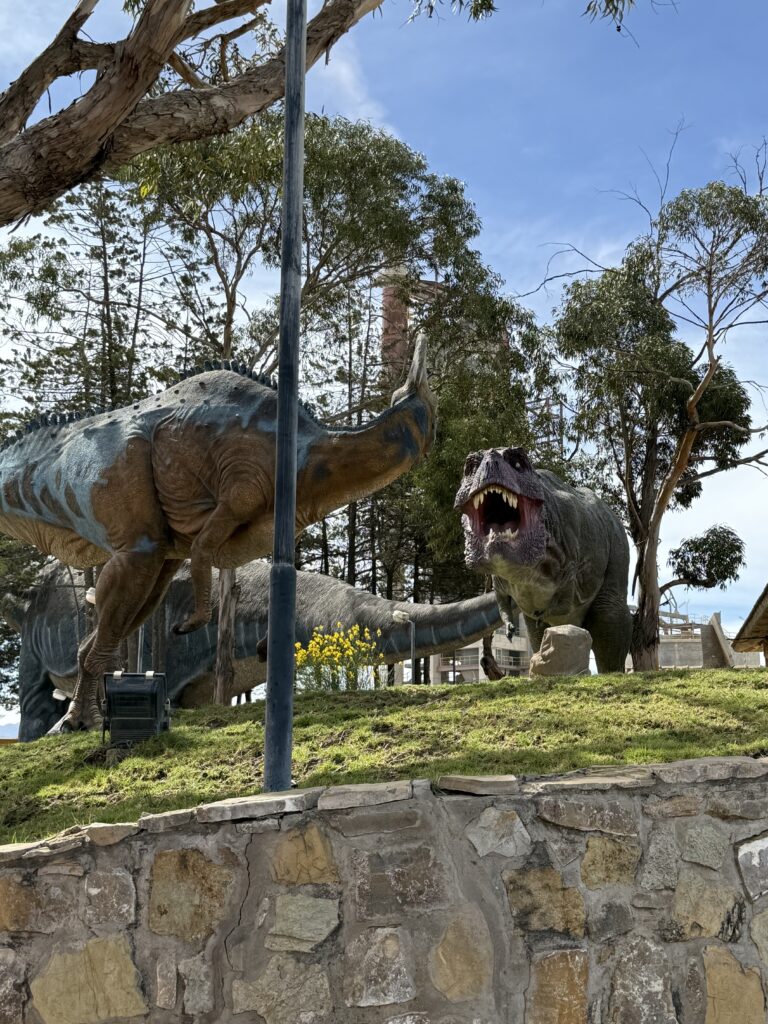
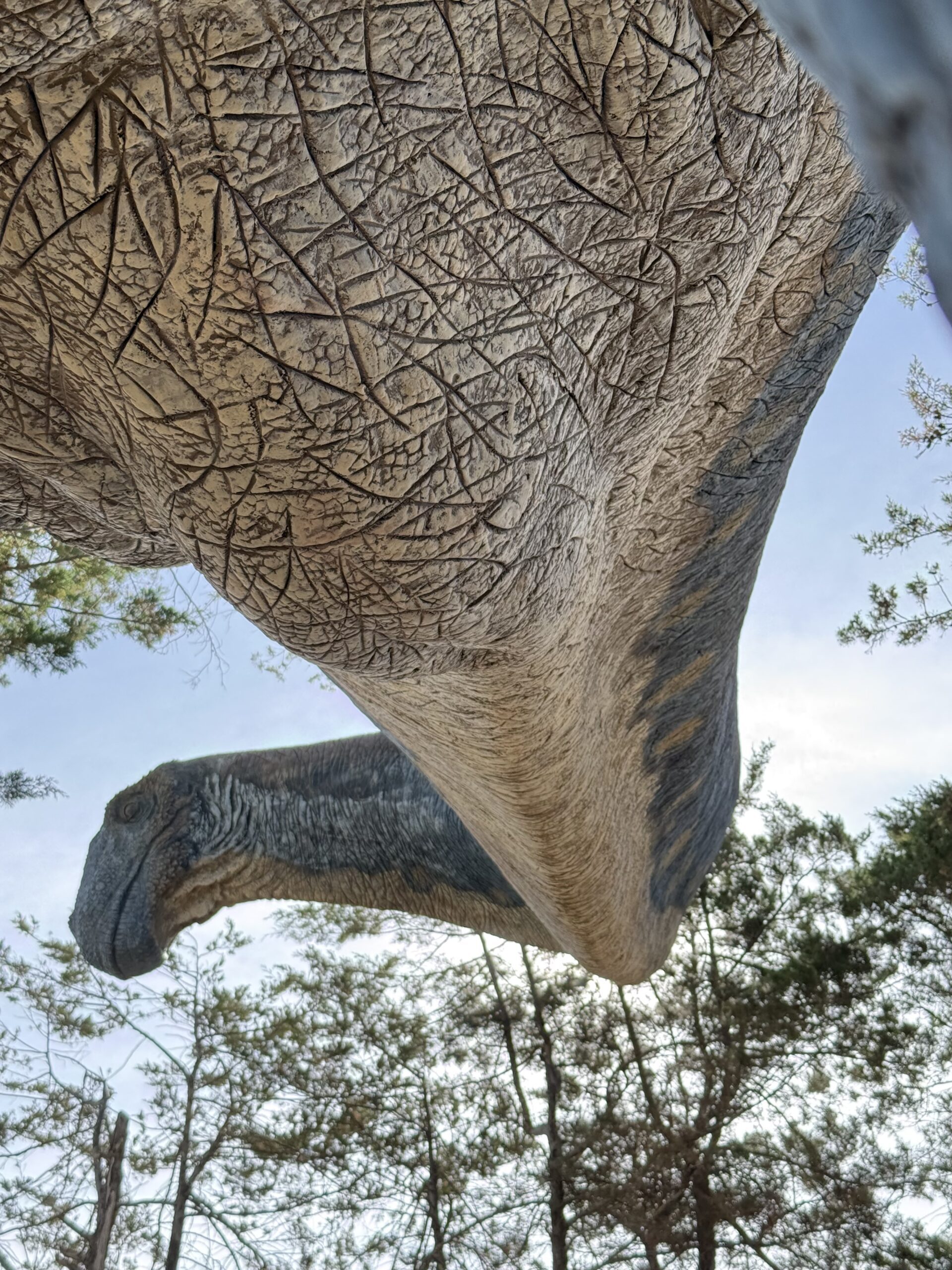
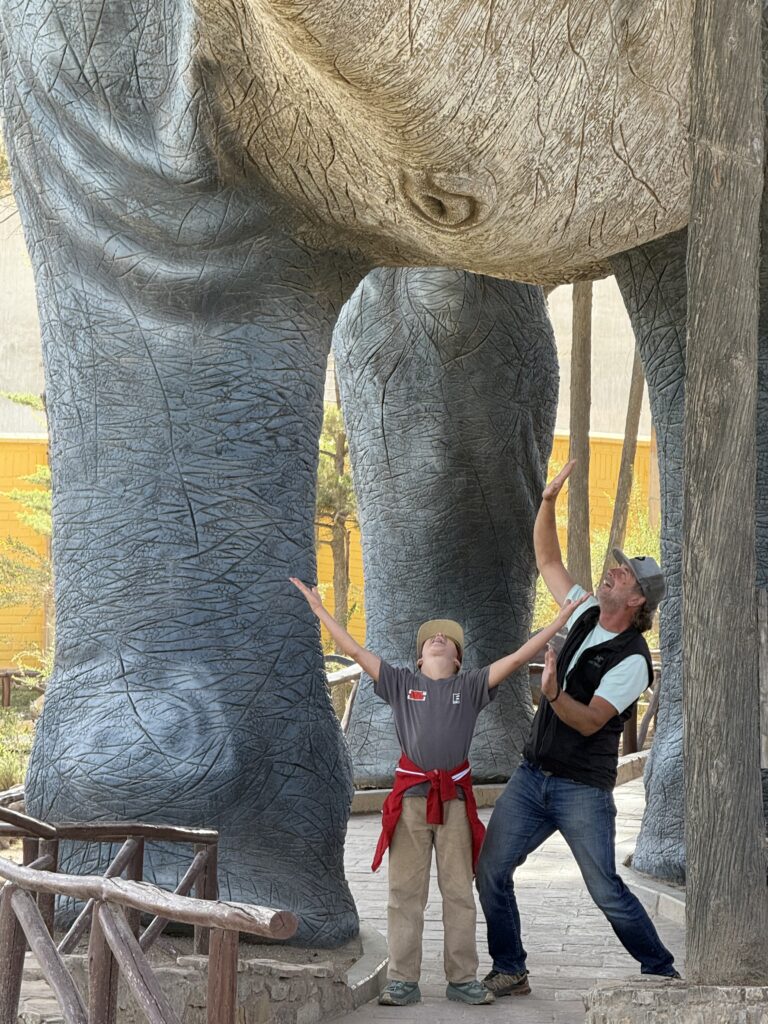

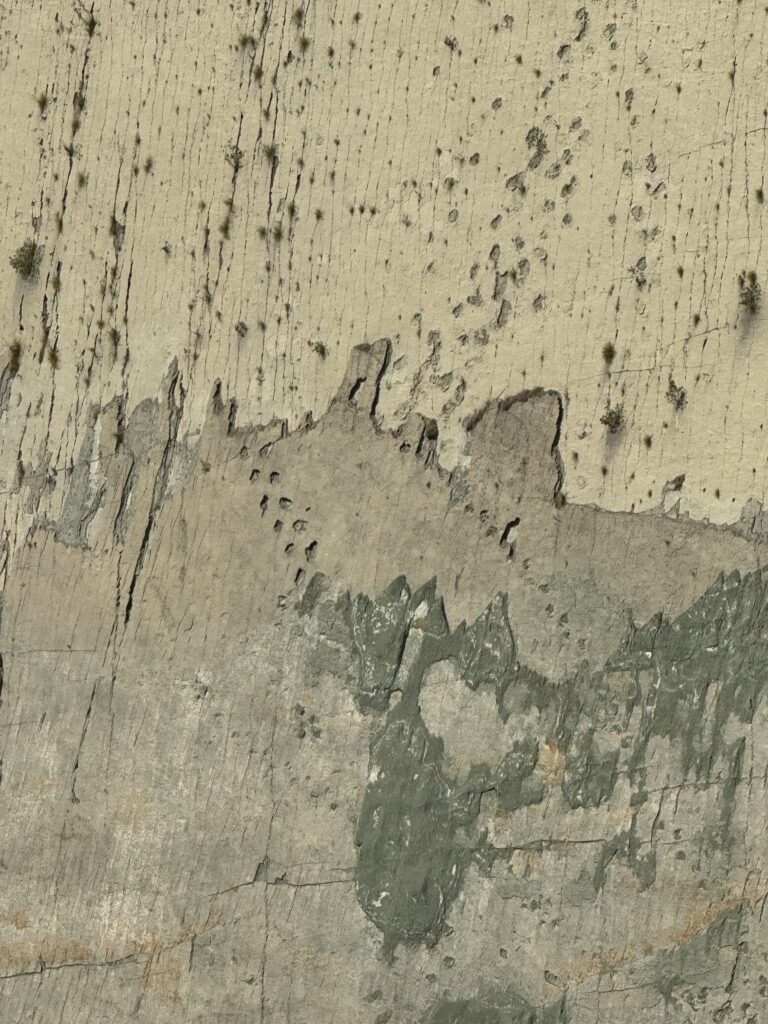
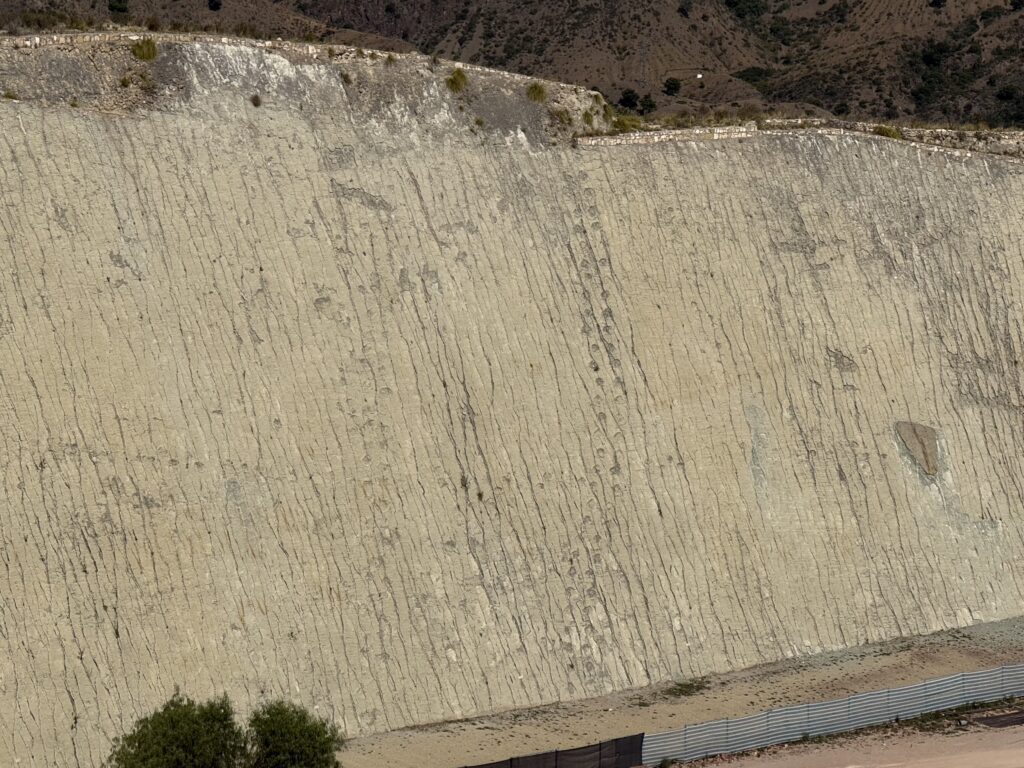
We spent a couple of hours at the site, learning how this once-swampy region has shifted dramatically over millions of years, from wet lowlands to the tilted limestone cliffs that exist today. The wall itself is astonishing: a towering vertical face stamped with thousands of fossilised footprints left by dozens of species—herbivores and carnivores—who once trudged across soft mud. Tectonic forces later lifted that ancient mudflat into the steep cliff we see now, preserving every track like a snapshot from the Cretaceous.
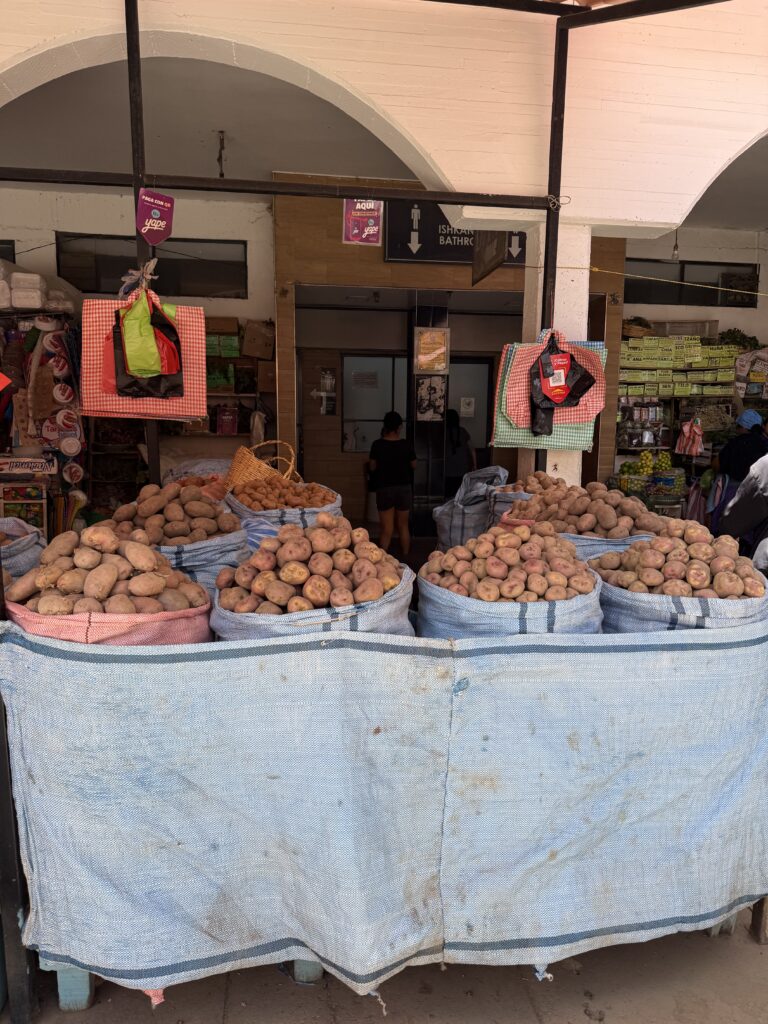
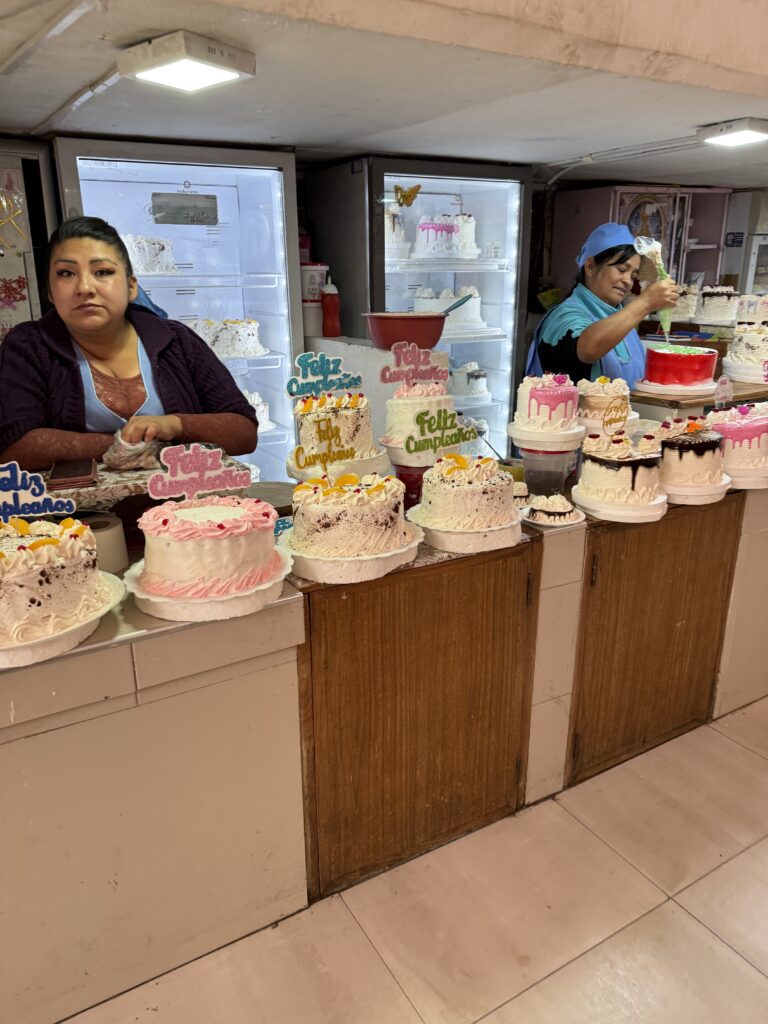
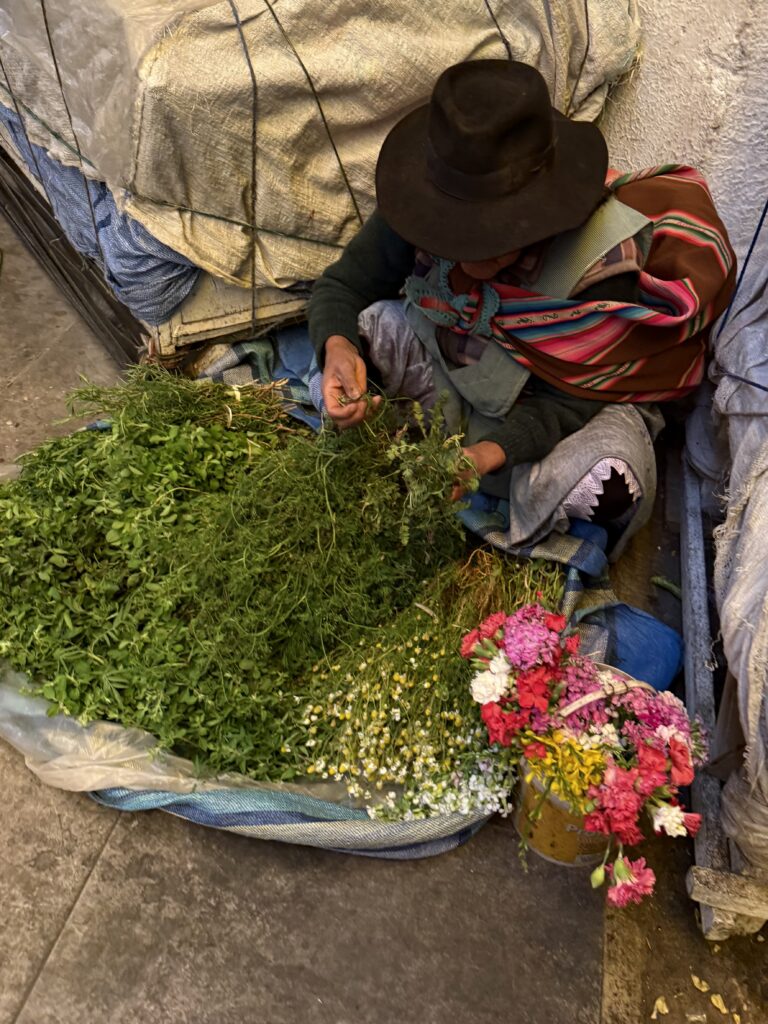
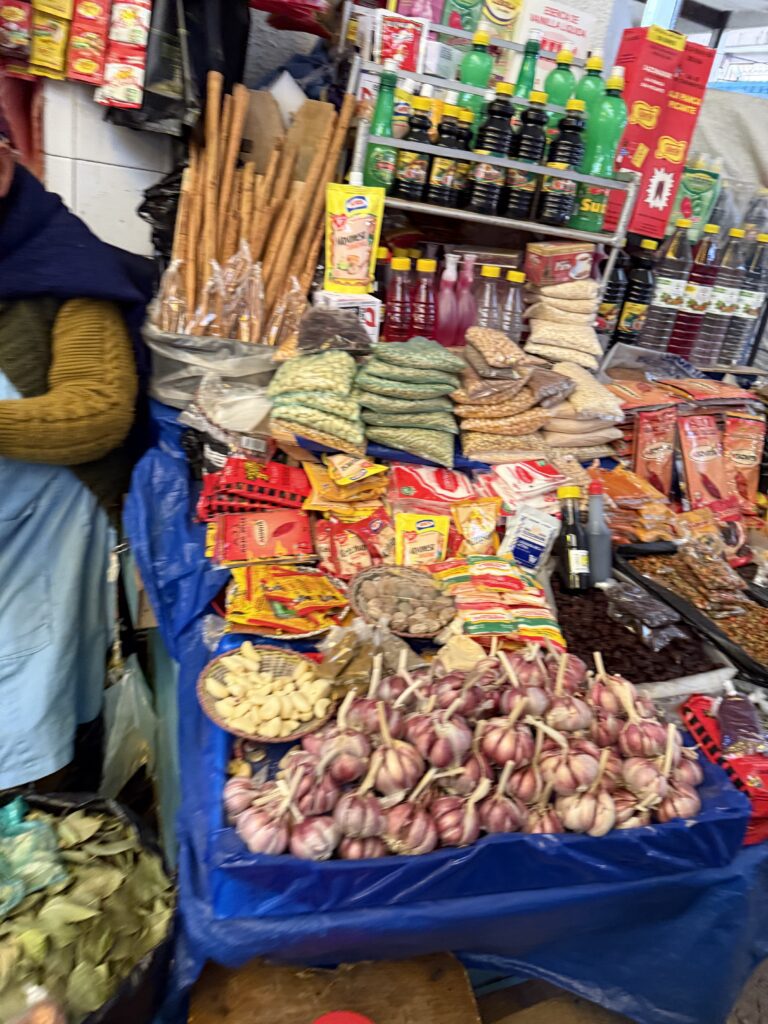
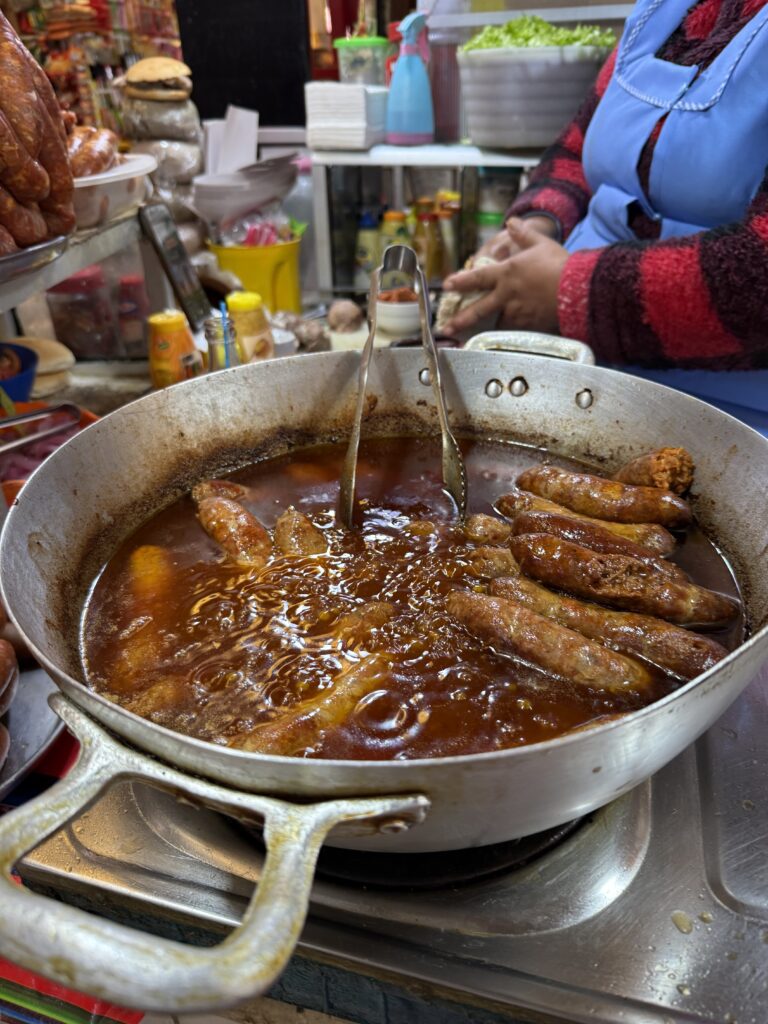
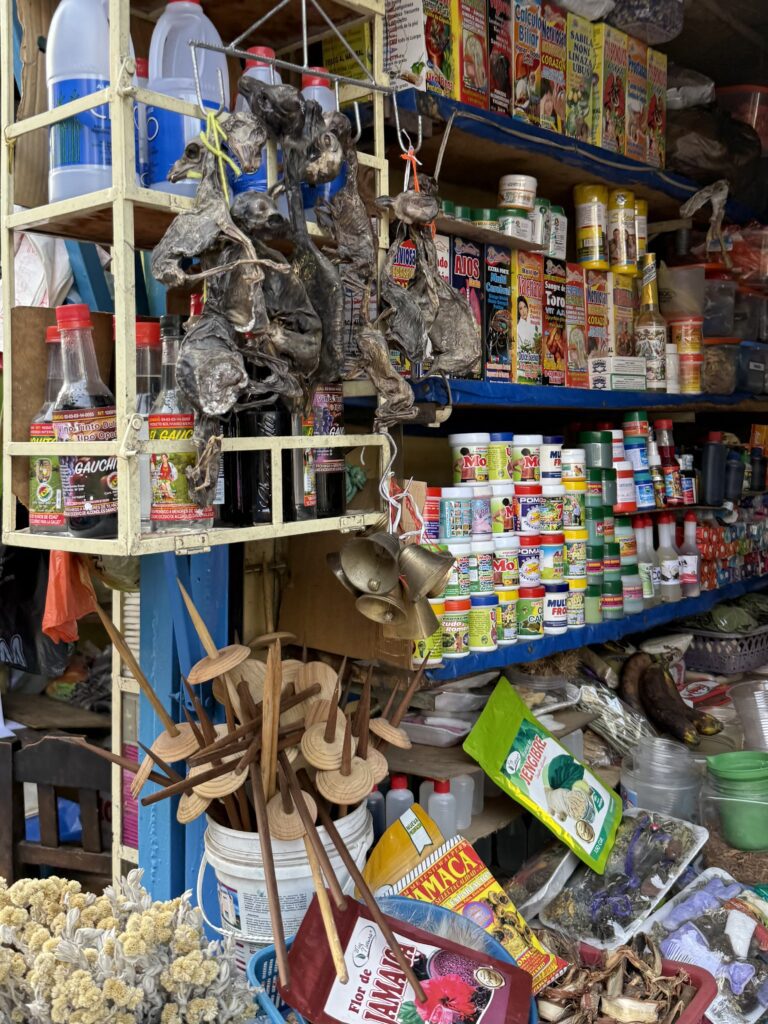
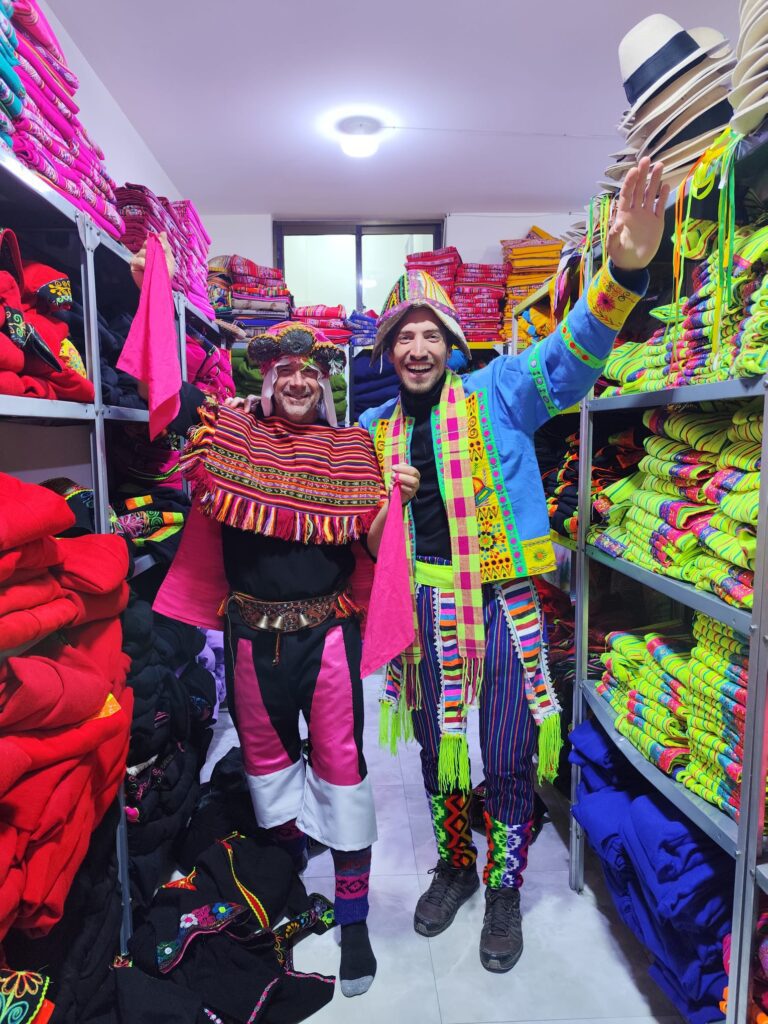
Afterward, we hopped the bus back toward Sucre, jumping off early to wander through the local markets, where there were no tourists and dried llama foetuses hung from stalls. We picked up a few bits and pieces and had fun walking back to camp.
After three days in Sucre, we were ready to keep rolling. Even though we hadn’t visited the city’s ‘main highlights’, but felt we’d had a good walk through the less touristy and more local areas.
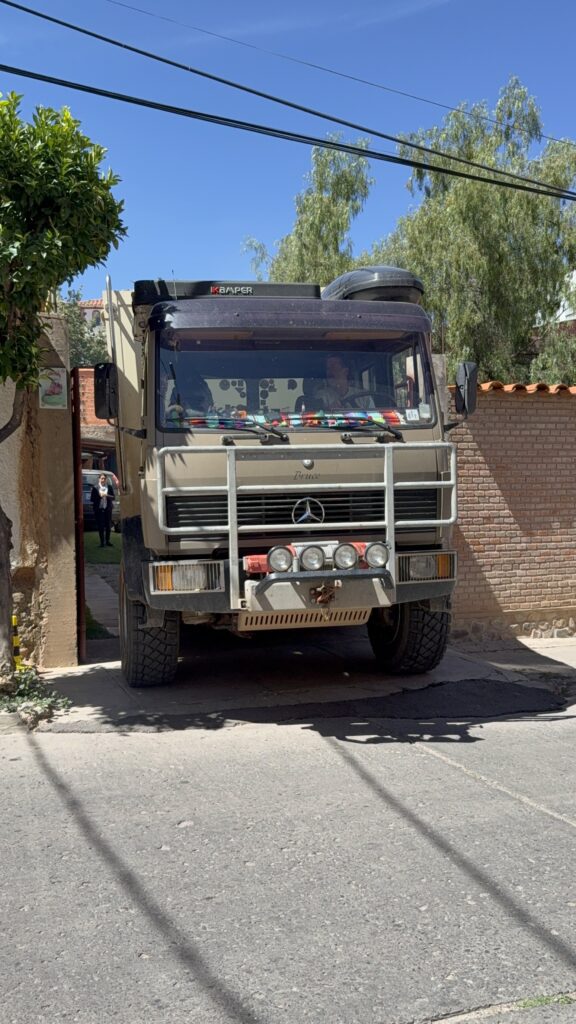
So we packed up, said goodbye to our little campground, squeezed out of the gate, and began the climb toward…
Potosí—one of the highest cities in the world, and a place where history, mining, and harsh altitude all meet on the slopes of the legendary Cerro Rico.