
24-27 January 2026. With the wind finally at our back, we pointed the truck south toward El Calafate.
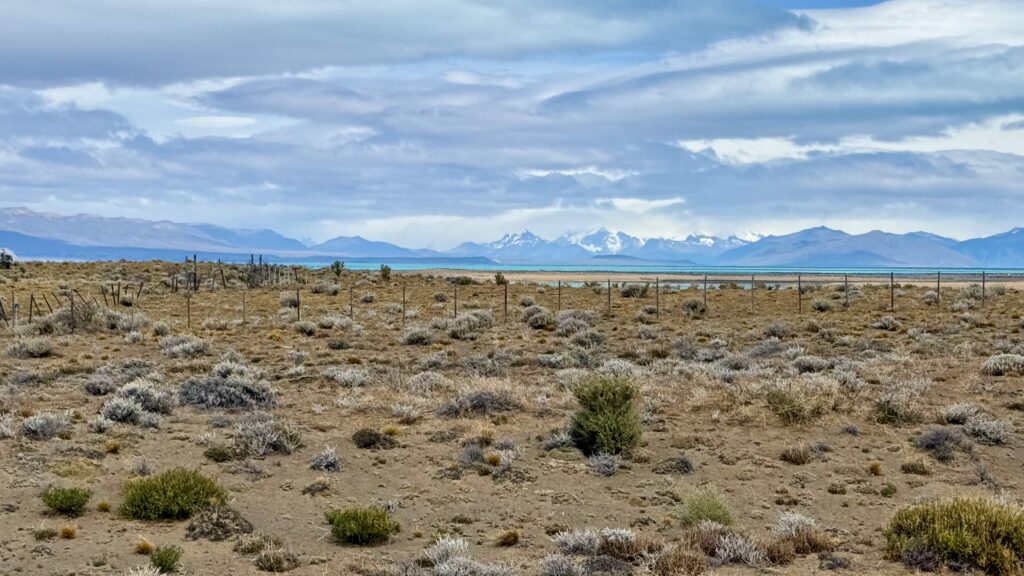
Beyond El Chaltén, the mountains fell away, replaced by vast open grasslands stretching in every direction. Patagonia laid bare. Nothing but long wire fences, endless steppe, and roaming guanaco for miles. The road ran straight and exposed, the kind where you could watch the weather approaching from an hour away.
The wind howled across the plains, pushing against the truck with impressive invisible force. Motorcycles passed riding at almost a 30-degree lean just to counter it. More often than not we face that wind head-on, but for a while that day we were lucky enough to have it at our backs.
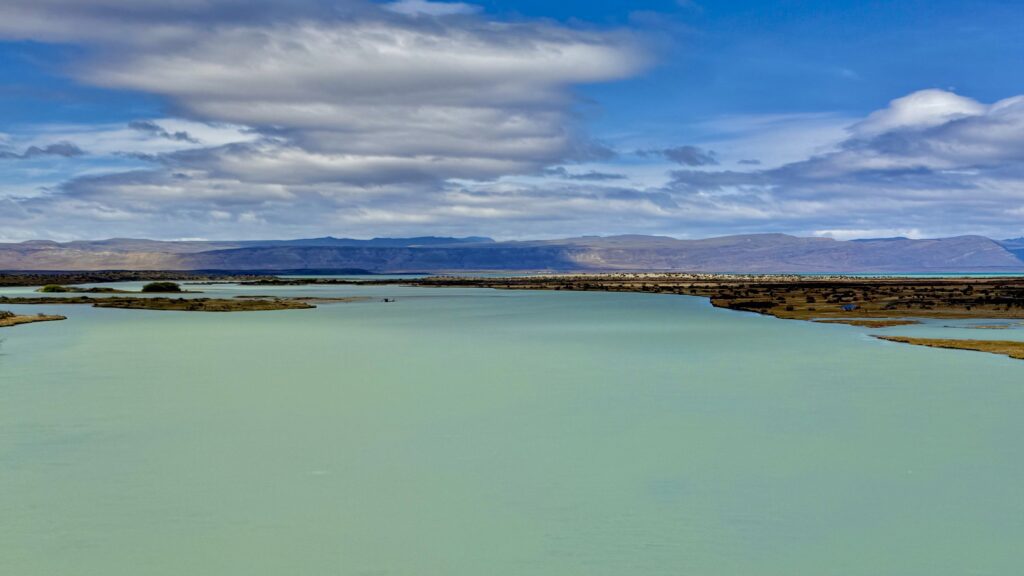
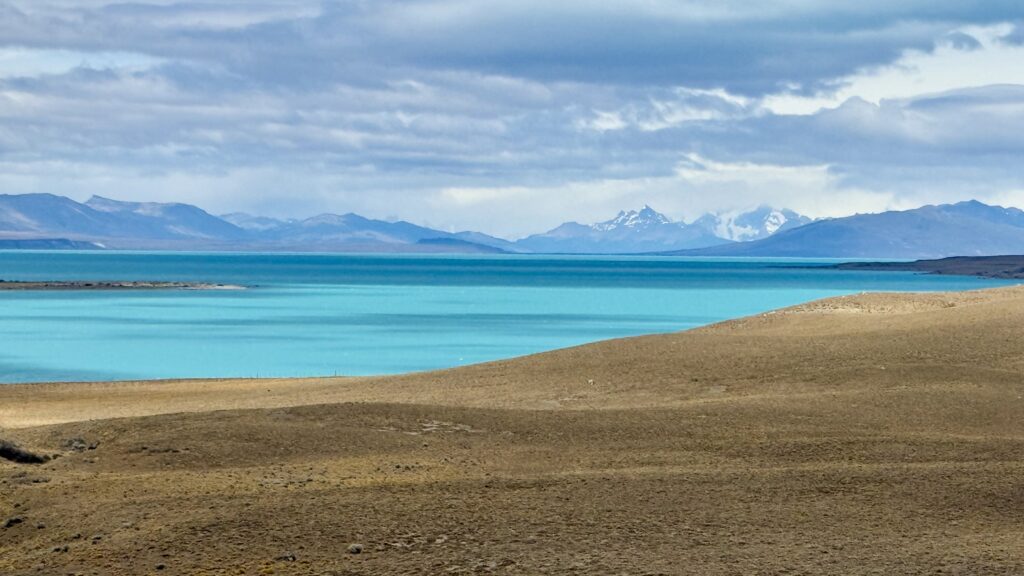
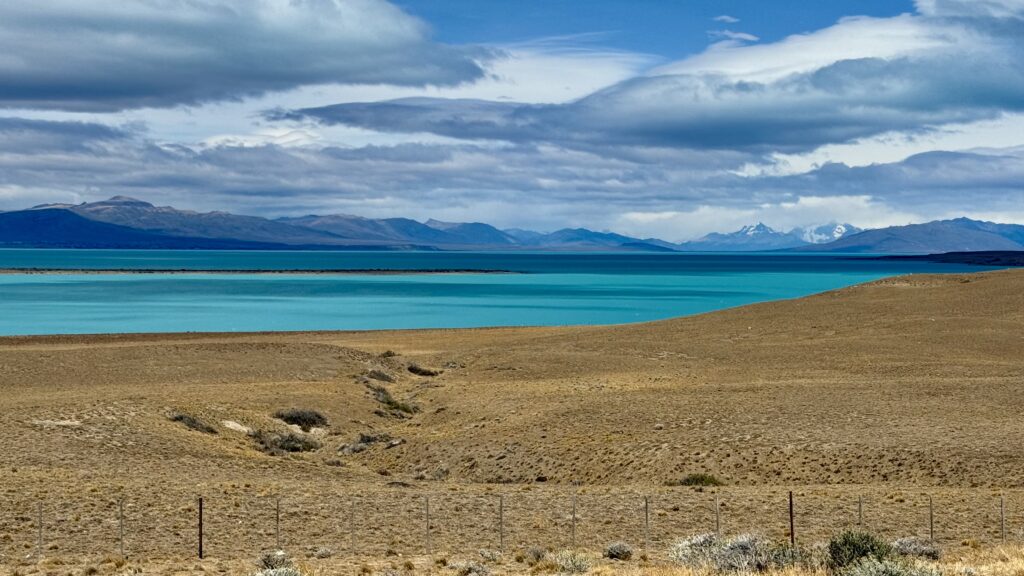
To our right, the waters of Lake Viedma glowed that impossible colour I’ll never get tired of. Not the deep blue of alpine lakes, but a milky, luminous turquoise — coloured by glacial silt ground to powder over thousands of years.
EL CALAFATE
Eventually the low buildings of El Calafate appeared on the horizon.
El Calafate exists because of ice.
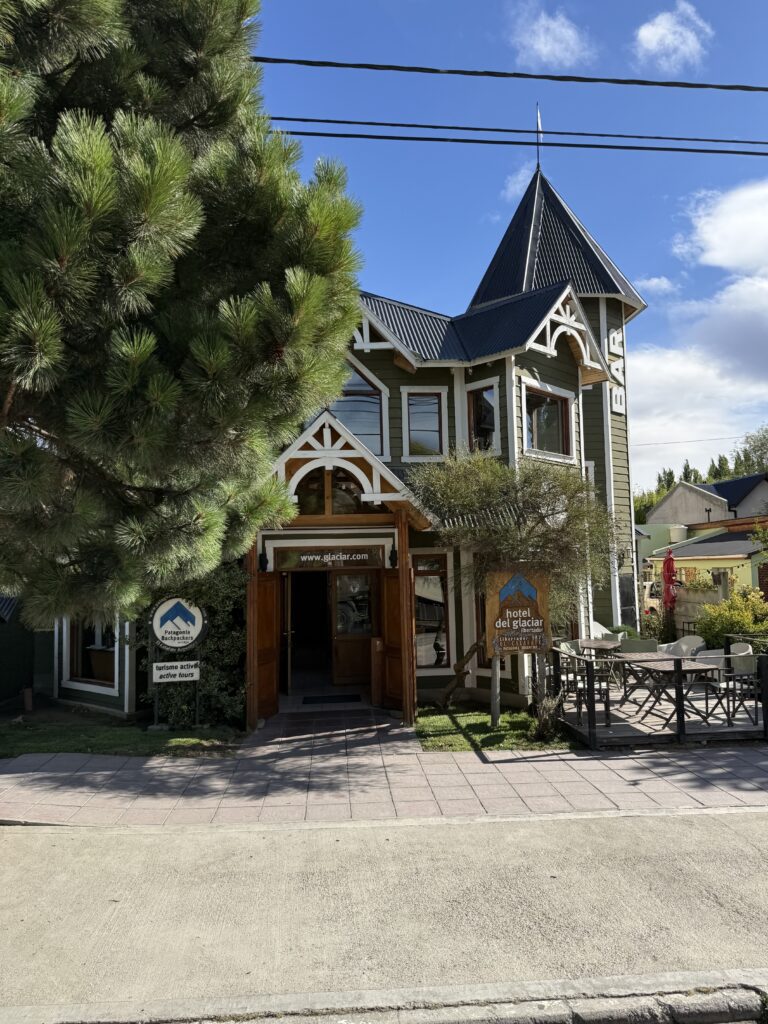
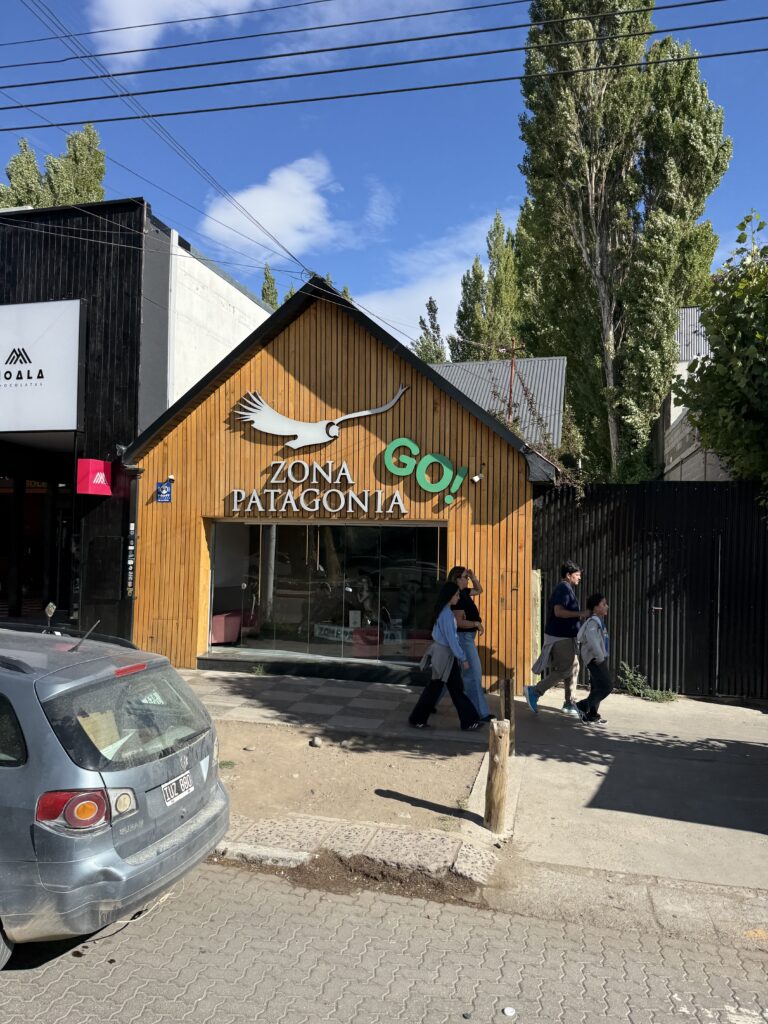
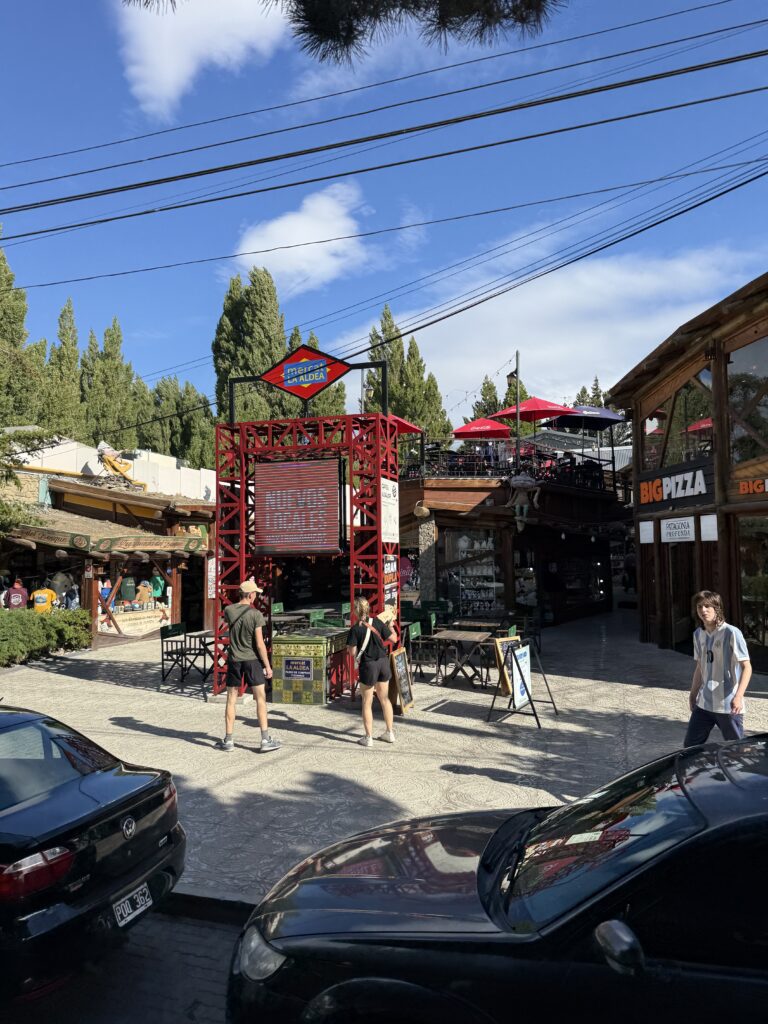
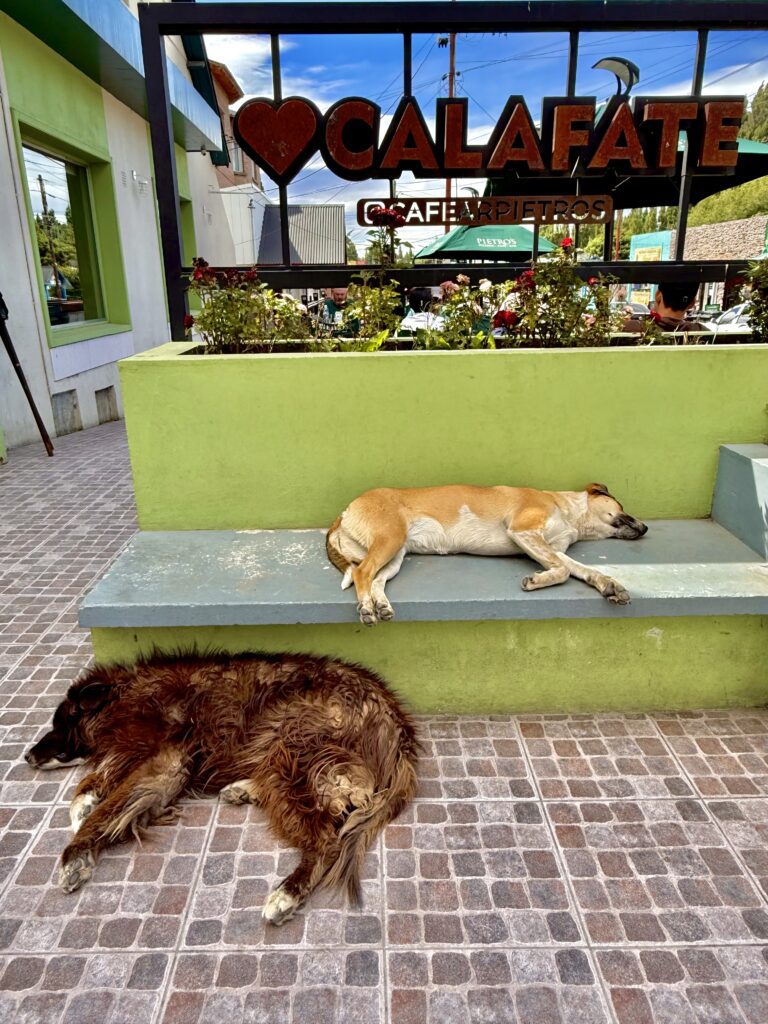
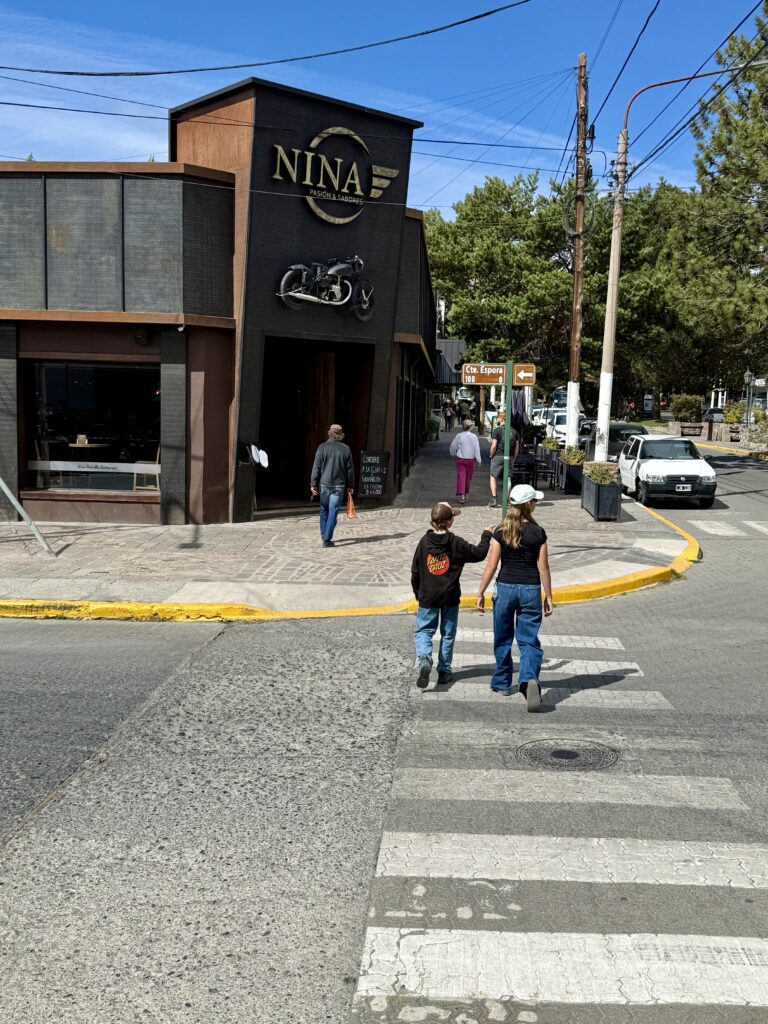
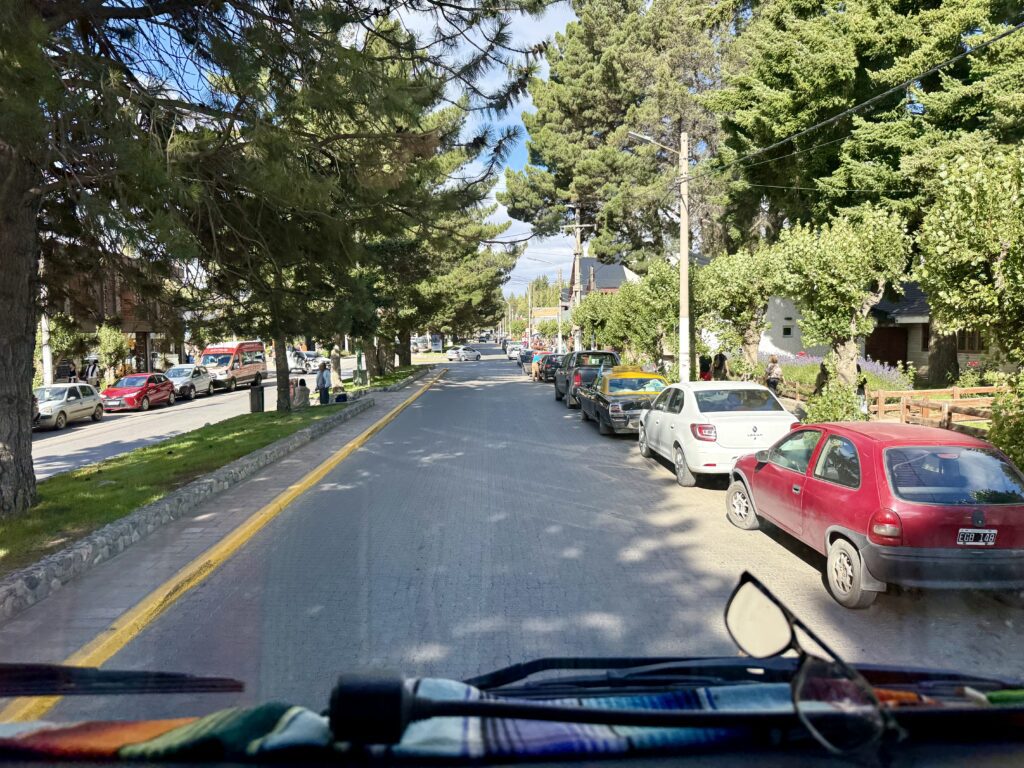
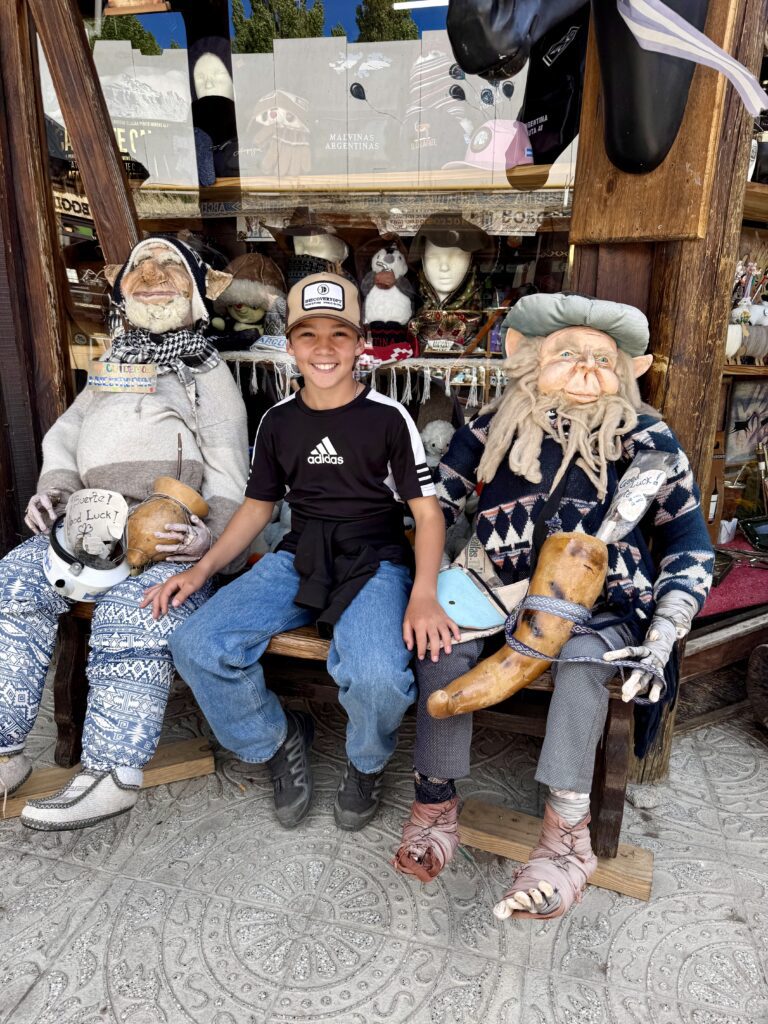
What began as a remote outpost for sheep ranchers has grown into Patagonia’s glacier capital — the gateway to Perito Moreno Glacier and Los Glaciares National Park. Today the town feels almost North American in character. Cafés spill onto sidewalks. Chocolaterías fill the air with the irresistible smell of cocoa. Outdoor stores, souvenir shops and restaurants line the main streets.
The travellers here feel different too.
Fewer backpacks and more handbags. Less dust and sweat. More clean jackets and camera straps. Most people have come for one thing — the glacier.
We spent our first night camped in the town’s concrete bus parking lot. Hardly scenic — just flat grey concrete — but after the past week of dirt and dust it felt strangely luxurious. No wind-blown grit. No uneven ground.
The next morning we wandered town slowly. Groceries. Coffee. Nothing urgent. Just browsing. After restocking the fridge and pantry and filling the diesel tank, we pointed the truck toward the national park, about 80 kilometres from town.
PERITO MORENO GLACIER
Deep within the mountains lies the Southern Patagonian Ice Field, one of the largest ice masses on Earth outside Antarctica and Greenland. From it flows the glacier we had come to see.
Driving along the lakeshore toward the park was surreal. Small icebergs drifted quietly along the water, fragments that had broken away somewhere upstream.
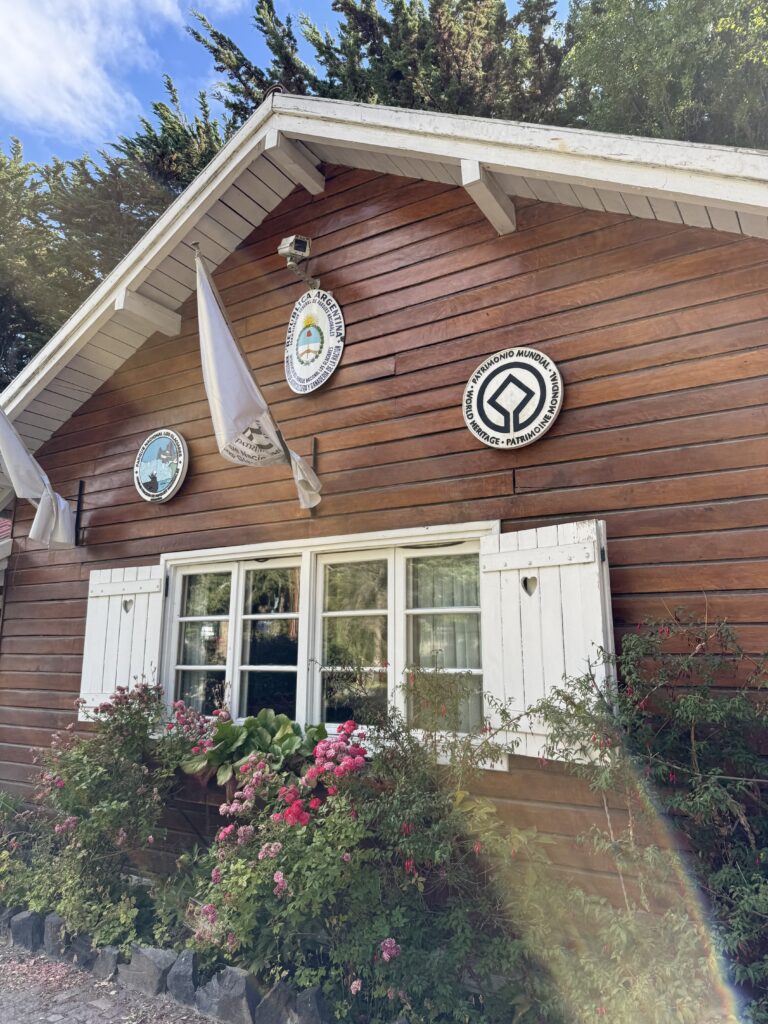
Presenting our three-day park pass at the entrance, we were waved through.
We parked Bruce in the lower lot and took the shuttle up the hill, joining a slow stream of visitors heading toward the viewing platforms. Steel walkways snake across the hillside, revealing the glacier from shifting angles as you move along them.
And then suddenly it appears. Immense!
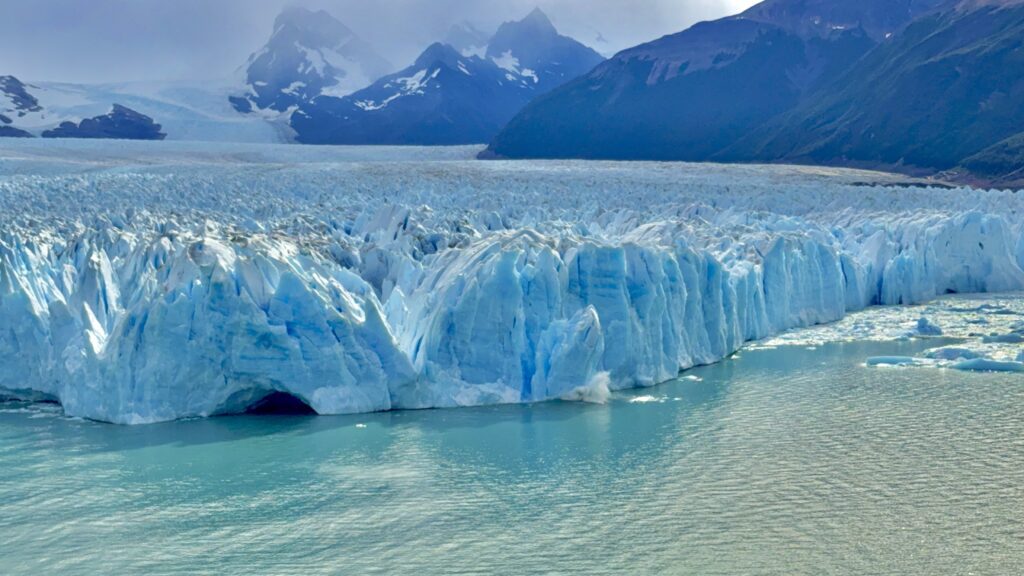
Stretching across the valley like a frozen river, Perito Moreno Glacier is nearly thirty kilometres long. Its face rises more than seventy metres above the lake, with hundreds more hidden below the surface. The ice glows blue and white, fractured and ridged, shaped by pressure and time.
We found a quiet place along the railing and simply watched. Waiting. Scanning the towering wall of ice for movement. For a long time, nothing happened.
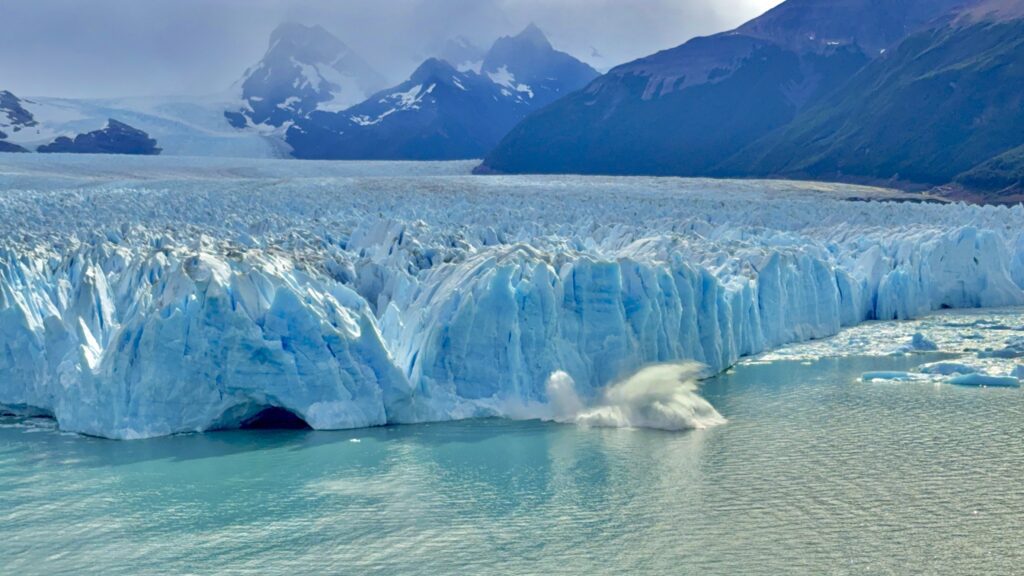
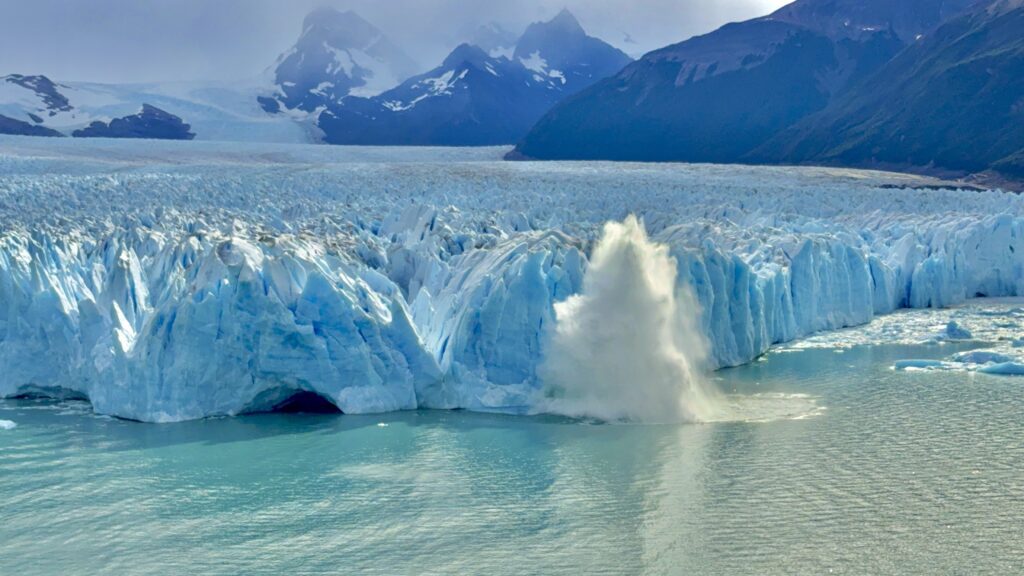
Then, without warning, a crack echoed across the valley. A section the size of a school bus broke free, crashing into the lake in an explosion of ice and water. Seconds later the sound reached us — a deep thunder rolling across the valley.
The spray shot upward in a towering plume before the waves rolled back toward the glacier’s face. The whole thing lasted only seconds. And then the glacier returned to silence. It was impossible to look away. Three hours passed without us noticing.
Eventually the rangers began gently guiding people toward the exits as the park prepared to close for the evening. Exiting we drove just beyond the gates and camped alongside five or six other travellers. The wind returned, but the sunset over the empty plains was the perfect end to the day.
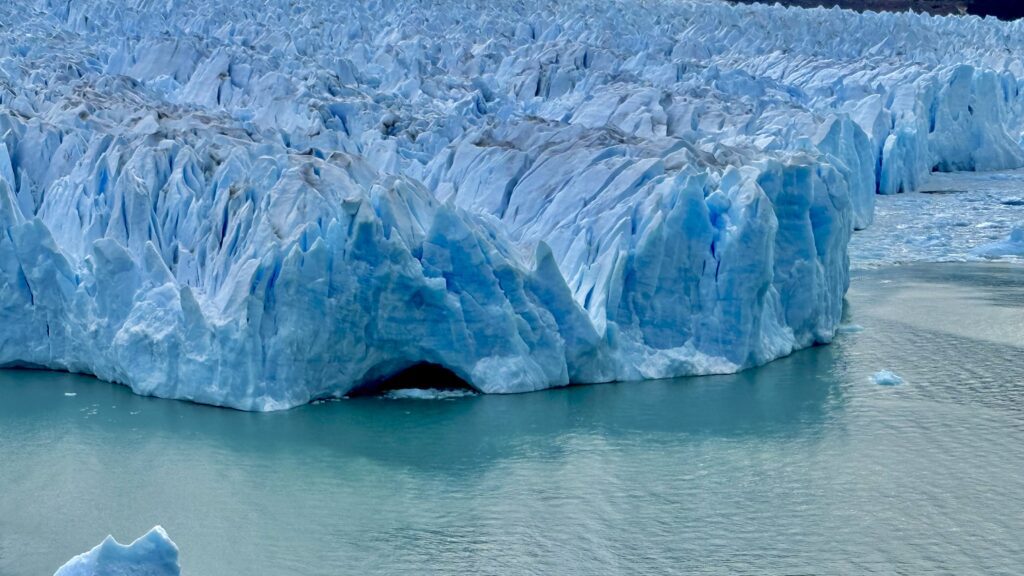
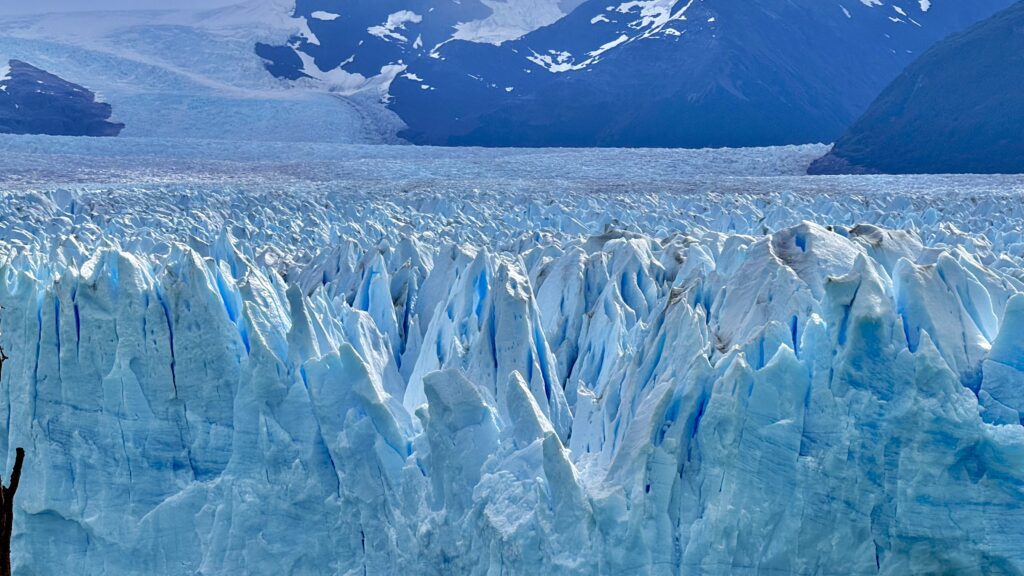
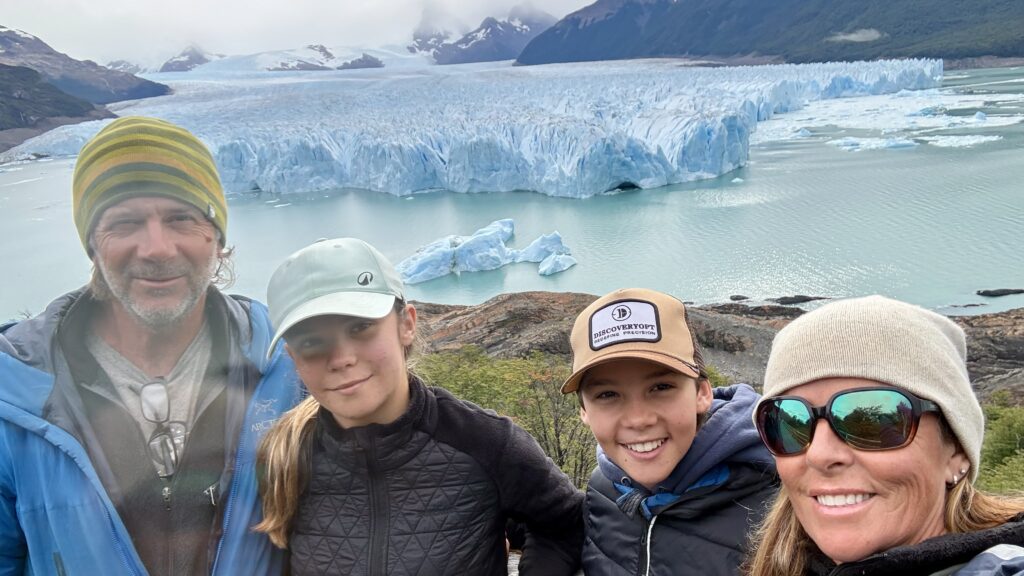
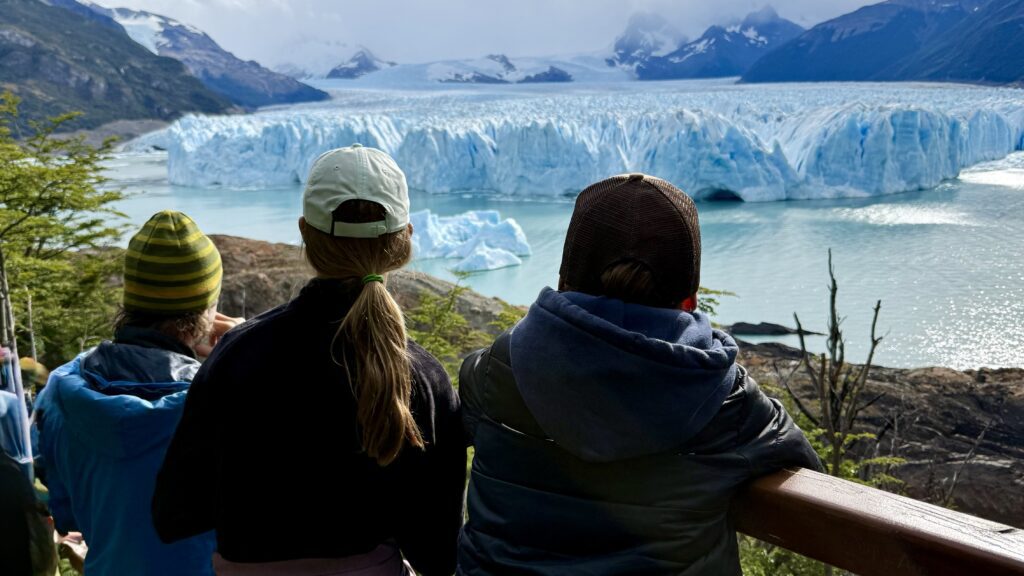
DAY 4 ON OUR 3 DAY PASS
The next morning we decided to try our luck. Technically our three-day park pass was finished, but we figured it was worth attempting another entry. At the gate, uniformed students checked passes but didn’t scan them. We handed ours over and waited. A brief glance. Then a casual wave. Through we went.
We bumped into Angelo and Ana again — familiar faces from the road. Together we watched as more massive sections of ice collapsed into the lake. The trick was timing. Either your camera was already rolling, or you missed it in a blink.
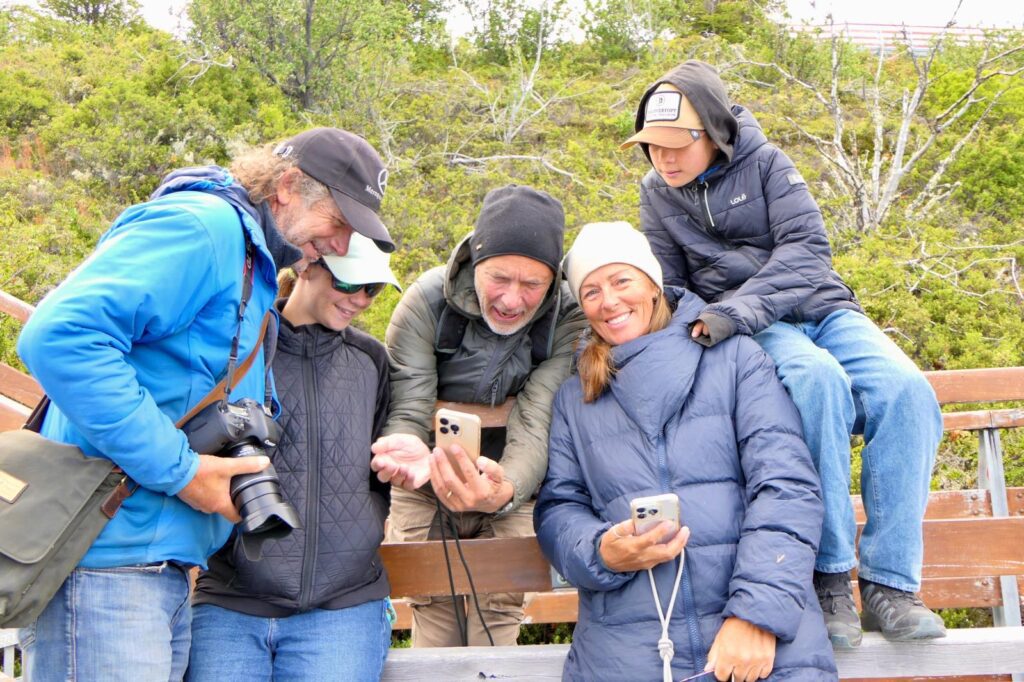
Eventually we returned to camp. The kids settled into schoolwork while Tim and I studied the map.
RETHINKING OUR PLAN
Our original plan had been to continue south toward Ushuaia. But something didn’t add up.
We needed to be in Torres del Paine National Park in a month to start the O-Trek. Ushuaia, for all its distance and mythology, could easily consume two weeks… but not four.
We had come too far south too quickly.
Our friends Mario and Wenke were still in Uruguay, carrying parts from Germany for us. Sara and Huw had changed their plans and were heading south. Suddenly our timeline had opened up.
So what now? The most obvious answer was to head back north for a couple of weeks. Back to El Chaltén to tackle another hike. And back toward Perito Moreno National Park, a remote park we had accidentally skipped entirely. Retracing your steps is something we usually try to avoid, but sometimes it just has to be done.
And this was one of those times.