By the time we reached the start of the Carretera Austral, the weather had already set the tone — cold, wet, and windy. We camped that night on the roadside in the small town of Hornopirén, queued for the next morning’s ferry alongside others doing the same. Vans and campers with Chilean, Brazilian, and Argentine plates slowly gathered, forming a loose convoy of overlanders heading south.
By morning, Sara and Huw had arrived, and the ferry line briefly felt like a small travelling village. Last to join was a man from Mexico, three years into a journey on a 90cc scooter, riding from Mexico to Alaska and then all the way south. His top speed: 50 km/h. Life in the slow lane — and loving it.




A Road Through the Wilderness
The Carretera Austral is a lifeline carved through one of the most remote regions of Chile. Construction began in 1976 under the Pinochet military regime, led by the Chilean Army as both a strategic and symbolic project to assert national presence in Patagonia. Before its existence, communities here were connected only by boat, horseback, or long detours through Argentina.
Built largely by hand in brutal conditions — relentless rain, dense forest, unstable mountainsides — the road took years of labour and cost many lives. Stretching roughly 1,200 kilometres from Puerto Montt to Villa O’Higgins, it stitched together isolated settlements, bringing access to healthcare, supplies, and education, while also opening the door to tourism and change. Even today, long sections remain gravel, rough and slow. This road was never meant to tame Patagonia — only to pass carefully through it.
Ferries & Fjords
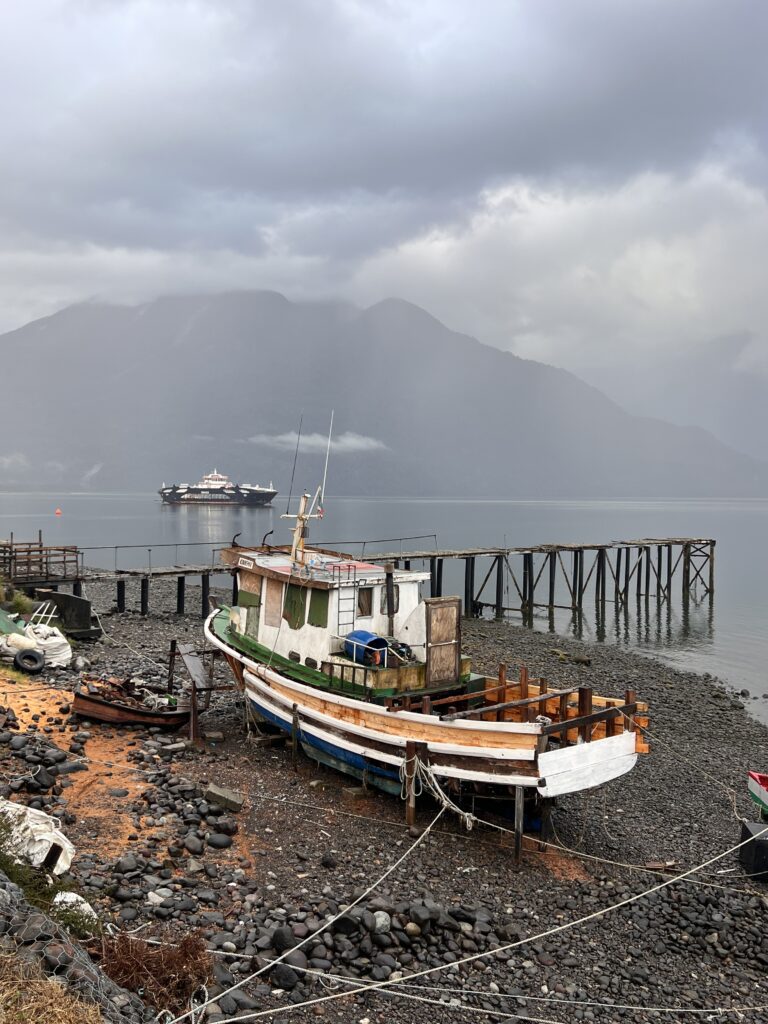
From Hornopirén, we boarded the ferry toward Pumalín National Park. As we pulled away from the ramp, our five-hour journey began to unfold. The water was calm and dark, reflecting forests that ran unbroken from mountain slopes straight into the sea. Mist clung low to the land, hiding the mountain tops completely. Waterfalls spilled down steep green walls in thin white ribbons, disappearing into the sound below. The bush was dense and untouched.
We chatted with Huw and Sara, played Bananagrams with Jaxon, and watched rain trickle down the windows. The scenery felt reminiscent of the Vancouver Island ferry routes through the sounds on a grey day. Between squalls, we walked the decks, quietly amazed at where we were.
After docking, we drove on to yet another short ferry crossing before continuing south. With a brief break in the rain, we stopped for a walk to Lago Negro — a 3 km out-and-back trail through rainforest, over slippery moss-covered rocks and root-laced trails that kept us watching every step. Then, suddenly, the lake appeared, dark and still beneath the forest canopy. If this was just a taste of what was to come, I was very excited.


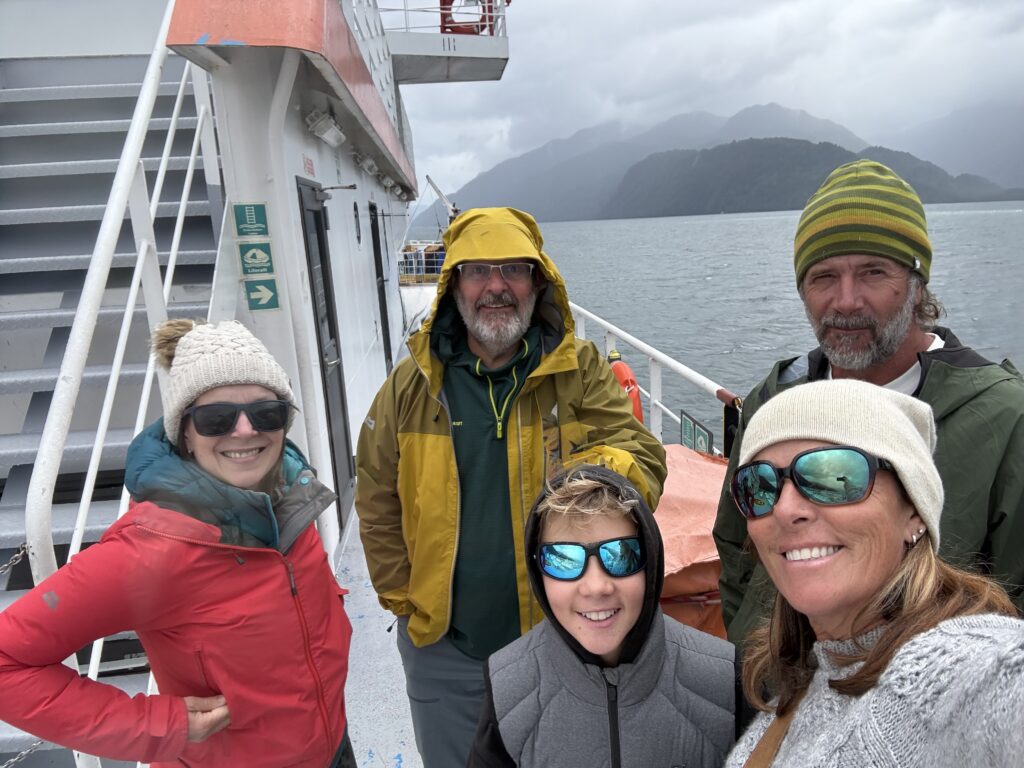


Pumalin National Park, Christmas 2025
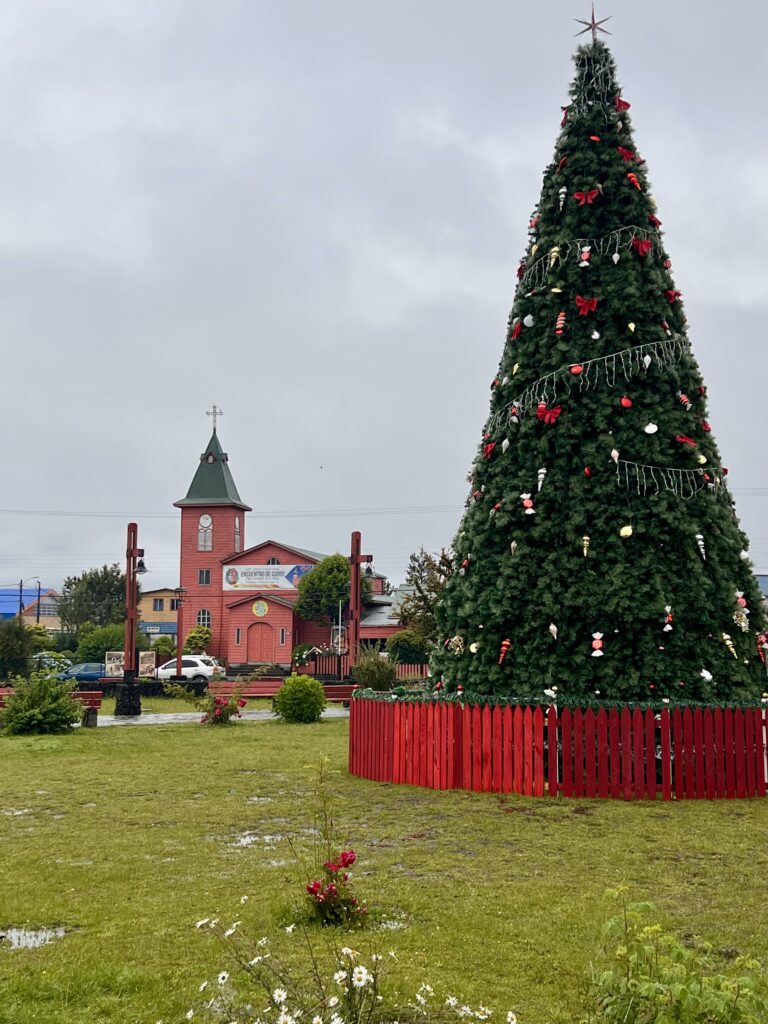
We decided to slow down and spend the next three nights celebrating Christmas with Huw and Sara at a privately owned campground, which was a waterfront field in front of the house. Prices in Chile are taking some getting used to — $140 CAD for three nights in a field with basic infrastructure was a little hard to swallow. Wild camping will be the plan as much as possible.
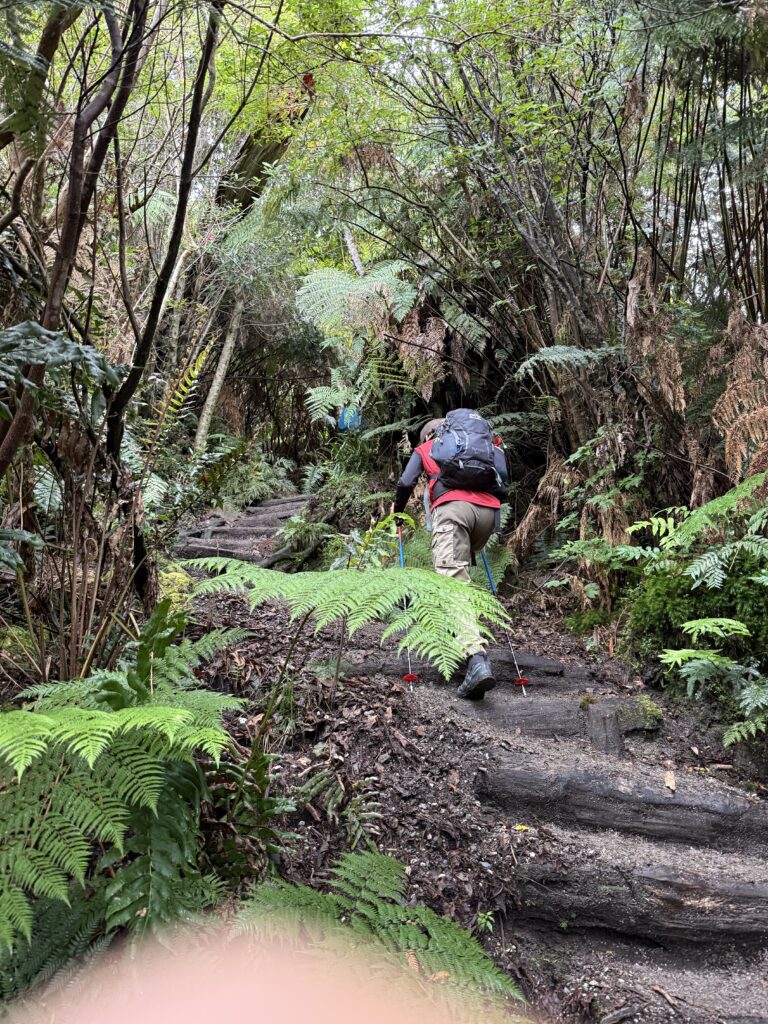
Christmas Day itself was one to remember. We started slowly with presents and a yummy cooked breakfast, then headed out around 11 a.m. for a hike. We found a trail that climbed steadily, then steeply, up Chaitén Volcano, which last erupted in 2008–2009 after being dormant for around 9,000 years.
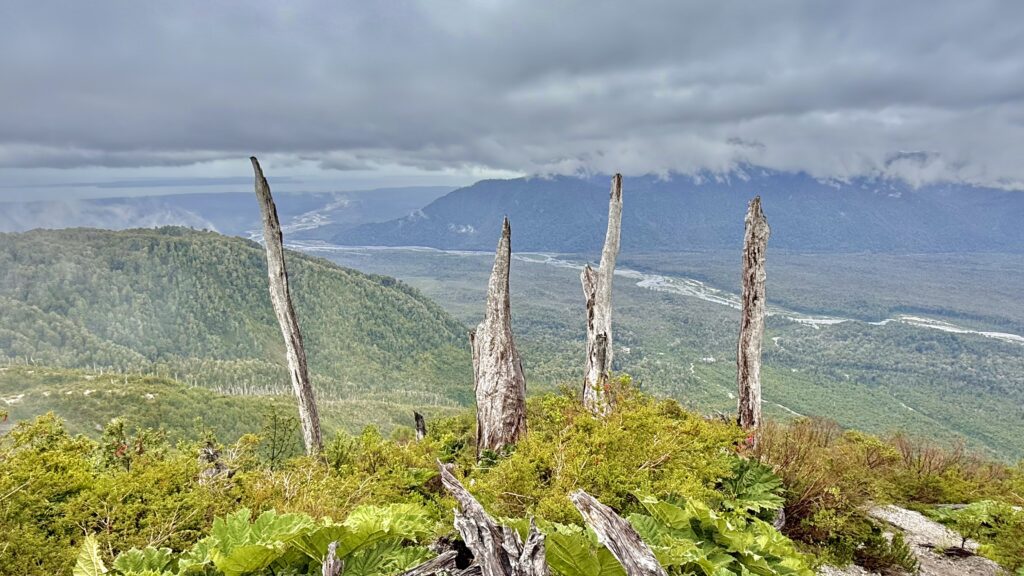
Pumice ash crunched underfoot, and we passed tree remnants from the pyroclastic flows — fast-moving, superheated mixtures of gas, ash, and debris that scorch and kill everything in their path, often leaving trees standing like lifeless sentinels. We reached the summit in 2.5 hours, but the cold, cutting wind quickly chilled us. A few photos, a long gaze at the view, and we headed back down. My legs felt a little wobbly on the descent — tomorrow I’ll be sore.
Back at the campground, just before sunset, we spotted a pod of five orcas hunting just offshore. Everyone raced down to watch and cheer for a crafty seal who managed to evade them by darting close to the beach, clearly aware his life depended on it. The dolphins persisted in searching for prey for a good half hour before finally moving on.
That evening, we shared a proper Christmas dinner — roast beef, vegetables, apple crumble — and sat around the fire with fellow travellers, enjoying a bottle of wine and swapping stories. The rain returned overnight, heavy and relentless, drumming on the roof as we slept.