
5th November 2025. Corumbá, I’m sure, is a lovely town—of the little we saw. Leaving the river around 4 p.m., we made our way to a laundromat and then to a truck stop for the night, marked on iOverlander as a good spot before crossing into Bolivia.
Before leaving Brazil, we tried to fill the freezer with some great cuts of meat and chicken. Basket full, I suddenly had the sense to check whether it was actually allowed. Google instantly said NO. Pooh. Back to the butcher I went, returning everything. Not even eggs or milk allowed. I left the supermarket with pasta and good bread flour instead.
A few sensor lights had come on in the truck, Tim wanted to check them out, so we stopped at a recommended mechanic who not only spoke English but also knew the truck model. He reattached a leaky airline and made a few adjustments, but no luck with the sensor itself. He did, however, give us the contact of a friend in Santa Cruz who could source the parts.
BORDER CROSSING
By the time we reached the border it was 11:30 a.m. Same routine: exit ourselves from Brazil, then the truck. We drove across the bridge into the shabby border town of Puerto Suárez and began the process of obtaining our visas and the TIP for the truck, which was parked in the “inspection” area—but was it inspected? No! Grrr… we could have brought all the food after all. Then on to another office where we had to buy a “driving permit”—a first for us. Turns out it’s legit, and we’ve already had it inspected twice. The best $3 we’ve spent so far.
With documents, stamps, and permits in hand, we changed money on the street at 1 USD : 10 bolivianos—a straightforward “blue dollar” rate, far better than the official 6:1 in the banks.
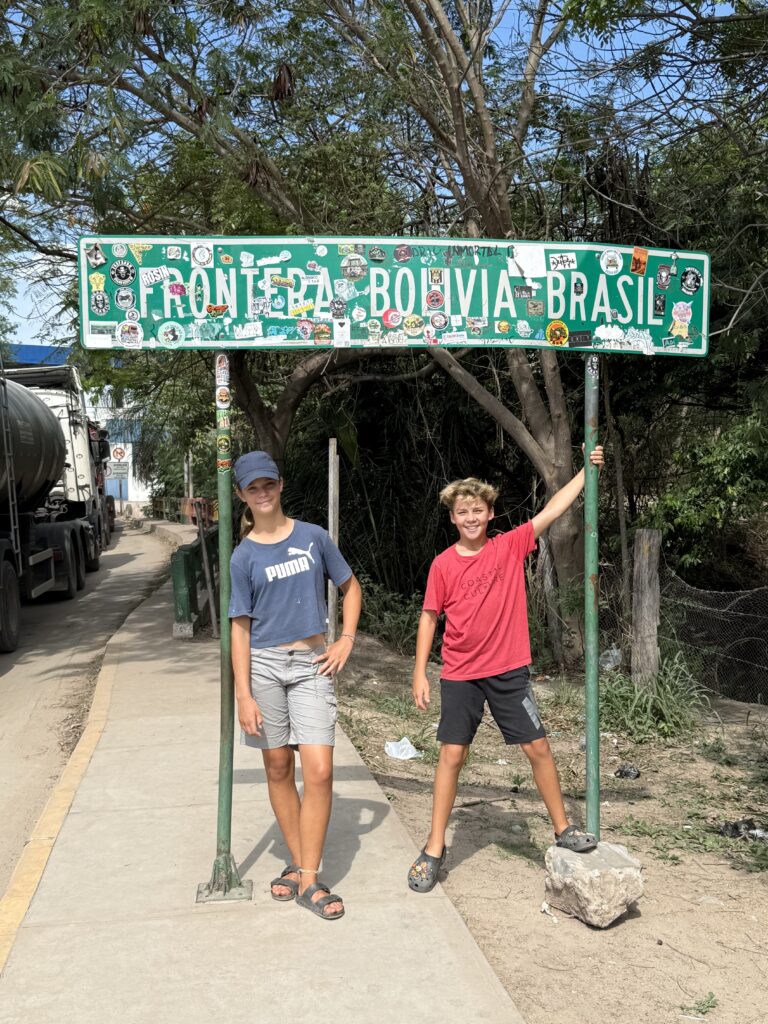


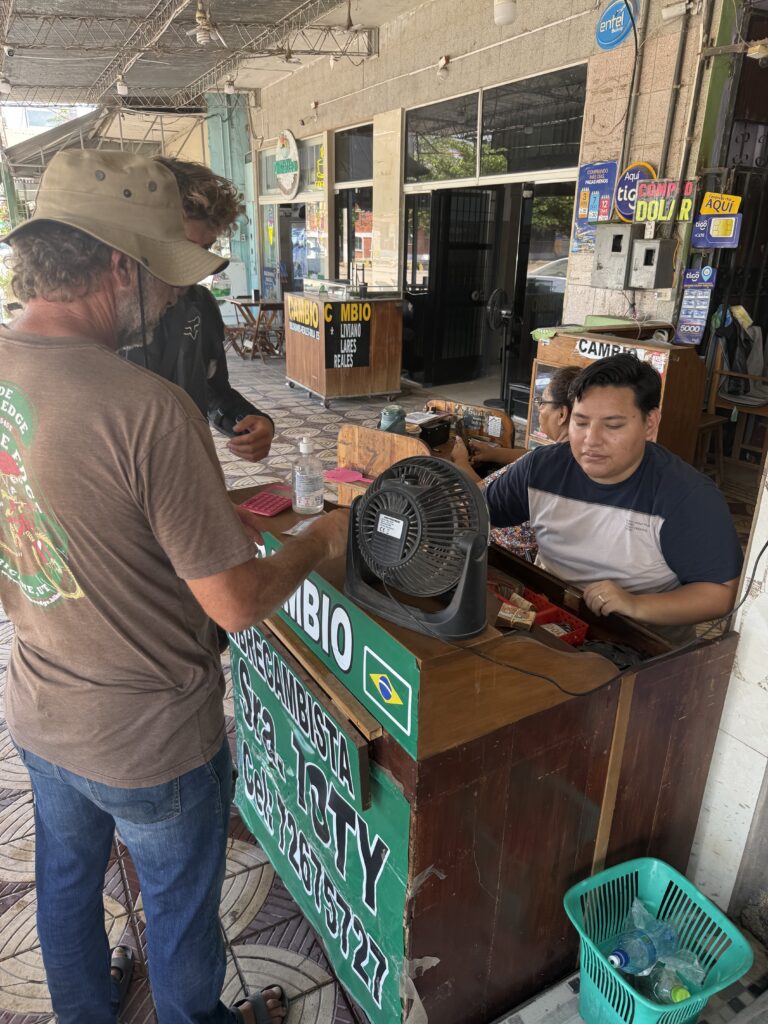
It was later than we hoped, so we hit the road. Manuel had a hiccup with his paperwork for his bike, bought new in Peru a couple of months ago. Wanting to get as far as possible before dark, we pointed the truck down the only road out of town, Highway 4.
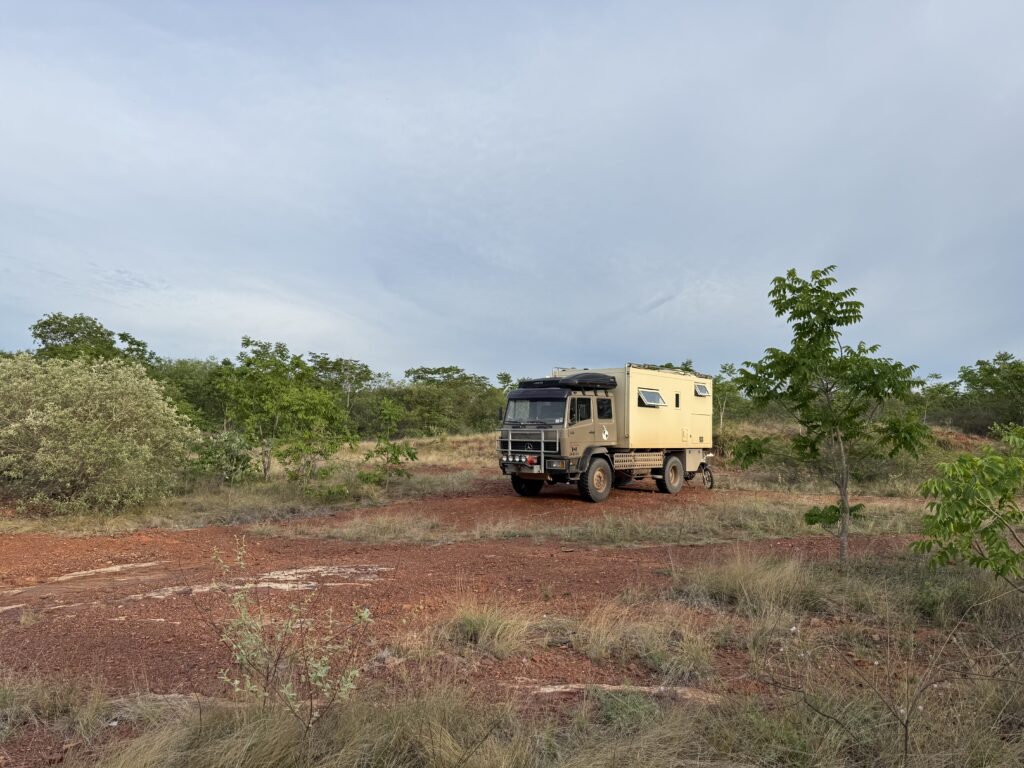
Outrunning a wall of thick, stormy clouds, we just clipped the edge of it and caught only ten minutes of rain. Down a dirt track we found a dry, quiet wild camp, far enough from the highway for a peaceful night under a bright, starry sky.
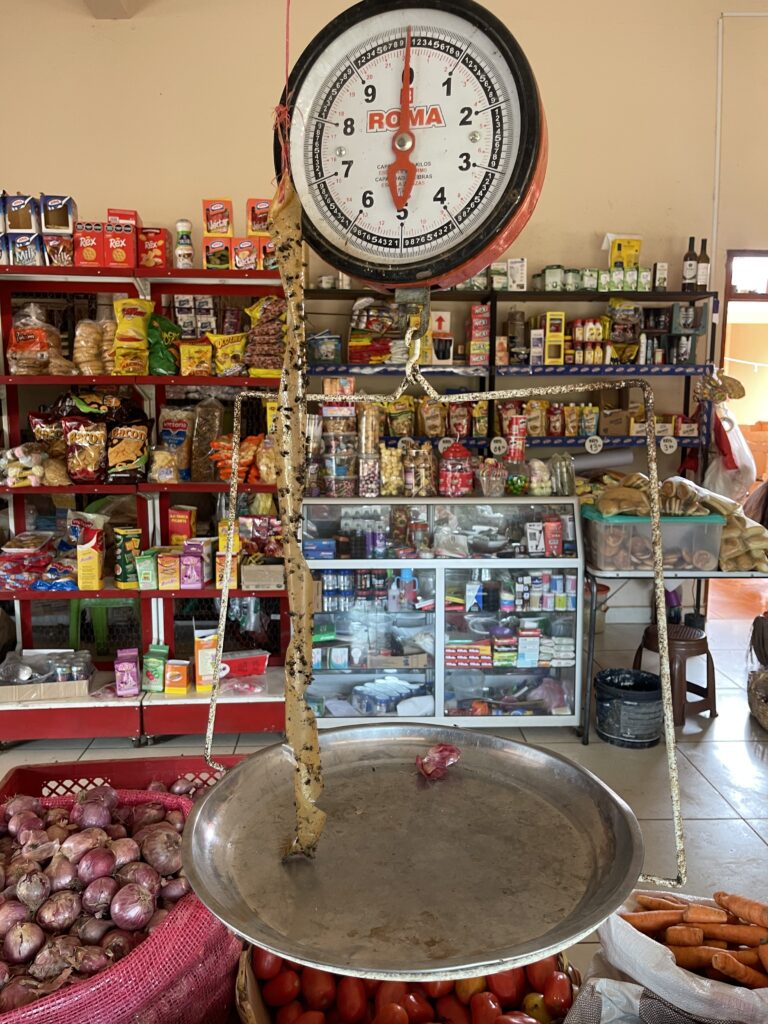
The next morning we continued on, passing through several small villages in search of groceries. Nothing but shrivelled carrots, limp green peppers, and an impressive selection of dried corn.

JESUIT TOWNS
Moving on, we entered Jesuit country. The Jesuits of eastern Bolivia left one of the most remarkable cultural legacies in South America. Arriving in the late 1600s, they founded remote mission towns—today the Jesuit Missions of the Chiquitos—working closely with Indigenous communities to build self-sufficient settlements centred on music, craftsmanship, and education.
Unlike many colonial systems, the Jesuits encouraged local languages, taught European and Indigenous arts side by side, and created extraordinary baroque-mestizo churches decorated by Chiquitano artisans. When the Jesuits were expelled in 1767, many missions continued their traditions, several towns still perform centuries-old baroque music that survived only in these forests.
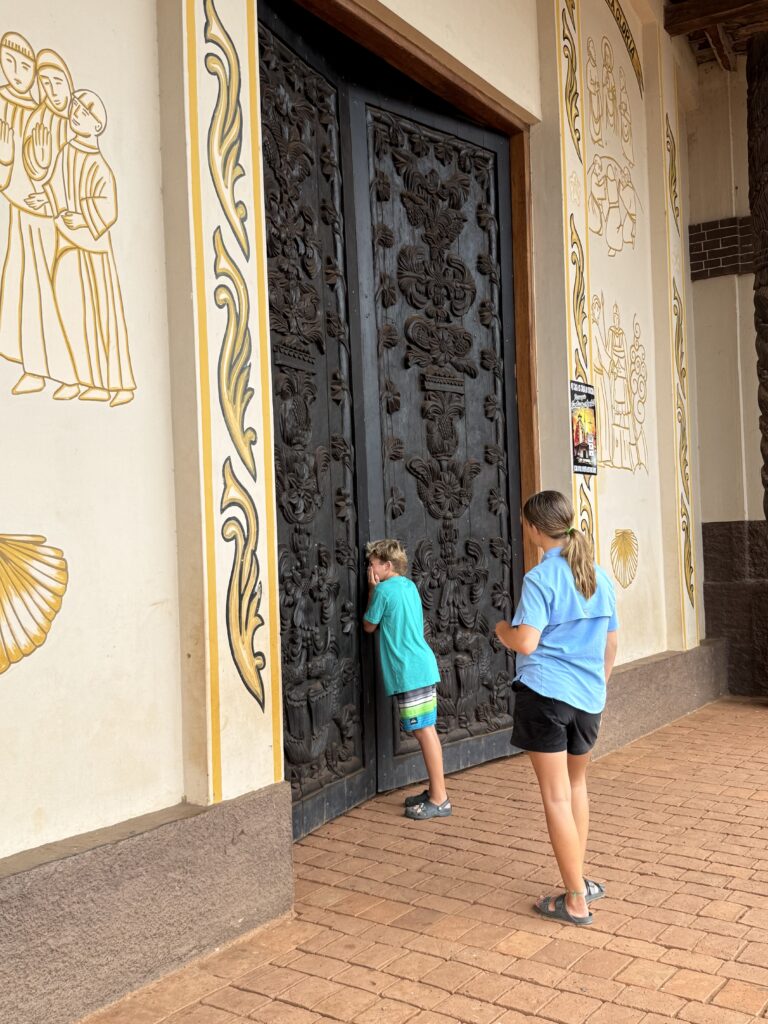
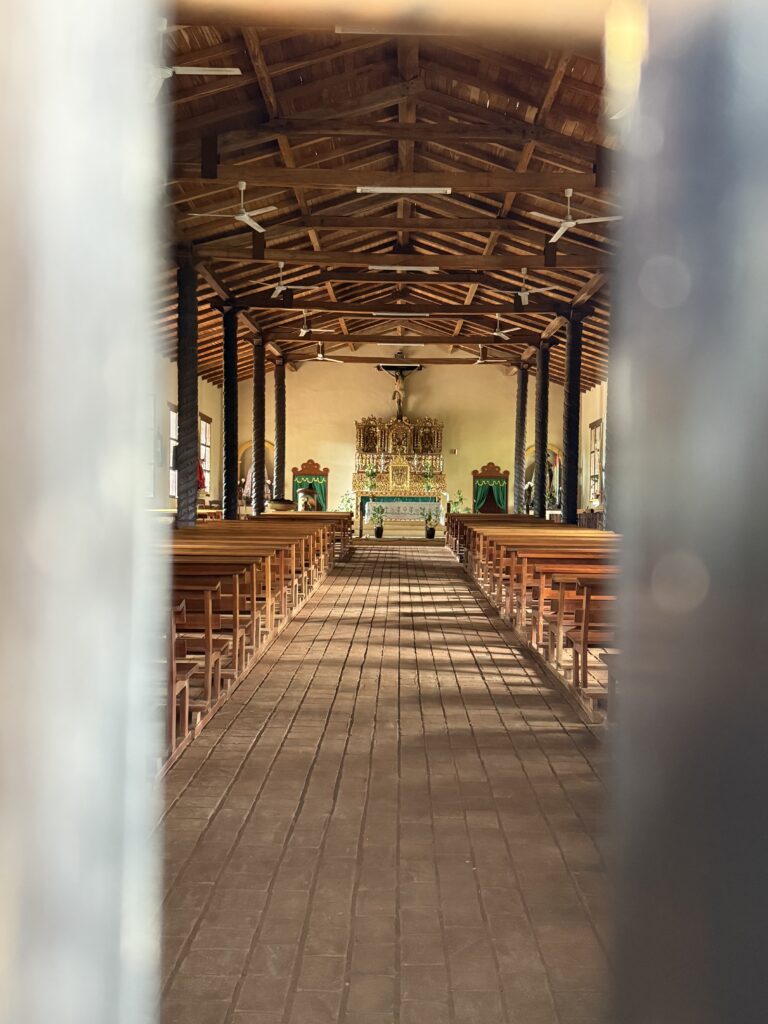
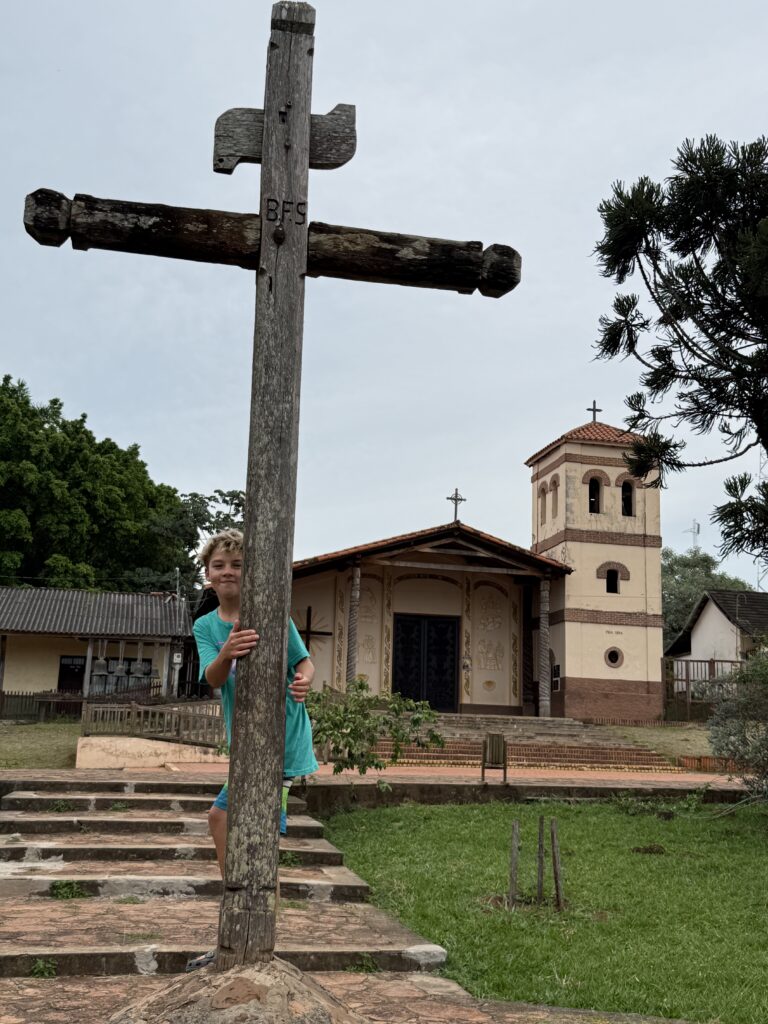
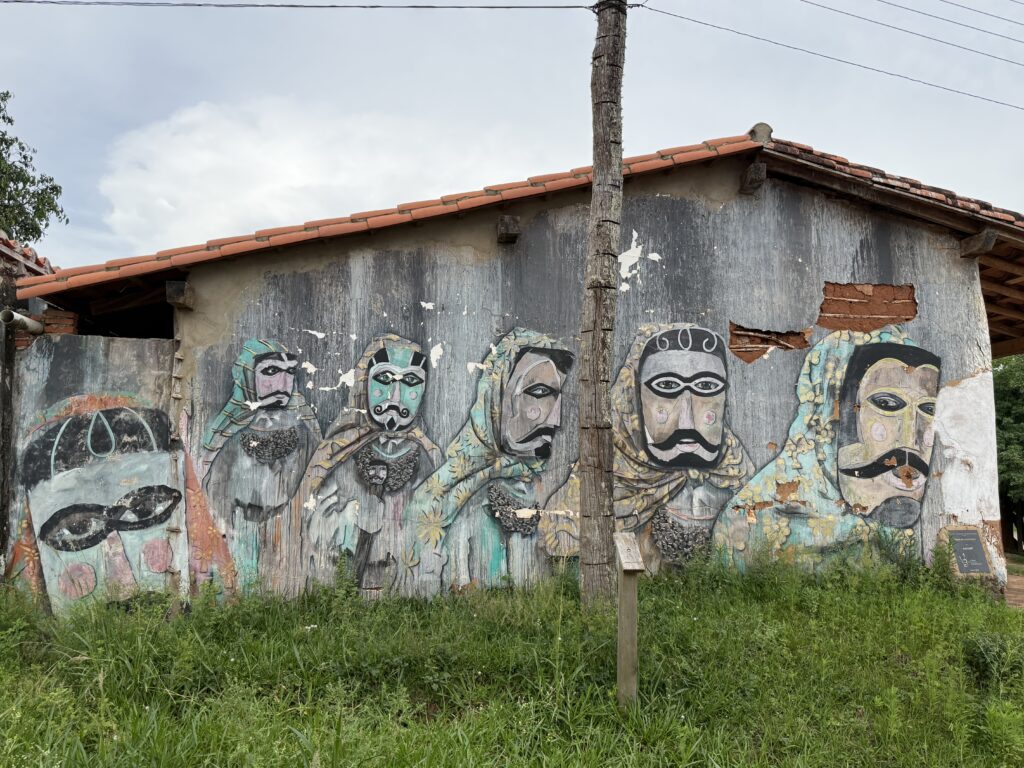
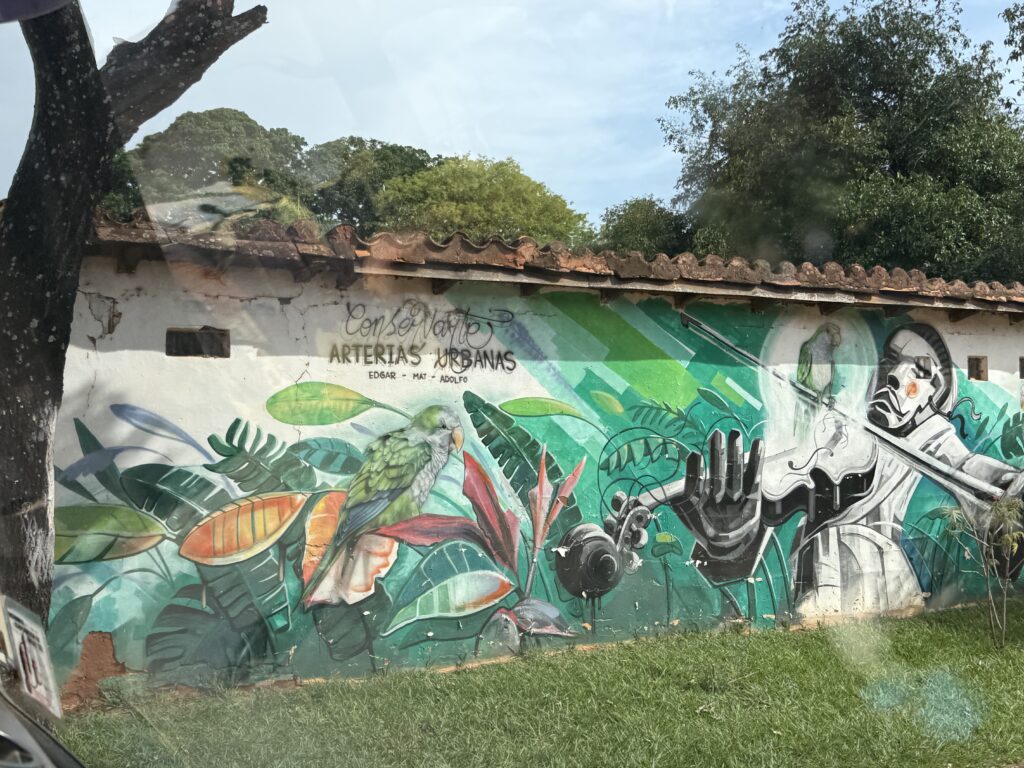
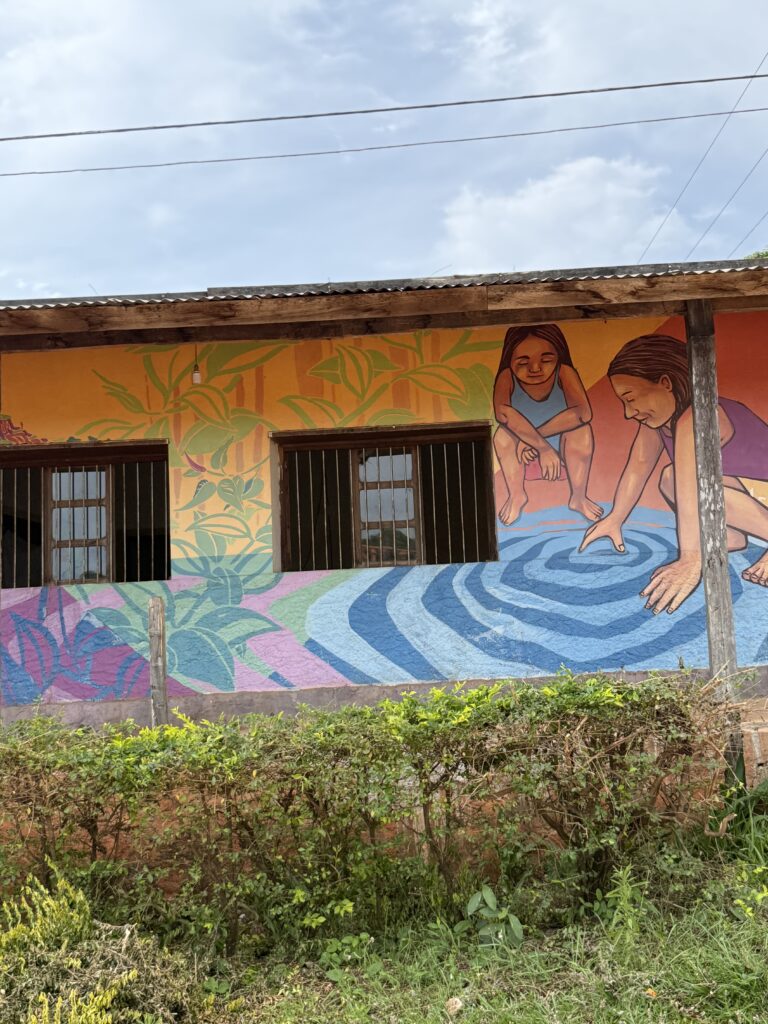
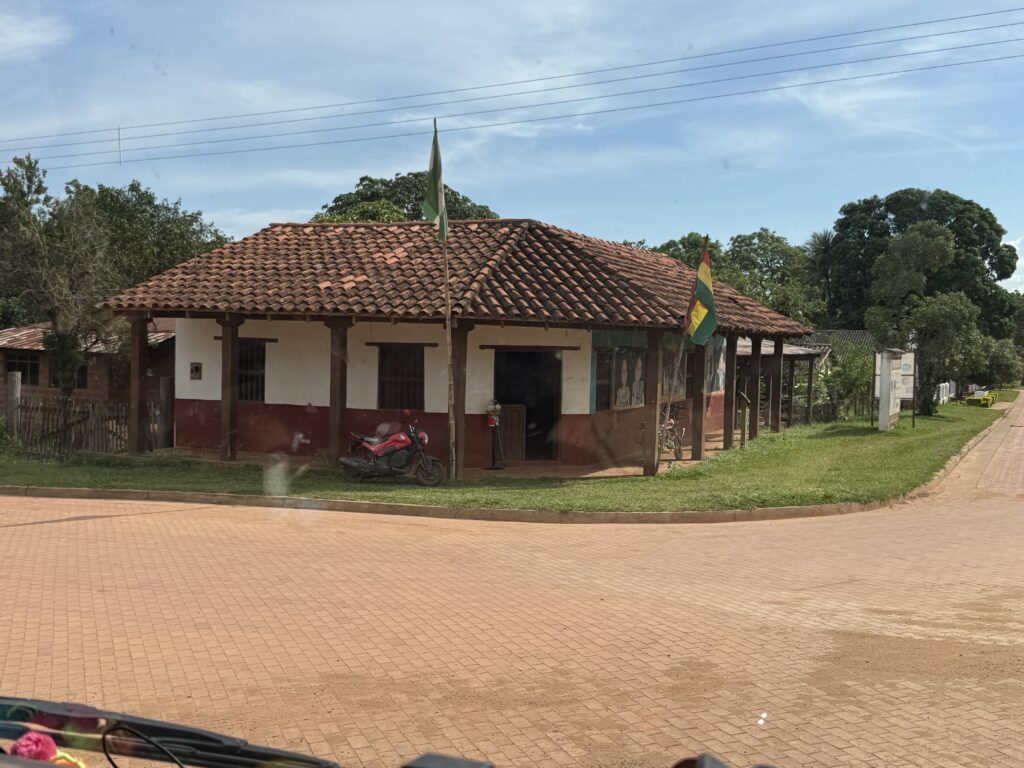
Today, these towns feel like time capsules scattered across the savanna. Central plazas rest in the shade of mango and tajibo trees, framed by long, low adobe houses with carved wooden columns and red-tile roofs. At their heart stand beautifully restored mission churches—warm timber interiors, hand-painted motifs, and soaring altars locked behind heavy wooden doors. Life moves slowly: children play in dusty streets, locals chat in the shade, and not much seems to happen.
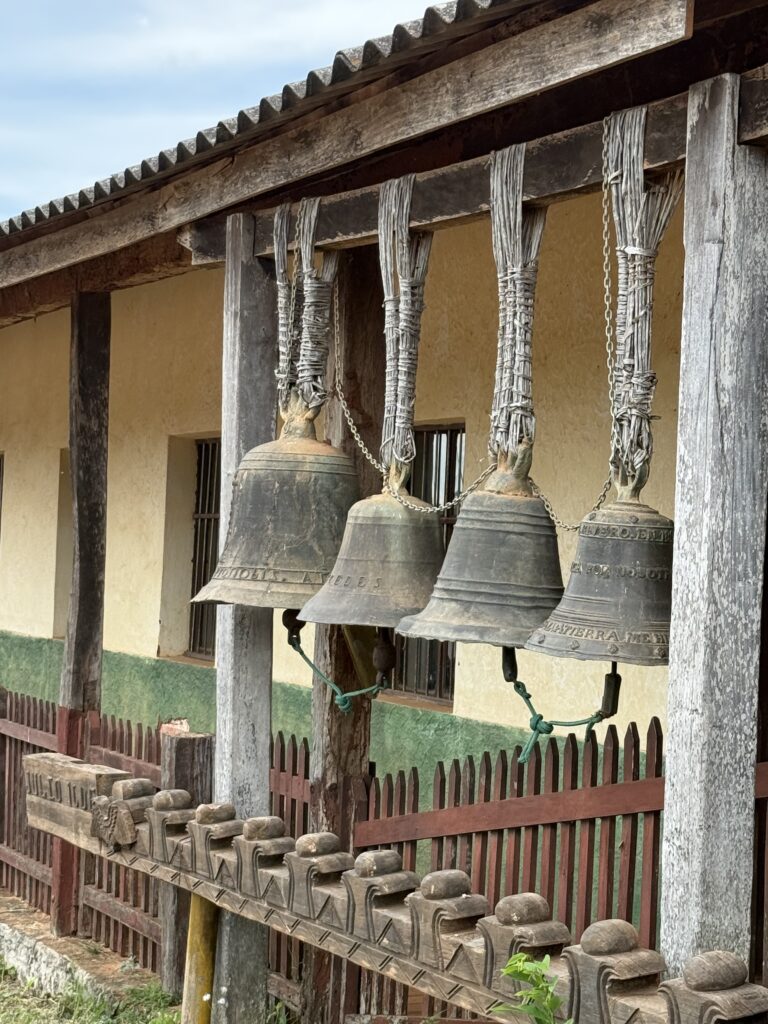
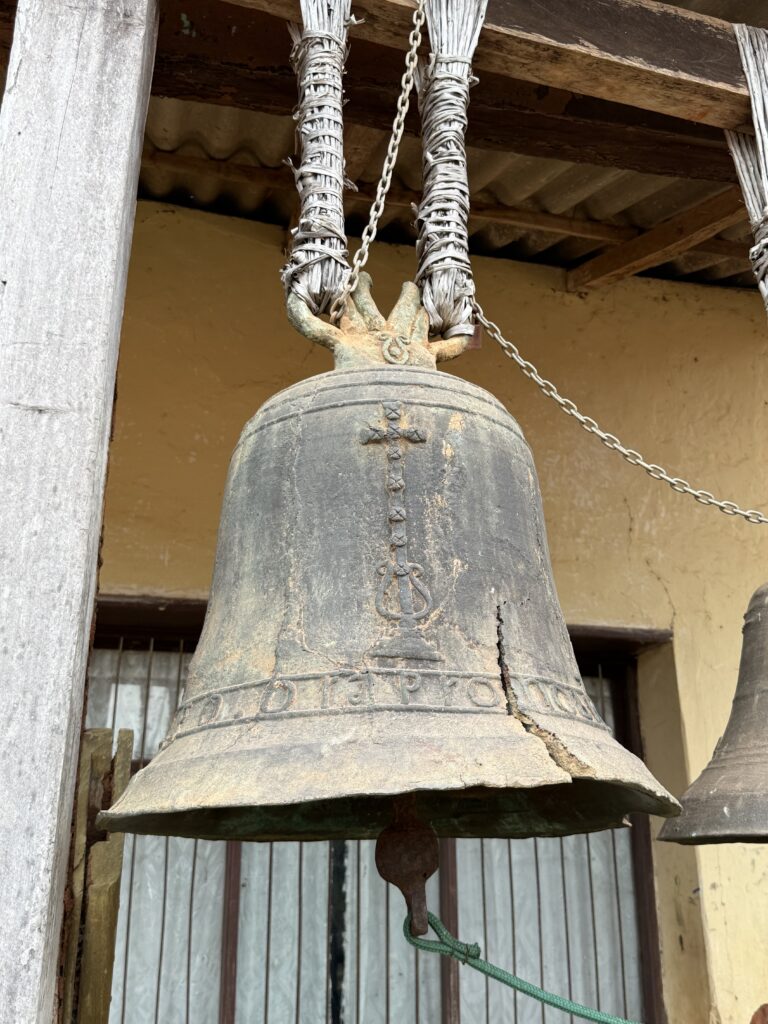
We stopped to peer through a crack in one locked church door, catching a glimpse of ancient brass bells.
MEETING NEW FRIENDS
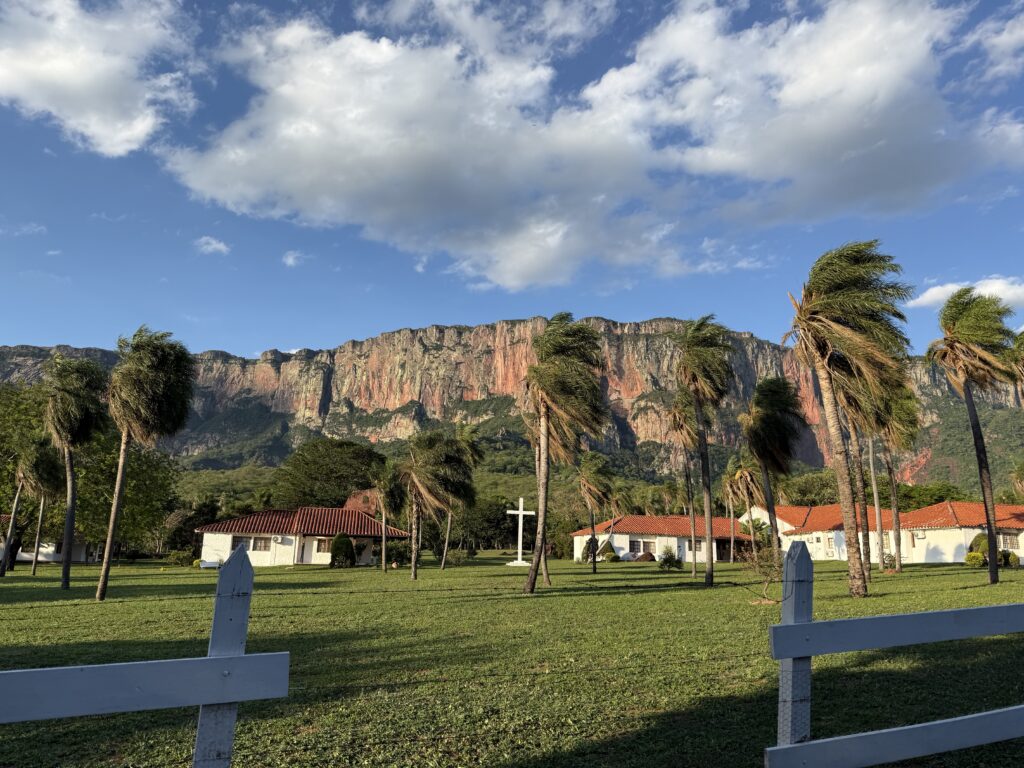
So far, we weren’t overly excited by this part of Bolivia and thought we might just pass through quickly—until we pulled into the tiny community of Chochis still in search of food.
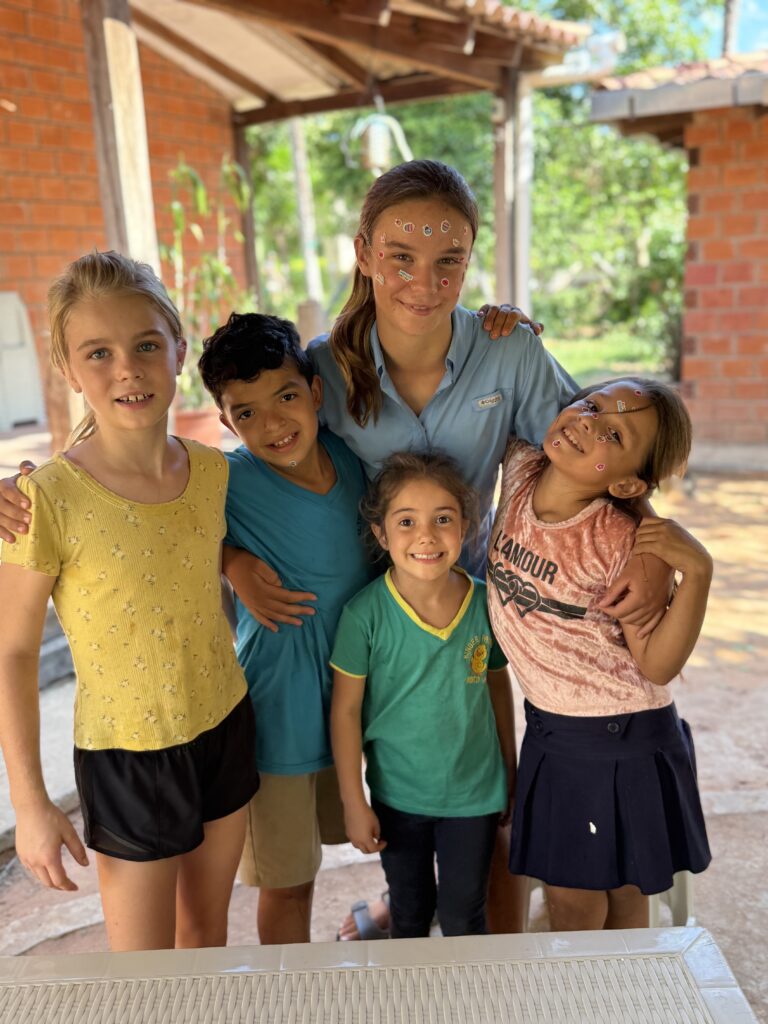
Following signs to a ‘restaurant’ we met an American family walking out as we were walking in. They had recently moved here from the Dominican Republic as missionaries, with their two kids, Koa (12) and Ayla (9). Long story short: we ended up camping in their yard the night and then spent the most wonderful weekend with them.
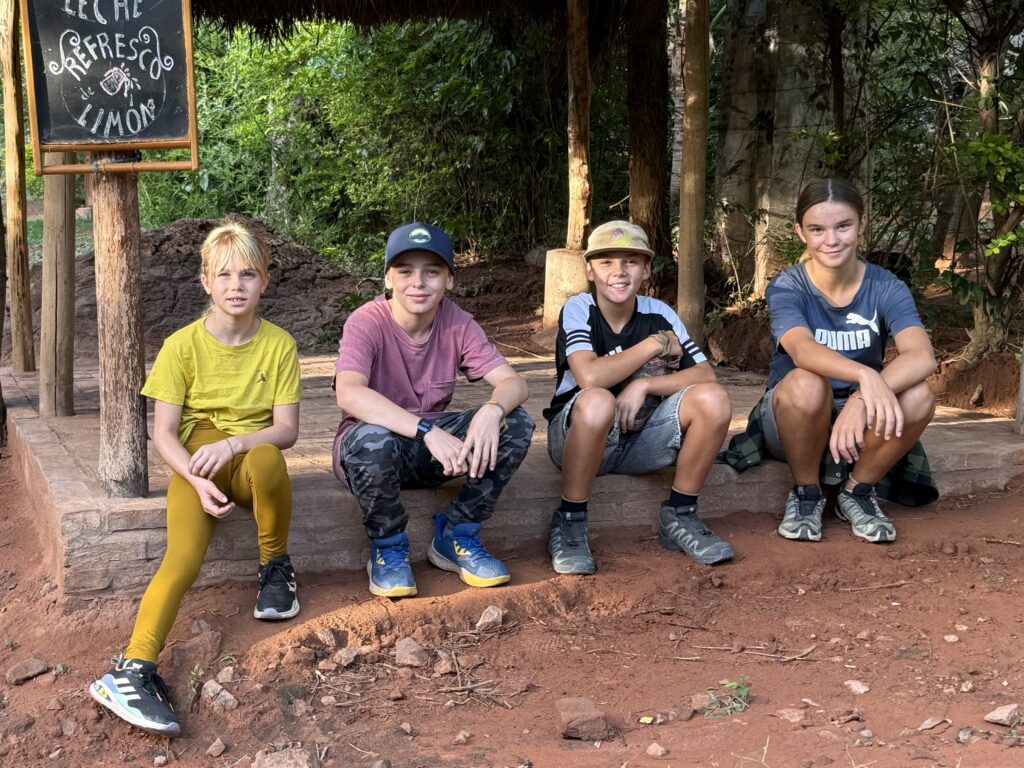
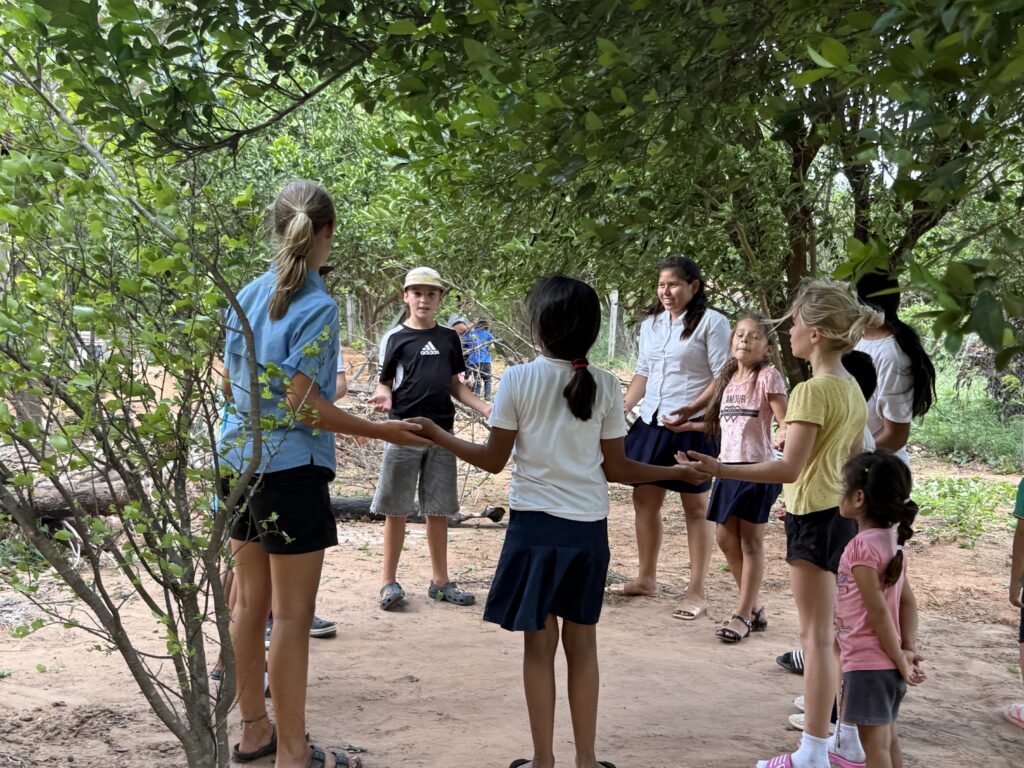
The kids bonded instantly and played nonstop. Tami and I clicked right away, as did Skip with Manuel and Tim. We shared food and cooked meals together. One afternoon we visited their neighbour, who prepares meals for 30 village children three times a week, cooked by different mothers on rotation. This is a very poor area; each meal costs just $1 relied on by donations. Charley and Jaxon had a great time playing with the kids, who took an instant shine to them.
A Village Graduation, Bolivian-Style
We attended the local high school graduation celebration held on the school basketball court. The entire village turned out to watch each grade perform, leading up to the graduates. Dressed in traditional clothing, the students danced ancestral dances that told stories of their past. Music blared from distorted speakers, the announcers were inaudible, and village dogs wandered freely between performers. It was a full cultural immersion, we’d gone from wanting to skip quickly through the region, to wanting to spend longer. The four North American-looking kids stood out and were recognized by many from the lunch the day before.


Sunset Magic… and Spider Mayhem
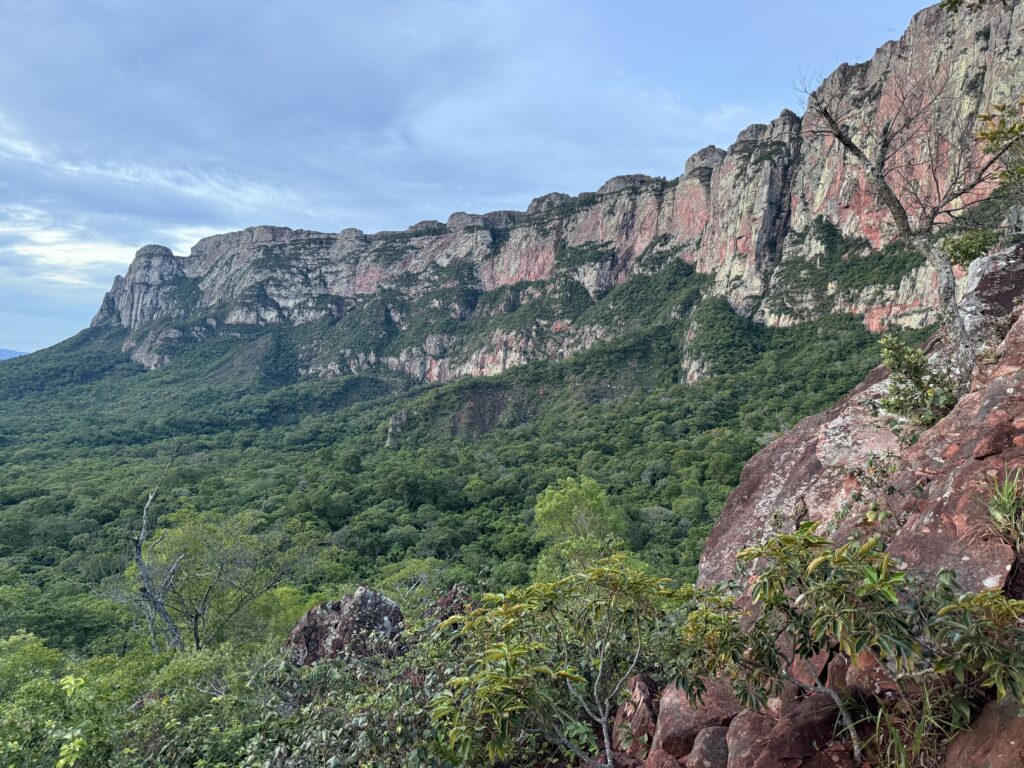
We hiked to a waterfall for a cold swim, and later took an afternoon walk up to a lookout to watch a colourful sunset over a lush valley, with the village hidden beneath the canopy. Red-and-green macaws flew and nested along the cliffs.
The descent, however, was something straight out of a scary storybook. We’d been warned that spiders here move fast after dark, spinning their webs right across the path—but nothing prepared us for it. Skip and the kids moved quickly ahead, and the rest of us kept walking into walls of web, at least ten inches thick. Ten inches! Twice I ran straight into one. The feeling of web and tiny spiders all over me—ugh. I screamed while the others pulled it off. After that, I tucked myself behind Tim and crouched low. It was fascinating and horrifying to see how fast these spiders work, sealing the trail shut for the night. My skin still crawls thinking about it. No I didn’t stick around to take photos of them.


A Weekend That Changed Everything
While the kids and I were playing over at Angies, Tim spent a couple of hours repairing our mangled power plug, with the hep of Manual, he carefully soldered the delicate connections, reassembled and bound it tightly with electrical tape. Bam! It works, of course it does, Tim fixed it.


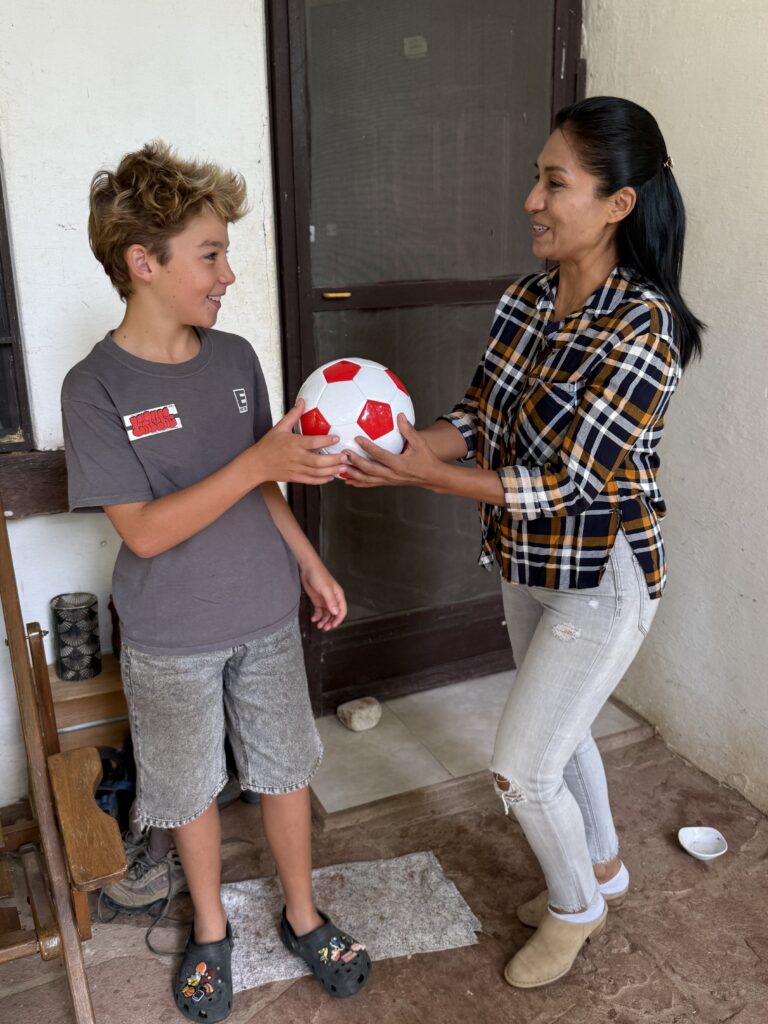
Sadly, it was time to move on. I gifted Tami one of my three cast-iron fry pans and gave everyone haircuts. Tami made an essential oil blend for me. Jaxon gave Angie—the neighbour who cooks for the village kids—one of his Tim Hortons soccer balls, one of the many he’s been gifting along our route.
Leaving Chochis, our whole perspective on Bolivia had changed. We were deeply touched by the warmth and gentleness of the people, the strong sense of community, and the quiet dignity of their daily lives. Meeting and spending time with Tami and Skip was an unexpected gift—and one we won’t forget.
Now we’re off to Santa Cruz, Bolivia’s biggest city…


