
DICKSON TO LOS PERROS — Into the Forest
ASCENT: 534m DESCENT: 115m DISTANCE: 15km. HOURS: 3:50
It’s always a good feeling waking up to dry weather when you’re living out of a tent. I didn’t want to say it out loud — no need to tempt fate — but here we were on day four… and still no rain.
Another good day on the trail, though not without effort. Packs are meant to feel lighter as the food disappears, but somehow mine felt heavier, and my legs took their time getting going.
We left camp at 9:20am, setting off toward Los Perros.
The trail wasted no time, beginning with a long, steady climb out of Dickson. An ongoing gradual climb, steep in places. My legs felt slow, the pack felt heavy.
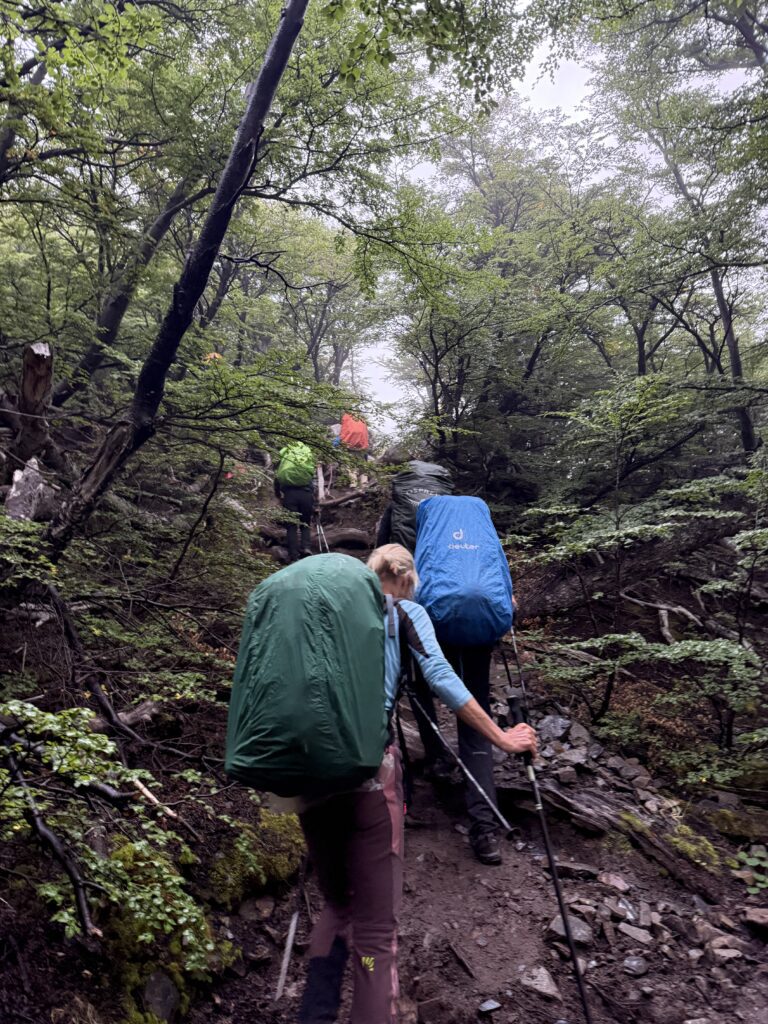
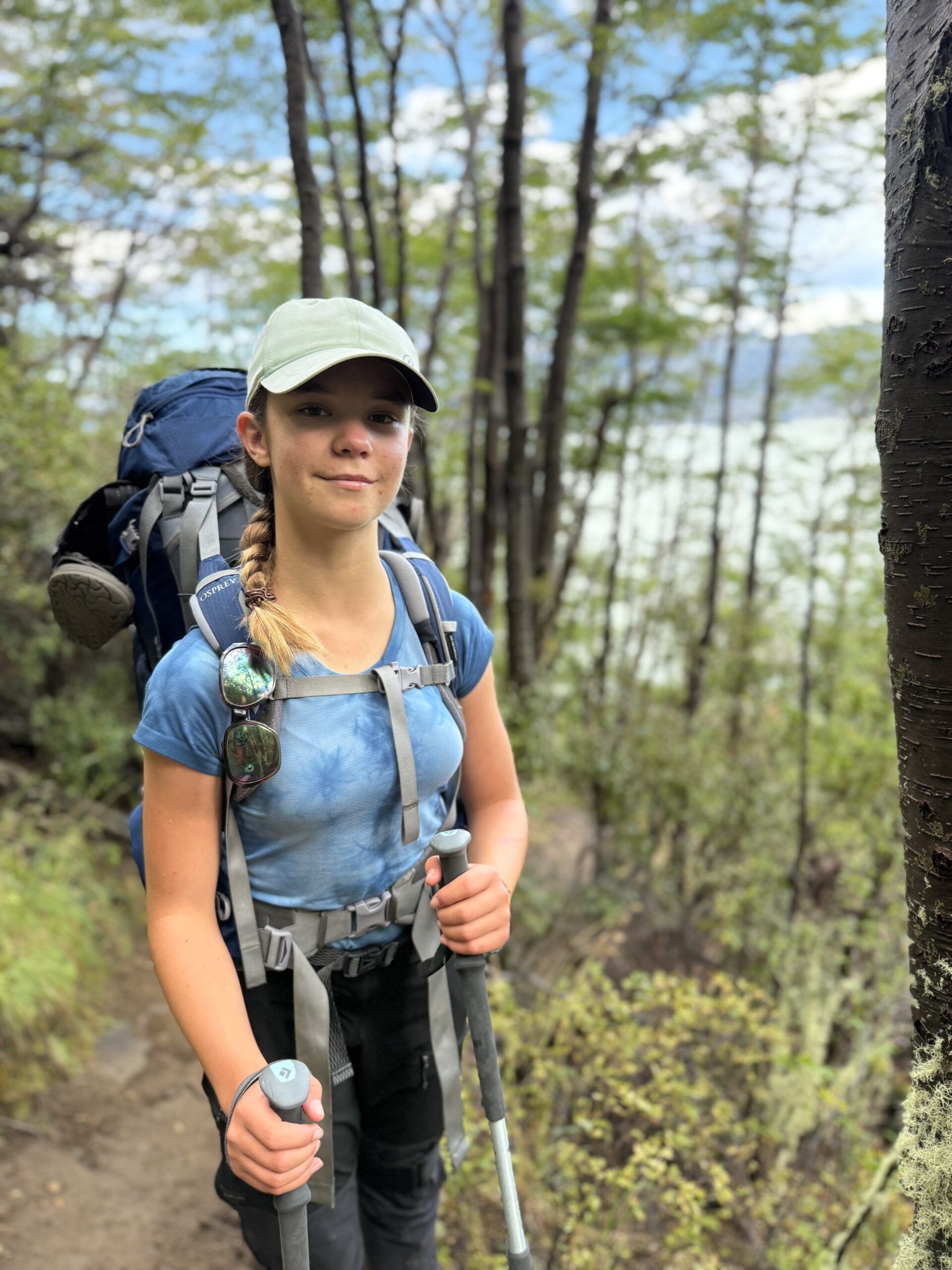
Most of the day unfolded beneath the canopy of old-growth forest. Towering trees, thick with moss, lined the trail. The ground was soft underfoot, carrying that rich, damp-earth smell.
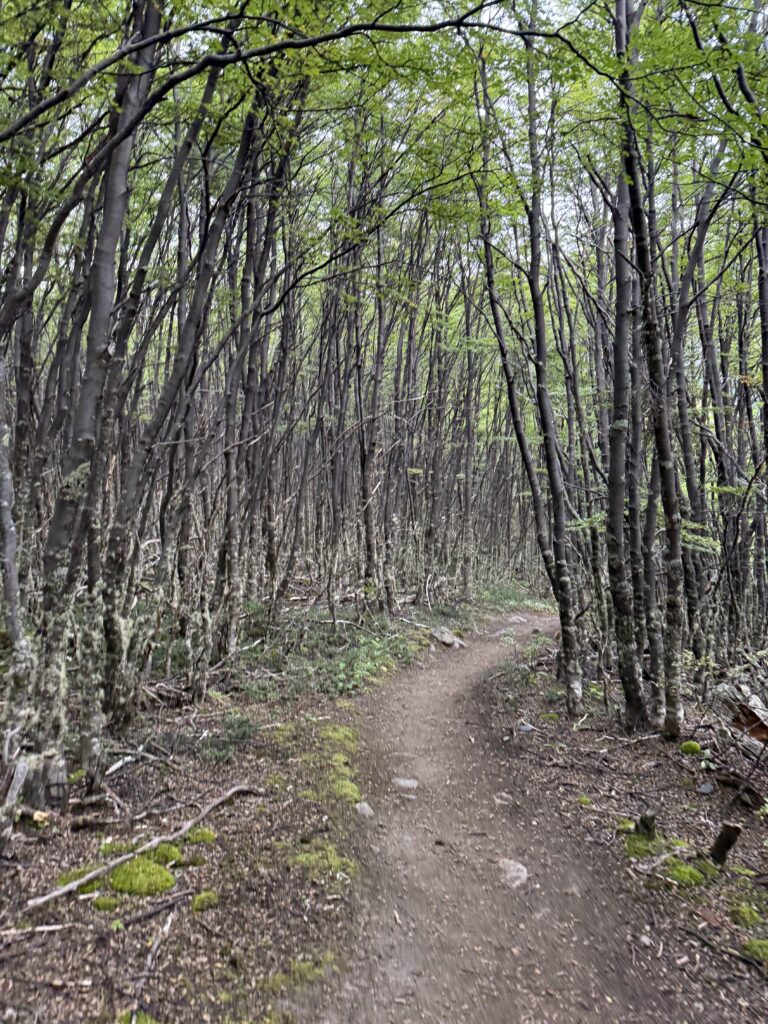
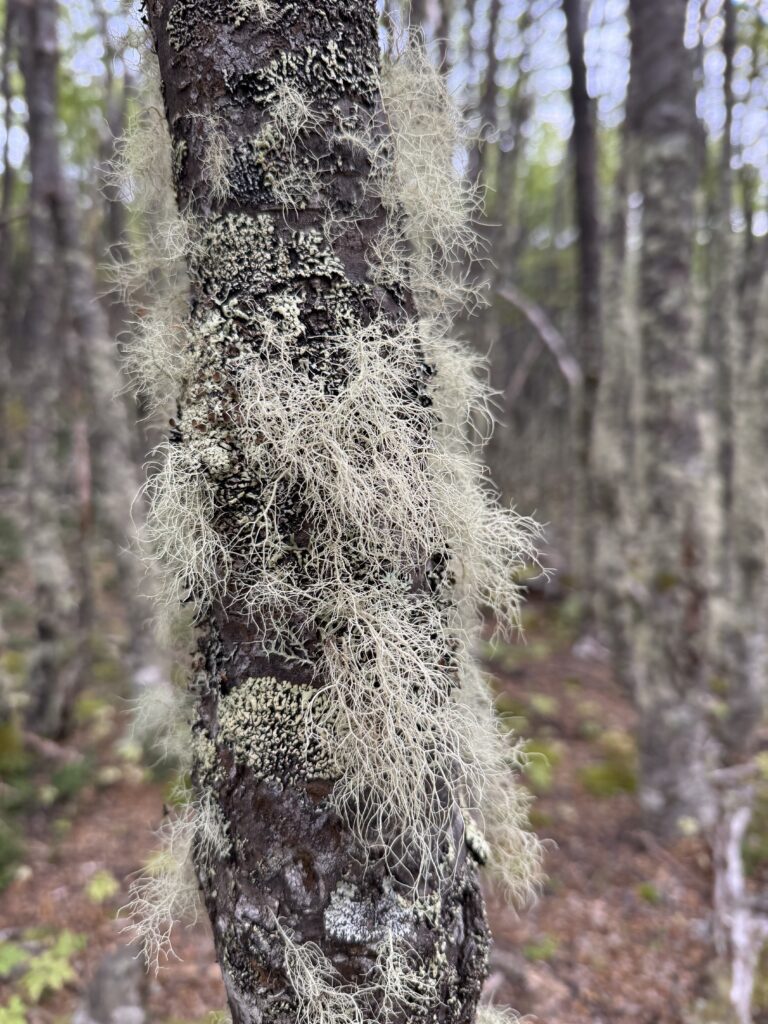
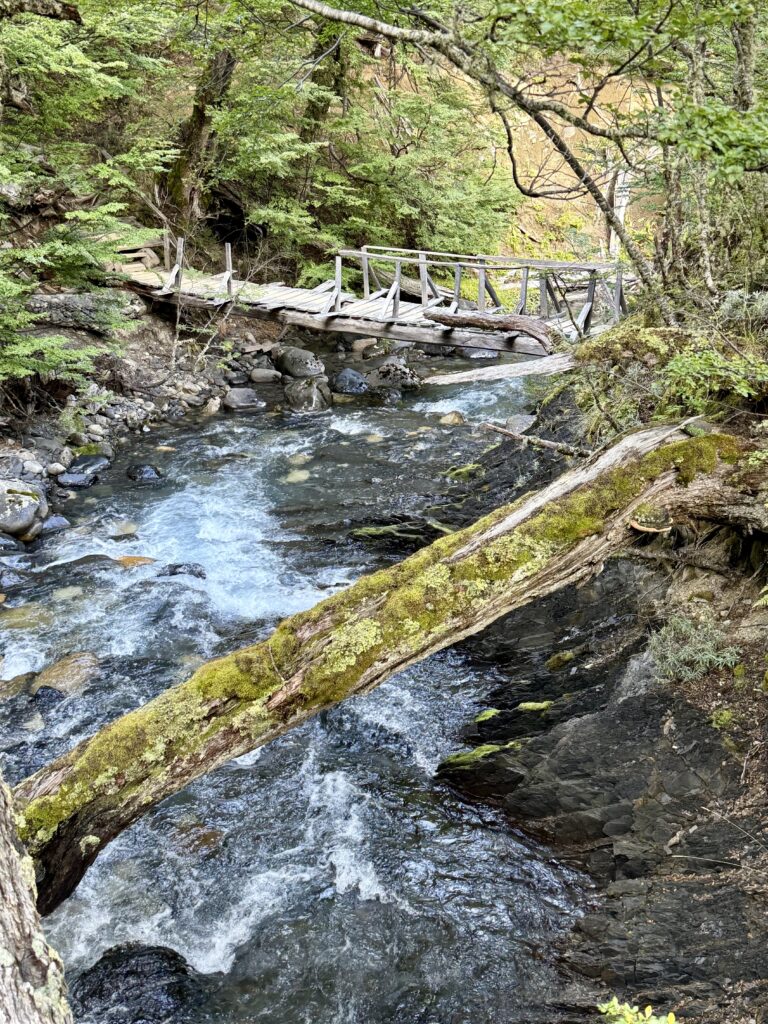
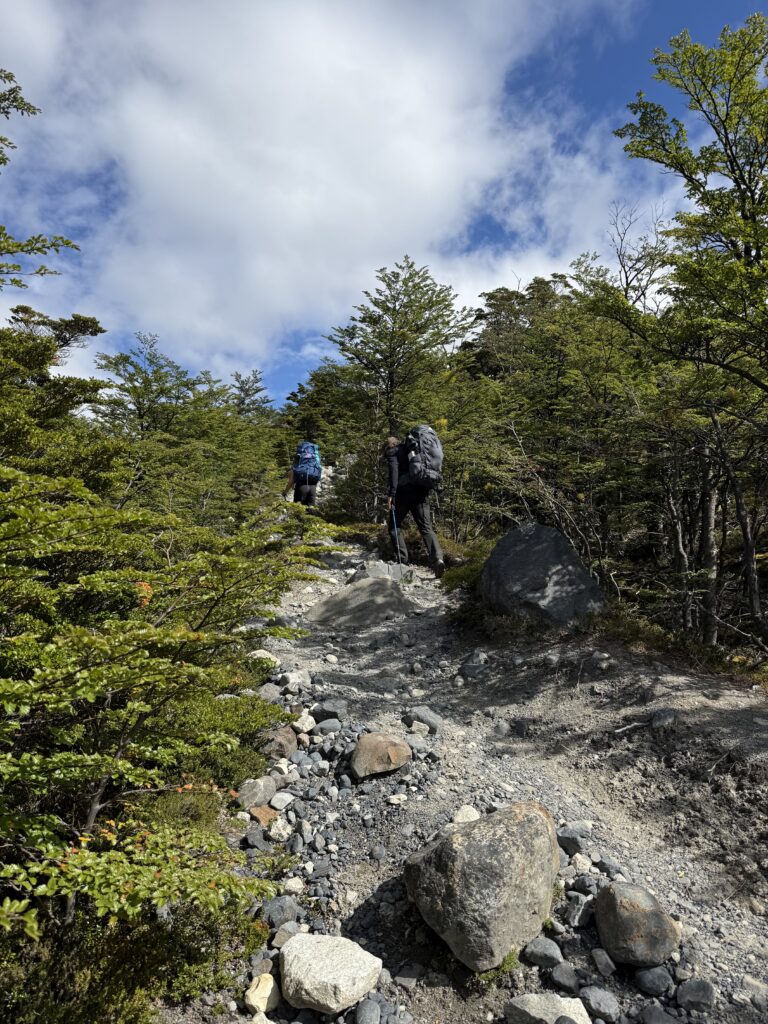
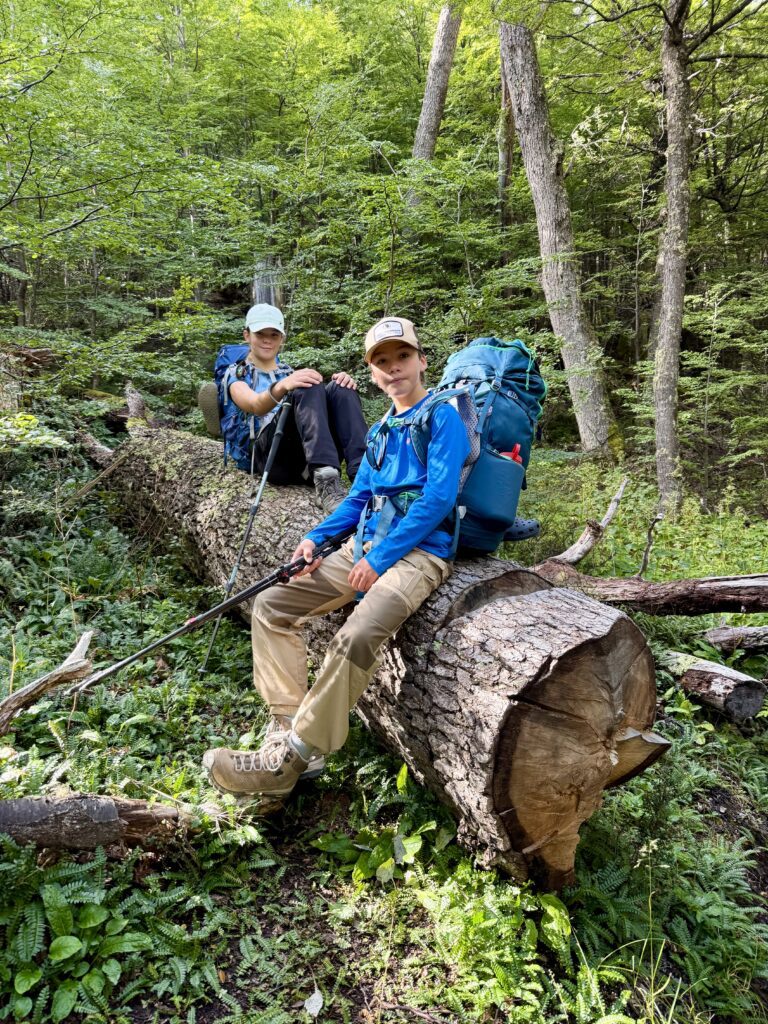
The path wound its way steadily upward, weaving between roots and rocks. Occasionally, the trees would part just enough to reveal the mountains again. In the distance, we caught glimpses of the pass — today it sat under perfect bluebird skies. Whoever crossed it had struck gold.
By lunchtime, we reached a beautiful lookout and stopped with Petra and Armin. Below us lay a lake of deep, still blue, and beyond it a glacier spilling down from the mountains. A perfect lunch spot and we took our time. A long lunch, legs stretched out, soaking it all.
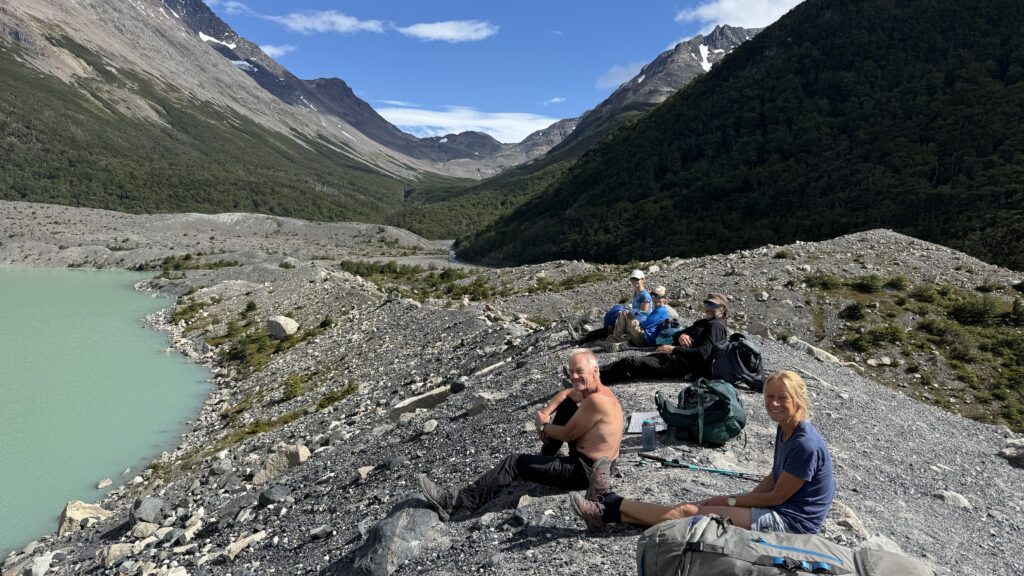
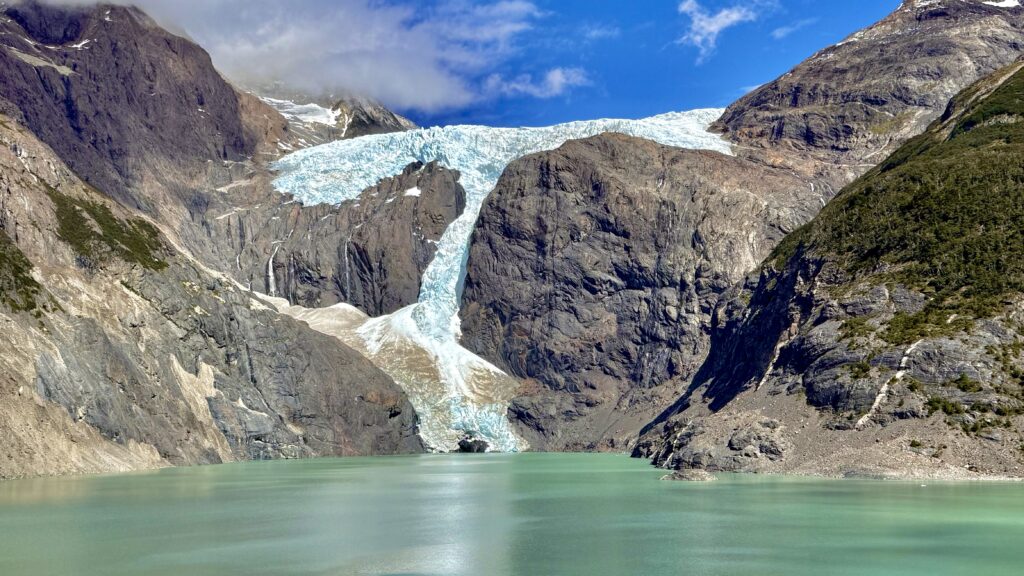
The trail continued its gentle climb, the air cooling as we gained elevation. By mid-afternoon, we arrived at Camp Los Perros, tucked deep within the trees, with a charm of it’s own, beside the rushing Río Los Perros.
LOS PERROS CAMP
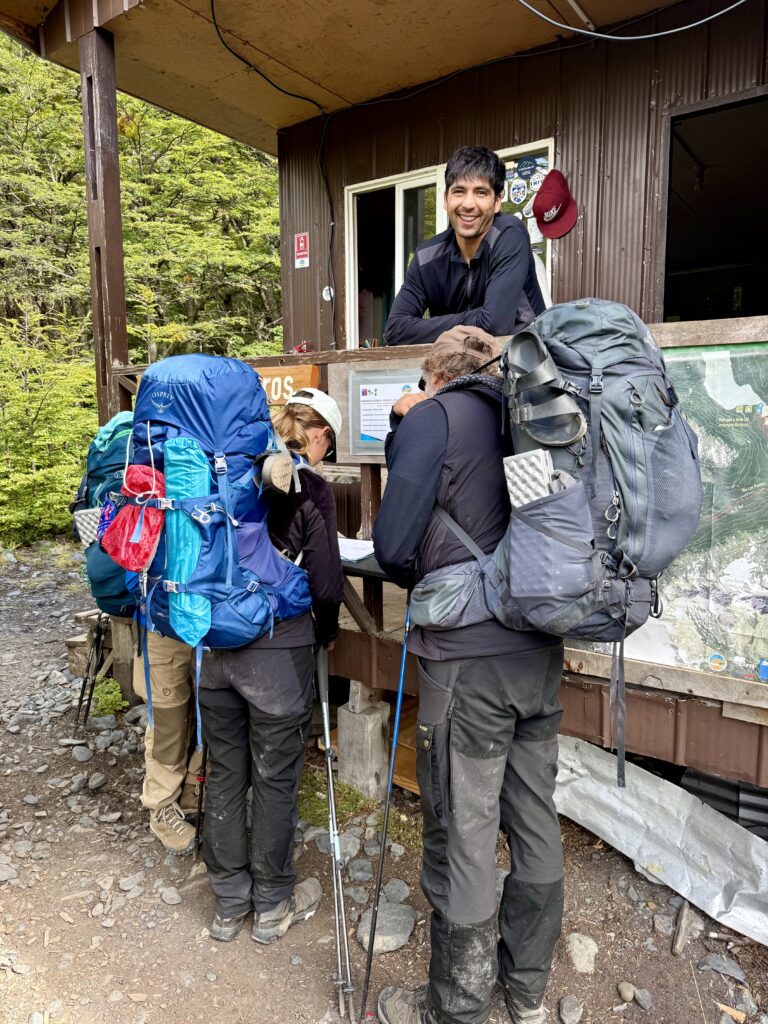
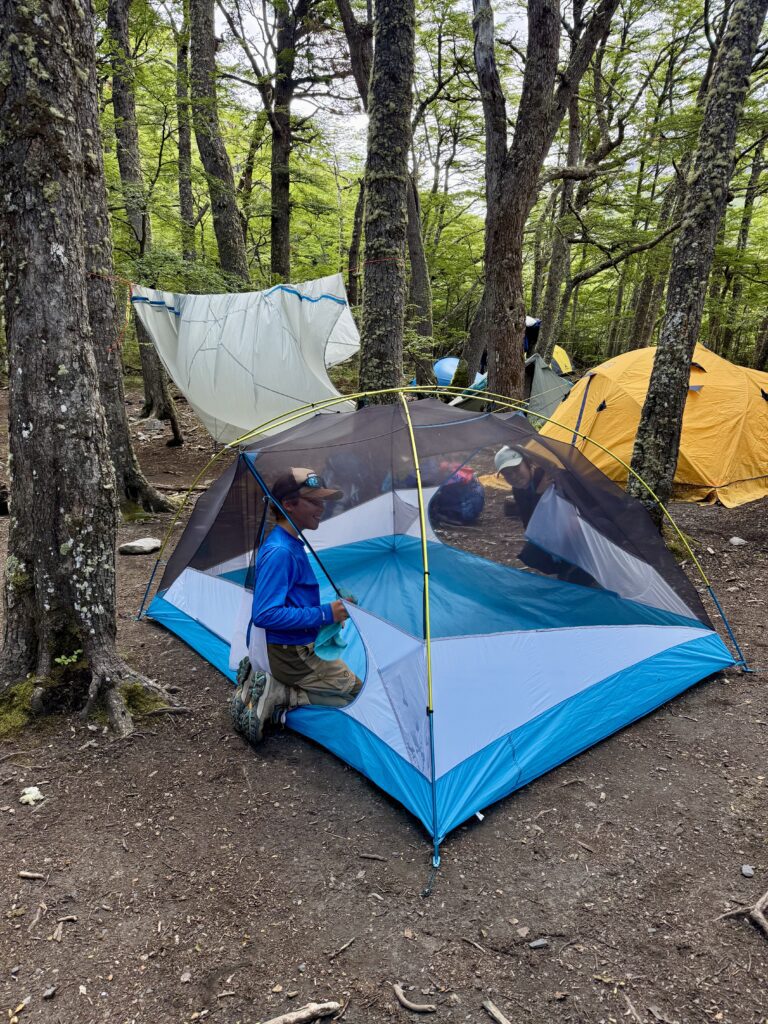
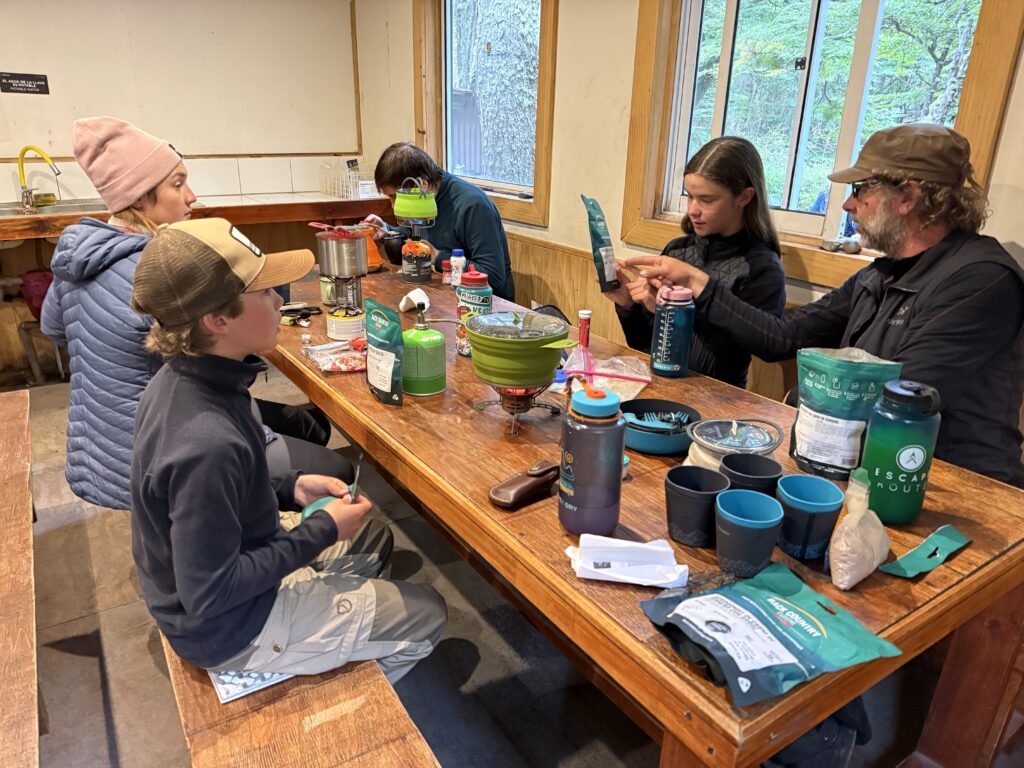
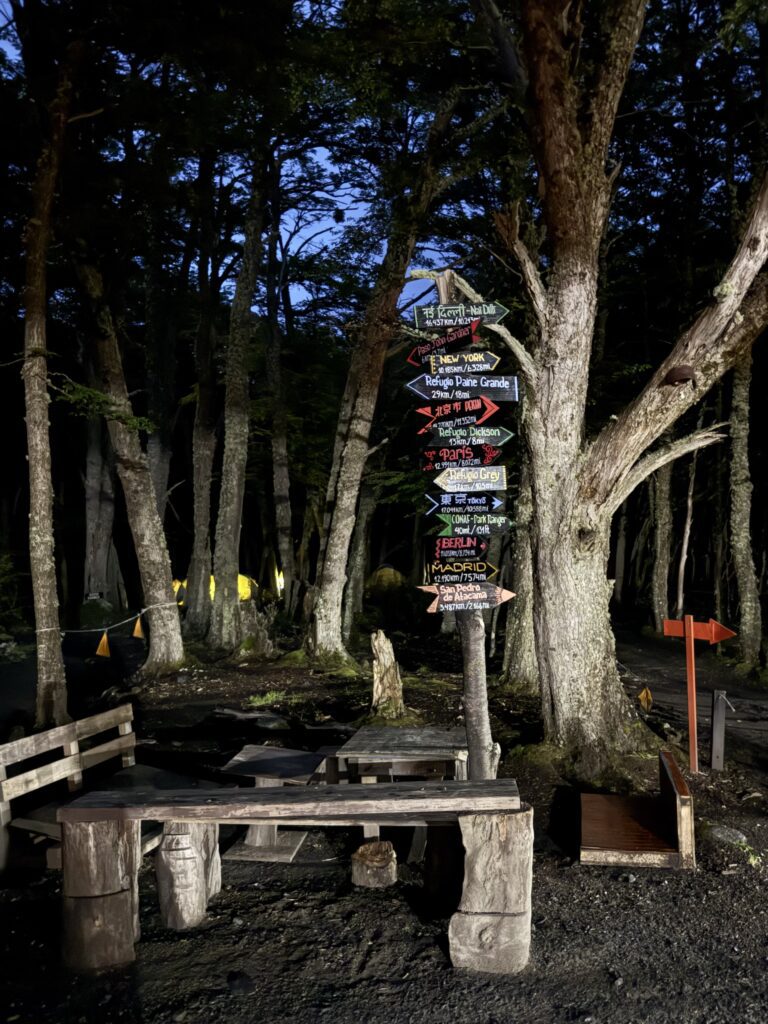
This campground is different from the others — more rugged, more remote, no hot showers here. Wooden tent platforms are scattered through the forest, reserved for pre-booked setups. The rest of us — carrying everything on our backs — found what we could: damp hollows among roots and uneven ground. Not much effort has gone into making these spots comfortable, but that’s part of the experience out here.
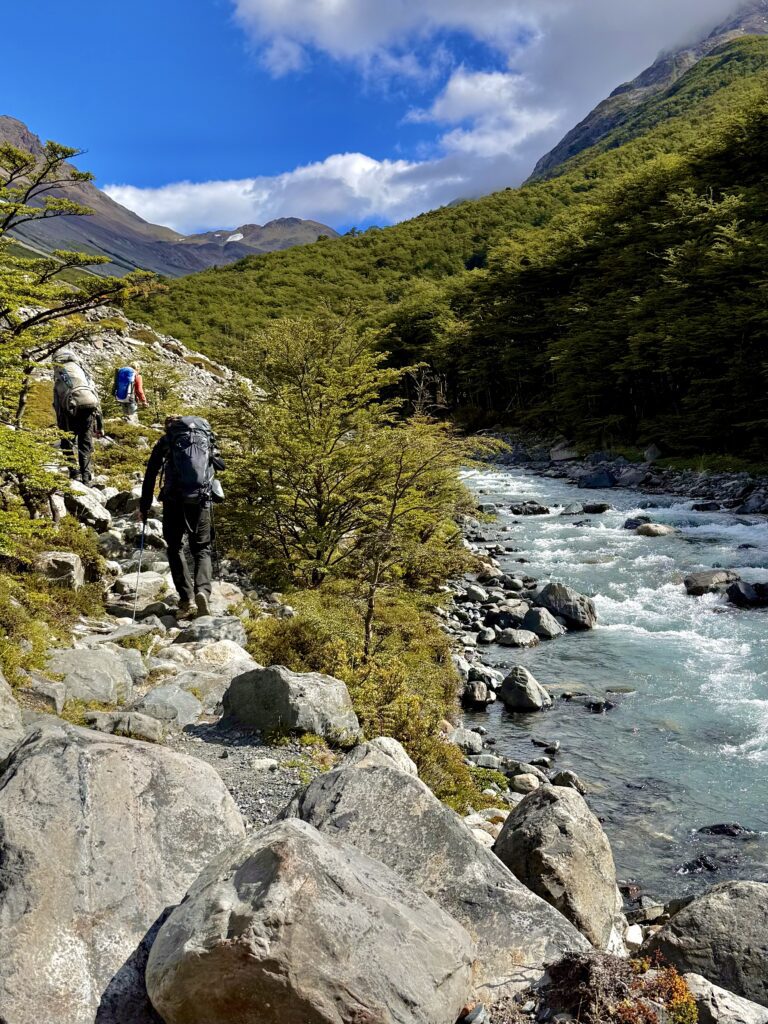

Tomorrow is the big one — the climb over John Gardner Pass.
There’s a quiet sense of anticipation in camp. People checking gear, hanging socks wherever they might dry, mentally preparing for what’s ahead. The rangers recommend early starts — slower hikers as early as 5am, faster ones around 8. Some had already set off at 3am, climbing by headlamp to reach the pass at sunrise.
JOHN GARDNER PASS TO CAMP GREY
DISTANCE: 22km ASCENT: 900m DESCENT: 1,700m TIME: 10hrs
We were up by 6 and on the trail by 7:30am, setting off in daylight.
It didn’t take long to realize we’d made the right call. Further on we passed several hikers who had left hours earlier, some already looking worn down. It’s not a trail I’d want to hike in the dark.
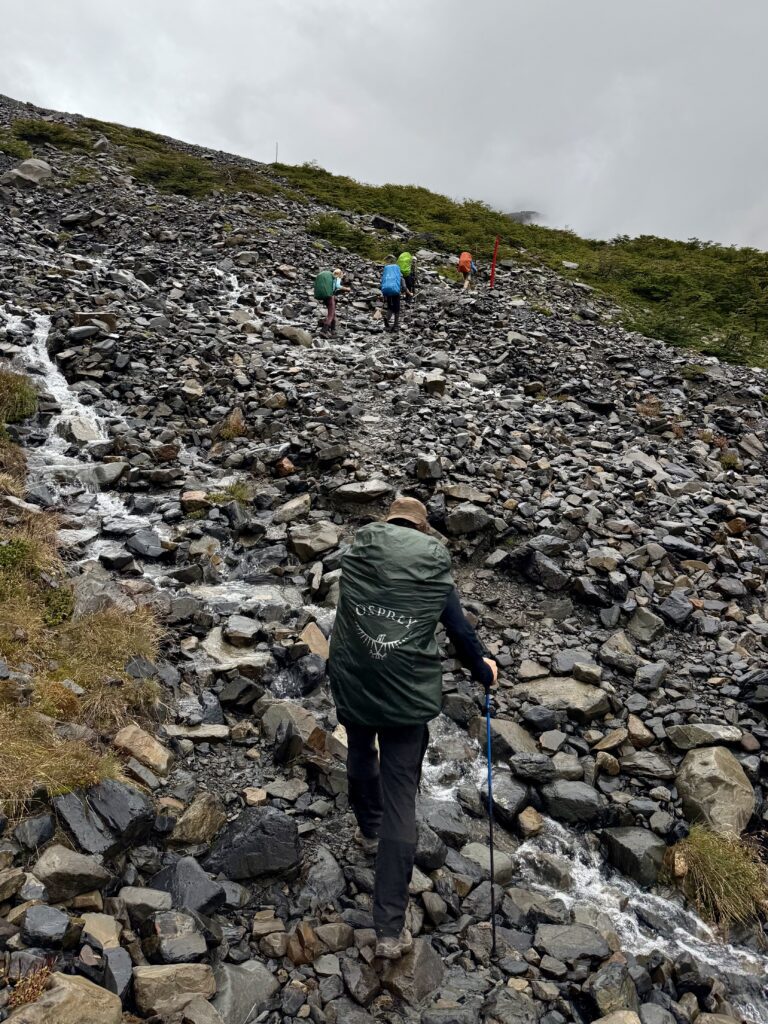
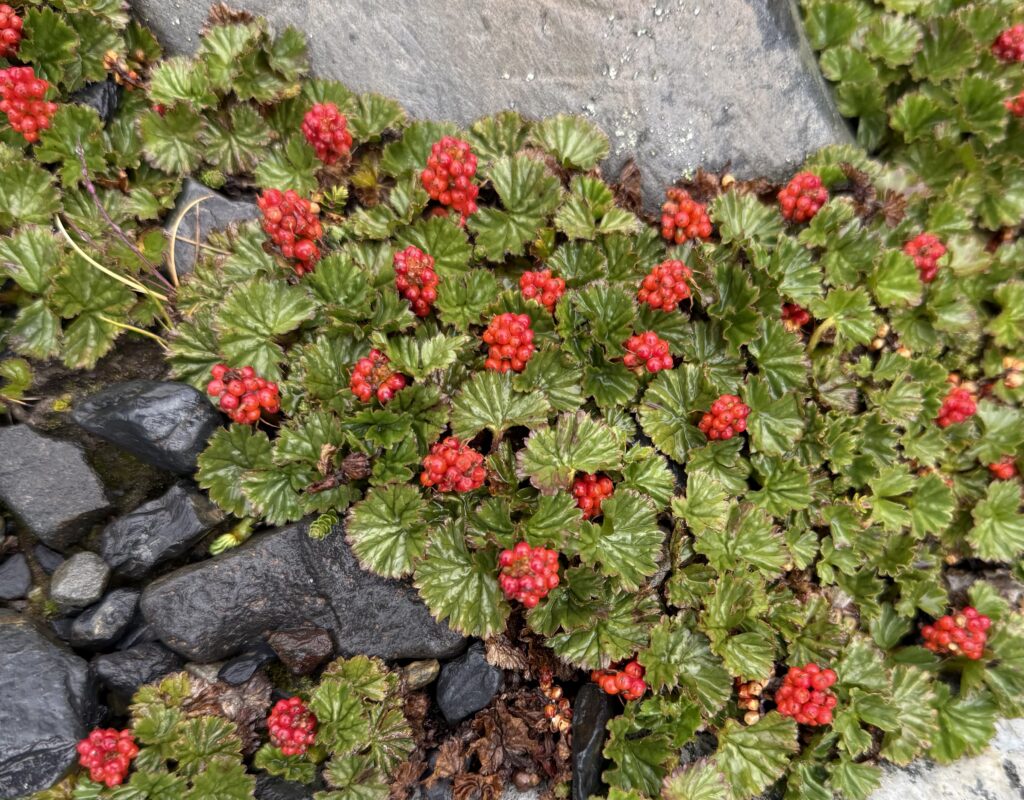
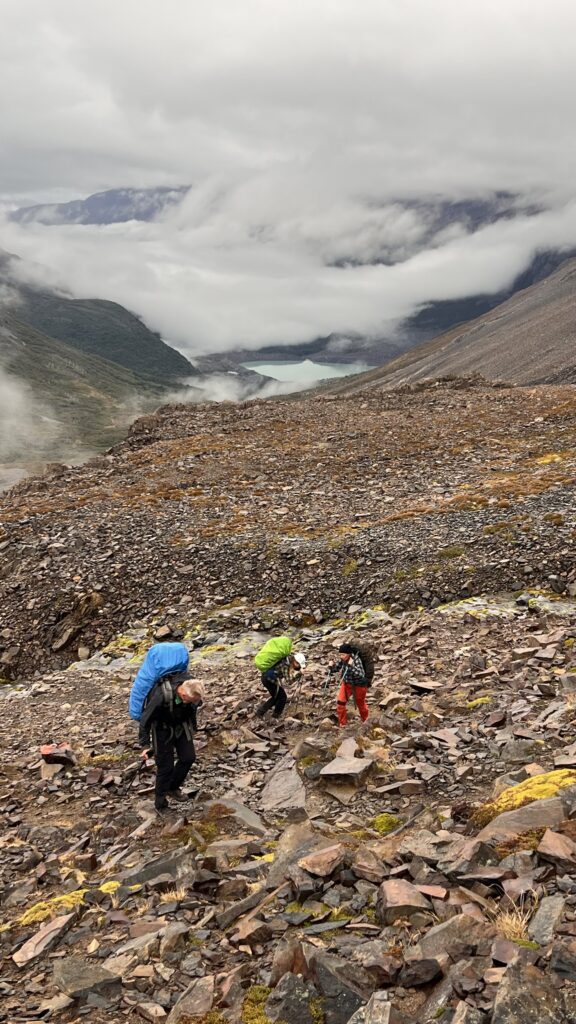
The climb began through the last stretch of forest before the alpine. Lots of rocks, slippery roots and mud puddles to navigate as we gained elevation. We crossed several shallow, flowing streams, stepping carefully trying to keep our boots dry. Overhead, clouds raced us toward the summit — an indicator of what was waiting for us up high.
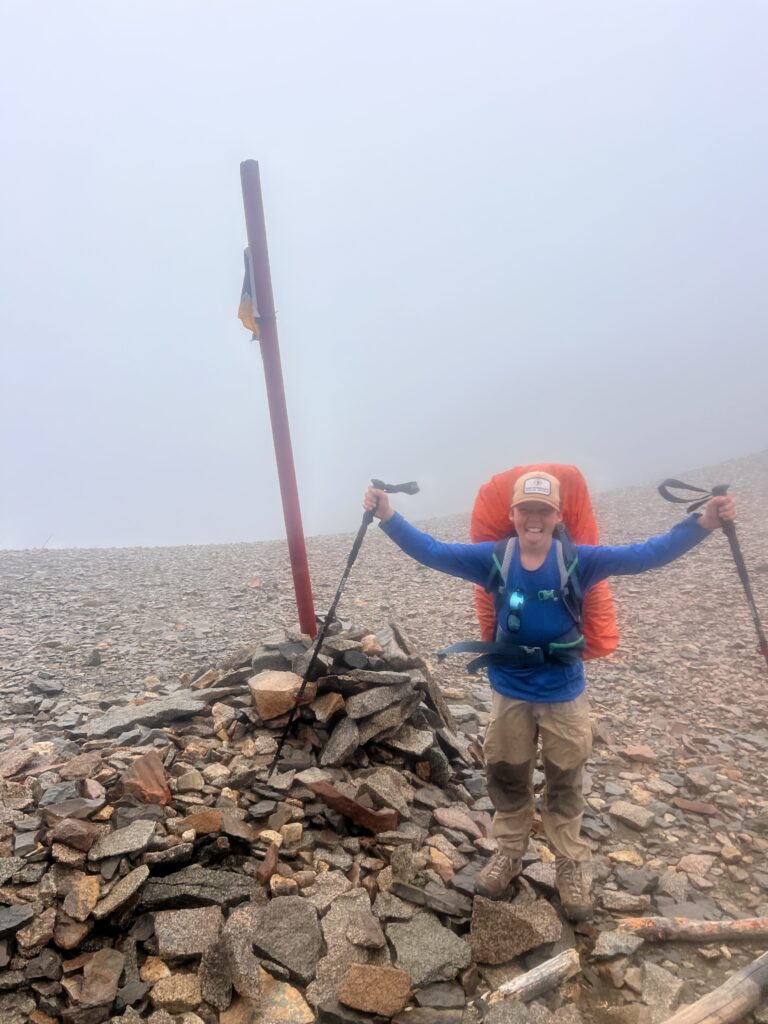
We’d been told by rangers to allow 4-6 hours to reach the pass. We made it in just two and a half.
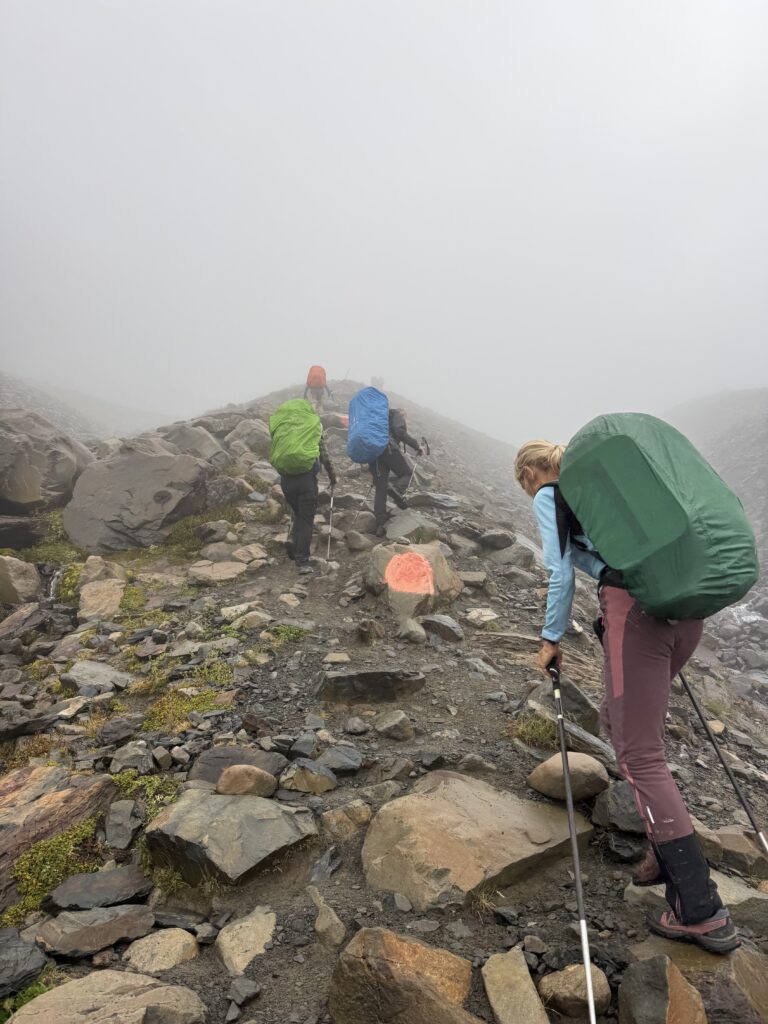
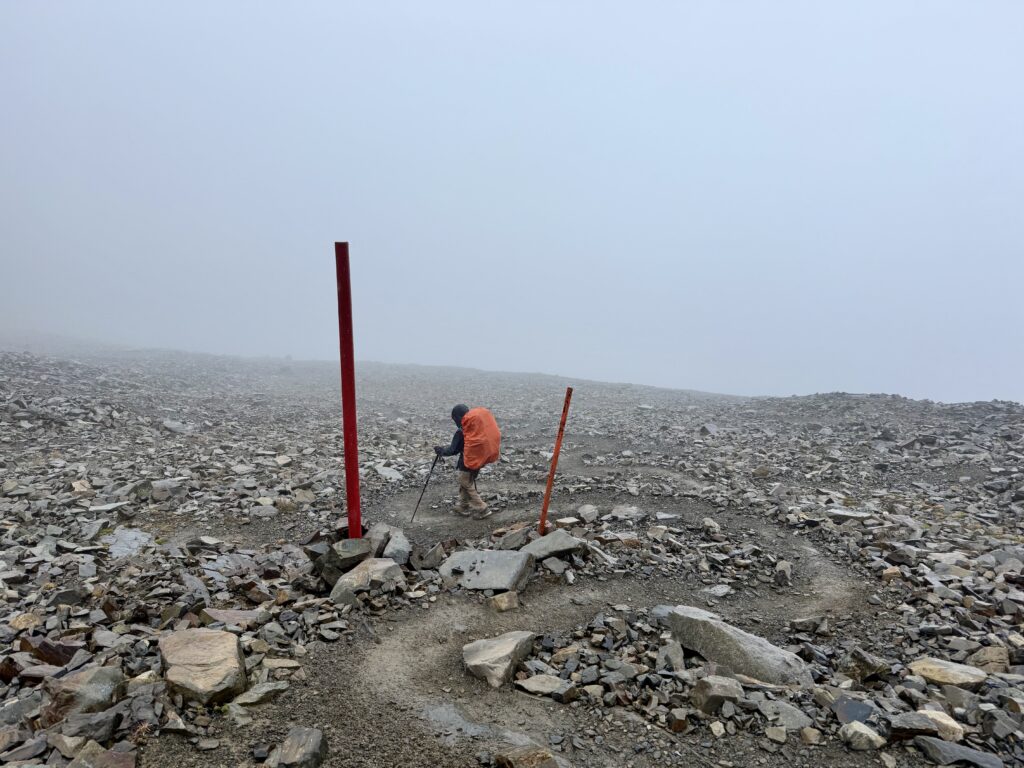
At the top, the conditions hit hard — strong winds and sideways rain. There was no lingering, no time to take it in. Just up and over, then keep going.
And there was no view. I have seen photos on a clear day you can see the entire length of the glacier.
REMEMBERING and DESCENDING
This is the pass where, just last November, five hikers lost their lives. The story has been hard to ignore — hurricane-force winds, whiteout conditions, and a failure to close the trail in time. Hypothermia was the official cause. Some turned back. Others didn’t make it.
It’s impossible not to think of them as you climb. The mountain felt different in that moment — less like a challenge, more like something to respect.
At the summit, I pushed on with the kids, while Tim stayed back to walk over with Armin & Petra, stopping to put their rain gear on. From the pass, it’s roughly 18 kilometres to Camp Grey. The first km being the worst, the trail drops nearly 900 metres in just over a kilometre — steep, relentless, and punishing. It was every bit as brutal as we’d been told.
Rain fell steadily as we descended. The track had turned to mud — slick, eroded, uneven. Every step needed attention. Going down proved harder than the climb — knees, quads, feet all taking the strain.
Once again, a little trail work could make a big difference here. But then again… if it were easy, everyone would be doing it.
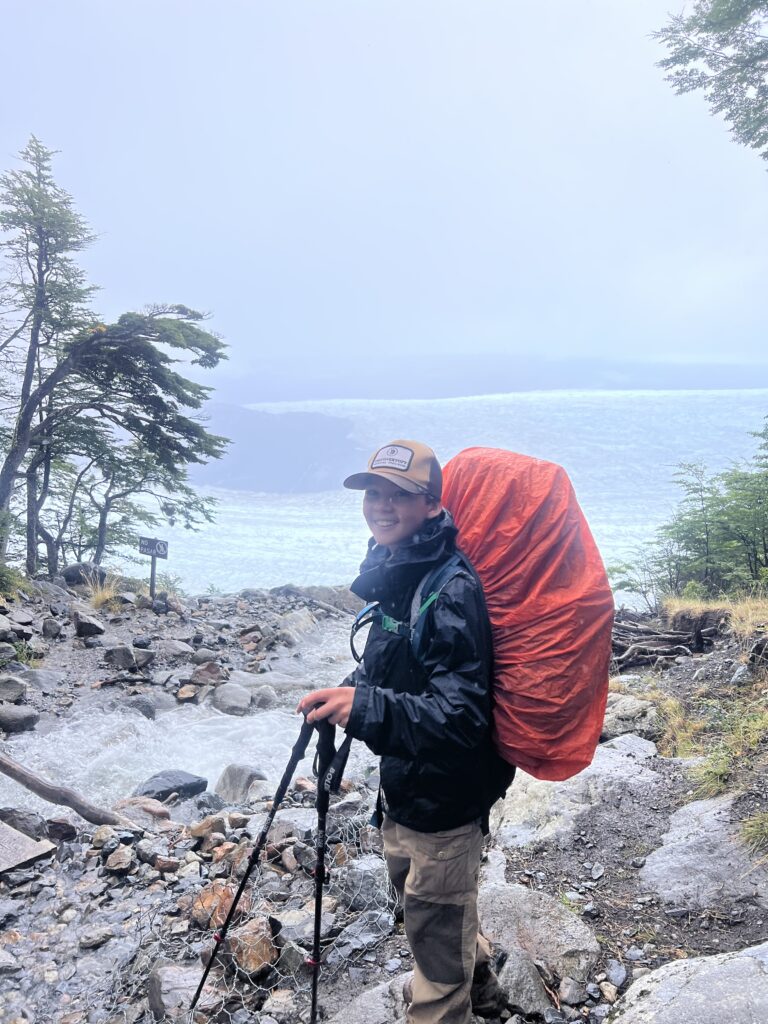
Every so often, like a game of hide and seek, the glacier would appear — suddenly close, almost within reach. But as we walked, it never seemed to get any nearer, before vanishing again behind the cloud.
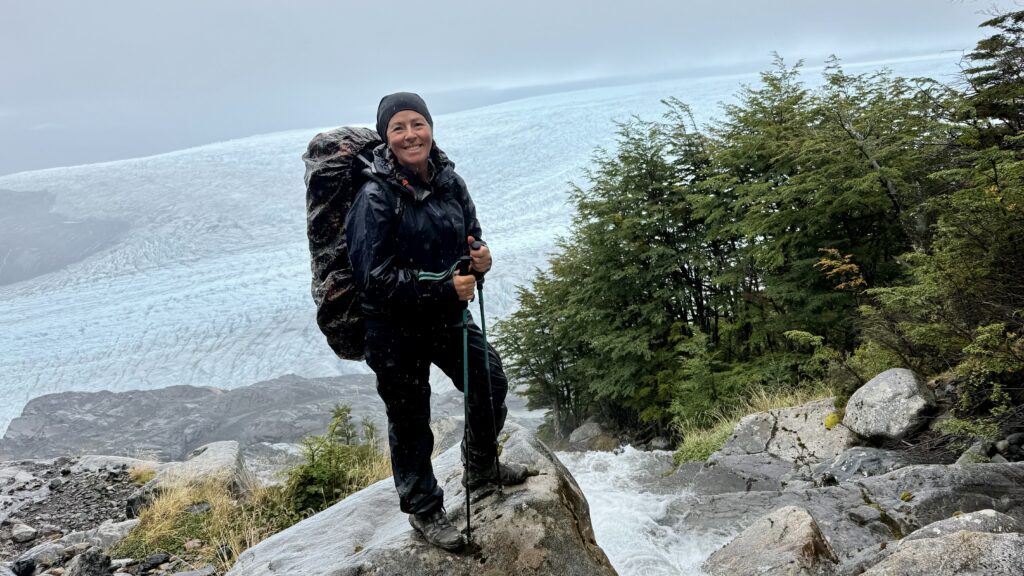
THE GREY GLACIER
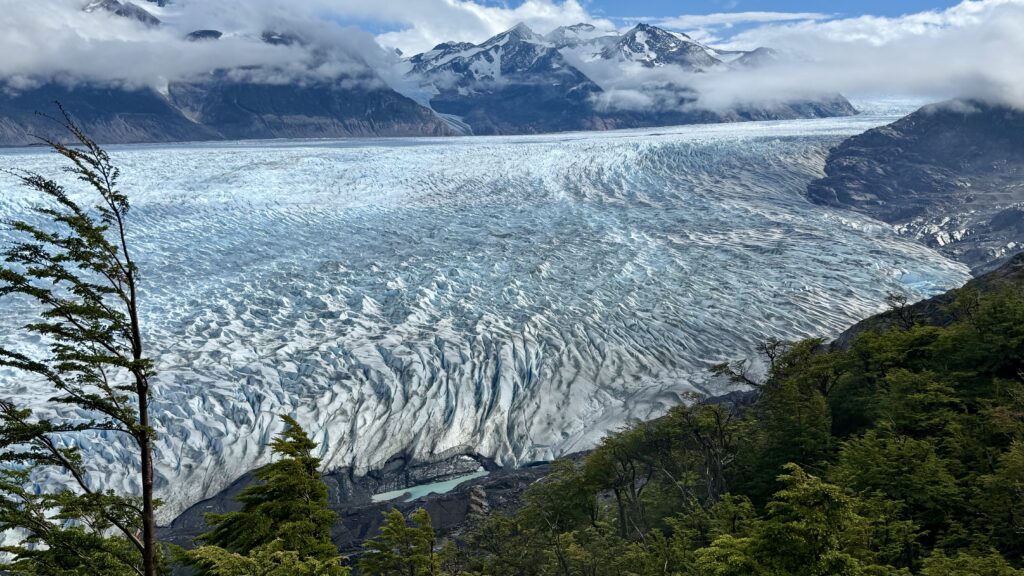
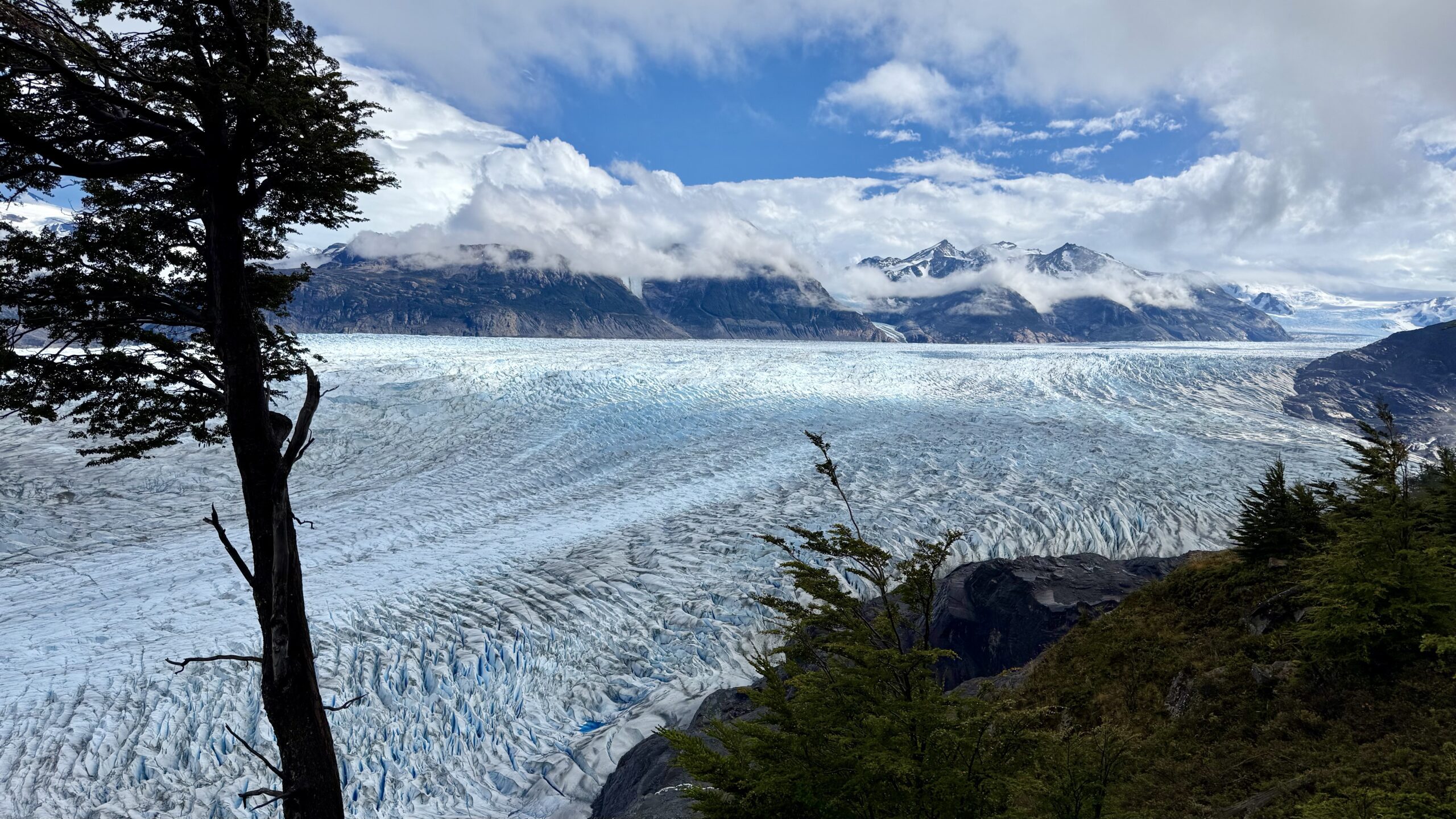
The Grey Glacier is immense — around 28 kilometres long and several hundred metres thick — part of the vast Southern Patagonian Ice Field. The ice itself can be hundreds, even thousands of years old, slowly moving and constantly reshaping the landscape as it calves into the lake below. Its name comes simply from the grey, silty water it feeds — but there’s nothing dull about it.
Then suddenly, it reveals itself — massive, ancient rivers of ice spilling down the valley. Even in poor weather, it stops you.
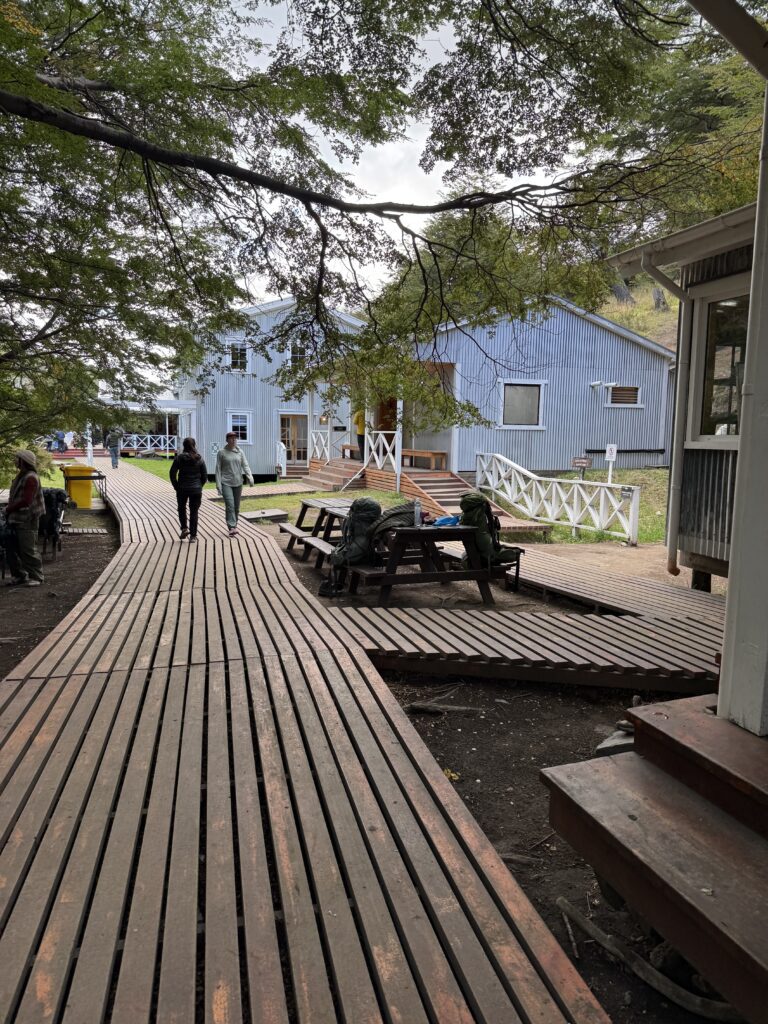
We reached a ranger station, relieved to get out of the rain, and ducked inside for shelter. For an hour and a half we warmed up, changed into dry clothes, and cooked a hot noodle lunch while the rain hammered down outside.
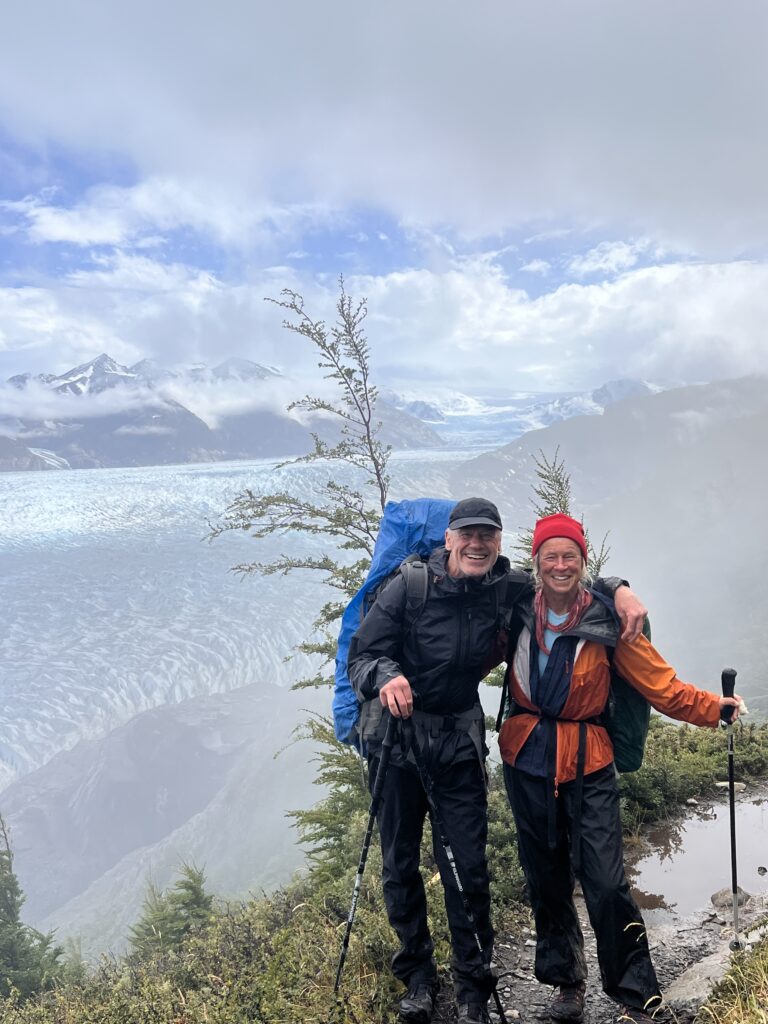
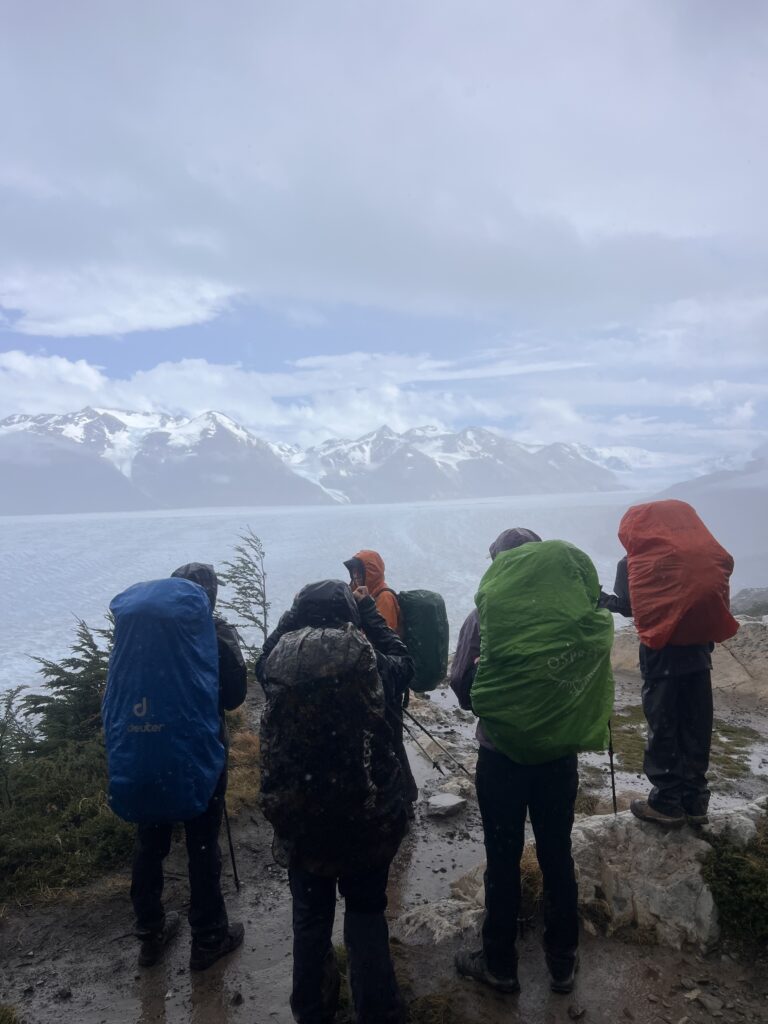
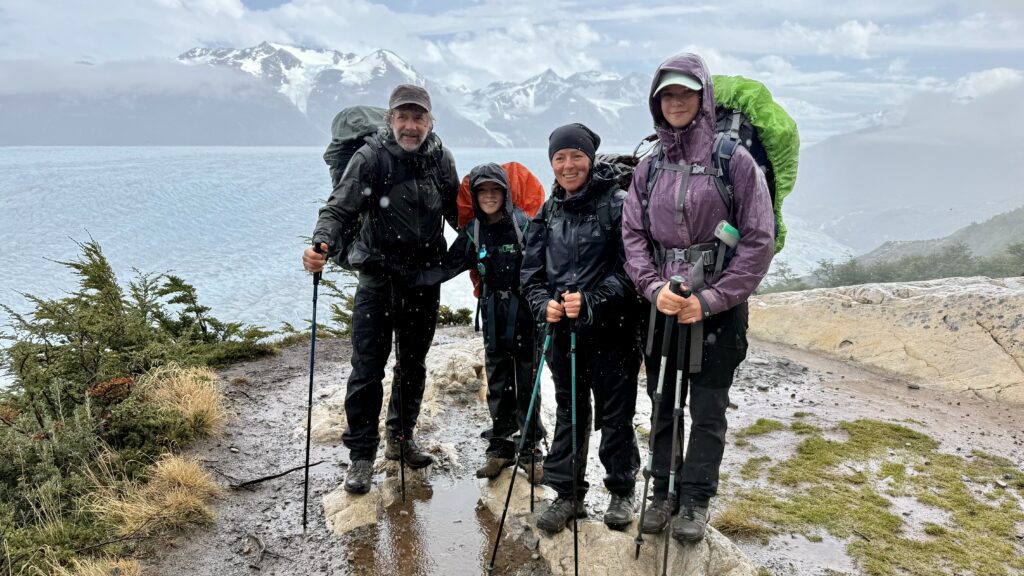
As forecast, at 1pm, the weather turned.
The rain stopped. The clouds lifted. Blue sky pushed through, and the sun came out strong enough to force us out of our rain gear. Steam rose from everything — the ground, our packs, our clothes.
And then the glacier revealed itself properly.
In full light, it was extraordinary. Vast, textured, alive with colour. One of those moments that makes you stop and just look. Sadly my photos just don’t do it justice.
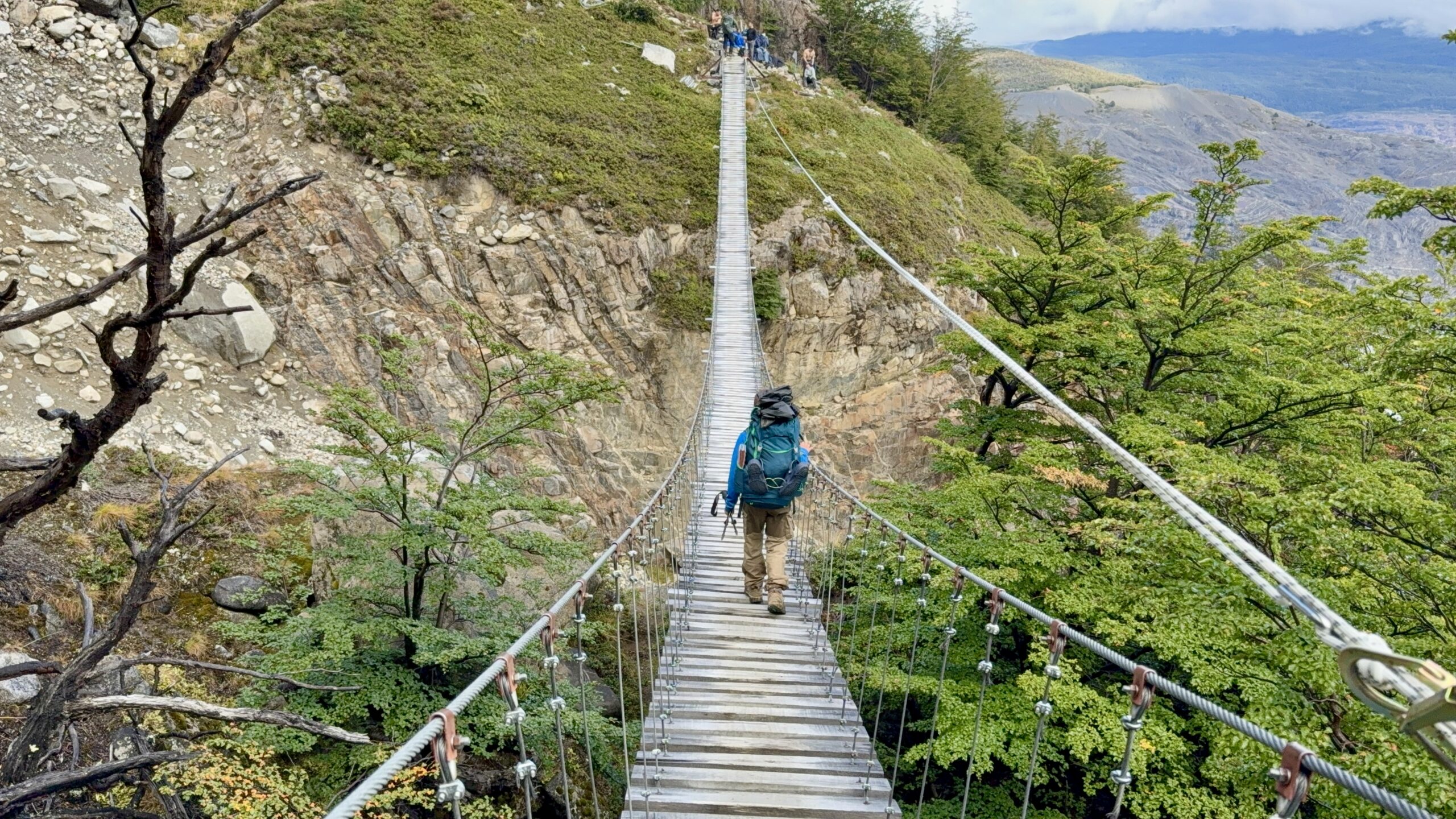
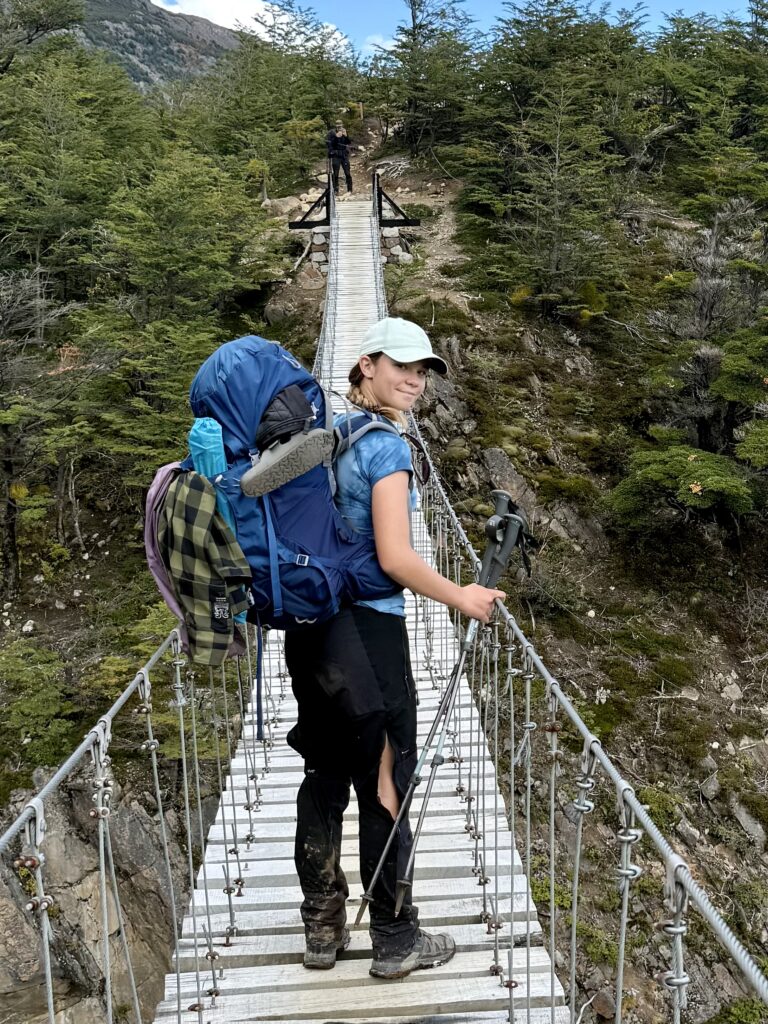
The final 10 kilometres to camp were slow and demanding. Constant ups and downs, legs already fatigued. Several swing bridges crossed deep valleys, adding just enough exposure to keep you focused.
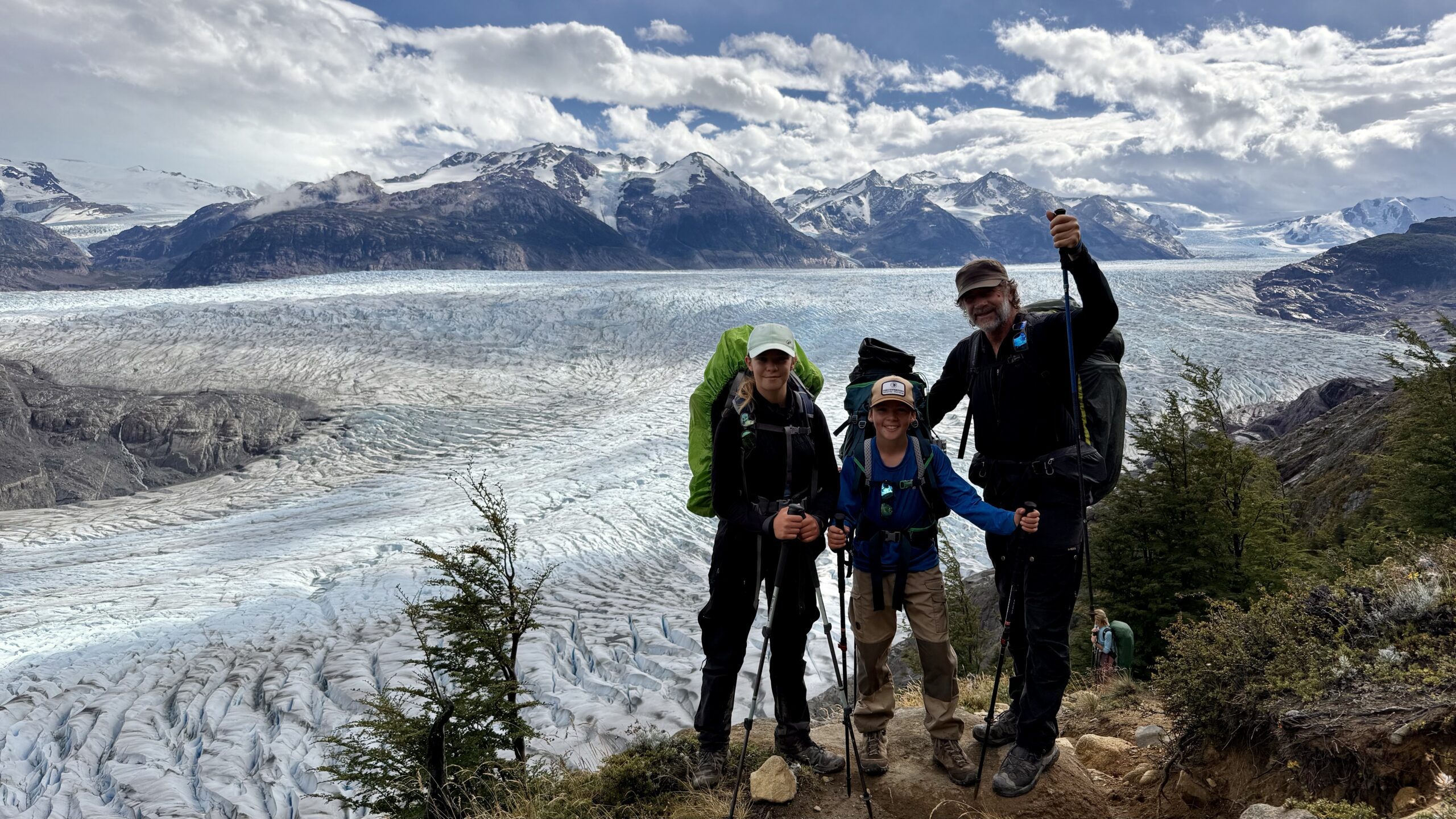
By the time we reached camp, we were done.
Completely spent, but happy.
It was, without question, the hardest day on the circuit.
And we did it.
Watching the kids push through — no complaints, just quiet determination — was something else. For them, and for us, this felt like a real achievement.
WHERE THE ‘O’ MEETS THE ‘W’
We set up camp, found our way to a hot shower, and then headed to dinner in the restaurant we’d pre-booked nine months earlier.
But somewhere between the trail and the table, things began to shift.
By the time we reached Grey, the O Trek had folded into the W — and with it, the whole atmosphere changed.
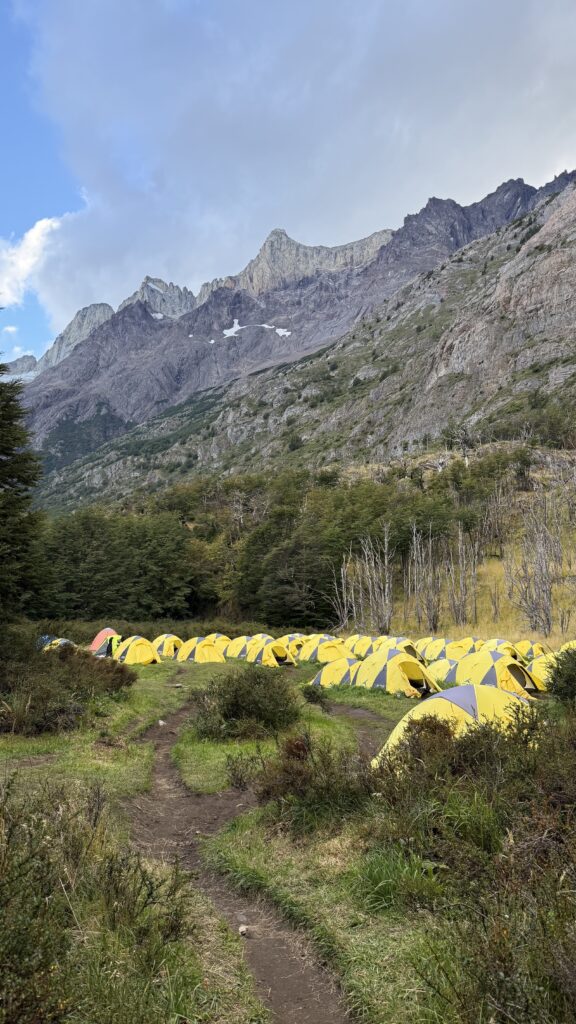
After days of remote camps, quiet forests, and the same familiar faces, we suddenly found ourselves in a completely different environment. Hundreds of neatly pitched rental tents spread across the campsite, people arriving in waves. There was a bar, music, cold beers flowing — a kind of celebratory energy that felt far removed from the solitude we’d just come from.
It caught us off guard. A little anticlimactic, in a way we hadn’t quite expected.
There’s something about the O — its remoteness. You earn each step, each view, each connection. And then, almost abruptly, you’re dropped into the busier, more social side of the park. For many, this is the start of their adventure. For us, it marked the end of the O.
If I’m honest, this part didn’t quite resonate. The restaurant and bar scene felt out of place after days in the wild — we would have far preferred to share a simple meal with our hiking crew.
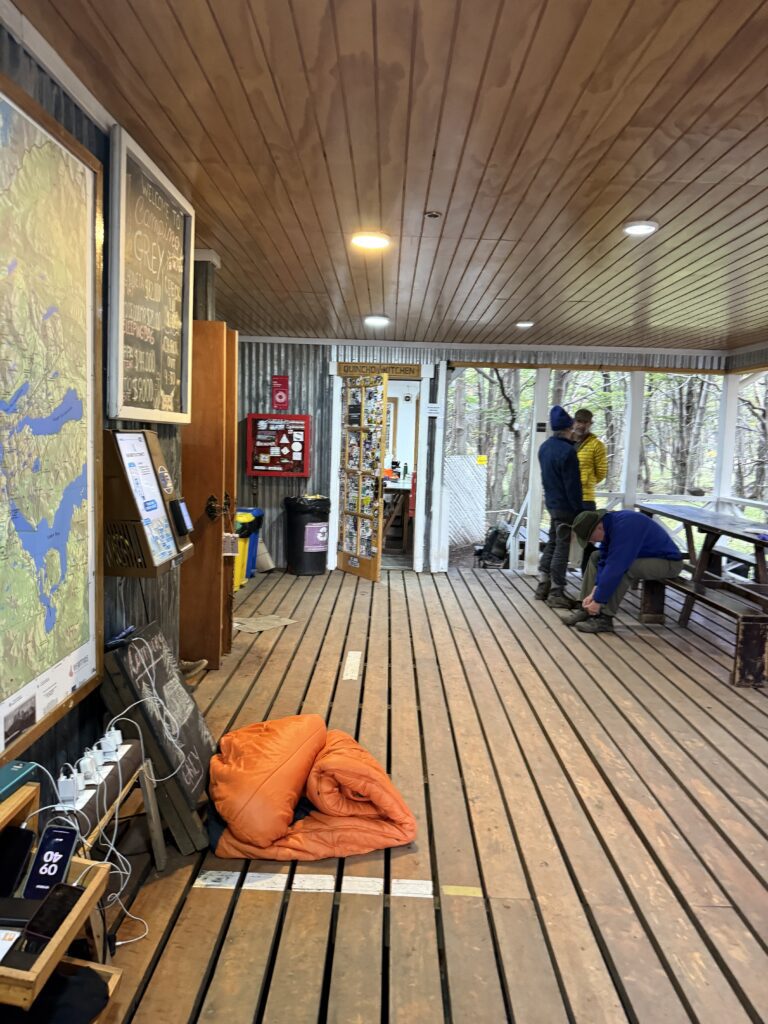
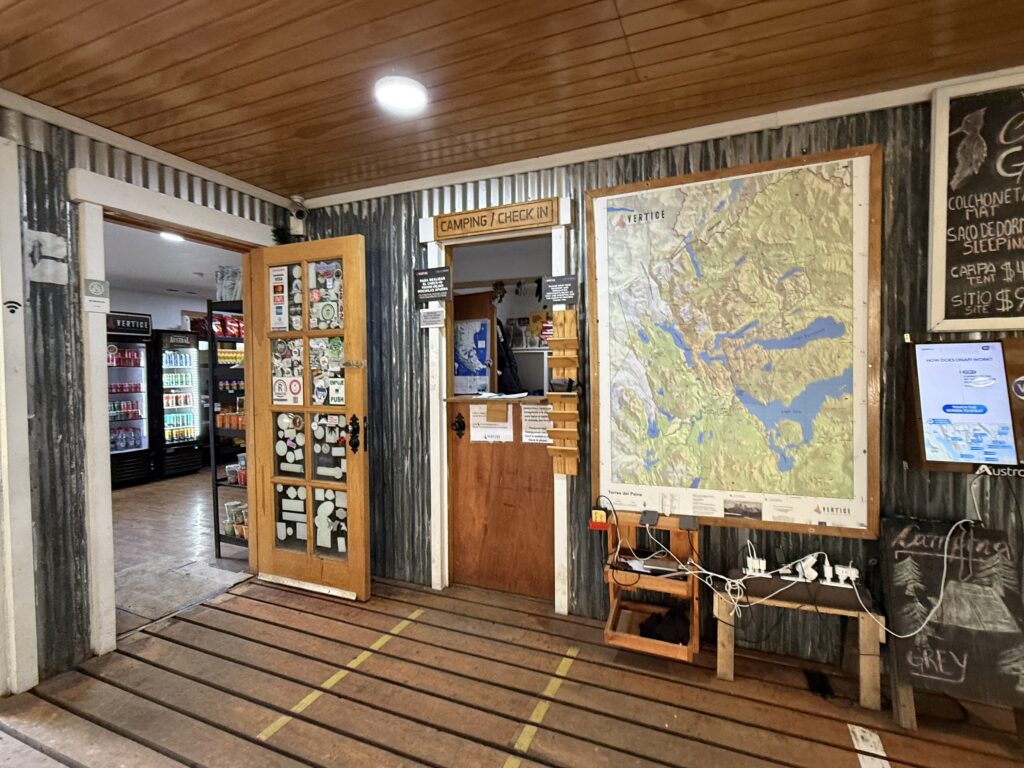
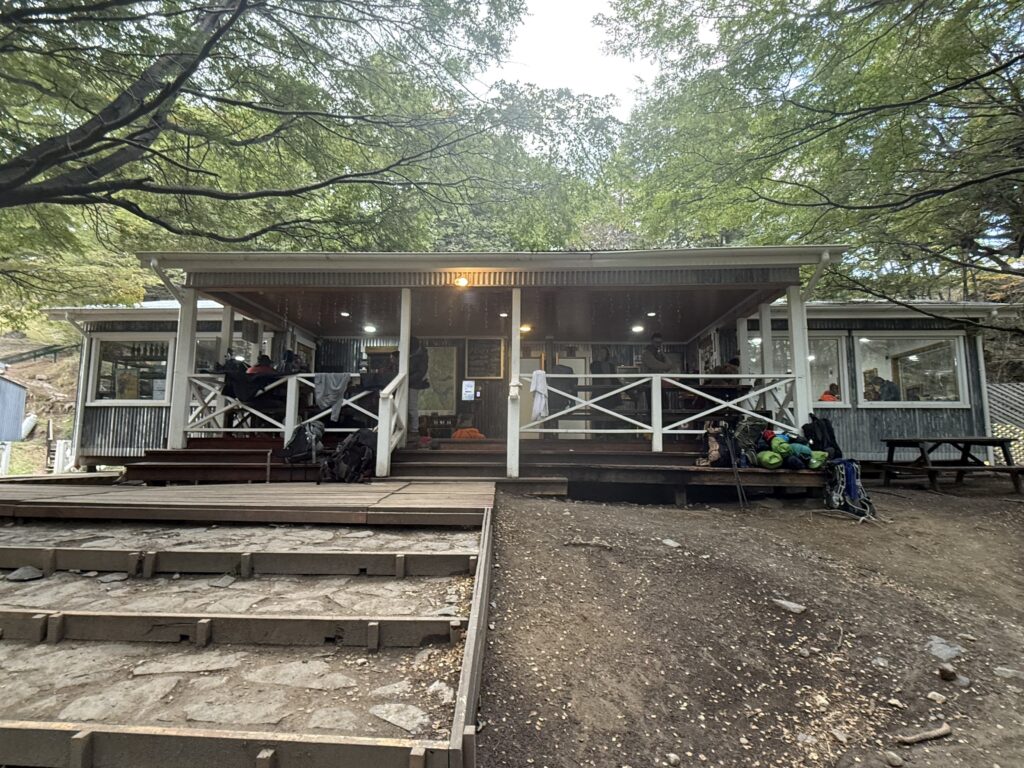
After dinner, I poked my head into the dining room and found Petra and Armin lingering over tea. We chatted for a while before heading back to camp. My feet, to my surprise, were properly sore—complaining with every step. A couple of ibuprofen took the edge off before we retreated to our quiet corner of the campground.
Later, we heard the last hikers straggle in around 8:30pm—after a punishing 14-plus hours on the trail. Others hadn’t made the cutoff at all and were spending the night at the ranger’s hut below the pass.
The sleeping bag had never felt so good.
One Response
Sensational effort Sarah, to you all. Etched in your memory’s.