
At the very edge of the continent, where land fractures into wind, water, and sky, lies Tierra del Fuego—the Land of Fire.
When the ships of early explorers, including Ferdinand Magellan, passed through these cold, seemingly inhospitable southern channels in the 1500s, they saw something unexpected. Fires flickered along the dark shoreline—hundreds of them.
They belonged to the Indigenous peoples who had long called this place home, their fires burning against the cold, the wind, and the endless night. From the decks of those ships, the coast appeared alive with flame. And so the name endured.
Today, this remote archipelago is split between Chile and Argentina, divided by a straight line on a map—drawn long ago with little regard for the wild landscape it cuts through.
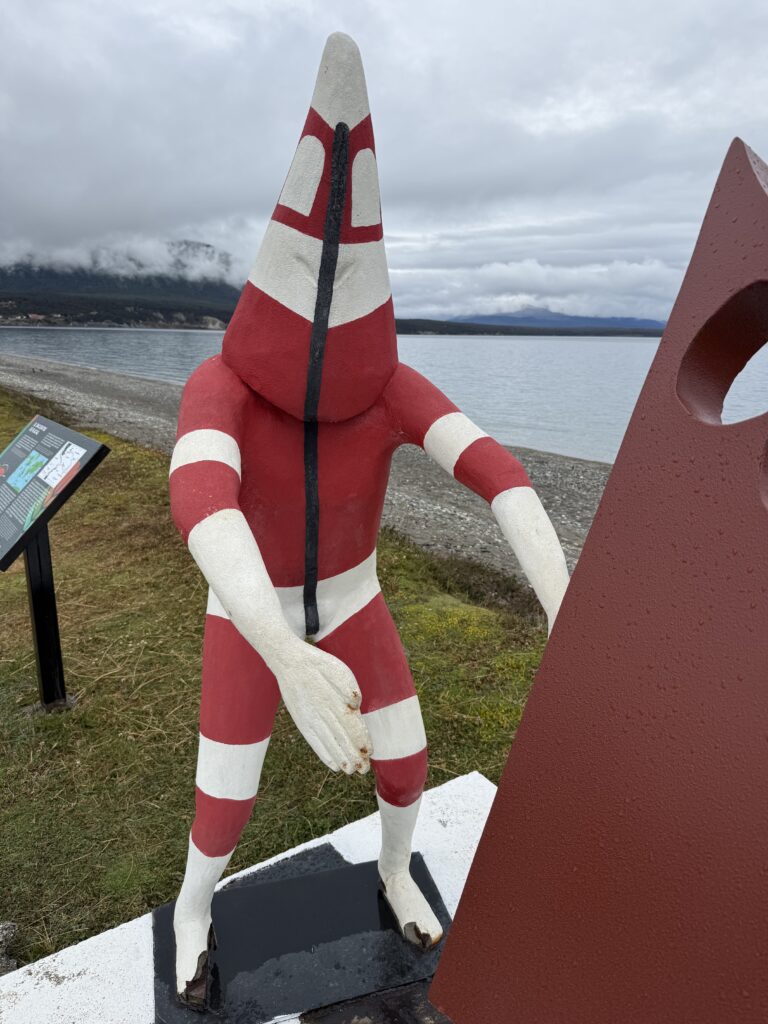
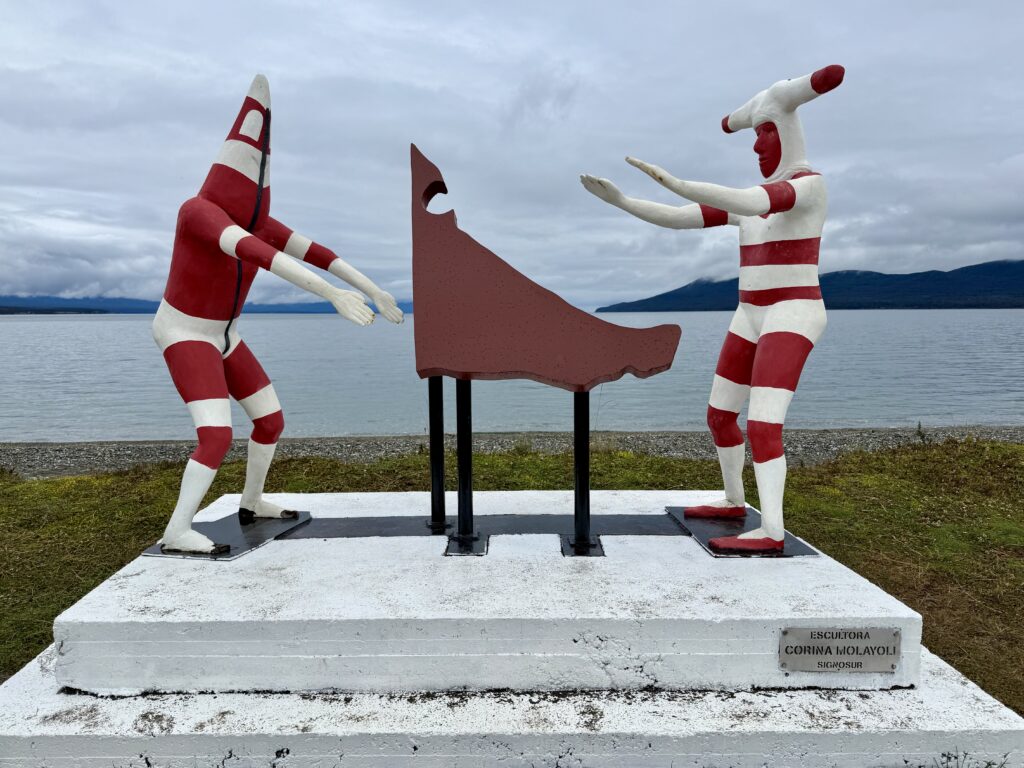
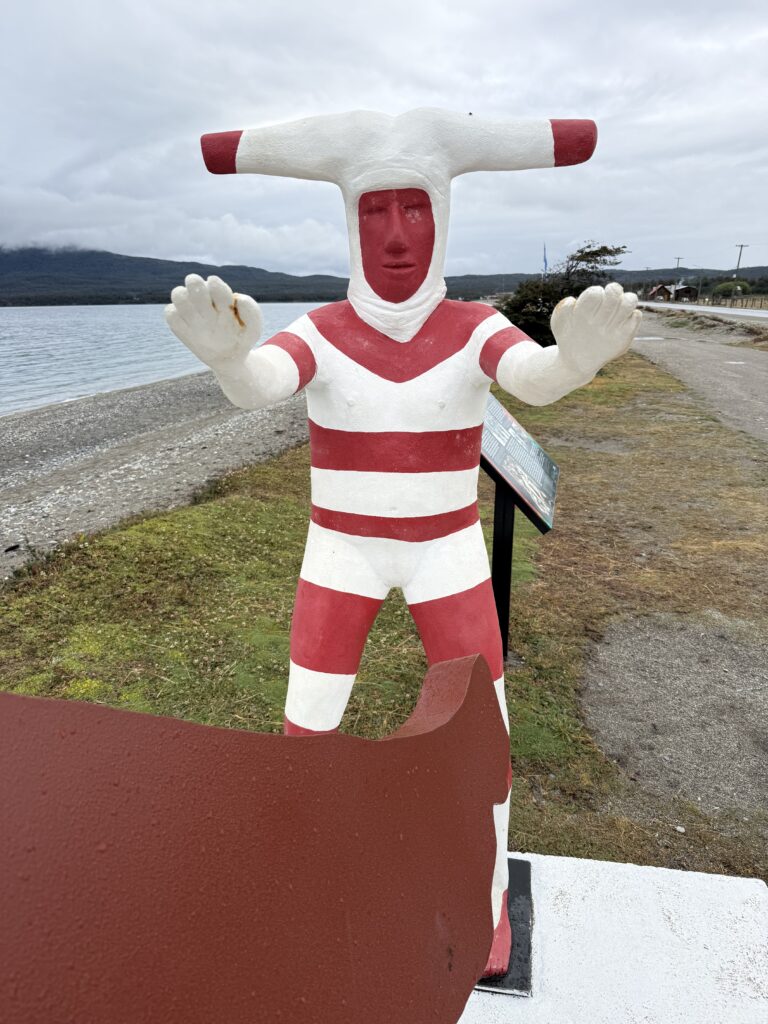
7- 16 February. Crossing back into Chile once more, we went through the familiar routine—stamping ourselves and the truck out of one country, then back in to the next. The vehicle inspection followed, intended to be thorough, though thankfully it didn’t extend into the laundry basket.
Down here, there’s little noticeable difference between the countries. Everything looks the same. From the border, we headed straight to the ferry line up and took our place—about a dozen vehicles from the front—and waited.
An hour or so later, another passenger walking past told us the ferry had been delayed until 6 p.m. due to strong winds. Maybe we’d cross today, maybe tomorrow. With nothing else to do, we settled in. Starlink went up, the kids got some schoolwork done, and we waited.
A few cars pulled out, leaving gaps—including one just ahead of us. That’s when a young couple in a nice car came cruising slowly up the line, clearly looking for a spot to slip into. By now, the queue behind us stretched well over a kilometre.
Watching them approach, Tim stepped forward and blocked their way. He asked what they were doing—and why they thought they could skip the line instead of joining the back like everyone else. They replied in broken English with a handful of vague excuses, something about upsetting other drivers.
By then I’d stepped out too, picking up the conversation while Tim jumped back in and closed the gap in front of us. Applause broke out from the cars behind.
Cheeky—and just a little too entitled.
The winds did eventually calm down and we were able to load and cross the straight of Megallean around 9pm. Too late to drive far, even though it doesn’t get dark till 10pm, we camped the night alone out by the lighthouse. We were happy to be done with the day.
PARQUE PENGUINO REY
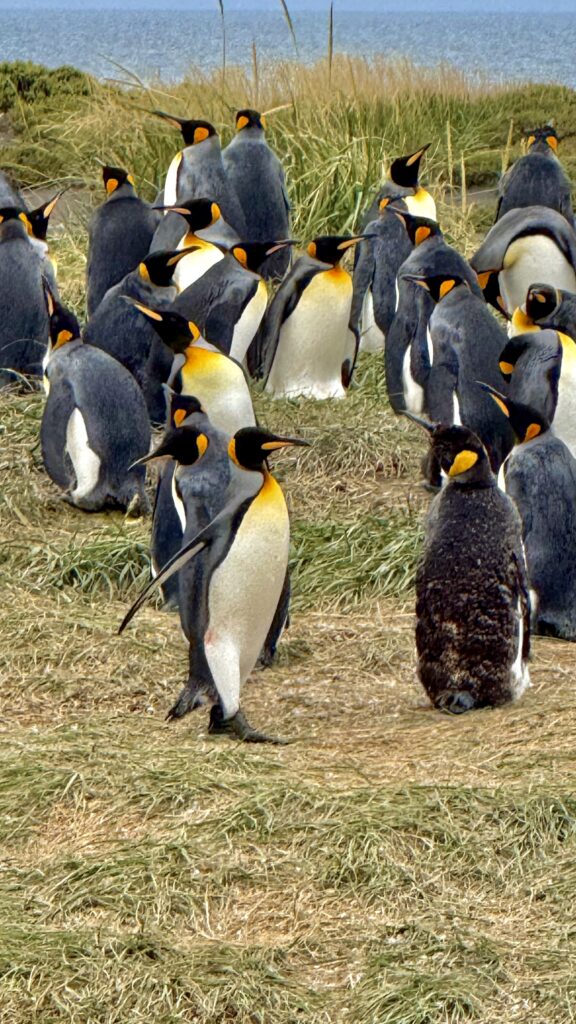
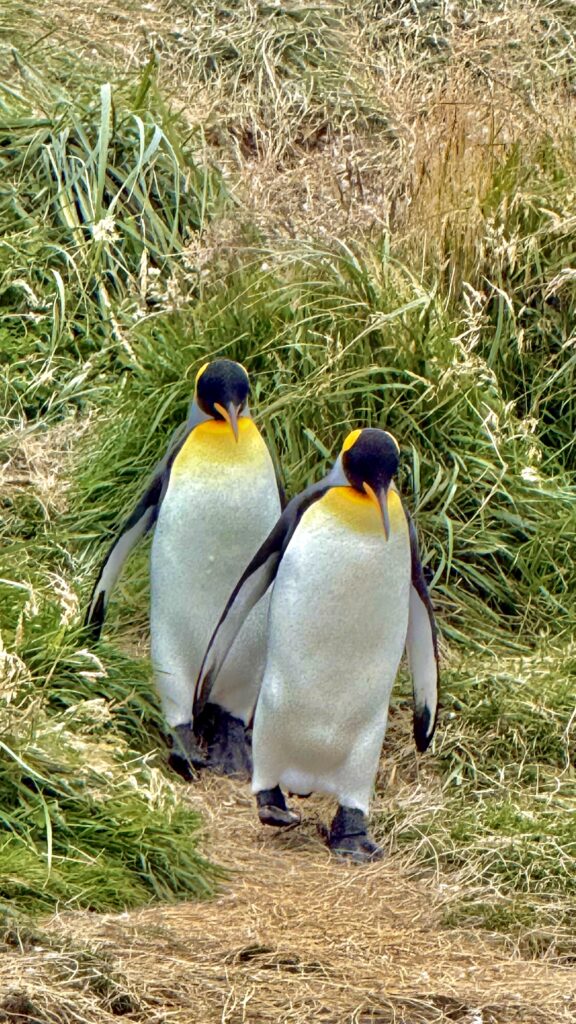
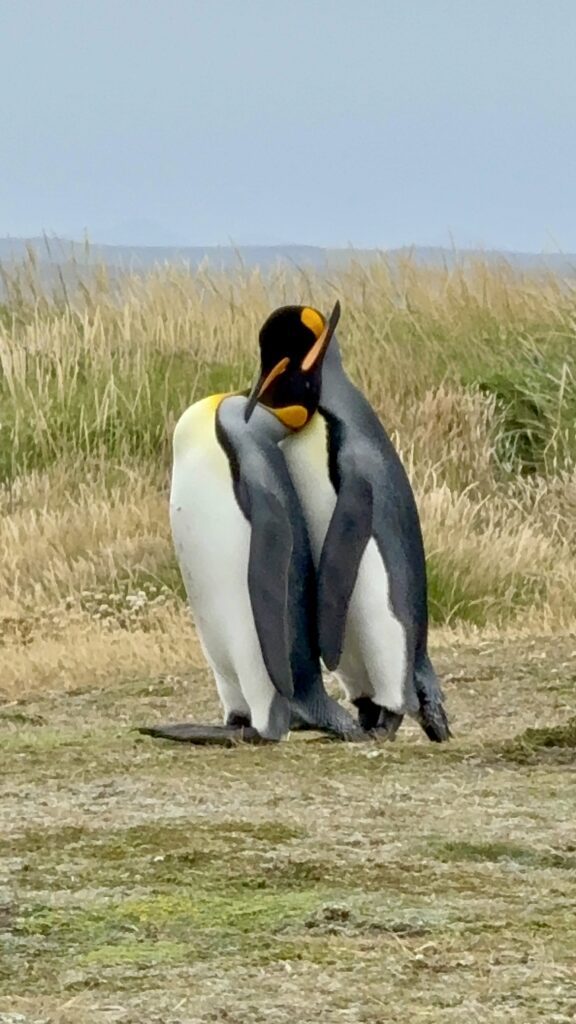
Home of a small colony of King Penguins. One of the only places outside subantarctic islands where you can see these beautiful birds on land.
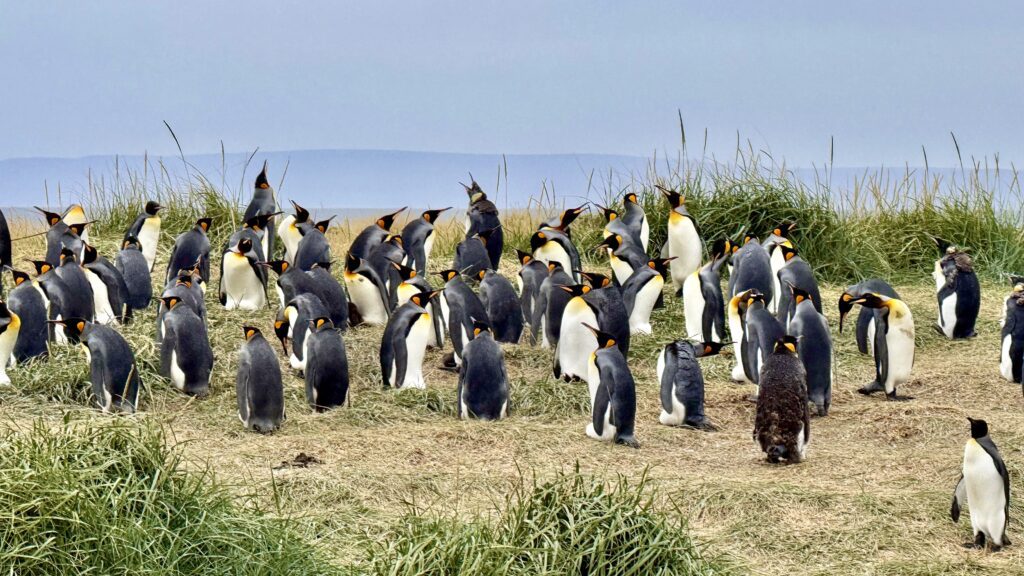
The landscape here is deceptively gentle—rolling grassland, low shrubs, precisely this isolation that makes it so ideal for them. The colony, still relatively small and fragile, represents a rare and hopeful expansion for the species, far from their traditional breeding strongholds. Careful conservation has allowed them to establish here, undisturbed and thriving.
We joined the 45-minute guided walk, keeping our distance. Watching we could see the adults standing tall and regal, their golden collars glowing, while small grey downy chicks huddled close together.
There were bachelor penguins and parent penguins—some asleep, others looking dishevelled as they went through the moulting process. Some stood patiently grooming, while others seemed to fall squarely into the ‘troublemaker’ category.
The non-partnered males wandered about with an air of total disregard, waddling straight through the nursery as if it didn’t concern them. Parents protested loudly, shuffling to shield eggs and young chicks from their intrusion.
Others pushed their way through the colony, nudging birds aside or inserting themselves into whatever was happening nearby—beaks poking into everyone else’s business.
It gave the whole scene a quiet, constant sense of comedy.
BRUCE BROKEN BRACKET… AGAIN
RIO GRANDE a place that surprised us all. After so many remote stretches, it felt almost metropolitan. Supermarkets, hardware stores, cafés—it had everything we needed and more. A small city in the far south that has everything and 220km from Ushuaia. Looking for a quiet place to camp for the night we pull off the road into a quiet spot among the trees we’d found on iOverlander. Only as we were maneuvering into a level spot we heard a solid thunk!
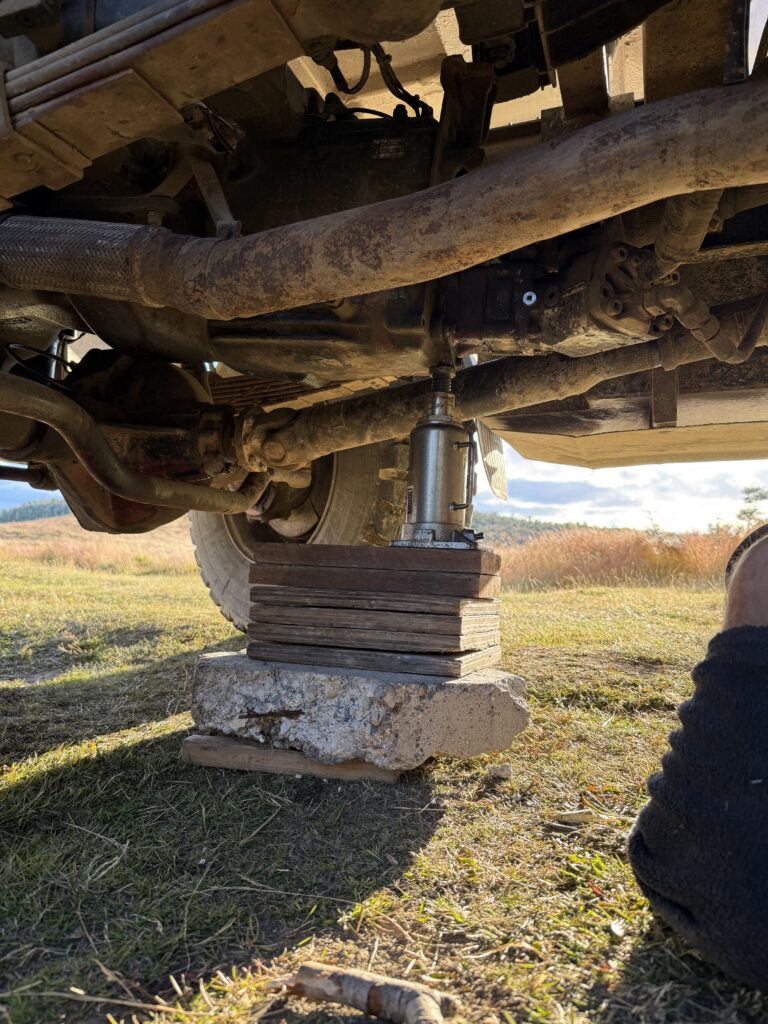
Tim looked at me, gear shift dropped in his hand and we knew instantly, the engine mount had failed again.
Tim was under the truck within minutes, lifting, strapping, stabilizing once more. But the force of it… we couldn’t help but worry what else had taken the strain. The front mounts, we suspected, weren’t far behind.
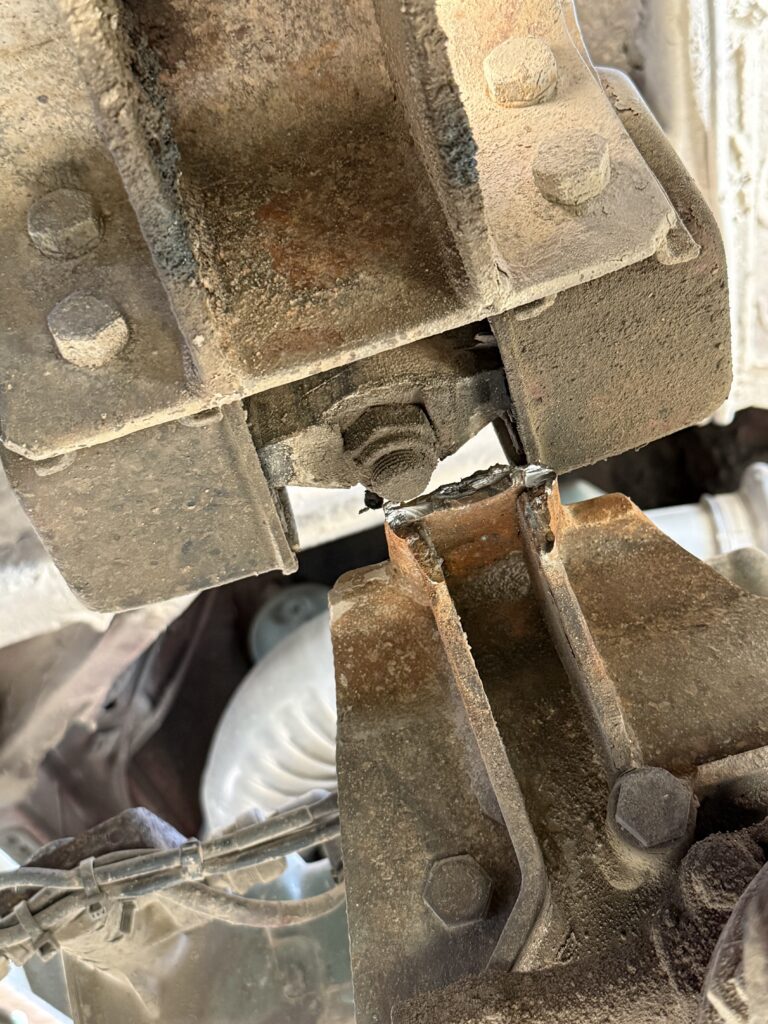
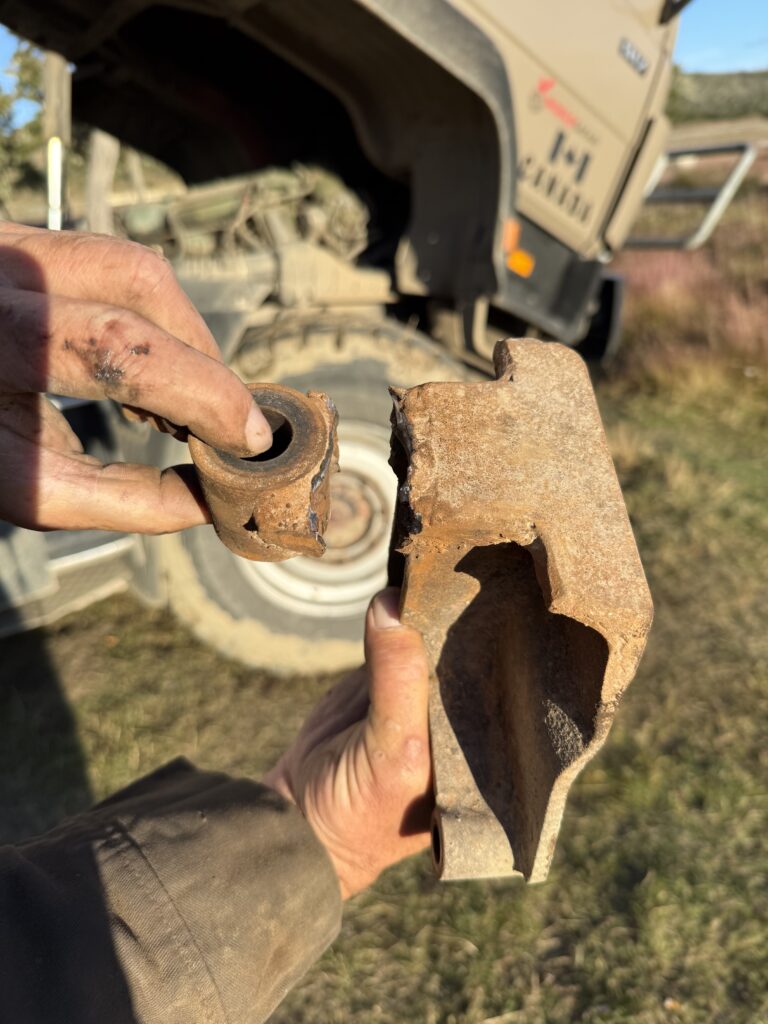
An old man lived on the land where we’d stopped. iOverlander had mentioned him—harmless, a veteran leftover from the Falklands War. He approached slowly, dressed in a weathered, hand-stitched military uniform complete with wool beret, that had clearly seen better decades. Missing teeth, worn boots and dirty. He welcomed us.
Between our broken Spanish and his fragments of English he understood our predicament. He’s a lonely man living in a tin shed with nobody to talk to. Later we knocked on the door of a Civil Defence post not far away in hopes someone there could help us find a welder.
We were 80km from Río Grande, 40km from the next small town. Options were thin.
The man at Civil Defence was exactly what you hope for in the middle of nowhere—calm, helpful, quietly efficient. By evening he’d arranged for a mobile welder to come “tomorrow.” No time given. Just… tomorrow.
So we waited.
And waited.
And waited.
By the next day, still no sign. Plans shifted—Tim would hitch into Río Grande with the broken bracket and find a welder.
At 9pm, headlights approached. It was Mario & Wenke, finally catching up after months apart. They’d driven 700km in one push to get here. Great to see them, our night shifted to sharing stories and laughter. They’d brought supplies too for us from Germany—water filters, locking caps, and a new pair of hiking boots for Jaxon… who promptly discovered they were… two different sizes. Doh!
MIDNIGHT MECHANICS
By 10pm, more headlights. A small pickup, weaving slightly as it approached. The welders.
ArrivING with wild energy—jittery, overconfident, like they’d each downed an entire pot of coffee. Within minutes, by the light of the truck and cell phone, sparks were flying as they began grinding the bracket by headlight. Tim hovered nearby, keeping a watchful eye.
Then—problem. Not enough power. They’d be back by midnight, they said.
Midnight came. Then 1am. Nothing. Tim climbed into bed, frozen cold from waiting.
At 2am, they returned—loud, fast, and suddenly very expensive. $300 USD.
It was outrageous. But out there, in the dark, with their erratic energy and our complete lack of options, it didn’t feel like a negotiation. We paid.
The repair? Functional. Not pretty. But enough.
They tore off into the night, whooping and fishtailing down the track like rodeo stars.
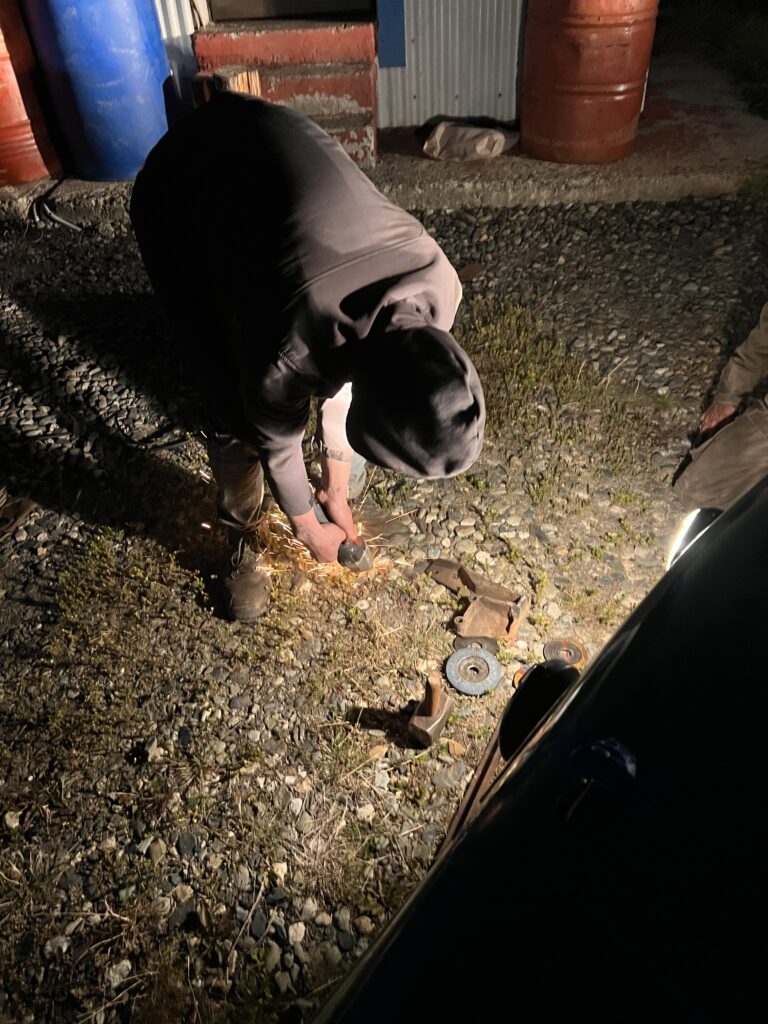
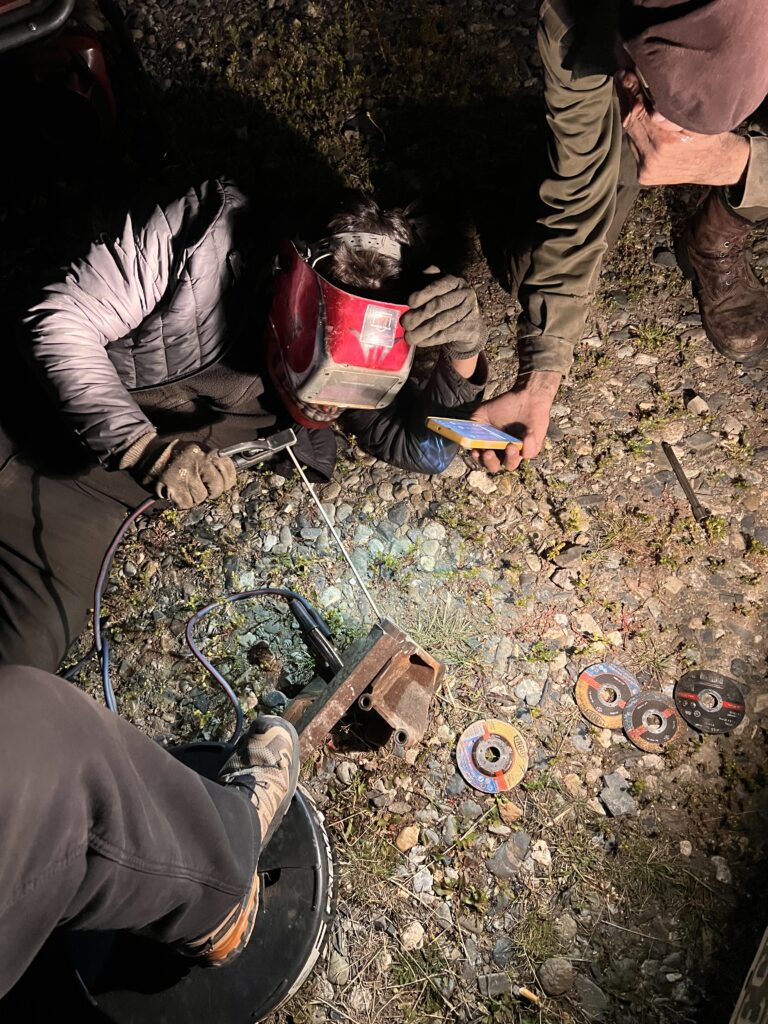
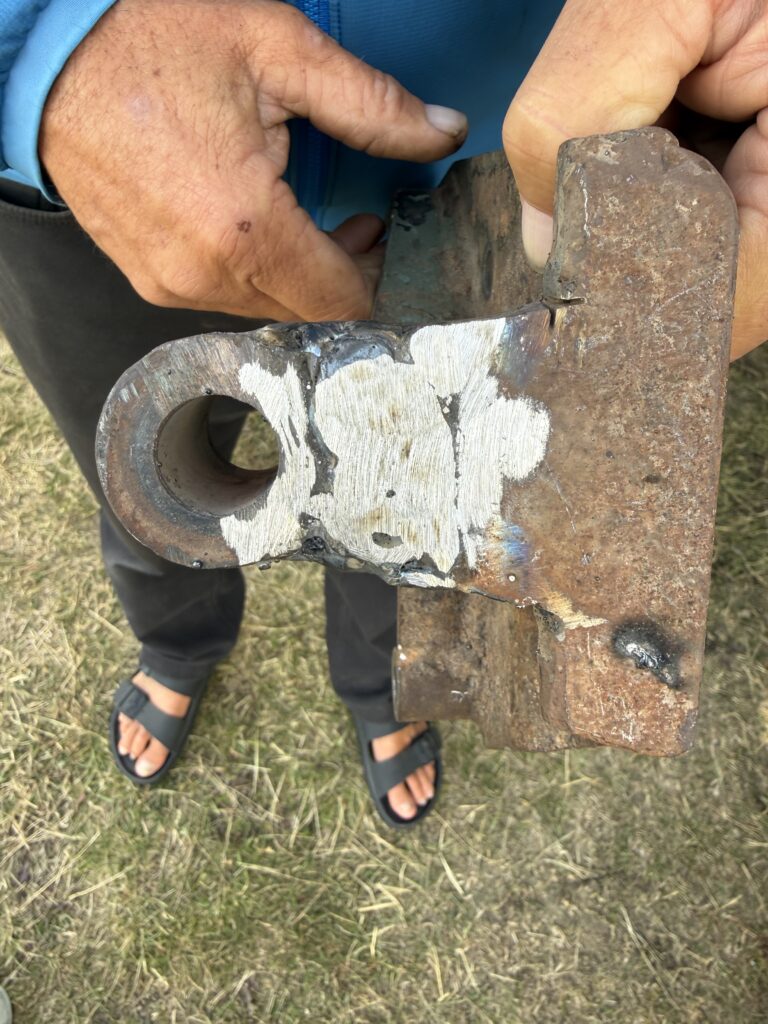
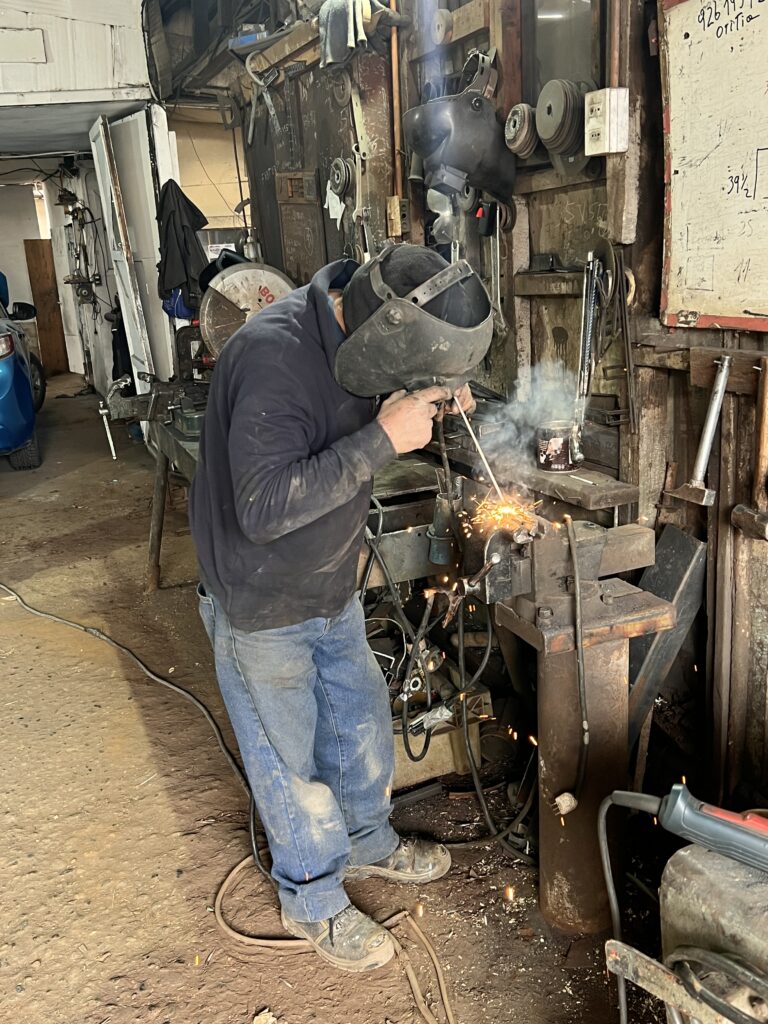
The next morning, in daylight and sanity, we drove back to Río Grande. A proper workshop removed the bracket and fixed it—for $50 USD.
Salt. Wound. Still… what were we to do? Chalk it up as an experience and move on.
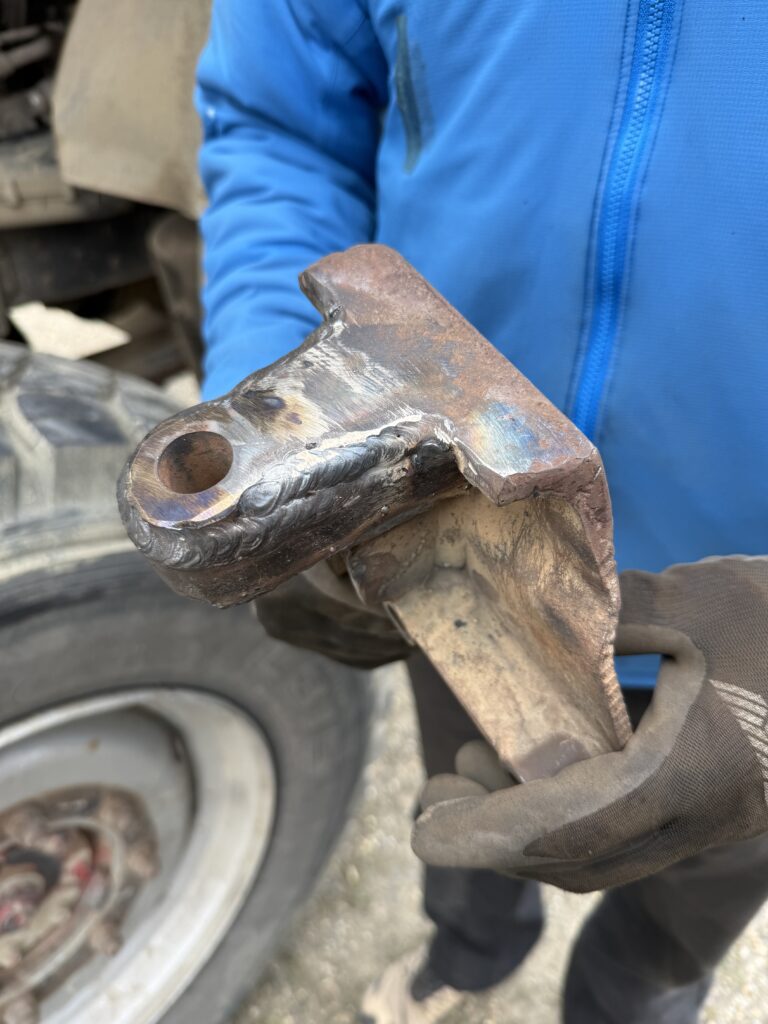
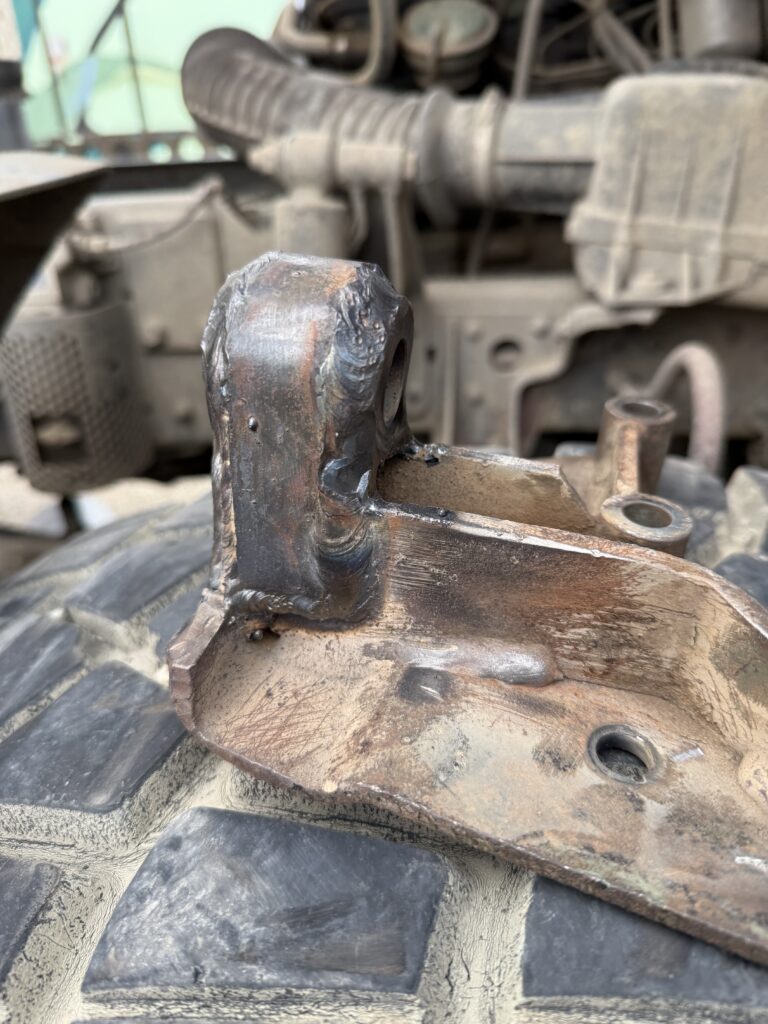
Here you can see the more professional welding done in Río Grande, certainly more robust.
USHUAIA
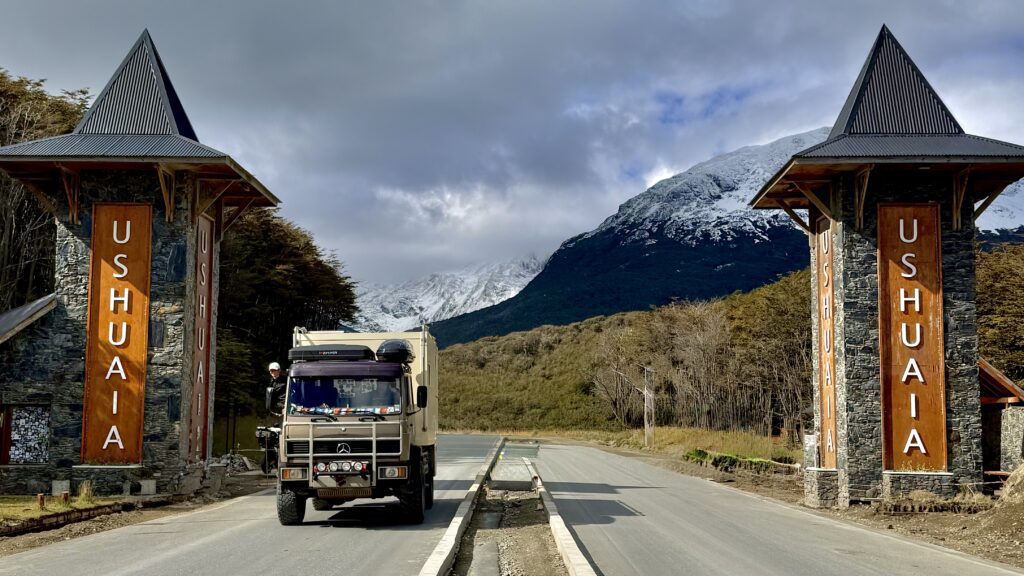
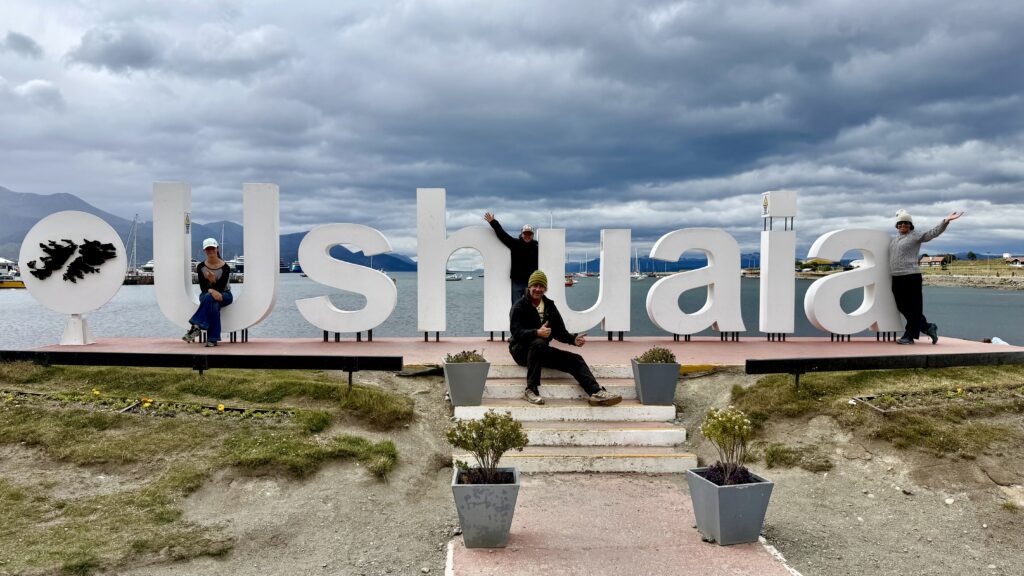
By the time we finally rolled into Ushuaia, the sense of arrival was undeniable. We stopped at the iconic sign marking the southernmost city in the world. Having driven somewhere around 54,000 km since leaving home.
Ushuaia itself sits between mountains and the Beagle Channel, a place shaped by extremes. Once a remote penal colony, its history is rugged and unforgiving. Today, it’s a lively hub—tourists, trekkers an expedition travellers on ships bound for Antarctica. Colourful buildings cling to the hillsides, and the streets buzz with energy that feels almost surreal this far south.
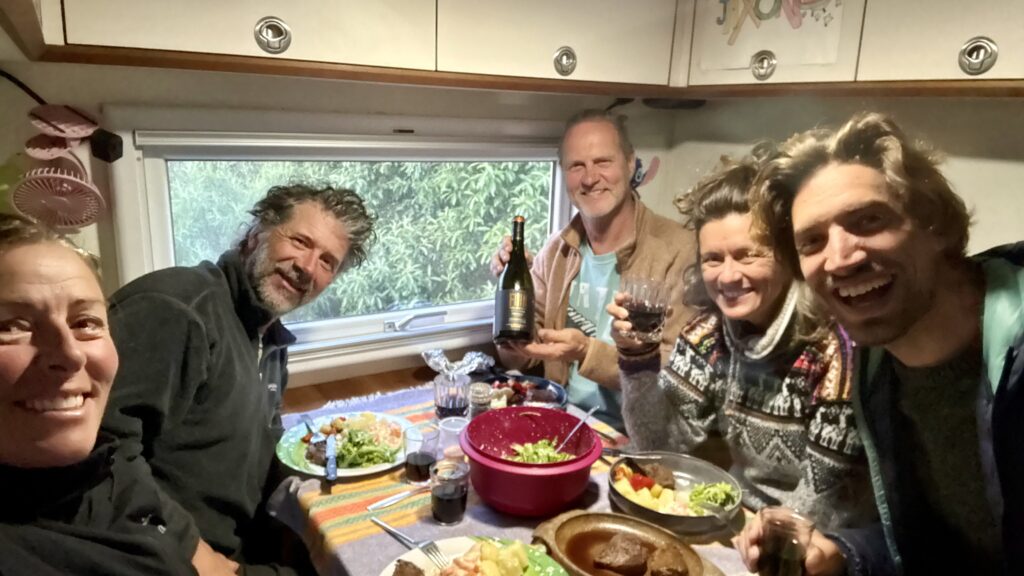
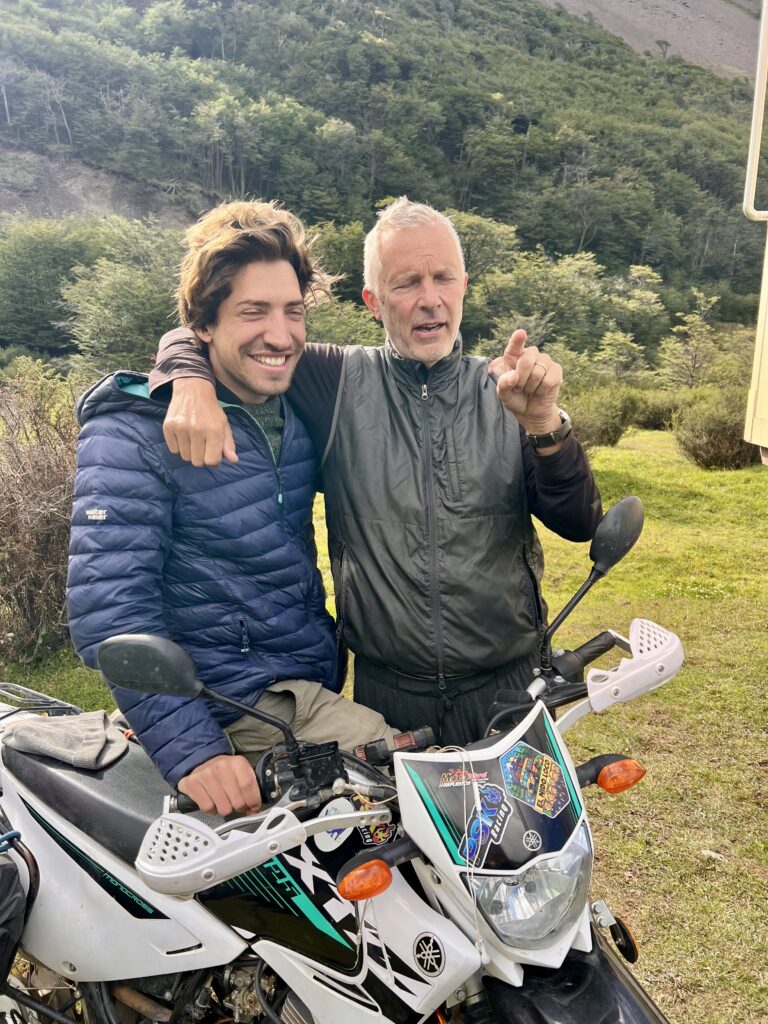
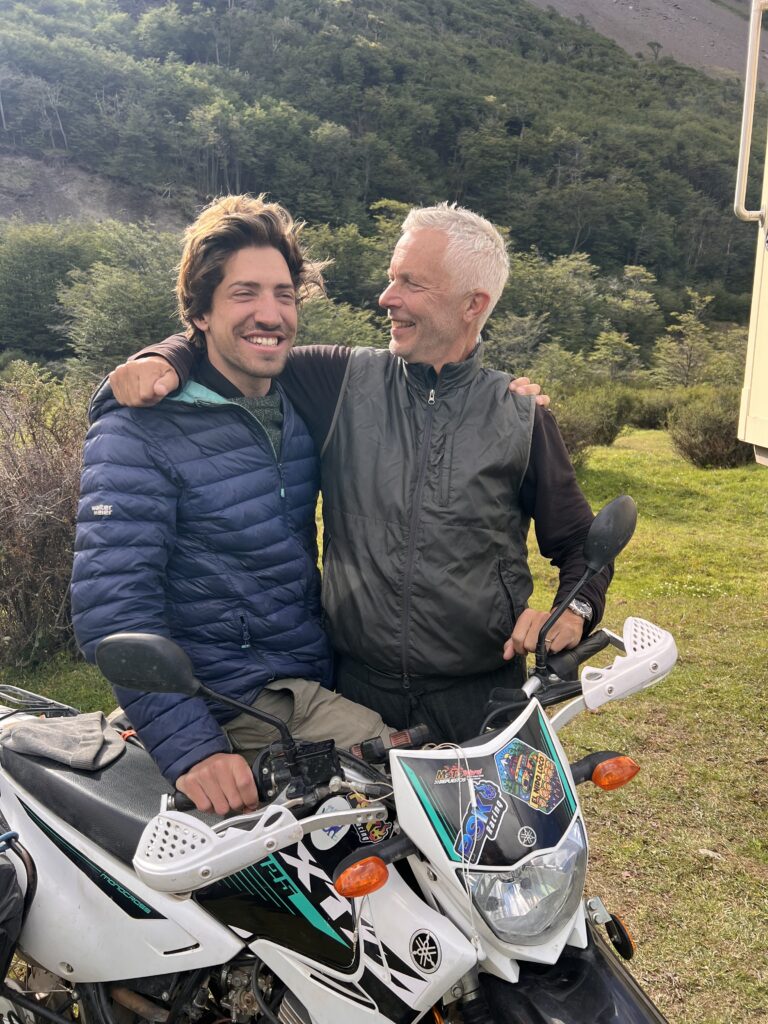
We found Manuel at his campsite—he’d leapfrogged us via ferry—and spent one of only two paid camping nights in Chile, cooking a proper feast with Mario & Wenke.
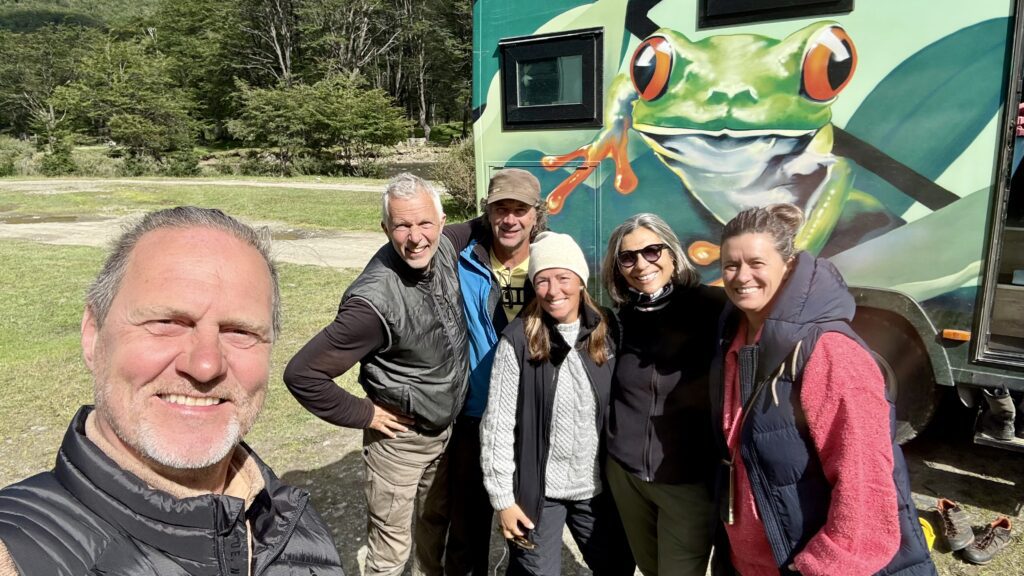
The following days blurred in the best way. Wandering Ushuaia’s streets. Browsing shops. Then retreating just 5km out to a quiet riverside wild camp—where we unexpectedly reunited with Angelo & Ana and Frank & Brigget from Bolivia. The road has a way of circling people back.
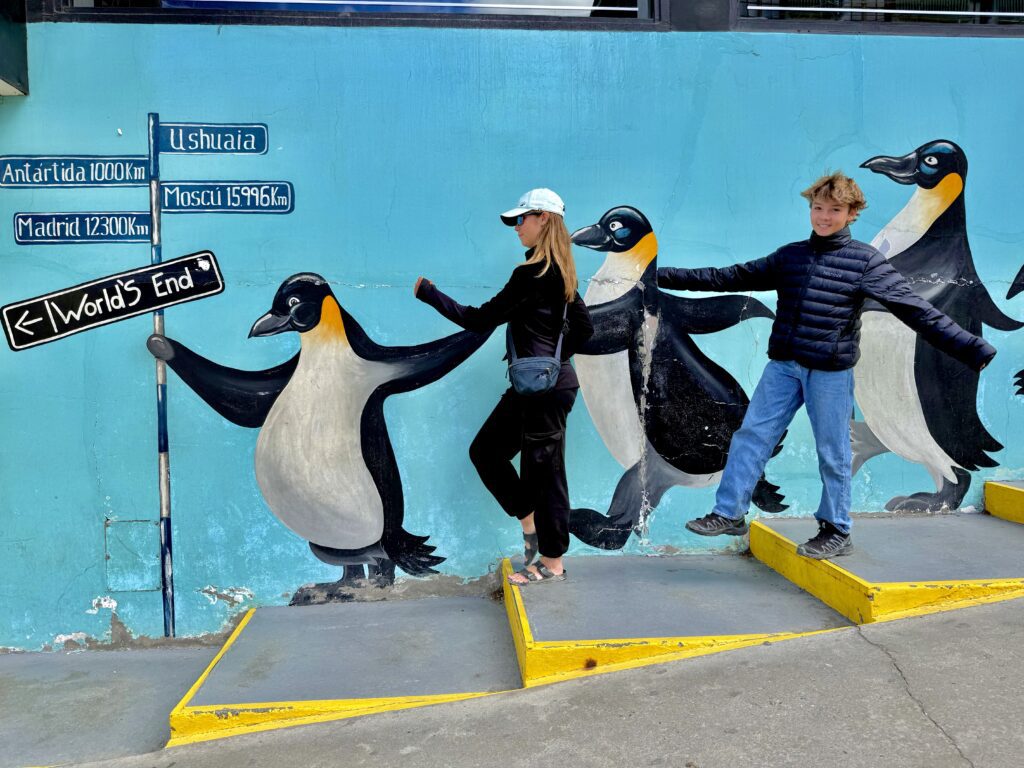
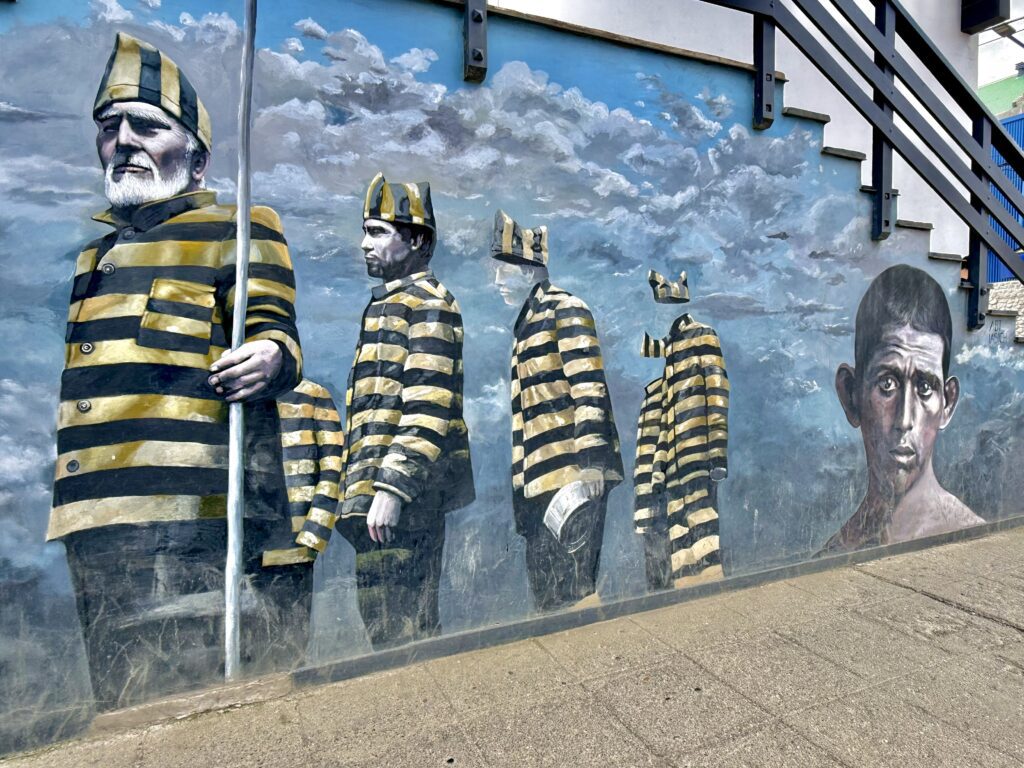
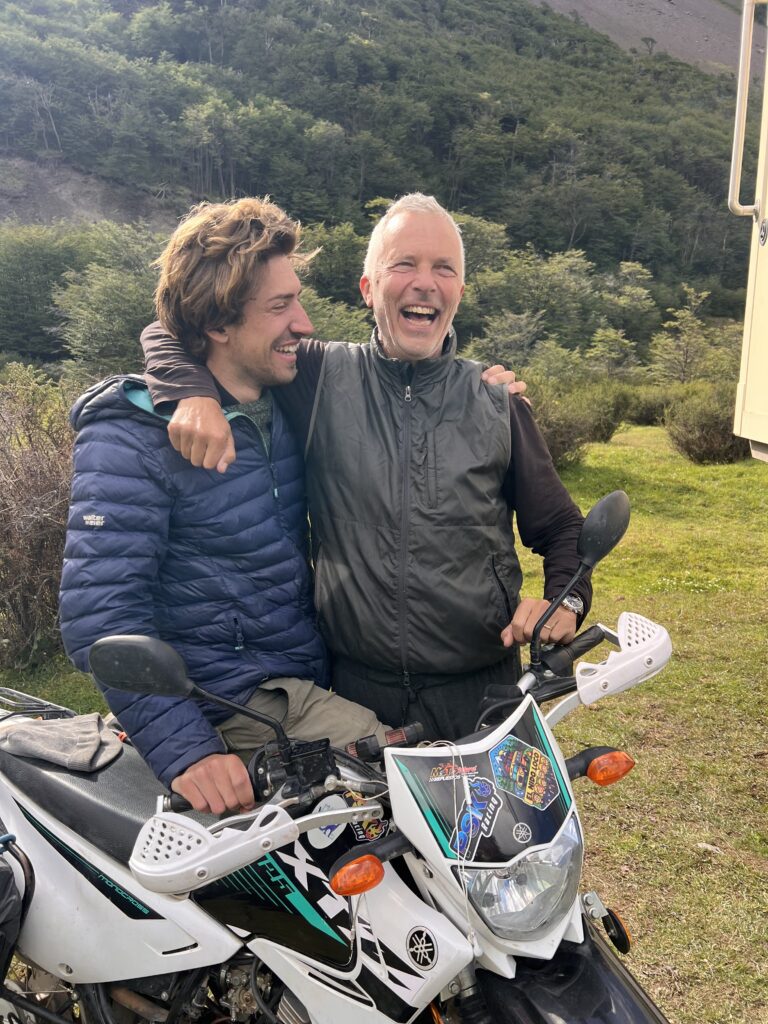
TIERRA DEL FUEGO NATIONAL PARK
We spent a morning in Tierra del Fuego National Park, driving to the southernmost accessible point in the country. Later, with Manuel, we tackled the legendary J Road—the southernmost drivable unpaved road in the world (Antarctica excluded). That night, camped beside the Beagle Channel, the wind carried that deep, ocean silence that only exists at the edges of continents.
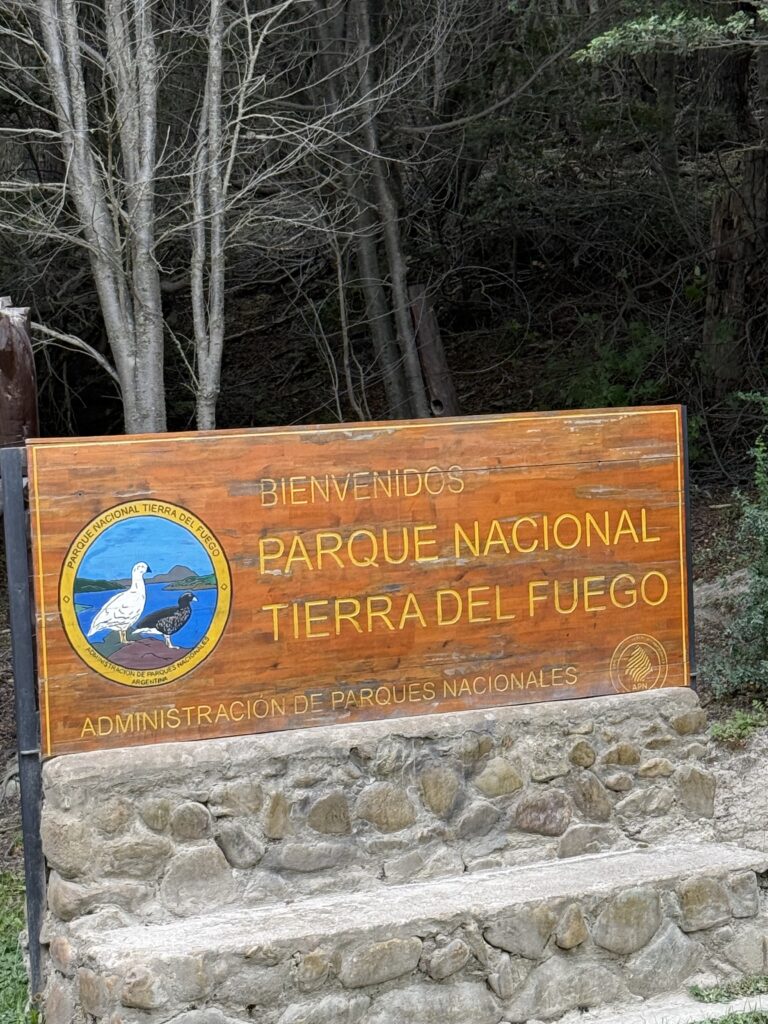
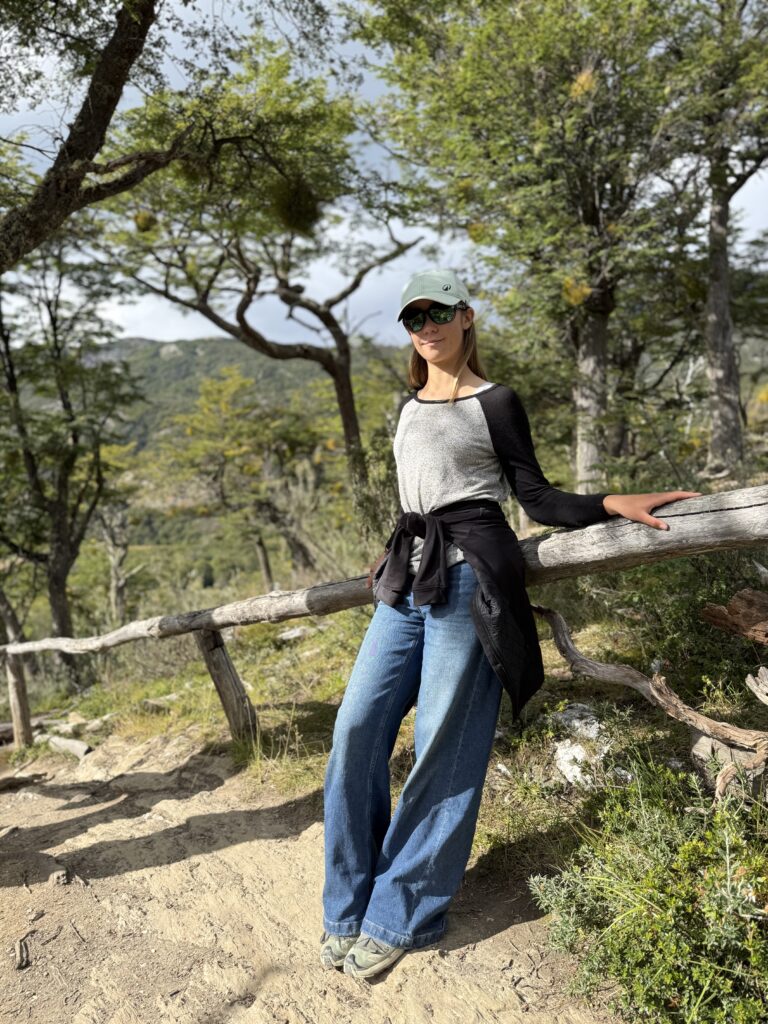
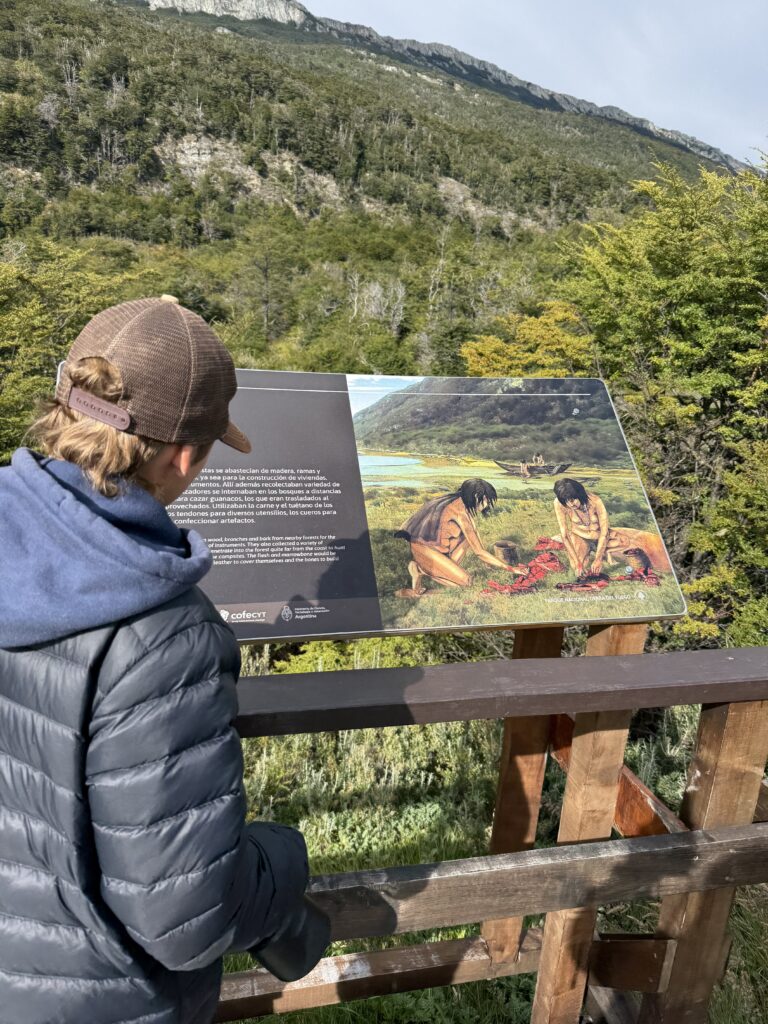
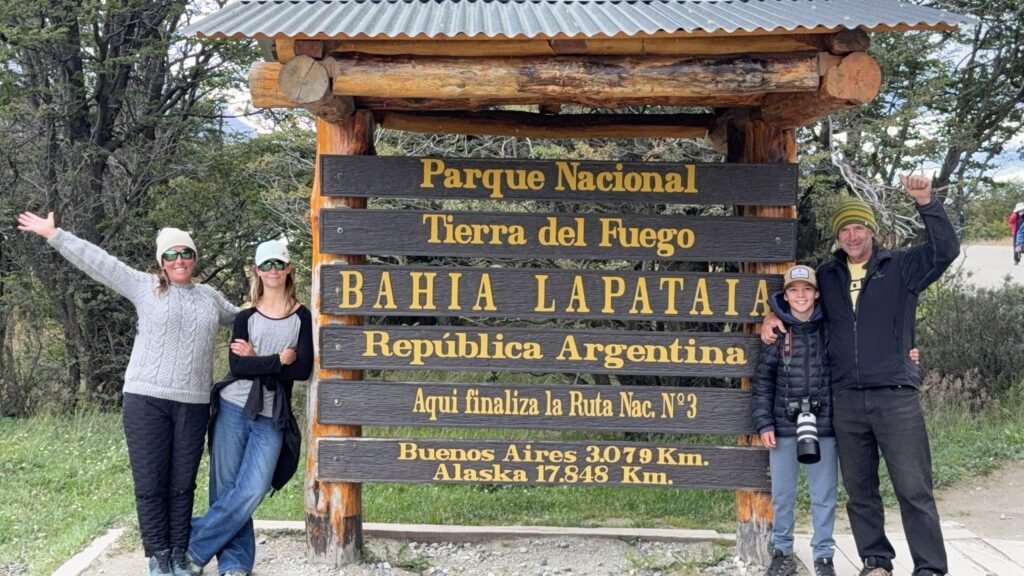
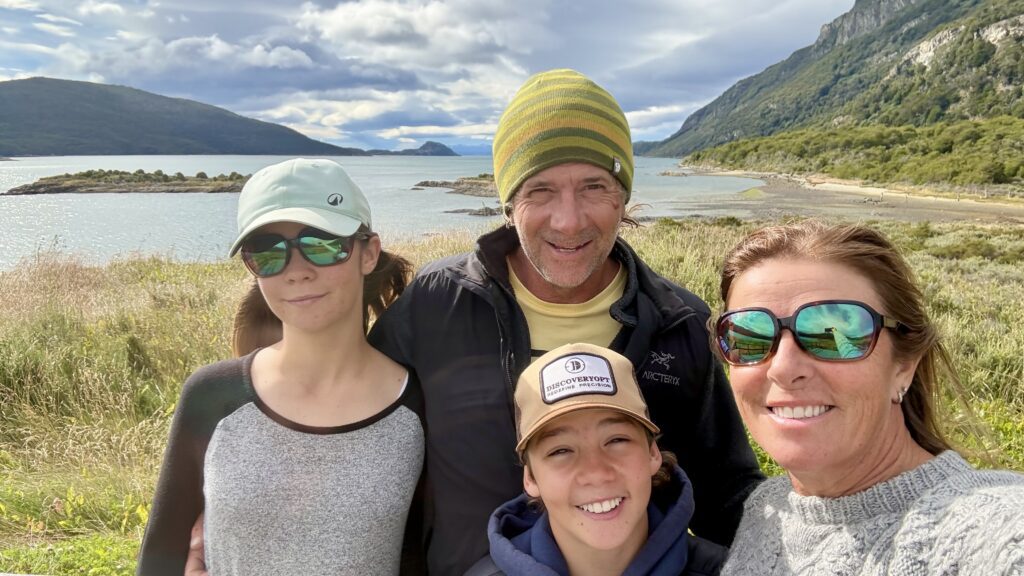
This is as far south as we can drive in Argentina. From here, we turn north, slowly beginning the long journey home.
MOTORCYCLE MUSEUM
A short drive out of Ushuaia, we pulled into a quiet spot at Haruwen and found ourselves in a small motorcycle museum. The bikes weren’t just displays—they were stories on wheels, many having travelled incredible distances to get here. Doubled as a bar selling their home made gin, drawing in people who understood the pull of the road, like us.
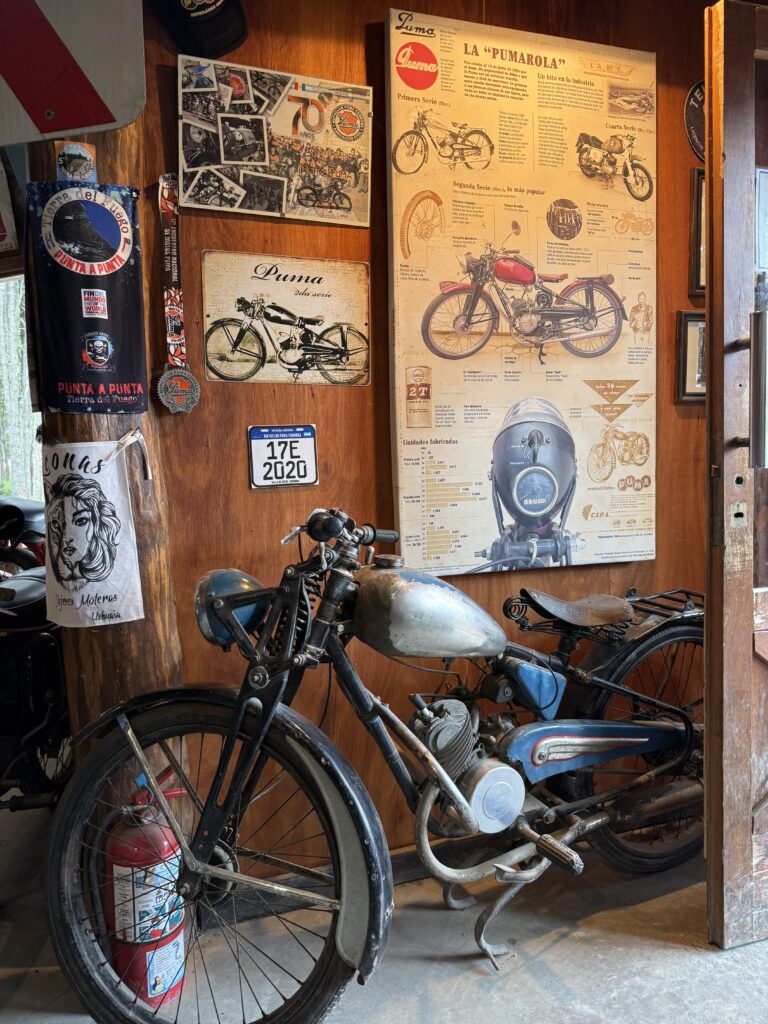
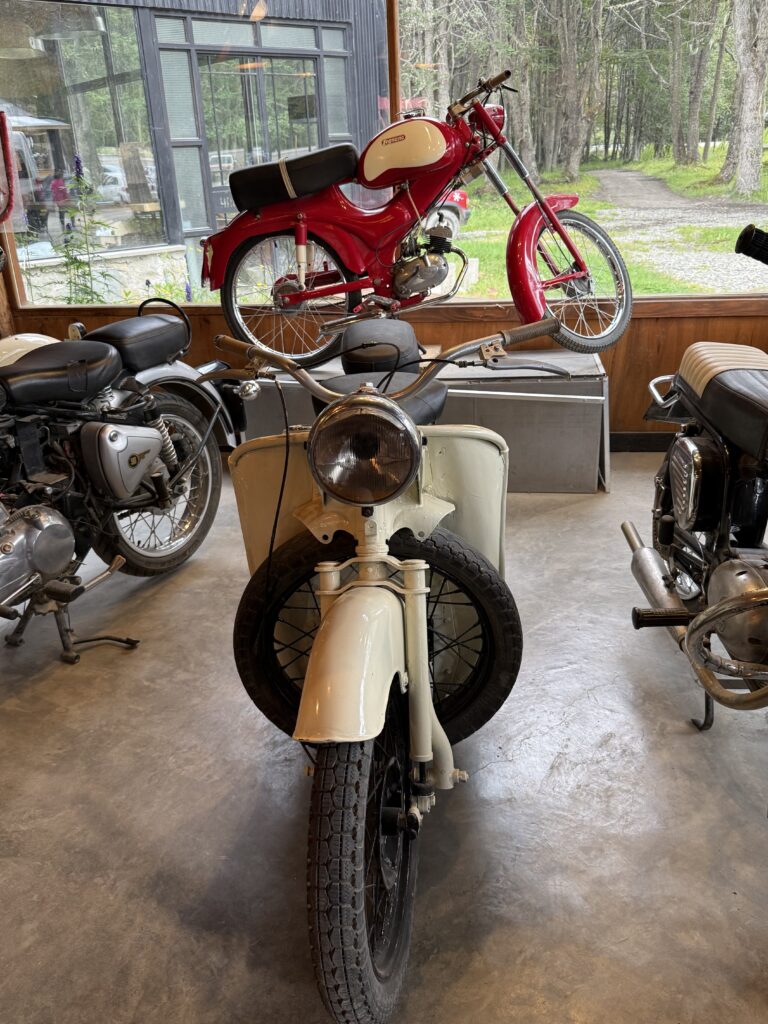
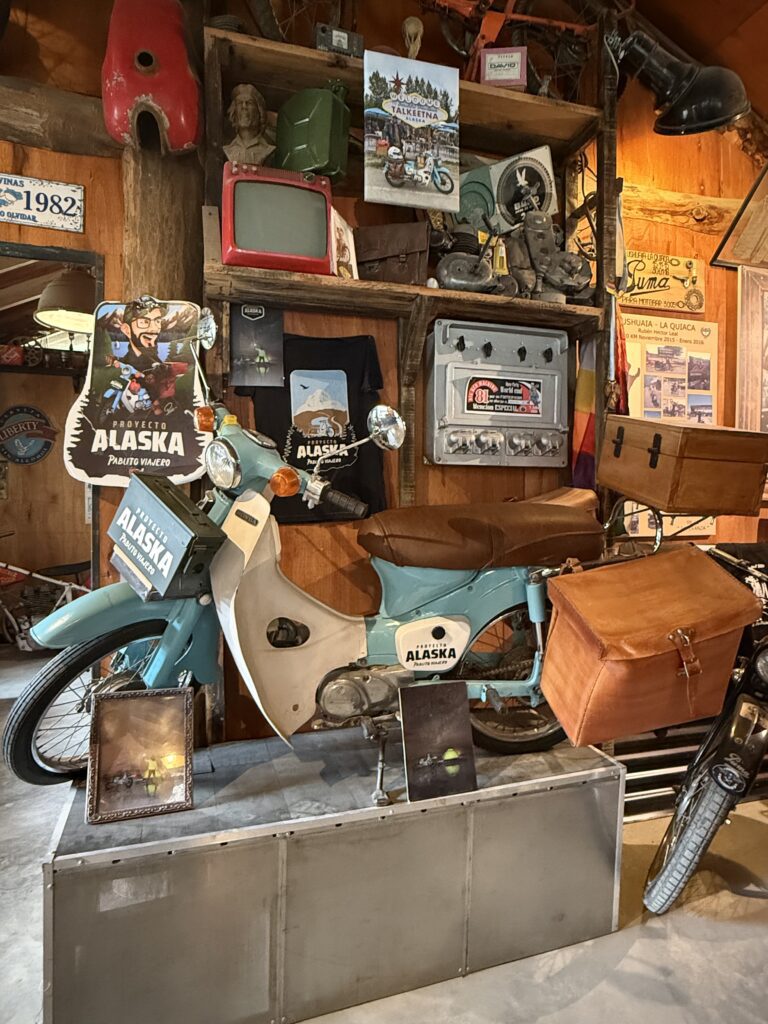

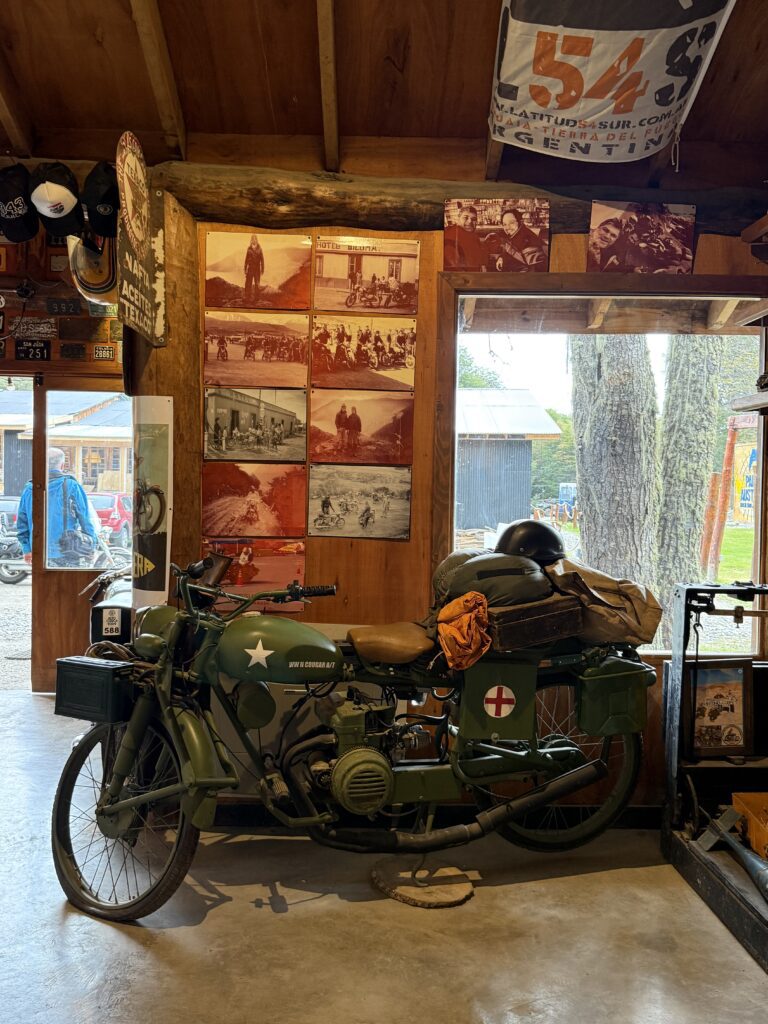
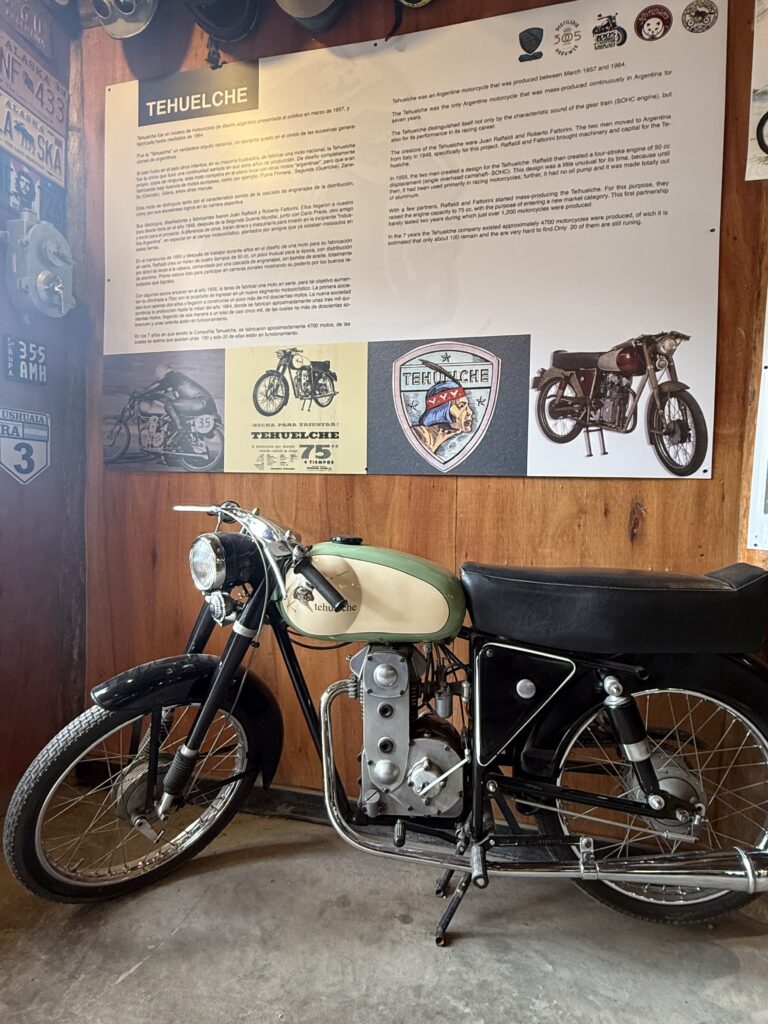
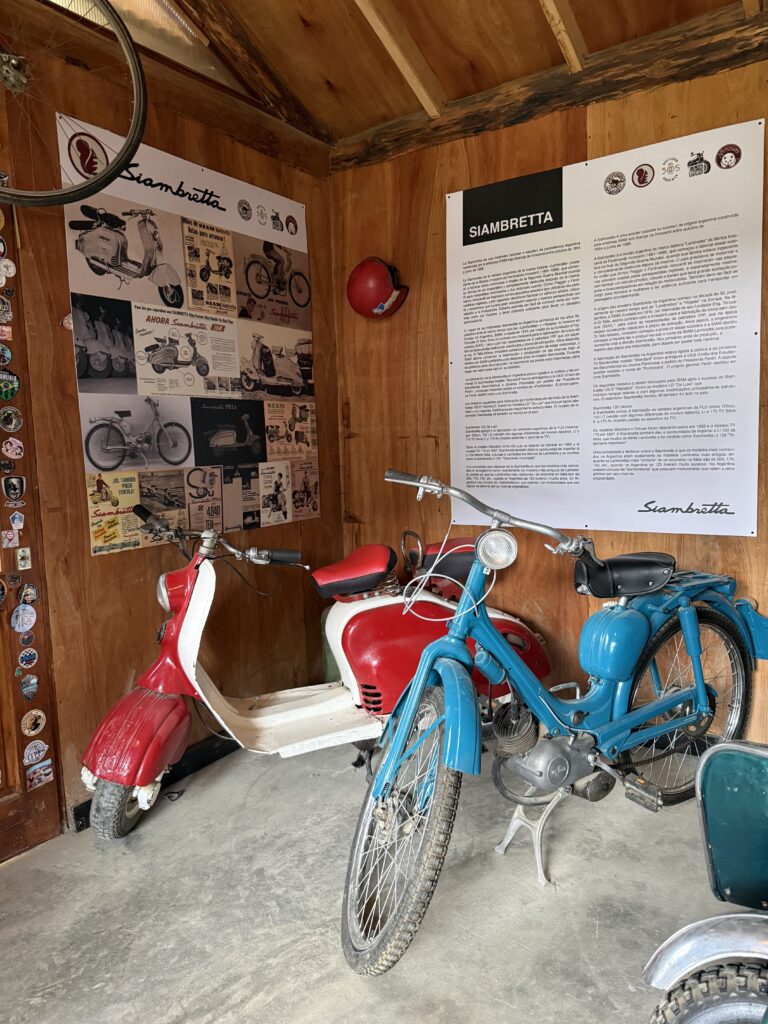
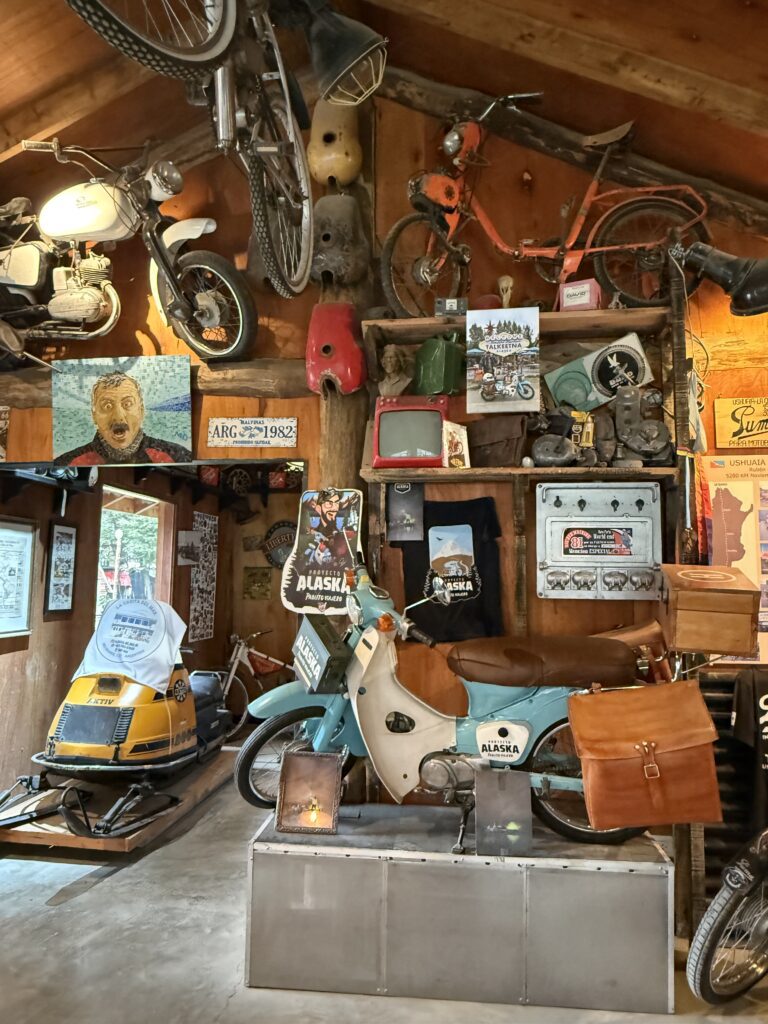
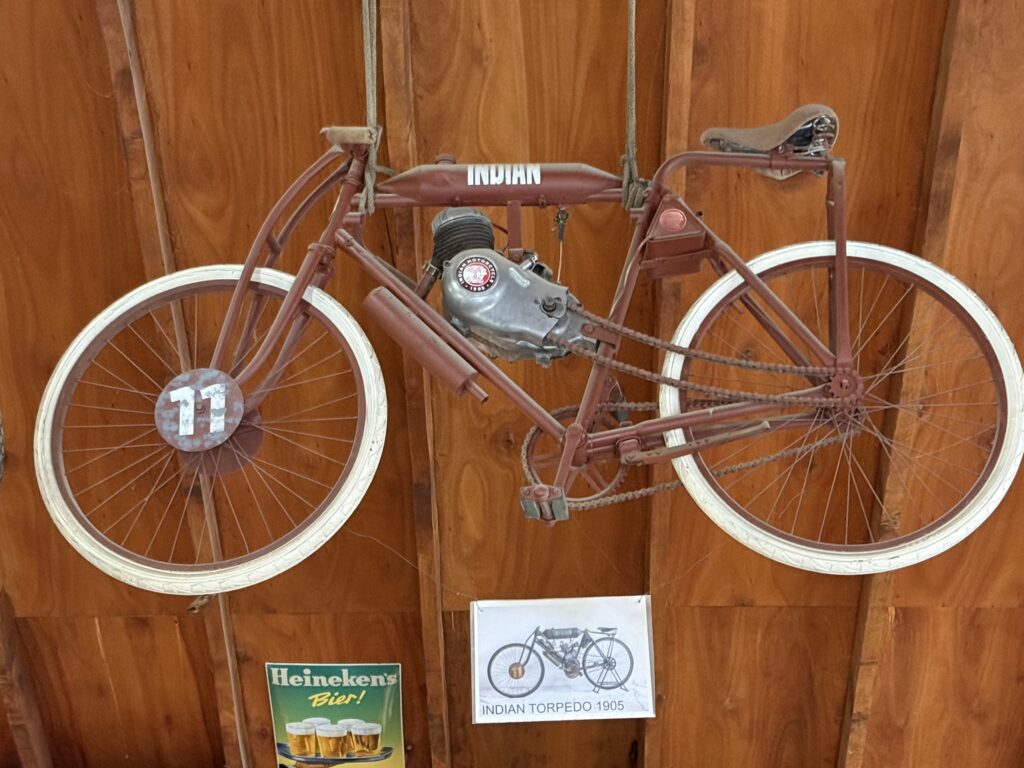
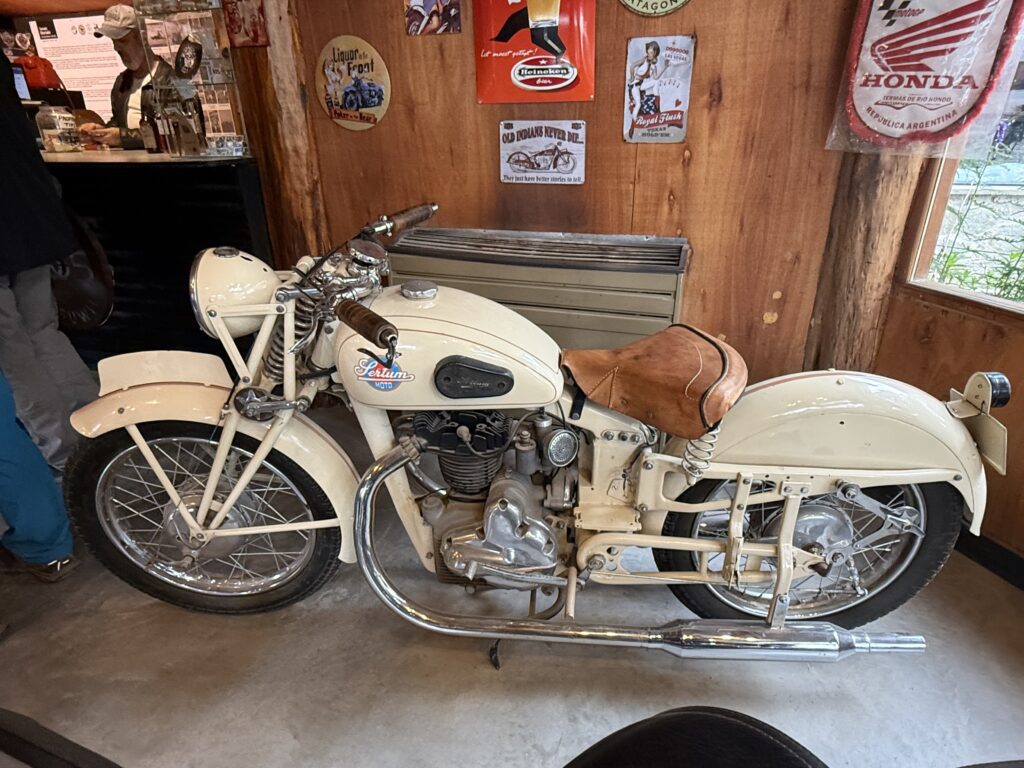
Oh, what stories these bikes could tell!
One Response
You’re not alone–lots of weather delays with B.C. ferries and the fleet is getting very old so lots of mechaical breakdowns. New ferries being built in China–likely the practical solution but not politically correct. No snow even
near Emerald roads and first winter Vancouver received no snow and my long time resident-Andrea–has never seen Green Lake not frozen at any time during a winter.